

California Gull vs Glaucous-winged Gull
Larus californicus versus Larus glaucescens
Play a quiz with California Gull and Glaucous-winged Gull
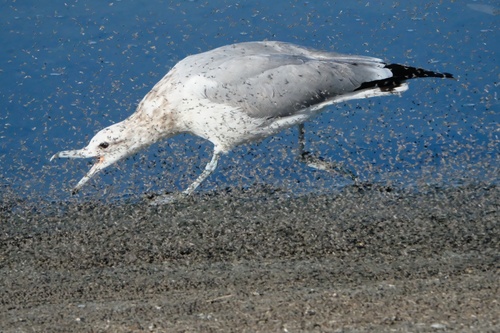 California Gull
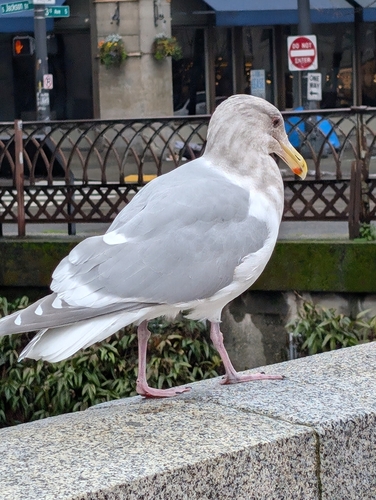 Glaucous-winged Gull
In short
The most reliable field mark between California Gull and Glaucous-winged Gull is the color of the wingtips in adults: California Gulls have black primaries with white tips, while Glaucous-winged Gulls have pale grey wingtips that match the mantle. In all plumages, California Gulls show yellow legs and brown eyes, contrasting with the pink legs and pale eyes of Glaucous-winged. Size can help: Glaucous-winged is bulkier and longer, but beware overlap. Immature birds can be tricky, but California Gulls tend to look browner overall, while Glaucous-winged immatures are paler and more uniform. Always check wingtip color first, then leg and eye color, and use size as a supporting clue.
Identification tips
- Adult wingtip color: California Gull adults have black primaries with white tips; Glaucous-winged adults have pale grey primaries matching the mantle. This is the single most reliable mark in all seasons for adults.
- Leg color: California Gull has yellow legs (all ages); Glaucous-winged has pink legs. Leg color is visible when birds are perched or standing, less so in flight.
- Eye color: California Gull has brown eyes as an adult; Glaucous-winged has pale eyes. This is subtle at distance but useful up close.
- Bill pattern: California Gull adults show a yellow bill with both a black ring and a red spot near the tip; Glaucous-winged has a yellow bill with only a red spot. The black ring is especially useful in breeding adults.
- Size and structure: Glaucous-winged is bulkier, longer, and heavier, with a thicker bill and deeper chest. California Gull is slimmer and more medium-sized. Use size only as a supporting clue due to overlap.
- Head shape: California Gull has a more rounded head; Glaucous-winged's head is larger and blockier. This is subtle and best used with other marks.
- Immature plumage: Juvenile and immature California Gulls are browner and more patterned, especially on the upperparts and wings. Glaucous-winged immatures are paler, more uniform grey-brown, and lack strong contrast in wing pattern. In flight, California Gull immatures may show more contrast between dark primaries and paler inner wing.
- Adult mantle color: Both have grey mantles, but Glaucous-winged's is paler than Western Gull, darker than Glaucous Gull, and similar to or slightly paler than California Gull. Mantle shade is not a primary separator between these two.
- Nonbreeding head streaking: Glaucous-winged can show more streaking on the head in nonbreeding (winter) plumage; California Gull's head is usually cleaner.
- Habitat context: If seen inland, especially away from the Pacific coast, California Gull is far more likely. On the outer Pacific coast, especially north of California, Glaucous-winged is more common.
- Hybrid confusion: In the Pacific Northwest, beware hybrids (especially Glaucous-winged x Western Gull), which can show intermediate wingtip and mantle colors. Use leg color and bill pattern as additional checks.
- Tail color: Both adults have white tails; not a separator.
- Voice: Not diagnostic with current information.
- Behavior: Not reliably different in the field.
- Season: All marks above apply year-round, but head streaking is most useful in winter.
Size
Glaucous-winged Gull is noticeably larger and heavier than California Gull, with an average body mass of about 1063 g compared to 775 g for California Gull. Glaucous-winged also has a longer body (50–68 cm vs. 46–55 cm) and broader wings (wingspan 120–150 cm vs. 122–137 cm), though there is some overlap. In the field, Glaucous-winged often looks more robust and thick-set, while California Gull appears slimmer and more medium-sized. Use size with caution in mixed flocks, as large California Gulls and small Glaucous-winged can overlap.
Plumage
For adults, the key difference is in the wingtips: California Gulls have black primaries with white tips, creating a sharp contrast with the grey upperwing, while Glaucous-winged Gulls have pale grey primaries that are similar in shade to the mantle, giving a 'washed-out' look with little contrast. California Gulls have yellow legs and brown eyes, while Glaucous-winged Gulls have pink legs and pale eyes. The bill of California Gull is yellow with both a black ring and a red spot near the tip; Glaucous-winged has a yellow bill with only a red spot. Immature California Gulls are browner and more patterned, while Glaucous-winged immatures are paler, more uniform grey-brown, and lack strong contrast in the wing pattern. In flight, juvenile and immature California Gulls may show more contrast between the dark primaries and paler inner wing, but this is less pronounced in Glaucous-winged, which looks more evenly pale. Tail and head are mostly white in both adults, but Glaucous-winged can show more streaking in nonbreeding plumage.
Behaviour
Both species are typical large gulls in behavior, often seen loafing in mixed flocks, scavenging, or foraging along shorelines and urban areas. Glaucous-winged Gulls may appear more dominant and sluggish due to their larger size, while California Gulls can seem more active and agile. No major behavioral differences are diagnostic in the field.
Habitat
California Gulls are widespread across western North America, found inland and on coasts, often at lakes, agricultural fields, and garbage dumps. Glaucous-winged Gulls are more coastal, especially along the Pacific from Alaska to California, and are less likely inland. Where ranges overlap (Pacific coast), both can occur together, but Glaucous-winged is more tied to marine habitats, while California Gull is more flexible. Hybrid Glaucous-winged x Western Gulls are common in the Pacific Northwest and can complicate identification.