

Motmot

California Gull vs American Herring Gull

Larus californicus versus Larus smithsonianus

Play a quiz with California Gull and American Herring Gull
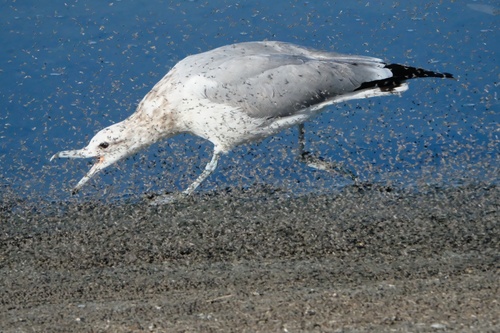
California Gull (Larus californicus) California Gull
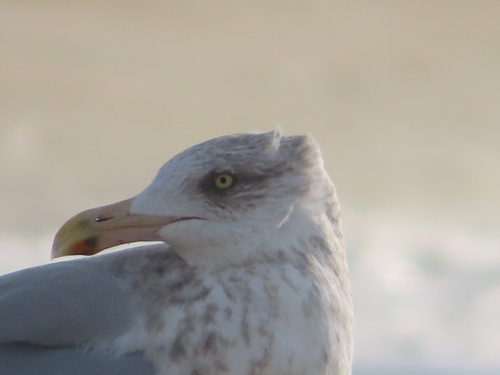
American Herring Gull (Larus smithsonianus) American Herring Gull

Media

Loading…

In short

The most reliable field mark between California Gull and American Herring Gull is leg color: adult California Gulls have yellow legs, while American Herring Gulls have pink legs. For immatures, separation is much tougher, but Herring Gulls are bulkier and have a more powerful bill and a darker, more uniform brown juvenile plumage with a distinctly dark tail band. California Gulls are smaller, with a more rounded head, brown eyes, and a bill with both a black ring and a red spot. In flight, immature Herring Gulls show a dark tail and paler inner primaries, while California Gull immatures are generally browner overall. Both species can appear similar, especially in non-breeding plumages, but careful attention to leg color, size, head shape, and bill pattern will help distinguish them.

Identification tips

  1. Leg color (adults): California Gulls have yellow legs; American Herring Gulls have pink legs. This is the single most reliable field mark for adults.
  2. Eye color (adults): California Gulls have brown eyes, while Herring Gulls have pale to medium yellow eyes with a yellow or orange orbital ring. This is subtle but useful at close range.
  3. Bill pattern (adults): California Gulls have a yellow bill with both a black ring and a red spot near the tip. Herring Gulls have a yellow bill with only a red spot on the lower mandible, no black ring.
  4. Head shape: California Gulls have a more rounded head; Herring Gulls have a fuller chest, sloping forehead, and a more angular, blocky head profile.
  5. Size and structure: Herring Gulls are larger, bulkier, and more heavily built, with a longer, thicker bill. California Gulls are medium-sized, slimmer, and lighter.
  6. Immature plumage (first-winter): Herring Gulls are gray-brown, darker and more uniform, with a dark tail band, brown rump with dark bars, and a dark bill (paler at base in winter). California Gull immatures are also brown but tend to be paler and less uniform, lacking the strong tail band and often appearing more mottled.
  7. Immature wing pattern (flight): Herring Gulls show dark outer primaries with paler inner primaries, and a dark tail band that is prominent in flight. California Gulls lack such strong contrast and are overall browner, with less distinct tail patterning.
  8. Adult wing pattern: Both have gray upperwings with black wingtips and white spots, but Herring Gulls have a broader white trailing edge and larger white 'mirrors' on the primaries.
  9. Head streaking (non-breeding): In winter, Herring Gulls develop brown streaking on the head and neck, while California Gulls remain cleaner-headed.
  10. Bill size and shape: Herring Gulls have a longer, more powerful bill, especially noticeable in profile or when seen side-by-side.
  11. Jizz in flight: Herring Gulls appear heavier and more ponderous in flight; California Gulls are more buoyant and less heavy.
  12. Habitat: Not diagnostic where ranges overlap, but California Gulls are more common inland in the west, while Herring Gulls are widespread across North America.
  13. Voice: Not reliably separable in the field based on calls alone.
  14. Sexual dimorphism: Both species show similar plumage in both sexes; size differences are more pronounced in Herring Gulls, with males larger than females.
  15. Pitfalls: Immature birds of both species are very similar and can be extremely difficult to separate, especially at a distance or in poor light. Focus on size, bill structure, and tail/wing pattern in flight when possible.

Size

California Gull is a medium-sized gull with an average body mass of about 775.5 g [wikidata], smaller than the American Herring Gull. Herring Gulls are larger and more heavily built, with males reaching up to 1,650 g and females up to 900 g [wikipedia]. Herring Gulls have a longer, more powerful bill, fuller chest, and a generally bulkier structure. California Gulls overlap in size with smaller Herring Gulls but are usually noticeably lighter and more slender in direct comparison.

Plumage

For immatures and first-winter birds, American Herring Gulls are gray-brown, darker and more uniform than European herring gulls, with a dark tail band, brown rump with dark bars, and a dark bill (paler at base in winter). Their head is often paler than the body, and the primaries are dark with paler inner webs. California Gull immatures are similar to immature Herring Gulls but tend to be browner overall, and lack the strong contrast of the Herring Gull's dark tail band and pale head. Adult California Gulls have yellow legs, brown eyes, a more rounded head, and a yellow bill with both a black ring and a red spot near the tip. Their upperparts are gray, with black primaries tipped white. Adult Herring Gulls have pink legs, pale eyes, a yellow bill with a red spot (no black ring), and a bulkier, more angular head. In winter, Herring Gulls develop brown streaking on the head and neck, while California Gulls retain a cleaner look. Both species have white heads and underparts, gray backs, and black wingtips with white spots as adults.

Behaviour

Both species are generalist feeders and can be found in a wide range of habitats, often scavenging at garbage dumps, parking lots, and shorelines. Herring Gulls tend to appear more dominant and aggressive due to their larger size and heavier build. California Gulls may seem more agile and less imposing. Flight style is similar, but Herring Gulls may appear more ponderous and powerful, while California Gulls are slightly more buoyant and less heavy in flight.

Habitat

Both species are widespread in North America and overlap in many regions, especially in the western and northern parts of the continent. Herring Gulls breed across a wide range, including coasts, lakes, and rivers, and are common in urban settings. California Gulls are also widespread in the west, from Canada to Mexico, and are found near water, often inland as well as on the coast. Habitat alone is not usually diagnostic where their ranges overlap.

Voice

No diagnostic differences are noted in the provided sources. Both species have a variety of loud, harsh calls typical of large gulls.

Submit a better description

Use the same sections as the comparison. Your text is published immediately.

The most reliable field mark between California Gull and American Herring Gull is leg color: adult California Gulls have yellow legs, while American Herring Gulls have pink legs. For immatures, separation is much tougher, but Herring Gulls are bulkier and have a more powerful bill and a darker, more uniform brown juvenile plumage with a distinctly dark tail band. California Gulls are smaller, with a more rounded head, brown eyes, and a bill with both a black ring and a red spot. In flight, immature Herring Gulls show a dark tail and paler inner primaries, while California Gull immatures are generally browner overall. Both species can appear similar, especially in non-breeding plumages, but careful attention to leg color, size, head shape, and bill pattern will help distinguish them.

  1. Leg color (adults): California Gulls have yellow legs; American Herring Gulls have pink legs. This is the single most reliable field mark for adults.
  2. Eye color (adults): California Gulls have brown eyes, while Herring Gulls have pale to medium yellow eyes with a yellow or orange orbital ring. This is subtle but useful at close range.
  3. Bill pattern (adults): California Gulls have a yellow bill with both a black ring and a red spot near the tip. Herring Gulls have a yellow bill with only a red spot on the lower mandible, no black ring.
  4. Head shape: California Gulls have a more rounded head; Herring Gulls have a fuller chest, sloping forehead, and a more angular, blocky head profile.
  5. Size and structure: Herring Gulls are larger, bulkier, and more heavily built, with a longer, thicker bill. California Gulls are medium-sized, slimmer, and lighter.
  6. Immature plumage (first-winter): Herring Gulls are gray-brown, darker and more uniform, with a dark tail band, brown rump with dark bars, and a dark bill (paler at base in winter). California Gull immatures are also brown but tend to be paler and less uniform, lacking the strong tail band and often appearing more mottled.
  7. Immature wing pattern (flight): Herring Gulls show dark outer primaries with paler inner primaries, and a dark tail band that is prominent in flight. California Gulls lack such strong contrast and are overall browner, with less distinct tail patterning.
  8. Adult wing pattern: Both have gray upperwings with black wingtips and white spots, but Herring Gulls have a broader white trailing edge and larger white 'mirrors' on the primaries.
  9. Head streaking (non-breeding): In winter, Herring Gulls develop brown streaking on the head and neck, while California Gulls remain cleaner-headed.
  10. Bill size and shape: Herring Gulls have a longer, more powerful bill, especially noticeable in profile or when seen side-by-side.
  11. Jizz in flight: Herring Gulls appear heavier and more ponderous in flight; California Gulls are more buoyant and less heavy.
  12. Habitat: Not diagnostic where ranges overlap, but California Gulls are more common inland in the west, while Herring Gulls are widespread across North America.
  13. Voice: Not reliably separable in the field based on calls alone.
  14. Sexual dimorphism: Both species show similar plumage in both sexes; size differences are more pronounced in Herring Gulls, with males larger than females.
  15. Pitfalls: Immature birds of both species are very similar and can be extremely difficult to separate, especially at a distance or in poor light. Focus on size, bill structure, and tail/wing pattern in flight when possible.

California Gull is a medium-sized gull with an average body mass of about 775.5 g [wikidata], smaller than the American Herring Gull. Herring Gulls are larger and more heavily built, with males reaching up to 1,650 g and females up to 900 g [wikipedia]. Herring Gulls have a longer, more powerful bill, fuller chest, and a generally bulkier structure. California Gulls overlap in size with smaller Herring Gulls but are usually noticeably lighter and more slender in direct comparison.

For immatures and first-winter birds, American Herring Gulls are gray-brown, darker and more uniform than European herring gulls, with a dark tail band, brown rump with dark bars, and a dark bill (paler at base in winter). Their head is often paler than the body, and the primaries are dark with paler inner webs. California Gull immatures are similar to immature Herring Gulls but tend to be browner overall, and lack the strong contrast of the Herring Gull's dark tail band and pale head. Adult California Gulls have yellow legs, brown eyes, a more rounded head, and a yellow bill with both a black ring and a red spot near the tip. Their upperparts are gray, with black primaries tipped white. Adult Herring Gulls have pink legs, pale eyes, a yellow bill with a red spot (no black ring), and a bulkier, more angular head. In winter, Herring Gulls develop brown streaking on the head and neck, while California Gulls retain a cleaner look. Both species have white heads and underparts, gray backs, and black wingtips with white spots as adults.

Both species are generalist feeders and can be found in a wide range of habitats, often scavenging at garbage dumps, parking lots, and shorelines. Herring Gulls tend to appear more dominant and aggressive due to their larger size and heavier build. California Gulls may seem more agile and less imposing. Flight style is similar, but Herring Gulls may appear more ponderous and powerful, while California Gulls are slightly more buoyant and less heavy in flight.

Both species are widespread in North America and overlap in many regions, especially in the western and northern parts of the continent. Herring Gulls breed across a wide range, including coasts, lakes, and rivers, and are common in urban settings. California Gulls are also widespread in the west, from Canada to Mexico, and are found near water, often inland as well as on the coast. Habitat alone is not usually diagnostic where their ranges overlap.

No diagnostic differences are noted in the provided sources. Both species have a variety of loud, harsh calls typical of large gulls.

Discard your changes?

You have unsaved edits. If you leave now, those changes will be lost.

California Gull · American Herring Gull · My Tricky Birds