

Cabanis's Wren vs Isthmian Wren
Cantorchilus modestus versus Cantorchilus elutus
Play a quiz with Cabanis's Wren and Isthmian Wren
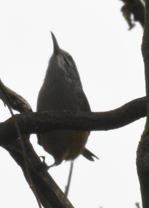 Cabanis's Wren
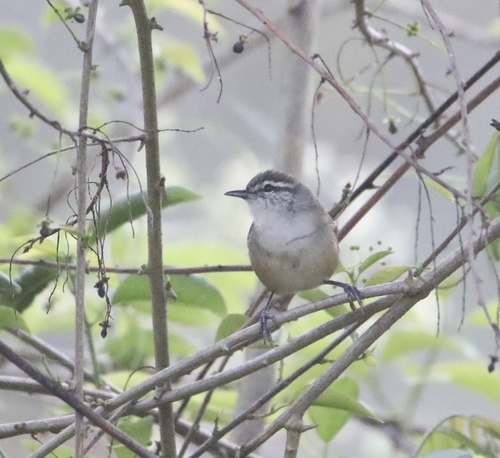 Isthmian Wren
In short
The most reliable field mark between Cabanis's Wren and Isthmian Wren is the color of the rump and tail: Cabanis's Wren shows a distinctly orange-rufous rump and rufescent brown tail, while Isthmian Wren has a paler russet rump and russet brown tail. Both species are similar in size and structure, and their facial patterns are alike, but subtle differences in back and underpart coloration can help. Immature birds are duller versions of adults in both species, so separation relies on the same plumage contrasts. Range is also a strong clue: Cabanis's Wren occurs north of Costa Rica, while Isthmian Wren is limited to Costa Rica and Panama.
Identification tips
- Rump and tail color: Cabanis's Wren has a bright orange-rufous rump and rufescent brown tail, while Isthmian Wren shows a paler russet rump and russet brown tail. This is the most consistent field mark for all ages.
- Back color: Cabanis's Wren's back is rufous-brown, contrasting with the gray-brown back of Isthmian Wren. In dull light or on immatures, this can be subtle but is often visible in good views.
- Underpart tones: Cabanis's Wren shows a pale grayish buff chest and buffy white belly, with orange-buff flanks; Isthmian Wren has a paler grayish chest, grayish white belly, and buffy cinnamon sides and flanks. Look for warmer tones on Cabanis's Wren, especially on the flanks.
- Facial pattern: Both species have a white supercilium and gray-brown eye-stripe, with mottled cheeks. These features are not reliable for separation, but Cabanis's Wren may appear slightly more contrasting.
- Crown color: Cabanis's Wren has a dark gray-brown crown, while Isthmian Wren's is gray-brown, matching the back. This is subtle and best used in combination with other marks.
- Immature plumage: Young birds are duller than adults in both species, but the same differences in rump, back, and underparts apply. No unique juvenile wing or flight marks are described.
- Range: If seen outside Costa Rica and Panama, the bird is Cabanis's Wren. In Costa Rica, both species may occur, so rely on plumage.
- Size and structure: Both species are the same size and show no described differences in bill, tail, or overall shape.
- Habitat: Both occupy dense vegetation near the ground; habitat is not diagnostic where ranges overlap.
- Voice: No distinguishing vocal differences are provided in the sources; do not rely on song or call for separation.
- Pitfalls: Beware of lighting conditions that can mute rufous tones, making Cabanis's Wren appear more like Isthmian Wren. Immatures are especially prone to looking drab, so focus on rump and tail color when possible.
- Season and sex: No seasonal or sexual plumage differences are described for either species; all field marks apply year-round and to both sexes.
- Geographic variation: Cabanis's Wrens in the far north of their range may be darker and less rufous on the back, potentially resembling Isthmian Wren more closely—use rump and tail color as the primary mark in these cases.
Size
Both species are essentially identical in size, measuring 12.5–14 cm in length. Adult Cabanis's Wrens weigh 16.0–19.1 g, but no weight data is provided for Isthmian Wren; there is no evidence of a meaningful size difference in the field. Structure, including bill and tail, is not described as different in the sources.
Plumage
No age-specific upperwing or flight pattern marks are described for either species, so separation relies on body plumage. For all ages, Cabanis's Wren has a dark gray-brown crown, a rufous-brown back, and a distinctly orange-rufous rump and rufescent brown tail with narrow dark bars. Isthmian Wren, in contrast, has a gray-brown crown and back, a pale russet rump, and a russet brown tail with darker bars. Underparts differ subtly: Cabanis's Wren shows a white throat, pale grayish buff chest, and buffy white belly between orange-buff flanks; Isthmian Wren has a white throat, pale grayish chest, grayish white belly, and buffy cinnamon sides and flanks. Both have a white supercilium, gray-brown eye-stripe, and mottled cheeks, but Cabanis's Wren may appear slightly more rufous overall, especially on the back and rump. Immatures are duller in both species, but the same color contrasts apply.
Behaviour
No behavioral differences are described that would reliably separate these two species in the field. Both are typical wrens, likely to be seen skulking or foraging in dense vegetation.
Habitat
Both species occupy similar habitats of dense vegetation, often near the ground. However, their ranges are distinct: Cabanis's Wren is found from southern Mexico through Central America to Costa Rica, while Isthmian Wren is restricted to Costa Rica and Panama. In Costa Rica, both may occur, so habitat alone is not diagnostic there.