

Burrowing Owl vs Rufous-legged Owl
Athene cunicularia versus Strix rufipes
Play a quiz with Burrowing Owl and Rufous-legged Owl
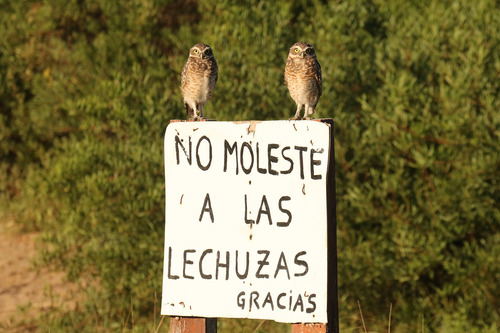 Burrowing Owl
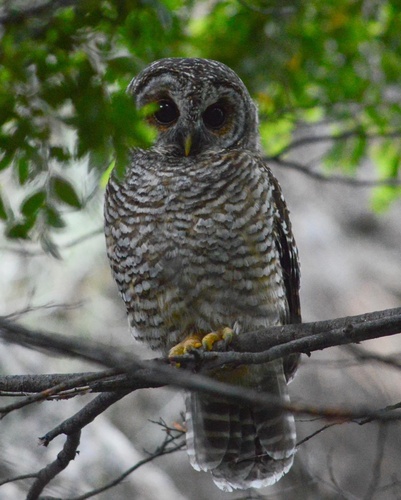 Rufous-legged Owl
In short
The most reliable field mark to separate Burrowing Owl from Rufous-legged Owl is overall structure and leg length: Burrowing Owl is noticeably smaller, with very long, exposed grayish legs and a terrestrial stance, while Rufous-legged Owl is much bulkier and compact, with feathered legs and a more typical owl posture. Juvenile Burrowing Owls show a buff bar across the upperwing and lack most white spotting above, while juvenile Rufous-legged Owls are warm buff with faint barring and a tawny face. In all ages, Burrowing Owl has bright yellow eyes and a flat, white-browed face, while Rufous-legged Owl has dark brown eyes set in a rusty facial disk. Habitat is another strong clue: Burrowing Owl is found in open, dry grasslands and even urban fields, while Rufous-legged Owl is restricted to forested areas in southern South America.
Identification tips
- Leg length and exposure: Burrowing Owl has very long, grayish legs that are clearly visible and often exposed when standing or running; Rufous-legged Owl's legs are shorter and feathered, rarely visible in the field.
- Overall size and bulk: Rufous-legged Owl is much larger and heavier, with a robust, broad body; Burrowing Owl is small, slim, and upright, only a bit larger than an American Robin.
- Juvenile plumage: Juvenile Burrowing Owls lack white spotting above and brown barring below, instead showing a buff bar across the upperwing and a buff breast; juvenile Rufous-legged Owls are warm buff with faint barring and a tawny face—look for the presence or absence of white spotting and the overall warmth of the plumage.
- Adult upperparts: Adult Burrowing Owls are brown with white spots above; Rufous-legged Owls are dark reddish brown with narrow orange-buff bars and spots—Burrowing Owl's spotting is more contrasting and extensive.
- Facial disk and eye color: Burrowing Owl has a flat facial disk with prominent white eyebrows and bright yellow eyes; Rufous-legged Owl has a rusty facial disk, white 'brows' over dark brown eyes, and white lores—eye color is a quick separator at close range.
- Chin and throat: Burrowing Owl shows a white chin patch, often expanded when agitated; Rufous-legged Owl has a white throat but not a distinct chin patch.
- Underparts: Burrowing Owl's underparts are white with variable brown spotting or barring; Rufous-legged Owl's are buffy white with many black bars and an orange-buff vent—look for the density and color of barring.
- Leg feathering: Burrowing Owl's legs are bare and grayish; Rufous-legged Owl's legs and toes are covered with buffy feathers.
- Perching and stance: Burrowing Owl often stands upright on the ground or low perches, sometimes bobbing its head; Rufous-legged Owl perches in trees with a compact, hunched posture.
- Habitat context: Burrowing Owl is found in open, dry, grassy or urban areas; Rufous-legged Owl is restricted to forests—location alone can often eliminate one species.
- Behavior: Burrowing Owl is diurnal and active in daylight, often seen running or flying low over open ground; Rufous-legged Owl is nocturnal and rarely seen during the day.
- Sexual dimorphism: Both species show little difference between sexes in plumage, but Burrowing Owl males may appear paler due to sun-bleaching; size difference is more pronounced in Rufous-legged Owl, with females larger.
- Flight: In flight, Burrowing Owl appears long-winged and buoyant for its size, with obvious white spotting; Rufous-legged Owl is broader-winged and more powerful, with less contrast in the upperwing.
- Pitfalls: Immature Burrowing Owls may be mistaken for other small, pale owls, but the combination of long legs, upright stance, and buff upperwing bar is distinctive; Rufous-legged Owl's warm buff juvenile plumage and dark eyes set it apart from any Burrowing Owl age class.
- Geographic range: Burrowing Owl is widespread in the Americas, especially in open country; Rufous-legged Owl is only found in southern South America—location can quickly narrow the options.
Size
Burrowing Owl is much smaller and lighter than Rufous-legged Owl. Burrowing Owl measures 19–28 cm (7–11 in) in length and weighs 140–240 g (5–8 oz) [wikipedia], while Rufous-legged Owl is 33–38 cm (13–15 in) long and weighs about 620 g (22 oz) [wikidata]. The Rufous-legged Owl is nearly three times heavier and substantially longer, appearing much more robust and broad-bodied in the field.
Plumage
Juvenile Burrowing Owls are distinctive: they lack the white spotting above and brown barring below seen in adults, instead showing a buff bar across the upperwing and a buff-colored breast. Juvenile Rufous-legged Owls are warm buff overall with faint dusky brown barring and a tawny face, lacking the sharp white and brown contrast of Burrowing Owl juveniles. Adult Burrowing Owls have brown heads and wings with white spotting, white eyebrows, and a white chin patch, with white underparts variably spotted or barred brown. Rufous-legged Owl adults have a rusty facial disk, white 'brows' over dark brown eyes, and upperparts that are dark reddish brown with narrow orange-buff bars and spots; their underparts are buffy white with many black bars, and their legs and toes are covered with buffy feathers. Burrowing Owls have grayish, long, exposed legs, while Rufous-legged Owls have feathered, buffy legs. Eye color is also diagnostic: Burrowing Owl has bright yellow eyes, Rufous-legged Owl has dark brown eyes.
Behaviour
Burrowing Owl is primarily terrestrial, often seen standing on the ground or perched low, and frequently runs or hops rather than flies when disturbed. It readily uses open, human-modified habitats such as golf courses and airport grasslands, and often perches on fence posts or rocks. Rufous-legged Owl, in contrast, is a typical forest owl: it is more secretive, perches in trees, and is rarely seen on the ground. Its compact, robust build and feathered legs suit a more arboreal lifestyle. Burrowing Owl is active during the day (diurnal and crepuscular), while Rufous-legged Owl is mainly nocturnal.
Habitat
Burrowing Owl inhabits open landscapes with low vegetation—grasslands, rangelands, deserts, agricultural fields, and even urban parks and lawns. It is rarely found in forests. Rufous-legged Owl is restricted to forested habitats in southern South America (Argentina and Chile), favoring dense woodland and forest edges. Finding a small owl in an open, dry field strongly favors Burrowing Owl; a large, compact owl in forested habitat points to Rufous-legged Owl.