

Motmot

Buff-fronted Foliage-gleaner vs Rufous-fronted Thornbird

Dendroma rufa versus Phacellodomus rufifrons

Play a quiz with Buff-fronted Foliage-gleaner and Rufous-fronted Thornbird
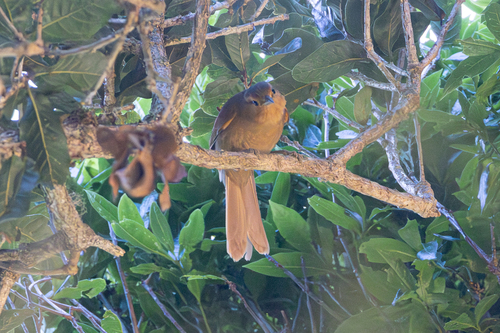
Buff-fronted Foliage-gleaner (Dendroma rufa) Buff-fronted Foliage-gleaner
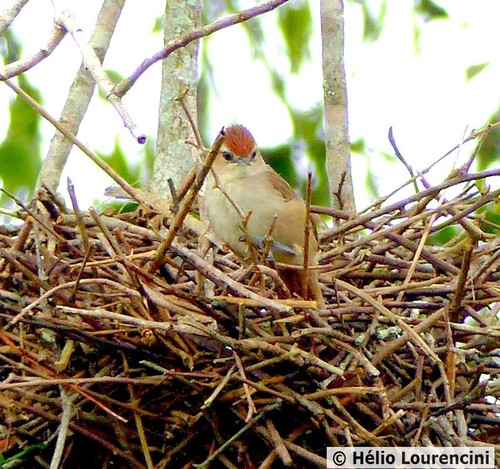
Rufous-fronted Thornbird (Phacellodomus rufifrons) Rufous-fronted Thornbird

Media

Loading…

In short

The most reliable field mark to separate Buff-fronted Foliage-gleaner from Rufous-fronted Thornbird is the combination of a broad, glowing ochraceous (buff) supercilium and forehead in the foliage-gleaner, versus a narrower, darker rufous forehead and duller buff supercilium in the thornbird. In flight or perched, the foliage-gleaner shows bright rufous wings and tail, while the thornbird’s wings and tail are duller brown with only subtle rufous tones. Juvenile Buff-fronted Foliage-gleaners have a paler crown and more rufescent underparts, but still show the ochraceous forehead band, while juvenile thornbirds lack the rufous forehead altogether and have mottled underparts. Structure also helps: the foliage-gleaner is larger and bulkier, with a stouter bill and more robust jizz, compared to the more slender, upright thornbird. Both species can overlap in range and habitat, so careful attention to these plumage and structural details is essential.

Identification tips

  1. Forehead and supercilium color (all ages): Buff-fronted Foliage-gleaner shows a broad, glowing ochraceous (buff) forehead and supercilium; Rufous-fronted Thornbird has a narrower, darker rufous forehead and a dull buff supercilium. Juvenile thornbirds lack the rufous forehead entirely.
  2. Wing and tail color (adults and immatures): Foliage-gleaner’s wings are bright rufous, contrasting with the duller brown wings of the thornbird. The foliage-gleaner’s tail is also dull rufous-brown with pointed tips, while the thornbird’s tail is dull brown, only showing rufous in some subspecies or as a patch.
  3. Juvenile plumage: Juvenile foliage-gleaner has a paler crown and more rufescent underparts, but retains a (narrower) ochraceous forehead band. Juvenile thornbird lacks any rufous on the forehead and has mottled underparts—if you see a young bird with a plain, pale forehead, it is likely a thornbird.
  4. Underparts color: Foliage-gleaner’s underparts are glowing ochraceous, especially on the throat and breast, fading to duller ochraceous on the belly and flanks. Thornbird’s underparts are brownish white with richer brownish flanks and pale undertail coverts; never as bright or uniform as the foliage-gleaner.
  5. Crown and back: Foliage-gleaner’s crown is dull brownish gray with faint streaks, and its back is ochraceous brown. Thornbird’s crown is dark brownish with some paler streaks, and its back is slightly lighter dark brown—less contrasty than the foliage-gleaner.
  6. Bill structure: Foliage-gleaner has a stouter, heavier bill, while the thornbird’s bill is more slender and straight. This is subtle but visible with good views.
  7. Size and jizz: Foliage-gleaner is larger and bulkier (18–19 cm, 25–36 g), appearing more robust and deliberate in movement. Thornbird is smaller (16–17 cm, 18–31 g), more slender, and often perches upright.
  8. Tail shape: Foliage-gleaner’s tail feathers have pointed tips; thornbird’s tail is more squared and lacks pointed tips.
  9. Facial pattern: Foliage-gleaner’s face is ochraceous with a wide supercilium and ochraceous ear coverts; thornbird’s face is pale buff-brown with a dull buff supercilium and dark grayish lores.
  10. Flight views: In flight, look for the bright rufous wings and tail of the foliage-gleaner versus the duller brown wings and tail of the thornbird. Some thornbird subspecies show a rufous patch on the flight feathers, but never as extensive as the foliage-gleaner’s rufous.
  11. Leg and foot color: Foliage-gleaner has olive to grayish green legs and feet; thornbird’s are gray. Not always visible in the field.
  12. Vocalizations: Thornbird gives high, mewing 'stjew' notes and sharp 'chip' or metallic 'tsi' calls. If you hear these, suspect thornbird. Foliage-gleaner’s voice is not described here.
  13. Habitat context: Thornbird is more likely in open, dry, or scrubby habitats and near large stick nests. Foliage-gleaner prefers denser forest and woodland interiors, especially in humid areas. Use only as supporting evidence.
  14. Iris color: Foliage-gleaner’s iris ranges from grayish brown to chestnut; thornbird’s is brown to grayish white. Subtle and not always visible.
  15. Subspecific variation: Both species have regional subspecies with slight differences in forehead and back color, but the core contrasts above remain reliable across their ranges.

Size

Buff-fronted Foliage-gleaner is distinctly larger, measuring 18–19 cm in length and weighing 25–36 g, compared to the Rufous-fronted Thornbird at 16–17 cm and 18–31 g. The foliage-gleaner appears bulkier and heavier-billed in the field, while the thornbird is more slender and slightly shorter-tailed. These size differences are subtle at a distance but become apparent with good views or direct comparison.

Plumage

Juvenile birds are a key separation point: juvenile Buff-fronted Foliage-gleaner retains a narrow ochraceous forehead band (though less broad than the adult) and has a paler crown with more rufescent underparts, while juvenile Rufous-fronted Thornbird lacks any rufous on the forehead and shows mottled underparts. In adults, the foliage-gleaner has a broad, glowing ochraceous forehead and supercilium, a dull brownish gray crown, bright rufous wings, and a dull rufous-brown tail with pointed tips. Its underparts are rich ochraceous, brightest on the throat and breast. The thornbird, by contrast, has a dark rufous forehead (not ochraceous), a dull buff supercilium, a dark brownish crown with faint streaks, and dull brown wings and tail (rufous only obvious in some subspecies or as a patch on the flight feathers). Its underparts are brownish white with richer brownish flanks and a pale undertail. Subspecific variation exists in both, but the overall contrast in forehead color and wing brightness is consistent.

Behaviour

Buff-fronted Foliage-gleaner tends to move methodically through dense foliage, often in pairs or small groups, and can appear heavy and deliberate in its movements. Rufous-fronted Thornbird is more likely to perch upright and visible, sometimes in open areas, and has a more slender, active jizz. Both species forage in similar ways, but the thornbird may be seen more frequently in open or edge habitats, and is often associated with its large stick nests.

Habitat

Both species occur in overlapping regions of South America and can be found in similar habitats, including forest edges, secondary growth, and woodland. However, Rufous-fronted Thornbird is more likely in drier, open, or scrubby habitats, and is often seen near its conspicuous stick nests. Buff-fronted Foliage-gleaner is more closely tied to denser forest and woodland interiors, especially in humid areas. Habitat alone is not diagnostic but can support identification when combined with plumage and structure.

Voice

The foliage-gleaner’s voice is not described in the provided notes, so cannot be used reliably here. Rufous-fronted Thornbird gives a distinctive, unstructured series of high, mewing 'stjew' notes, as well as sharp 'chip' or metallic 'tsi' calls. If you hear these high, mewing or metallic notes, thornbird is more likely, but absence of such calls does not confirm foliage-gleaner.

Submit a better description

Use the same sections as the comparison. Your text is published immediately.

The most reliable field mark to separate Buff-fronted Foliage-gleaner from Rufous-fronted Thornbird is the combination of a broad, glowing ochraceous (buff) supercilium and forehead in the foliage-gleaner, versus a narrower, darker rufous forehead and duller buff supercilium in the thornbird. In flight or perched, the foliage-gleaner shows bright rufous wings and tail, while the thornbird’s wings and tail are duller brown with only subtle rufous tones. Juvenile Buff-fronted Foliage-gleaners have a paler crown and more rufescent underparts, but still show the ochraceous forehead band, while juvenile thornbirds lack the rufous forehead altogether and have mottled underparts. Structure also helps: the foliage-gleaner is larger and bulkier, with a stouter bill and more robust jizz, compared to the more slender, upright thornbird. Both species can overlap in range and habitat, so careful attention to these plumage and structural details is essential.

  1. Forehead and supercilium color (all ages): Buff-fronted Foliage-gleaner shows a broad, glowing ochraceous (buff) forehead and supercilium; Rufous-fronted Thornbird has a narrower, darker rufous forehead and a dull buff supercilium. Juvenile thornbirds lack the rufous forehead entirely.
  2. Wing and tail color (adults and immatures): Foliage-gleaner’s wings are bright rufous, contrasting with the duller brown wings of the thornbird. The foliage-gleaner’s tail is also dull rufous-brown with pointed tips, while the thornbird’s tail is dull brown, only showing rufous in some subspecies or as a patch.
  3. Juvenile plumage: Juvenile foliage-gleaner has a paler crown and more rufescent underparts, but retains a (narrower) ochraceous forehead band. Juvenile thornbird lacks any rufous on the forehead and has mottled underparts—if you see a young bird with a plain, pale forehead, it is likely a thornbird.
  4. Underparts color: Foliage-gleaner’s underparts are glowing ochraceous, especially on the throat and breast, fading to duller ochraceous on the belly and flanks. Thornbird’s underparts are brownish white with richer brownish flanks and pale undertail coverts; never as bright or uniform as the foliage-gleaner.
  5. Crown and back: Foliage-gleaner’s crown is dull brownish gray with faint streaks, and its back is ochraceous brown. Thornbird’s crown is dark brownish with some paler streaks, and its back is slightly lighter dark brown—less contrasty than the foliage-gleaner.
  6. Bill structure: Foliage-gleaner has a stouter, heavier bill, while the thornbird’s bill is more slender and straight. This is subtle but visible with good views.
  7. Size and jizz: Foliage-gleaner is larger and bulkier (18–19 cm, 25–36 g), appearing more robust and deliberate in movement. Thornbird is smaller (16–17 cm, 18–31 g), more slender, and often perches upright.
  8. Tail shape: Foliage-gleaner’s tail feathers have pointed tips; thornbird’s tail is more squared and lacks pointed tips.
  9. Facial pattern: Foliage-gleaner’s face is ochraceous with a wide supercilium and ochraceous ear coverts; thornbird’s face is pale buff-brown with a dull buff supercilium and dark grayish lores.
  10. Flight views: In flight, look for the bright rufous wings and tail of the foliage-gleaner versus the duller brown wings and tail of the thornbird. Some thornbird subspecies show a rufous patch on the flight feathers, but never as extensive as the foliage-gleaner’s rufous.
  11. Leg and foot color: Foliage-gleaner has olive to grayish green legs and feet; thornbird’s are gray. Not always visible in the field.
  12. Vocalizations: Thornbird gives high, mewing 'stjew' notes and sharp 'chip' or metallic 'tsi' calls. If you hear these, suspect thornbird. Foliage-gleaner’s voice is not described here.
  13. Habitat context: Thornbird is more likely in open, dry, or scrubby habitats and near large stick nests. Foliage-gleaner prefers denser forest and woodland interiors, especially in humid areas. Use only as supporting evidence.
  14. Iris color: Foliage-gleaner’s iris ranges from grayish brown to chestnut; thornbird’s is brown to grayish white. Subtle and not always visible.
  15. Subspecific variation: Both species have regional subspecies with slight differences in forehead and back color, but the core contrasts above remain reliable across their ranges.

Buff-fronted Foliage-gleaner is distinctly larger, measuring 18–19 cm in length and weighing 25–36 g, compared to the Rufous-fronted Thornbird at 16–17 cm and 18–31 g. The foliage-gleaner appears bulkier and heavier-billed in the field, while the thornbird is more slender and slightly shorter-tailed. These size differences are subtle at a distance but become apparent with good views or direct comparison.

Juvenile birds are a key separation point: juvenile Buff-fronted Foliage-gleaner retains a narrow ochraceous forehead band (though less broad than the adult) and has a paler crown with more rufescent underparts, while juvenile Rufous-fronted Thornbird lacks any rufous on the forehead and shows mottled underparts. In adults, the foliage-gleaner has a broad, glowing ochraceous forehead and supercilium, a dull brownish gray crown, bright rufous wings, and a dull rufous-brown tail with pointed tips. Its underparts are rich ochraceous, brightest on the throat and breast. The thornbird, by contrast, has a dark rufous forehead (not ochraceous), a dull buff supercilium, a dark brownish crown with faint streaks, and dull brown wings and tail (rufous only obvious in some subspecies or as a patch on the flight feathers). Its underparts are brownish white with richer brownish flanks and a pale undertail. Subspecific variation exists in both, but the overall contrast in forehead color and wing brightness is consistent.

Buff-fronted Foliage-gleaner tends to move methodically through dense foliage, often in pairs or small groups, and can appear heavy and deliberate in its movements. Rufous-fronted Thornbird is more likely to perch upright and visible, sometimes in open areas, and has a more slender, active jizz. Both species forage in similar ways, but the thornbird may be seen more frequently in open or edge habitats, and is often associated with its large stick nests.

Both species occur in overlapping regions of South America and can be found in similar habitats, including forest edges, secondary growth, and woodland. However, Rufous-fronted Thornbird is more likely in drier, open, or scrubby habitats, and is often seen near its conspicuous stick nests. Buff-fronted Foliage-gleaner is more closely tied to denser forest and woodland interiors, especially in humid areas. Habitat alone is not diagnostic but can support identification when combined with plumage and structure.

The foliage-gleaner’s voice is not described in the provided notes, so cannot be used reliably here. Rufous-fronted Thornbird gives a distinctive, unstructured series of high, mewing 'stjew' notes, as well as sharp 'chip' or metallic 'tsi' calls. If you hear these high, mewing or metallic notes, thornbird is more likely, but absence of such calls does not confirm foliage-gleaner.

Discard your changes?

You have unsaved edits. If you leave now, those changes will be lost.

Buff-fronted Foliage-gleaner · Rufous-fronted Thornbird · My Tricky Birds