

Brown-headed Gull vs Pallas's Gull
Chroicocephalus brunnicephalus versus Ichthyaetus ichthyaetus
Play a quiz with Brown-headed Gull and Pallas's Gull
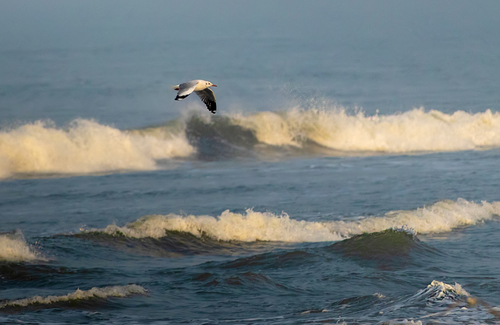 Brown-headed Gull
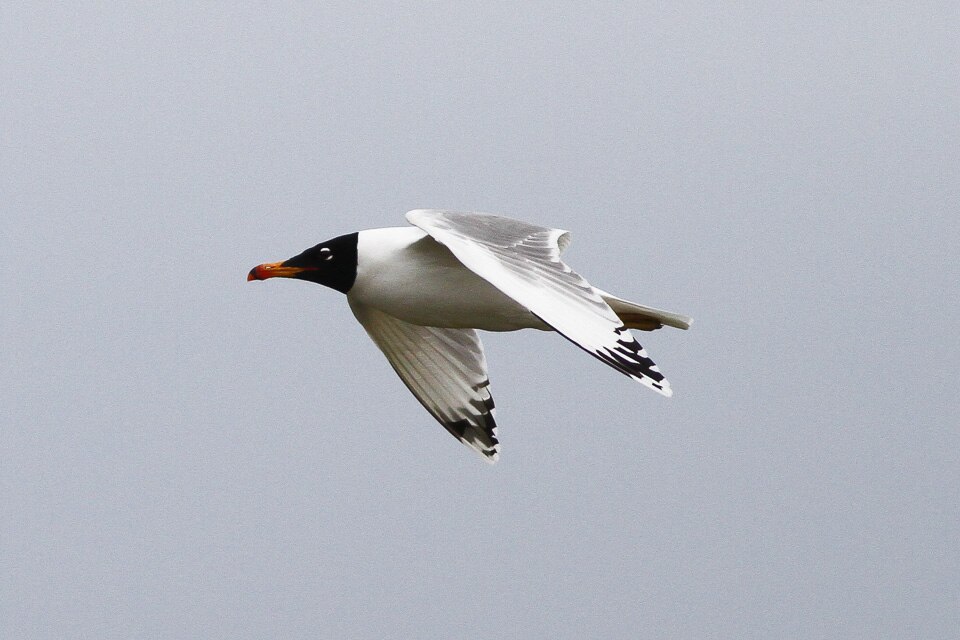 Pallas's Gull
In short
The most reliable field mark between Brown-headed Gull and Pallas's Gull is size: Pallas's Gull is vastly larger, with a bulk and wingspan that dwarf any Brown-headed Gull. In flight, first-year Brown-headed Gulls show a black tail band and more extensive dark in the wings, while Pallas's Gull immatures rapidly develop grey upperparts and take four years to mature. Adult summer birds differ in hood color—Brown-headed has a pale brown head and red bill/legs, while Pallas's is strikingly black-hooded with yellow legs and a hefty yellow bill tipped red. Structure is also a giveaway: Pallas's Gull is massive and long-winged, with a thick bill and long tarsi, compared to the daintier Brown-headed. If you see a black-hooded gull with yellow legs and a huge, powerful build, it's Pallas's; a smaller, red-legged, brown-hooded bird is Brown-headed.
Identification tips
- Size is the first check: Pallas's Gull is enormous, with a wingspan and bulk that make Brown-headed look small even at a distance. If the bird looks as big as a Great Black-backed Gull, it's Pallas's.
- Bill and leg color: Adult Brown-headed has a red bill and legs; Pallas's has yellow legs and a thick yellow bill with a red tip. This is visible at moderate range.
- Hood color in summer: Brown-headed's hood is pale brown; Pallas's is jet black. No other large gull has a black hood.
- Winter head pattern: In winter, Brown-headed loses its hood, showing only dark vertical streaks; Pallas's loses the full hood but retains a dark mask through the eye.
- Juvenile/first-year tail and wing pattern: Brown-headed juveniles/first-years have a black tail band and more extensive dark in the wings. Pallas's immatures lack this tail band and instead develop grey upperparts quickly.
- Maturity timing: Brown-headed matures in two years; Pallas's takes four. Immature Pallas's may show a mix of grey and brown upperparts for several years, but will always be very large.
- White wing 'mirrors': Both have white mirrors at the wingtips, so this is not a separator.
- Underwing color: Brown-headed has grey underwings with black flight feathers; Pallas's is similar but much larger—use size and structure.
- Leg length and stance: Pallas's has long tarsi and stands tall; Brown-headed is shorter-legged and more compact.
- Bill shape: Pallas's bill is thick, long, and powerful, with a distinct red tip; Brown-headed's is finer and all red.
- Behavior in flocks: Brown-headed is gregarious and often in large flocks; Pallas's is usually solitary or in small numbers.
- Habitat context: In South Asia, Brown-headed is common on lakes and coasts in winter; Pallas's is much rarer and more local.
- Voice: If heard, Pallas's gives a deep 'aargh' unlike the typical gull calls of Brown-headed.
- Jizz in flight: Pallas's is long-winged, heavy, and powerful in flight; Brown-headed is quick, agile, and compact.
- Pitfalls: Do not confuse a distant Pallas's with a close Brown-headed—always check for the massive size, thick bill, and yellow legs of Pallas's.
Size
Pallas's Gull is one of the largest gulls in the world, with an average adult mass of about 1394 g [wikidata], a length of 55–72 cm, and a wingspan of 142–170 cm [wikipedia]. Brown-headed Gull is much smaller—described as only slightly larger than Black-headed Gull, which is less than half the mass and wingspan of Pallas's. In any direct comparison, Pallas's appears gigantic, with a thick neck, long bill, and long legs, while Brown-headed is a small, compact gull with finer features. Even at a distance, the sheer bulk and wingspan of Pallas's are diagnostic.
Plumage
Juvenile and first-year Brown-headed Gulls show a black terminal tail band and more extensive dark in the wings, with a less uniform hood in first-summer birds. These age-specific marks are absent in Pallas's Gull, which instead develops grey upperparts quickly but takes four years to reach full adult plumage. Adult summer Brown-headed Gulls have a pale brown hood (lighter than Black-headed Gull), pale grey body, and red bill and legs; in winter, the hood is lost, leaving only dark vertical streaks. Pallas's Gull adults in summer are unmistakable: a jet-black hood, grey wings and back, yellow legs, and a heavy yellow bill with a red tip. In all other plumages, Pallas's shows a dark mask through the eye, a vestige of the hood. Both species have white 'mirrors' at the wingtips, but the overall contrast and color of the hood and bare parts are key. Underwings of Brown-headed are grey with black flight feathers; Pallas's has similar grey wings but is much larger and bulkier in all plumages.
Behaviour
Brown-headed Gull is highly gregarious in winter, often seen in large flocks feeding or roosting, and is bold in scavenging, even in urban settings. Pallas's Gull, while not described in detail here, is less likely to be seen in large, dense flocks and stands out by its size and more stately, powerful movements. Both species are not truly pelagic and are rarely seen far from coasts or large lakes.
Habitat
Both species breed inland, but Brown-headed Gull nests in high plateau reedbeds, marshes, or lake islands in central Asia, and winters widely on coasts and large inland lakes of the Indian subcontinent. Pallas's Gull's habitat is not detailed here, but both are associated with large water bodies rather than open sea. In winter, Brown-headed is common in large flocks on lakes and coasts, while Pallas's is much scarcer and more localized.
Voice
Pallas's Gull has a deep, harsh 'aargh' cry. Brown-headed Gull is described as noisy, especially at colonies, but no specific call is given. In mixed flocks, the deep, resonant call of Pallas's may stand out from the higher-pitched, more typical gull calls of Brown-headed.