
Motmot

Brown-breasted Flycatcher vs Indian Robin

Muscicapa muttui versus Copsychus fulicatus

Play a quiz with Brown-breasted Flycatcher and Indian Robin
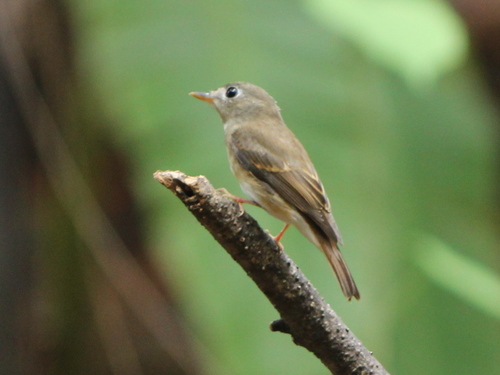
Brown-breasted Flycatcher (Muscicapa muttui) Brown-breasted Flycatcher
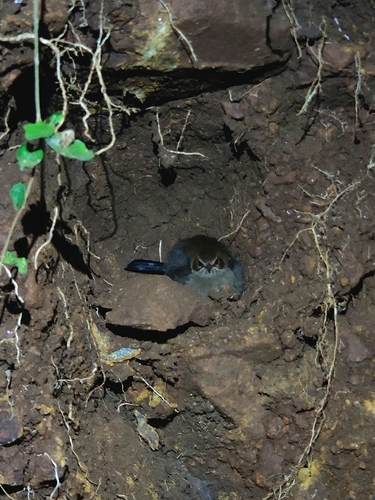
Indian Robin (Copsychus fulicatus) Indian Robin

Media

Loading…

In short

The most reliable field mark to separate Brown-breasted Flycatcher from Indian Robin is overall structure and plumage contrast: the flycatcher is a small, compact bird with olive-brown upperparts, pale underparts, and a conspicuous pale eye ring, while the Indian Robin is more upright, with males showing striking black or brownish upperparts (depending on region), a white shoulder patch (males only), and rich chestnut undertail coverts. Juvenile and female Indian Robins are brownish but still bulkier and longer-tailed than the flycatcher. In flight or perched, the flycatcher’s subtle rufous tones on tail and wing edges never approach the robin’s bold chestnut undertail. Leg color is a key detail: Brown-breasted Flycatcher has pale flesh-colored legs, while Indian Robin’s are dark. If you see a bird sallying low in forest shade, it’s likely the flycatcher; if it’s strutting or tail-cocking in open country, it’s the robin.

Identification tips

  1. Leg color: Brown-breasted Flycatcher has pale flesh-colored legs; Indian Robin has dark legs. This is a reliable mark at close range.
  2. Tail and undertail coverts: Indian Robin always shows rich chestnut undertail coverts, especially when tail is cocked; flycatcher’s rufous is limited to tail edges and never forms a solid patch.
  3. Eye ring: Flycatcher has a conspicuous pale eye ring; robin lacks this feature.
  4. Overall structure: Flycatcher is small, compact, with a short tail and delicate bill; robin is larger, upright, and long-tailed.
  5. White shoulder patch: Male Indian Robins have a white shoulder patch or stripe (variable with posture); absent in flycatcher and in female/juvenile robins.
  6. Plumage contrast: Flycatcher is olive-brown above, pale below, with subtle rufous on tail edges; robin males are black or brown above (depending on region), females and juveniles are brownish but still bulkier.
  7. Behavior: Flycatcher forages quietly in shady forest, rarely flicks tail; robin is active, perches in the open, and often cocks tail upright.
  8. Habitat: Flycatcher is a forest bird, especially below canopy; robin is found in open country, gardens, and rocky areas.
  9. Vocalization: Flycatcher’s call is a faint tseet or chi-chi-chi-chi, barely audible; robin’s song is louder, more musical, and often heard during breeding season.
  10. Breast and belly color: Flycatcher has a pale brown breast and buffy white belly; robin females and juveniles are greyish below with paler chestnut vent.
  11. Bill: Flycatcher’s bill is fine and typical of insectivorous flycatchers; robin’s bill is stouter.
  12. Flight style: Flycatcher makes short, direct sallies from low perches; robin flies with slow wingbeats between perches, often in open.
  13. Sexual dimorphism: Only robin shows strong sexual dimorphism (males with white shoulder and black/brown upperparts); flycatcher sexes are similar.
  14. Juvenile confusion: Juvenile robins may be confused with flycatcher due to brownish tones, but remain bulkier, longer-tailed, and lack the flycatcher’s pale eye ring and subtle plumage.
  15. Context: If observed in dense forest, especially in the shade, suspect flycatcher; in open or semi-open areas, robin is far more likely.

Size

Brown-breasted Flycatcher is noticeably smaller and lighter, with a body mass around 12 g and a length of 13–14 cm. Indian Robin is larger and bulkier, with a noticeably longer tail (6–8 cm) and a more upright posture. The robin’s size and shape are more reminiscent of a small thrush or chat, while the flycatcher is compact and delicate, typical of Muscicapa flycatchers.

Plumage

Juvenile and female Indian Robins are brownish above and greyish below, with a paler chestnut vent, but they remain bulkier and longer-tailed than the flycatcher. Males are strikingly different: northern males have brown backs, southern males are all black above, both with a white shoulder patch and rich chestnut undertail coverts (always visible when the tail is raised). Brown-breasted Flycatcher of all ages is olive-brown above with subtle rufous on tail and wing edges, a pale eye ring, and pale underparts (white throat, pale brown breast, buffy belly). The flycatcher’s plumage is always soft and subdued, never showing the robin’s bold contrasts or white shoulder. The flycatcher’s rufous is limited to the tail edges and upper tail coverts, never forming a solid patch. No distinctive upperwing pattern is noted for either species in juvenile or adult plumage.

Behaviour

Brown-breasted Flycatcher is typically seen foraging quietly below the forest canopy, often near the ground, making short sallies for insects. It perches unobtrusively and rarely flicks its tail. Indian Robin is much more conspicuous, often found in open country, perched prominently on rocks or walls, and frequently cocking its long tail upright to display chestnut undertail coverts. Males may sing and display by strutting and fluffing undertail coverts, especially during breeding season.

Habitat

Brown-breasted Flycatcher prefers forested habitats, especially shady areas below the canopy, and is rarely seen in open country. Indian Robin is widespread in open habitats across the Indian subcontinent, including scrub, gardens, rocky areas, and even urban settings. If you find the bird in dense forest, it is much more likely to be the flycatcher; in open or human-modified landscapes, the robin is expected.

Voice

Brown-breasted Flycatcher has a very faint tseet, only audible at close range, and a series of chi-chi-chi-chi notes ending with a low chit-chit. Indian Robin males sing more complex songs, especially during breeding season, with variants for mate attraction and territory defense. The robin’s song is louder and more musical, while the flycatcher’s calls are soft and easily missed.

Submit a better description

Use the same sections as the comparison. Your text is published immediately.

The most reliable field mark to separate Brown-breasted Flycatcher from Indian Robin is overall structure and plumage contrast: the flycatcher is a small, compact bird with olive-brown upperparts, pale underparts, and a conspicuous pale eye ring, while the Indian Robin is more upright, with males showing striking black or brownish upperparts (depending on region), a white shoulder patch (males only), and rich chestnut undertail coverts. Juvenile and female Indian Robins are brownish but still bulkier and longer-tailed than the flycatcher. In flight or perched, the flycatcher’s subtle rufous tones on tail and wing edges never approach the robin’s bold chestnut undertail. Leg color is a key detail: Brown-breasted Flycatcher has pale flesh-colored legs, while Indian Robin’s are dark. If you see a bird sallying low in forest shade, it’s likely the flycatcher; if it’s strutting or tail-cocking in open country, it’s the robin.

  1. Leg color: Brown-breasted Flycatcher has pale flesh-colored legs; Indian Robin has dark legs. This is a reliable mark at close range.
  2. Tail and undertail coverts: Indian Robin always shows rich chestnut undertail coverts, especially when tail is cocked; flycatcher’s rufous is limited to tail edges and never forms a solid patch.
  3. Eye ring: Flycatcher has a conspicuous pale eye ring; robin lacks this feature.
  4. Overall structure: Flycatcher is small, compact, with a short tail and delicate bill; robin is larger, upright, and long-tailed.
  5. White shoulder patch: Male Indian Robins have a white shoulder patch or stripe (variable with posture); absent in flycatcher and in female/juvenile robins.
  6. Plumage contrast: Flycatcher is olive-brown above, pale below, with subtle rufous on tail edges; robin males are black or brown above (depending on region), females and juveniles are brownish but still bulkier.
  7. Behavior: Flycatcher forages quietly in shady forest, rarely flicks tail; robin is active, perches in the open, and often cocks tail upright.
  8. Habitat: Flycatcher is a forest bird, especially below canopy; robin is found in open country, gardens, and rocky areas.
  9. Vocalization: Flycatcher’s call is a faint tseet or chi-chi-chi-chi, barely audible; robin’s song is louder, more musical, and often heard during breeding season.
  10. Breast and belly color: Flycatcher has a pale brown breast and buffy white belly; robin females and juveniles are greyish below with paler chestnut vent.
  11. Bill: Flycatcher’s bill is fine and typical of insectivorous flycatchers; robin’s bill is stouter.
  12. Flight style: Flycatcher makes short, direct sallies from low perches; robin flies with slow wingbeats between perches, often in open.
  13. Sexual dimorphism: Only robin shows strong sexual dimorphism (males with white shoulder and black/brown upperparts); flycatcher sexes are similar.
  14. Juvenile confusion: Juvenile robins may be confused with flycatcher due to brownish tones, but remain bulkier, longer-tailed, and lack the flycatcher’s pale eye ring and subtle plumage.
  15. Context: If observed in dense forest, especially in the shade, suspect flycatcher; in open or semi-open areas, robin is far more likely.

Brown-breasted Flycatcher is noticeably smaller and lighter, with a body mass around 12 g and a length of 13–14 cm. Indian Robin is larger and bulkier, with a noticeably longer tail (6–8 cm) and a more upright posture. The robin’s size and shape are more reminiscent of a small thrush or chat, while the flycatcher is compact and delicate, typical of Muscicapa flycatchers.

Juvenile and female Indian Robins are brownish above and greyish below, with a paler chestnut vent, but they remain bulkier and longer-tailed than the flycatcher. Males are strikingly different: northern males have brown backs, southern males are all black above, both with a white shoulder patch and rich chestnut undertail coverts (always visible when the tail is raised). Brown-breasted Flycatcher of all ages is olive-brown above with subtle rufous on tail and wing edges, a pale eye ring, and pale underparts (white throat, pale brown breast, buffy belly). The flycatcher’s plumage is always soft and subdued, never showing the robin’s bold contrasts or white shoulder. The flycatcher’s rufous is limited to the tail edges and upper tail coverts, never forming a solid patch. No distinctive upperwing pattern is noted for either species in juvenile or adult plumage.

Brown-breasted Flycatcher is typically seen foraging quietly below the forest canopy, often near the ground, making short sallies for insects. It perches unobtrusively and rarely flicks its tail. Indian Robin is much more conspicuous, often found in open country, perched prominently on rocks or walls, and frequently cocking its long tail upright to display chestnut undertail coverts. Males may sing and display by strutting and fluffing undertail coverts, especially during breeding season.

Brown-breasted Flycatcher prefers forested habitats, especially shady areas below the canopy, and is rarely seen in open country. Indian Robin is widespread in open habitats across the Indian subcontinent, including scrub, gardens, rocky areas, and even urban settings. If you find the bird in dense forest, it is much more likely to be the flycatcher; in open or human-modified landscapes, the robin is expected.

Brown-breasted Flycatcher has a very faint tseet, only audible at close range, and a series of chi-chi-chi-chi notes ending with a low chit-chit. Indian Robin males sing more complex songs, especially during breeding season, with variants for mate attraction and territory defense. The robin’s song is louder and more musical, while the flycatcher’s calls are soft and easily missed.

Discard your changes?

You have unsaved edits. If you leave now, those changes will be lost.

Brown-breasted Flycatcher · Indian Robin · My Tricky Birds