
Motmot

Broad-winged Hawk vs Zone-tailed Hawk

Buteo platypterus versus Buteo albonotatus

Play a quiz with Broad-winged Hawk and Zone-tailed Hawk
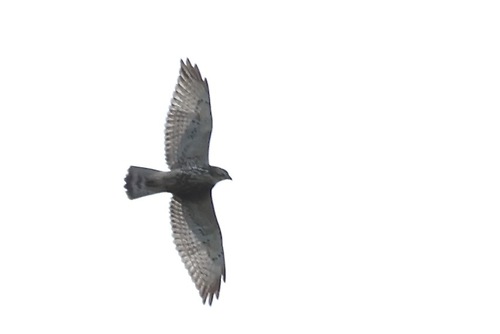
Broad-winged Hawk (Buteo platypterus) Broad-winged Hawk
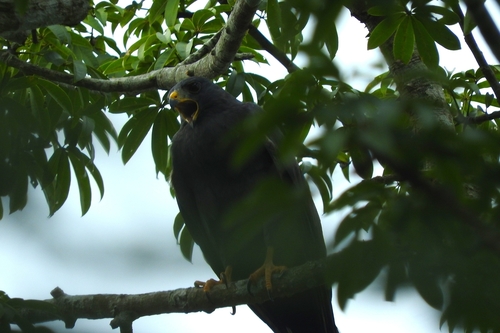
Zone-tailed Hawk (Buteo albonotatus) Zone-tailed Hawk

Media

Loading…

In short

The most reliable way to separate Broad-winged Hawk from Zone-tailed Hawk is by overall structure and flight pattern: Broad-winged is a compact, short-tailed, broad-winged raptor, while Zone-tailed is larger, more slender, and long-winged, often mimicking the flight style of turkey vultures. Immature birds can be tricky, but note that Broad-winged juveniles show more white and longitudinal barring below, while Zone-tailed immatures have small white spots on the breast and a tail with multiple narrow bands and a broad dark tip. In flight, Zone-tailed's long, banded tail and dihedral soaring posture are key, versus Broad-winged's shorter tail and flatter, paddle-shaped wings. Adult plumage is also distinctive: Broad-winged adults are brown above with a white belly and horizontal barring, while Zone-tailed adults are mostly blackish with striking pale tail bands.

Identification tips

  1. Overall size and structure: Zone-tailed is much larger and longer-winged than Broad-winged. If the bird looks compact and short-tailed, Broad-winged is more likely; if it looks long and slender, consider Zone-tailed.
  2. Tail shape and pattern in flight: Broad-winged shows a short, squared tail with 2–3 white bands; Zone-tailed has a longer tail with 3–4 pale bands, the second from the tip being broadest and most obvious. Immature Zone-tailed has a broad dark tip to the tail.
  3. Wing shape and posture: Broad-winged has short, broad wings with a unique tapered look and soars with wings held flat. Zone-tailed has long wings and soars with wings in a dihedral (V-shape), often rocking side to side like a turkey vulture.
  4. Flight mimicry: If the bird is soaring with vultures and mimicking their flight style, it's likely a Zone-tailed Hawk. Broad-winged does not mimic vultures and is rarely seen in mixed vulture flocks.
  5. Plumage – adults: Broad-winged adults are brown above, with a white belly and horizontal barring. Zone-tailed adults are blackish overall, with paler, barred flight feathers and a strikingly banded tail.
  6. Plumage – immatures/juveniles: Juvenile Broad-winged is paler below with more white and vertical streaks; juvenile Zone-tailed is darker, with small white spots on the breast and a tail with multiple narrow bands and a broad dark tip.
  7. Underwing pattern: Zone-tailed's flight feathers are barred lighter gray, sometimes appearing silvery, contrasting with dark coverts; Broad-winged lacks this silvery effect and shows a more uniform underwing.
  8. Dark morph confusion: Rare dark-morph Broad-winged can resemble Zone-tailed, but usually show more white under the tail and only a single subterminal band, unlike the multiple broad bands of Zone-tailed.
  9. Perched appearance: Broad-winged appears compact and short-tailed when perched; Zone-tailed looks longer and more slender, with a proportionally longer tail.
  10. Leg and cere color: Zone-tailed has yellow legs and cere, with light gray lores and sometimes a touch of white on the face; Broad-winged's bare part colors are less distinctive in the field.
  11. Habitat context: In eastern forests, Broad-winged is expected; in arid or canyon habitats, especially in the southwestern US or Mexico, Zone-tailed is more likely.
  12. Season and range: Broad-winged is migratory and absent from most of the Zone-tailed's range outside migration/winter; check local abundance on eBird if unsure.
  13. Group behavior: Zone-tailed may soar with vultures in kettles; Broad-winged typically does not.
  14. Sexual dimorphism: Both species show little obvious sexual dimorphism in the field, though female Zone-taileds are heavier.
  15. When in doubt: Focus on tail banding, flight style, and overall structure—these are the most reliable field marks for all ages.

Size

Zone-tailed Hawk is significantly larger and heavier than Broad-winged Hawk, with a body mass averaging around 762.5 g (and up to 1,080 g in large females), compared to Broad-winged's 265–560 g. Zone-tailed is also longer (46–56 cm vs. 32–44 cm) and has a much greater wingspan (117–140 cm vs. 74–100 cm). Broad-winged is a compact, small Buteo with a relatively short tail and short, broad wings, while Zone-tailed is a large, slender Buteo with a long tail and long wings.

Plumage

Juvenile Broad-winged Hawks are paler below with more white and vertical (longitudinal) streaking, while immature Zone-tailed Hawks have small white spots on the breast and a tail with several narrow gray and black bands plus a broad dark tip. Adult Broad-winged Hawks are brown above, with a white belly and chest marked by horizontal barring, and a dark tail with 2–3 white bands. Adult Zone-tailed Hawks are mostly blackish, with flight feathers barred lighter gray (sometimes appearing silvery), and a tail with 3–4 pale bands (the second from the tip is broadest and most obvious). Broad-winged has a shorter, more squared tail, while Zone-tailed's tail is longer and more obviously banded. Dark morph Broad-winged Hawks are rare and can be confused with Zone-tailed, but usually show more white under the tail and a single subterminal band, unlike the multiple broad bands of Zone-tailed.

Behaviour

Zone-tailed Hawks often mimic turkey vultures in flight, soaring with wings held in a dihedral (V-shape) and rocking side to side, sometimes joining vulture flocks. Broad-winged Hawks soar with flatter, paddle-shaped wings and do not mimic vultures. Both are Buteos and may be seen soaring, but Zone-tailed's flight style is more distinctive. Perched, Broad-winged appears compact and short-tailed, while Zone-tailed looks longer and more slender.

Habitat

Broad-winged Hawks breed in eastern North America, favoring deciduous forests, and migrate to the Neotropics for winter. Zone-tailed Hawks are found in warm, dry regions of the Americas, often in arid or semi-arid habitats, and may be seen soaring over canyons, deserts, or open woodlands. Overlap is limited, but in migration or winter, Broad-winged may occur in areas where Zone-tailed is resident.

Submit a better description

Use the same sections as the comparison. Your text is published immediately.

The most reliable way to separate Broad-winged Hawk from Zone-tailed Hawk is by overall structure and flight pattern: Broad-winged is a compact, short-tailed, broad-winged raptor, while Zone-tailed is larger, more slender, and long-winged, often mimicking the flight style of turkey vultures. Immature birds can be tricky, but note that Broad-winged juveniles show more white and longitudinal barring below, while Zone-tailed immatures have small white spots on the breast and a tail with multiple narrow bands and a broad dark tip. In flight, Zone-tailed's long, banded tail and dihedral soaring posture are key, versus Broad-winged's shorter tail and flatter, paddle-shaped wings. Adult plumage is also distinctive: Broad-winged adults are brown above with a white belly and horizontal barring, while Zone-tailed adults are mostly blackish with striking pale tail bands.

  1. Overall size and structure: Zone-tailed is much larger and longer-winged than Broad-winged. If the bird looks compact and short-tailed, Broad-winged is more likely; if it looks long and slender, consider Zone-tailed.
  2. Tail shape and pattern in flight: Broad-winged shows a short, squared tail with 2–3 white bands; Zone-tailed has a longer tail with 3–4 pale bands, the second from the tip being broadest and most obvious. Immature Zone-tailed has a broad dark tip to the tail.
  3. Wing shape and posture: Broad-winged has short, broad wings with a unique tapered look and soars with wings held flat. Zone-tailed has long wings and soars with wings in a dihedral (V-shape), often rocking side to side like a turkey vulture.
  4. Flight mimicry: If the bird is soaring with vultures and mimicking their flight style, it's likely a Zone-tailed Hawk. Broad-winged does not mimic vultures and is rarely seen in mixed vulture flocks.
  5. Plumage – adults: Broad-winged adults are brown above, with a white belly and horizontal barring. Zone-tailed adults are blackish overall, with paler, barred flight feathers and a strikingly banded tail.
  6. Plumage – immatures/juveniles: Juvenile Broad-winged is paler below with more white and vertical streaks; juvenile Zone-tailed is darker, with small white spots on the breast and a tail with multiple narrow bands and a broad dark tip.
  7. Underwing pattern: Zone-tailed's flight feathers are barred lighter gray, sometimes appearing silvery, contrasting with dark coverts; Broad-winged lacks this silvery effect and shows a more uniform underwing.
  8. Dark morph confusion: Rare dark-morph Broad-winged can resemble Zone-tailed, but usually show more white under the tail and only a single subterminal band, unlike the multiple broad bands of Zone-tailed.
  9. Perched appearance: Broad-winged appears compact and short-tailed when perched; Zone-tailed looks longer and more slender, with a proportionally longer tail.
  10. Leg and cere color: Zone-tailed has yellow legs and cere, with light gray lores and sometimes a touch of white on the face; Broad-winged's bare part colors are less distinctive in the field.
  11. Habitat context: In eastern forests, Broad-winged is expected; in arid or canyon habitats, especially in the southwestern US or Mexico, Zone-tailed is more likely.
  12. Season and range: Broad-winged is migratory and absent from most of the Zone-tailed's range outside migration/winter; check local abundance on eBird if unsure.
  13. Group behavior: Zone-tailed may soar with vultures in kettles; Broad-winged typically does not.
  14. Sexual dimorphism: Both species show little obvious sexual dimorphism in the field, though female Zone-taileds are heavier.
  15. When in doubt: Focus on tail banding, flight style, and overall structure—these are the most reliable field marks for all ages.

Zone-tailed Hawk is significantly larger and heavier than Broad-winged Hawk, with a body mass averaging around 762.5 g (and up to 1,080 g in large females), compared to Broad-winged's 265–560 g. Zone-tailed is also longer (46–56 cm vs. 32–44 cm) and has a much greater wingspan (117–140 cm vs. 74–100 cm). Broad-winged is a compact, small Buteo with a relatively short tail and short, broad wings, while Zone-tailed is a large, slender Buteo with a long tail and long wings.

Juvenile Broad-winged Hawks are paler below with more white and vertical (longitudinal) streaking, while immature Zone-tailed Hawks have small white spots on the breast and a tail with several narrow gray and black bands plus a broad dark tip. Adult Broad-winged Hawks are brown above, with a white belly and chest marked by horizontal barring, and a dark tail with 2–3 white bands. Adult Zone-tailed Hawks are mostly blackish, with flight feathers barred lighter gray (sometimes appearing silvery), and a tail with 3–4 pale bands (the second from the tip is broadest and most obvious). Broad-winged has a shorter, more squared tail, while Zone-tailed's tail is longer and more obviously banded. Dark morph Broad-winged Hawks are rare and can be confused with Zone-tailed, but usually show more white under the tail and a single subterminal band, unlike the multiple broad bands of Zone-tailed.

Zone-tailed Hawks often mimic turkey vultures in flight, soaring with wings held in a dihedral (V-shape) and rocking side to side, sometimes joining vulture flocks. Broad-winged Hawks soar with flatter, paddle-shaped wings and do not mimic vultures. Both are Buteos and may be seen soaring, but Zone-tailed's flight style is more distinctive. Perched, Broad-winged appears compact and short-tailed, while Zone-tailed looks longer and more slender.

Broad-winged Hawks breed in eastern North America, favoring deciduous forests, and migrate to the Neotropics for winter. Zone-tailed Hawks are found in warm, dry regions of the Americas, often in arid or semi-arid habitats, and may be seen soaring over canyons, deserts, or open woodlands. Overlap is limited, but in migration or winter, Broad-winged may occur in areas where Zone-tailed is resident.

Discard your changes?

You have unsaved edits. If you leave now, those changes will be lost.

Broad-winged Hawk · Zone-tailed Hawk · My Tricky Birds