

Motmot

Broad-billed Prion vs Antarctic Prion

Pachyptila vittata versus Pachyptila desolata

Play a quiz with Broad-billed Prion and Antarctic Prion
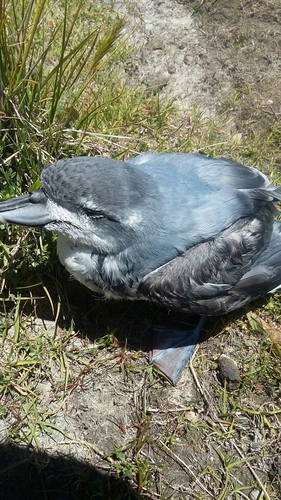
Broad-billed Prion (Pachyptila vittata) Broad-billed Prion
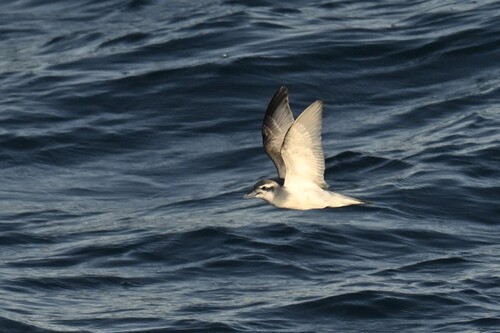
Antarctic Prion (Pachyptila desolata) Antarctic Prion

Media

Loading…

In short

The most reliable field mark to separate Broad-billed Prion from Antarctic Prion is the bill: Broad-billed Prion has a much heavier, broader bill that often looks iron-grey or blackish, while Antarctic Prion's bill is slimmer and blue-grey. Both species are very similar in plumage, with blue-grey upperparts, white underparts, and a dark 'M' across the wings, but Broad-billed Prion tends to have a more distinct head pattern and a less extensive tail band. Size overlaps, but Broad-billed Prion is generally heavier and slightly larger. In the field, focus on bill structure and subtle head and tail pattern differences, as plumage and flight style are otherwise very close.

Identification tips

  1. Bill shape and size: Broad-billed Prion has a noticeably broader, heavier bill—often appearing iron-grey or blackish from a distance. Antarctic Prion's bill is slimmer and blue-grey. This is the most consistent field mark, especially at close range or in good light.
  2. Head pattern: Broad-billed Prion shows a more distinct head pattern with a strong grey crown and a dark eye-stripe, while Antarctic Prion has a white eyebrow and a less contrasting crown. Use this in good viewing conditions, but beware of light and feather wear.
  3. Tail band: Broad-billed Prion has a less extensive black tail band, whereas Antarctic Prion's tail is described as a grey wedge with a black tip. This is subtle and often hard to judge unless the bird fans its tail.
  4. Greater covert coloration: Antarctic Prion's greater coverts are described as near black, but this is not flagged as a difference from Broad-billed Prion—so do not rely on this mark.
  5. Feet color: Antarctic Prion has blue feet, but this is rarely visible in the field.
  6. Bill color: Antarctic Prion's bill is blue-grey, Broad-billed Prion's is iron-grey to blackish. Color can be hard to judge at sea, but the shape is more reliable.
  7. Size and bulk: Broad-billed Prion is heavier and slightly bulkier, but size overlap is significant. Only use this if you have a direct comparison.
  8. Flight style: Both species have similar flight patterns—buoyant and gliding—so this is not diagnostic.
  9. Plumage pattern: Both have blue-grey upperparts, white underparts, and a dark 'M' across the upperwings and back. Do not use these marks to separate them.
  10. Juvenile/immature plumage: No distinctive age-specific upperwing or flight marks are described for either species, so age does not aid separation.
  11. Context: Both are pelagic and overlap in range; context does not help.
  12. Sex: Sexes are alike in both species.
  13. Behavior at sea: Broad-billed Prion may be seen hydroplaning with its bill in the water, but this is not exclusive.
  14. Association with boats: Neither species is a regular follower of fishing boats.
  15. When in doubt: If the bill appears exceptionally broad and heavy, favor Broad-billed Prion; if slimmer and blue-grey, favor Antarctic Prion. If the view is poor or distant, it may not be possible to separate them reliably.

Size

Broad-billed Prion is the largest prion, measuring 25–30 cm in length with a wingspan of 57–66 cm and weighing 160–235 g. Antarctic Prion is also large for a prion, at about 27 cm in length, wingspan 61–66 cm, and mass 150–160 g. While their lengths and wingspans overlap, Broad-billed Prion is typically heavier and bulkier, but this difference is subtle and not always apparent in the field unless seen side-by-side. Both are larger than most other prions, but Broad-billed Prion is the more robust of the two.

Plumage

Both species share the classic prion look: blue-grey upperparts, white underparts, and a dark 'M' across the upperwings and back. There are no age-specific upperwing patterns noted for either species that allow for easy separation in flight, even among juveniles or immatures. Broad-billed Prion shows a more distinct head pattern, with a stronger grey crown and dark eye-stripe, and a less extensive black tail band compared to Antarctic Prion. Antarctic Prion has a white eyebrow, blue-grey bill, blue feet, and a grey wedge-shaped tail with a black tip; its greater coverts are near black, but this is not noted as different from Broad-billed. In practice, these plumage differences are subtle and can be hard to judge at sea or in poor light.

Behaviour

Both species are pelagic and gregarious, feeding mainly on zooplankton by filtering water through their bills. Broad-billed Prion is noted for hydroplaning—flying with its bill in the water to skim and filter food. Antarctic Prion also filters zooplankton but no unique feeding behavior is described. Neither species is known for following fishing boats regularly. In flight, both show similar buoyant, gliding patterns typical of prions.

Habitat

Both species are pelagic seabirds of the Southern Ocean, rarely seen near land except at breeding colonies. There is no habitat difference that aids field separation.

Submit a better description

Use the same sections as the comparison. Your text is published immediately.

The most reliable field mark to separate Broad-billed Prion from Antarctic Prion is the bill: Broad-billed Prion has a much heavier, broader bill that often looks iron-grey or blackish, while Antarctic Prion's bill is slimmer and blue-grey. Both species are very similar in plumage, with blue-grey upperparts, white underparts, and a dark 'M' across the wings, but Broad-billed Prion tends to have a more distinct head pattern and a less extensive tail band. Size overlaps, but Broad-billed Prion is generally heavier and slightly larger. In the field, focus on bill structure and subtle head and tail pattern differences, as plumage and flight style are otherwise very close.

  1. Bill shape and size: Broad-billed Prion has a noticeably broader, heavier bill—often appearing iron-grey or blackish from a distance. Antarctic Prion's bill is slimmer and blue-grey. This is the most consistent field mark, especially at close range or in good light.
  2. Head pattern: Broad-billed Prion shows a more distinct head pattern with a strong grey crown and a dark eye-stripe, while Antarctic Prion has a white eyebrow and a less contrasting crown. Use this in good viewing conditions, but beware of light and feather wear.
  3. Tail band: Broad-billed Prion has a less extensive black tail band, whereas Antarctic Prion's tail is described as a grey wedge with a black tip. This is subtle and often hard to judge unless the bird fans its tail.
  4. Greater covert coloration: Antarctic Prion's greater coverts are described as near black, but this is not flagged as a difference from Broad-billed Prion—so do not rely on this mark.
  5. Feet color: Antarctic Prion has blue feet, but this is rarely visible in the field.
  6. Bill color: Antarctic Prion's bill is blue-grey, Broad-billed Prion's is iron-grey to blackish. Color can be hard to judge at sea, but the shape is more reliable.
  7. Size and bulk: Broad-billed Prion is heavier and slightly bulkier, but size overlap is significant. Only use this if you have a direct comparison.
  8. Flight style: Both species have similar flight patterns—buoyant and gliding—so this is not diagnostic.
  9. Plumage pattern: Both have blue-grey upperparts, white underparts, and a dark 'M' across the upperwings and back. Do not use these marks to separate them.
  10. Juvenile/immature plumage: No distinctive age-specific upperwing or flight marks are described for either species, so age does not aid separation.
  11. Context: Both are pelagic and overlap in range; context does not help.
  12. Sex: Sexes are alike in both species.
  13. Behavior at sea: Broad-billed Prion may be seen hydroplaning with its bill in the water, but this is not exclusive.
  14. Association with boats: Neither species is a regular follower of fishing boats.
  15. When in doubt: If the bill appears exceptionally broad and heavy, favor Broad-billed Prion; if slimmer and blue-grey, favor Antarctic Prion. If the view is poor or distant, it may not be possible to separate them reliably.

Broad-billed Prion is the largest prion, measuring 25–30 cm in length with a wingspan of 57–66 cm and weighing 160–235 g. Antarctic Prion is also large for a prion, at about 27 cm in length, wingspan 61–66 cm, and mass 150–160 g. While their lengths and wingspans overlap, Broad-billed Prion is typically heavier and bulkier, but this difference is subtle and not always apparent in the field unless seen side-by-side. Both are larger than most other prions, but Broad-billed Prion is the more robust of the two.

Both species share the classic prion look: blue-grey upperparts, white underparts, and a dark 'M' across the upperwings and back. There are no age-specific upperwing patterns noted for either species that allow for easy separation in flight, even among juveniles or immatures. Broad-billed Prion shows a more distinct head pattern, with a stronger grey crown and dark eye-stripe, and a less extensive black tail band compared to Antarctic Prion. Antarctic Prion has a white eyebrow, blue-grey bill, blue feet, and a grey wedge-shaped tail with a black tip; its greater coverts are near black, but this is not noted as different from Broad-billed. In practice, these plumage differences are subtle and can be hard to judge at sea or in poor light.

Both species are pelagic and gregarious, feeding mainly on zooplankton by filtering water through their bills. Broad-billed Prion is noted for hydroplaning—flying with its bill in the water to skim and filter food. Antarctic Prion also filters zooplankton but no unique feeding behavior is described. Neither species is known for following fishing boats regularly. In flight, both show similar buoyant, gliding patterns typical of prions.

Both species are pelagic seabirds of the Southern Ocean, rarely seen near land except at breeding colonies. There is no habitat difference that aids field separation.

Discard your changes?

You have unsaved edits. If you leave now, those changes will be lost.

Broad-billed Prion · Antarctic Prion · My Tricky Birds