

Motmot

Bobolink vs Brown-headed Cowbird

Dolichonyx oryzivorus versus Molothrus ater

Play a quiz with Bobolink and Brown-headed Cowbird
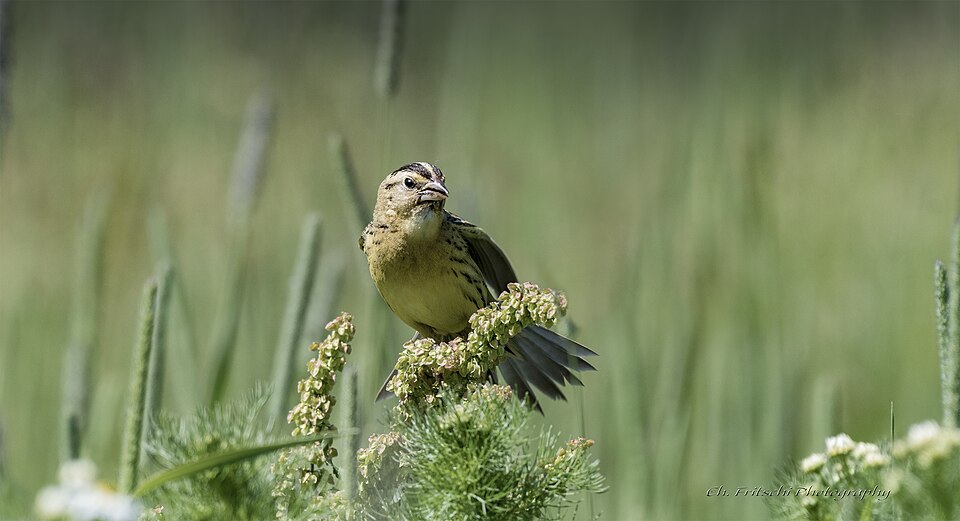
Bobolink (Dolichonyx oryzivorus) Bobolink
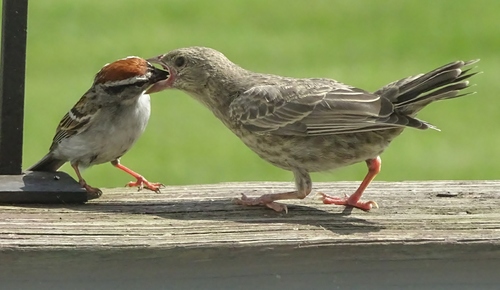
Brown-headed Cowbird (Molothrus ater) Brown-headed Cowbird

Media

Loading…

In short

The most reliable field mark between Bobolink and Brown-headed Cowbird is the adult male's striking plumage: breeding male Bobolinks show a unique pattern of black underparts with a pale nape and white back, while male Cowbirds have a brown head and glossy black body. Females and immatures are trickier, as both are streaky brown, but Bobolink females are paler with more pronounced head stripes and heavier streaking below. In flight or perched, Bobolinks are slimmer and more elongated, with shorter tails and smaller bills than the chunkier, thick-billed Cowbird. Cowbirds are also noticeably larger and heavier, with a longer wingspan. Both species can flock together in fall, so careful attention to structure and subtle plumage is key, especially outside of adult male breeding plumage.

Identification tips

  1. Adult male Bobolink in breeding plumage is unique: Look for a black body with a pale yellow nape and white back/rump—no Cowbird shows this combination. This is diagnostic from late spring through summer.
  2. Male Cowbird always has a brown head and glossy black body: No pale nape or white on the back. If you see a brown-headed, black-bodied bird with no pale markings, it's a Cowbird.
  3. Female/immature Bobolinks are pale brown with strong head stripes and heavy streaking below: The face shows dark stripes and the underparts are streaked, unlike the plainer Cowbird.
  4. Female Cowbirds are dull gray-brown with a pale throat and very fine, almost blurry streaking below: They lack strong facial stripes and appear more uniform overall.
  5. Bill shape is a key structural clue: Bobolinks have a smaller, more delicate finch-like bill, while Cowbirds have a thick, conical bill that looks oversized for their head.
  6. Body shape and posture: Bobolinks are slimmer and more elongated, with a shorter tail and a more upright posture. Cowbirds are chunkier, with a rounder body and a longer, squarer tail.
  7. Size in mixed flocks: Cowbirds are noticeably larger and heavier than Bobolinks, with a longer wingspan. If you see both together, the size difference is clear.
  8. Habitat context: In summer, Bobolinks are almost always in open grasslands or hayfields, rarely at feeders. Cowbirds are more likely in pastures, agricultural areas, and at feeders, often near livestock.
  9. Seasonal presence: Bobolinks are only present in North America during the breeding season and migration; Cowbirds can be found year-round in much of their range, especially in the south.
  10. Flocking behavior: Both species may join mixed blackbird flocks in fall, but Bobolinks are more likely to be seen in single-species groups during the breeding season.
  11. Juvenile/immature confusion: When dealing with streaky brown birds, focus on the strength of facial stripes and underpart streaking (stronger in Bobolink) and bill size (smaller in Bobolink).
  12. No distinctive wing or flight pattern marks are described for either species in immature plumages: Rely on structure and plumage instead.
  13. Cowbird females can appear similar to sparrows, but lack the strong head pattern of Bobolink females.
  14. If you see a bird foraging under livestock or at a feeder, especially outside of grassland, Cowbird is more likely.
  15. If uncertain, try to get a good look at the bill and face pattern—these are the most reliable features for separating females and immatures.

Size

Brown-headed Cowbird is the larger and bulkier of the two: Cowbirds average 16–22 cm (6.3–8.7 in) in length and 36 cm (14 in) wingspan, with males weighing about 49 g and females about 39 g. Bobolinks are slightly smaller and more slender, at 16–18 cm (6.3–7.1 in) long with a 27 cm (10.6 in) wingspan, and weigh around 28 g. Cowbirds have a noticeably stouter, more finch-like bill and a chunkier body, while Bobolinks are slimmer with a shorter tail and smaller bill. These differences are most apparent when the two species are seen side by side or in mixed flocks.

Plumage

Adult male Bobolinks in breeding plumage are unmistakable: they have a black face and underparts, a pale yellow nape, and white scapulars, lower back, and rump—no other North American blackbird shows this pattern. Male Cowbirds, in contrast, are glossy black with a chocolate-brown head and lack any white or pale markings. Female and immature Bobolinks are pale brown above with heavy dark streaks on the back and flanks, strong facial striping, and a pale, unstreaked throat; their wings and tails are darker but not glossy. Female Cowbirds are dull gray-brown overall, with a pale throat and very fine streaking on the underparts, but lack the strong head stripes and are plainer-faced. Juvenile and immature plumages are not described in detail for either species in the notes, but the heavier streaking and facial pattern of Bobolink females/immatures is a useful distinction from the plainer, more uniform Cowbird females/immatures. No age-specific upperwing or flight pattern marks are given for either species.

Behaviour

Both species are often seen in open country and can form mixed flocks, especially in fall. Cowbirds frequently forage on the ground, often following livestock or bison to catch insects, and are common at bird feeders. Bobolinks are more likely to be found in grasslands and hayfields, feeding on seeds and grains, and are less likely to visit feeders. Cowbirds are obligate brood parasites and may be seen interacting with other species at nests, while Bobolinks are not parasitic. In flight, Bobolinks appear more slender and buoyant, while Cowbirds look heavier and more direct.

Habitat

Bobolinks breed in tallgrass prairies, hayfields, and open grassy areas, especially in the northern U.S. and southern Canada. They are most often found in dense grasslands during the breeding season. Brown-headed Cowbirds are more generalist, found in open or semiopen country, including agricultural fields, pastures, and even suburban areas with feeders. Cowbirds' range extends farther south year-round, while Bobolinks are strictly migratory, wintering in South America and absent from North America outside the breeding and migration seasons.

Submit a better description

Use the same sections as the comparison. Your text is published immediately.

The most reliable field mark between Bobolink and Brown-headed Cowbird is the adult male's striking plumage: breeding male Bobolinks show a unique pattern of black underparts with a pale nape and white back, while male Cowbirds have a brown head and glossy black body. Females and immatures are trickier, as both are streaky brown, but Bobolink females are paler with more pronounced head stripes and heavier streaking below. In flight or perched, Bobolinks are slimmer and more elongated, with shorter tails and smaller bills than the chunkier, thick-billed Cowbird. Cowbirds are also noticeably larger and heavier, with a longer wingspan. Both species can flock together in fall, so careful attention to structure and subtle plumage is key, especially outside of adult male breeding plumage.

  1. Adult male Bobolink in breeding plumage is unique: Look for a black body with a pale yellow nape and white back/rump—no Cowbird shows this combination. This is diagnostic from late spring through summer.
  2. Male Cowbird always has a brown head and glossy black body: No pale nape or white on the back. If you see a brown-headed, black-bodied bird with no pale markings, it's a Cowbird.
  3. Female/immature Bobolinks are pale brown with strong head stripes and heavy streaking below: The face shows dark stripes and the underparts are streaked, unlike the plainer Cowbird.
  4. Female Cowbirds are dull gray-brown with a pale throat and very fine, almost blurry streaking below: They lack strong facial stripes and appear more uniform overall.
  5. Bill shape is a key structural clue: Bobolinks have a smaller, more delicate finch-like bill, while Cowbirds have a thick, conical bill that looks oversized for their head.
  6. Body shape and posture: Bobolinks are slimmer and more elongated, with a shorter tail and a more upright posture. Cowbirds are chunkier, with a rounder body and a longer, squarer tail.
  7. Size in mixed flocks: Cowbirds are noticeably larger and heavier than Bobolinks, with a longer wingspan. If you see both together, the size difference is clear.
  8. Habitat context: In summer, Bobolinks are almost always in open grasslands or hayfields, rarely at feeders. Cowbirds are more likely in pastures, agricultural areas, and at feeders, often near livestock.
  9. Seasonal presence: Bobolinks are only present in North America during the breeding season and migration; Cowbirds can be found year-round in much of their range, especially in the south.
  10. Flocking behavior: Both species may join mixed blackbird flocks in fall, but Bobolinks are more likely to be seen in single-species groups during the breeding season.
  11. Juvenile/immature confusion: When dealing with streaky brown birds, focus on the strength of facial stripes and underpart streaking (stronger in Bobolink) and bill size (smaller in Bobolink).
  12. No distinctive wing or flight pattern marks are described for either species in immature plumages: Rely on structure and plumage instead.
  13. Cowbird females can appear similar to sparrows, but lack the strong head pattern of Bobolink females.
  14. If you see a bird foraging under livestock or at a feeder, especially outside of grassland, Cowbird is more likely.
  15. If uncertain, try to get a good look at the bill and face pattern—these are the most reliable features for separating females and immatures.

Brown-headed Cowbird is the larger and bulkier of the two: Cowbirds average 16–22 cm (6.3–8.7 in) in length and 36 cm (14 in) wingspan, with males weighing about 49 g and females about 39 g. Bobolinks are slightly smaller and more slender, at 16–18 cm (6.3–7.1 in) long with a 27 cm (10.6 in) wingspan, and weigh around 28 g. Cowbirds have a noticeably stouter, more finch-like bill and a chunkier body, while Bobolinks are slimmer with a shorter tail and smaller bill. These differences are most apparent when the two species are seen side by side or in mixed flocks.

Adult male Bobolinks in breeding plumage are unmistakable: they have a black face and underparts, a pale yellow nape, and white scapulars, lower back, and rump—no other North American blackbird shows this pattern. Male Cowbirds, in contrast, are glossy black with a chocolate-brown head and lack any white or pale markings. Female and immature Bobolinks are pale brown above with heavy dark streaks on the back and flanks, strong facial striping, and a pale, unstreaked throat; their wings and tails are darker but not glossy. Female Cowbirds are dull gray-brown overall, with a pale throat and very fine streaking on the underparts, but lack the strong head stripes and are plainer-faced. Juvenile and immature plumages are not described in detail for either species in the notes, but the heavier streaking and facial pattern of Bobolink females/immatures is a useful distinction from the plainer, more uniform Cowbird females/immatures. No age-specific upperwing or flight pattern marks are given for either species.

Both species are often seen in open country and can form mixed flocks, especially in fall. Cowbirds frequently forage on the ground, often following livestock or bison to catch insects, and are common at bird feeders. Bobolinks are more likely to be found in grasslands and hayfields, feeding on seeds and grains, and are less likely to visit feeders. Cowbirds are obligate brood parasites and may be seen interacting with other species at nests, while Bobolinks are not parasitic. In flight, Bobolinks appear more slender and buoyant, while Cowbirds look heavier and more direct.

Bobolinks breed in tallgrass prairies, hayfields, and open grassy areas, especially in the northern U.S. and southern Canada. They are most often found in dense grasslands during the breeding season. Brown-headed Cowbirds are more generalist, found in open or semiopen country, including agricultural fields, pastures, and even suburban areas with feeders. Cowbirds' range extends farther south year-round, while Bobolinks are strictly migratory, wintering in South America and absent from North America outside the breeding and migration seasons.

Discard your changes?

You have unsaved edits. If you leave now, those changes will be lost.

Bobolink · Brown-headed Cowbird · My Tricky Birds