

Motmot

Blyth's Pipit vs Tawny Pipit

Anthus godlewskii versus Anthus campestris

Play a quiz with Blyth's Pipit and Tawny Pipit
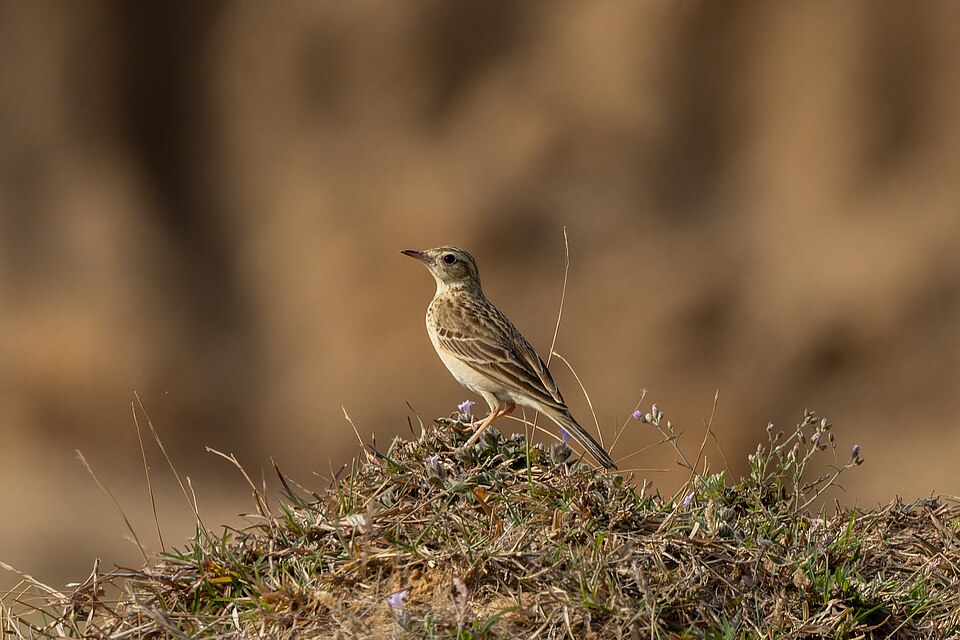
Blyth's Pipit (Anthus godlewskii) Blyth's Pipit
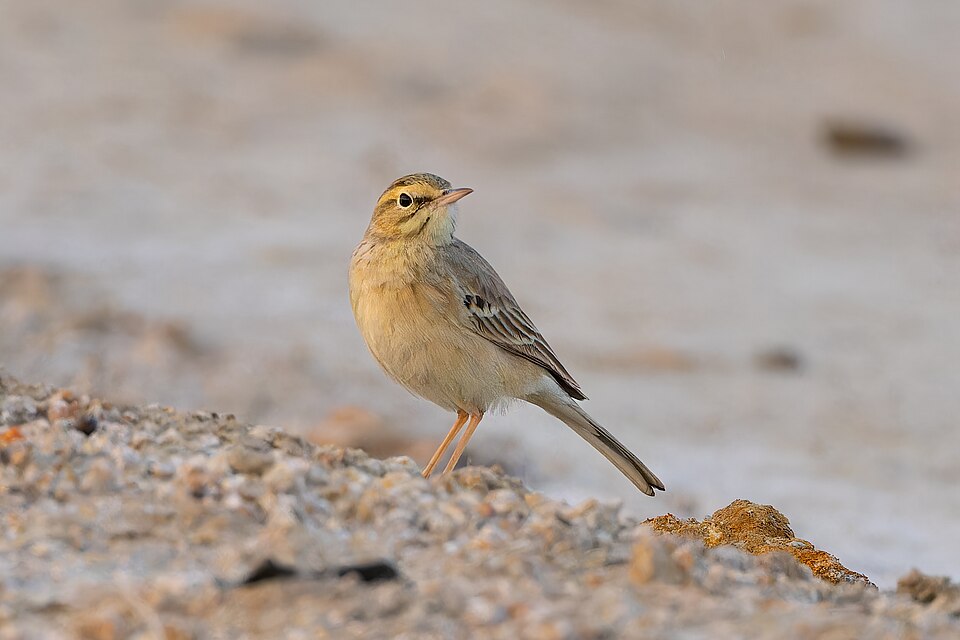
Tawny Pipit (Anthus campestris) Tawny Pipit

Media

Loading…

In short

The most reliable separation between Blyth's Pipit and Tawny Pipit is structural: Blyth's Pipit is slightly heavier, with a shorter bill and legs, while Tawny Pipit is slimmer, with a longer, narrower bill and proportionally longer legs and tail. Both are plain, sandy-brown pipits with pale underparts and few strong markings, so field separation relies on careful scrutiny of structure and subtle plumage differences. Vocalizations differ, with Blyth's giving a higher-pitched 'pshee' and Tawny a sharp 'schip'. In all plumages, both species are easily confused with each other and with Richard's Pipit, so take a holistic approach, especially in wintering areas where both may occur.

Identification tips

  1. Leg and bill structure: Blyth's Pipit has shorter legs and a shorter, darker bill; Tawny Pipit shows longer legs and a narrower, longer bill. This is most reliable in side-by-side or close views.
  2. Tail and wing length: Tawny Pipit has a longer tail and wings, giving it a more elongated appearance, especially when standing or in flight. Blyth's Pipit is more compact.
  3. Plumage tone: Tawny Pipit is paler and more sandy brown above, while Blyth's Pipit is browner. Both are pale below, but Tawny Pipit is generally less streaked overall.
  4. Streaking: Both species are less streaked than Richard's Pipit, but Tawny Pipit is especially plain, with minimal streaking on the upperparts and underparts. Blyth's Pipit may show slightly more diffuse streaking, but this is subtle.
  5. Flight jizz: Both species have strong, direct flight. Tawny Pipit's longer wings and tail may be apparent in flight, but this requires experience.
  6. Vocalizations: Listen for Blyth's Pipit's high 'pshee' call versus Tawny Pipit's sharp 'schip'. Calls are best learned from recordings and may be the most reliable clue in poor viewing conditions.
  7. Habitat and range: In South Asia, both species may occur together in open, dry habitats. Blyth's Pipit is a rare vagrant to Europe, while Tawny Pipit is more widespread in the western Palearctic.
  8. Size: Blyth's Pipit is marginally heavier, but size overlap is considerable; use structure and other marks first.
  9. Perched posture: Tawny Pipit may appear more upright and elongated due to its longer legs and tail, while Blyth's Pipit is a bit more hunched and compact.
  10. Bill color: Blyth's Pipit has a darker bill, which may help in good light.
  11. No strong wing panels: Neither species shows the contrasting wing panels or strong upperwing patterns seen in some other pipits; do not rely on this feature.
  12. Juvenile/immature separation: No distinctive age-specific upperwing marks are noted for either species, so juveniles are best separated by structure and call.
  13. Confusion with Richard's Pipit: Both species are similar to Richard's Pipit but are smaller, with shorter legs and bills; beware of this pitfall in mixed flocks.
  14. Sexual dimorphism: Not noted as significant in either species; males and females appear similar.
  15. Seasonal variation: Both species are plainer in non-breeding plumage, increasing the risk of confusion; rely on structure and voice year-round.

Size

Blyth's Pipit is marginally heavier (26.0g vs 22.0g) and described as a large pipit, but Tawny Pipit is also considered medium-large. In the field, Tawny Pipit may appear slightly more elongated due to its longer wings, tail, and legs, while Blyth's Pipit is a bit more compact and shorter-legged. These differences are subtle and best appreciated with direct comparison or experience.

Plumage

Both species are generally plain above (brown in Blyth's, sandy brown in Tawny) and pale below, with minimal streaking compared to Richard's Pipit. Tawny Pipit is described as less streaked overall, which may help in close views. No specific juvenile or immature upperwing patterns are detailed for either species in the sources, so age-specific flight marks are not a primary separator here. Both species lack strong wing panels or contrasting upperwing features in all plumages, making structure and subtle tone differences more important. In summary: Tawny Pipit is paler and less streaked; Blyth's Pipit is browner and may show slightly more diffuse streaking, but both are 'undistinguished' on the ground.

Behaviour

Both species show strong, direct flight and are typically found walking on open ground. Tawny Pipit may appear more upright and elongated due to its longer legs and tail, while Blyth's Pipit is a bit shorter-legged and more compact. Both can be inconspicuous when feeding, blending into dry grass or stony ground.

Habitat

Blyth's Pipit breeds in Mongolia, China, Tibet, and India, migrating to open lowlands in southern Asia and is a rare vagrant to western Europe. Tawny Pipit breeds widely across the Palearctic from northwest Africa and Portugal to Central Siberia and Inner Mongolia, wintering in tropical Africa and the Indian subcontinent. In South Asia, both species may overlap in open, dry habitats such as grasslands and stony plains, so habitat alone is not diagnostic where ranges overlap.

Voice

Blyth's Pipit gives a characteristic 'pshee' call, which is higher pitched than Richard's Pipit. Tawny Pipit gives a sharp 'schip' call, also higher pitched than Richard's but distinct from Blyth's. Tawny Pipit's song is a short, repeated disyllabic 'chir-ree chir-ree', but song is rarely heard outside the breeding grounds. Calls are the best vocal clue, but require experience to distinguish.

Submit a better description

Use the same sections as the comparison. Your text is published immediately.

The most reliable separation between Blyth's Pipit and Tawny Pipit is structural: Blyth's Pipit is slightly heavier, with a shorter bill and legs, while Tawny Pipit is slimmer, with a longer, narrower bill and proportionally longer legs and tail. Both are plain, sandy-brown pipits with pale underparts and few strong markings, so field separation relies on careful scrutiny of structure and subtle plumage differences. Vocalizations differ, with Blyth's giving a higher-pitched 'pshee' and Tawny a sharp 'schip'. In all plumages, both species are easily confused with each other and with Richard's Pipit, so take a holistic approach, especially in wintering areas where both may occur.

  1. Leg and bill structure: Blyth's Pipit has shorter legs and a shorter, darker bill; Tawny Pipit shows longer legs and a narrower, longer bill. This is most reliable in side-by-side or close views.
  2. Tail and wing length: Tawny Pipit has a longer tail and wings, giving it a more elongated appearance, especially when standing or in flight. Blyth's Pipit is more compact.
  3. Plumage tone: Tawny Pipit is paler and more sandy brown above, while Blyth's Pipit is browner. Both are pale below, but Tawny Pipit is generally less streaked overall.
  4. Streaking: Both species are less streaked than Richard's Pipit, but Tawny Pipit is especially plain, with minimal streaking on the upperparts and underparts. Blyth's Pipit may show slightly more diffuse streaking, but this is subtle.
  5. Flight jizz: Both species have strong, direct flight. Tawny Pipit's longer wings and tail may be apparent in flight, but this requires experience.
  6. Vocalizations: Listen for Blyth's Pipit's high 'pshee' call versus Tawny Pipit's sharp 'schip'. Calls are best learned from recordings and may be the most reliable clue in poor viewing conditions.
  7. Habitat and range: In South Asia, both species may occur together in open, dry habitats. Blyth's Pipit is a rare vagrant to Europe, while Tawny Pipit is more widespread in the western Palearctic.
  8. Size: Blyth's Pipit is marginally heavier, but size overlap is considerable; use structure and other marks first.
  9. Perched posture: Tawny Pipit may appear more upright and elongated due to its longer legs and tail, while Blyth's Pipit is a bit more hunched and compact.
  10. Bill color: Blyth's Pipit has a darker bill, which may help in good light.
  11. No strong wing panels: Neither species shows the contrasting wing panels or strong upperwing patterns seen in some other pipits; do not rely on this feature.
  12. Juvenile/immature separation: No distinctive age-specific upperwing marks are noted for either species, so juveniles are best separated by structure and call.
  13. Confusion with Richard's Pipit: Both species are similar to Richard's Pipit but are smaller, with shorter legs and bills; beware of this pitfall in mixed flocks.
  14. Sexual dimorphism: Not noted as significant in either species; males and females appear similar.
  15. Seasonal variation: Both species are plainer in non-breeding plumage, increasing the risk of confusion; rely on structure and voice year-round.

Blyth's Pipit is marginally heavier (26.0g vs 22.0g) and described as a large pipit, but Tawny Pipit is also considered medium-large. In the field, Tawny Pipit may appear slightly more elongated due to its longer wings, tail, and legs, while Blyth's Pipit is a bit more compact and shorter-legged. These differences are subtle and best appreciated with direct comparison or experience.

Both species are generally plain above (brown in Blyth's, sandy brown in Tawny) and pale below, with minimal streaking compared to Richard's Pipit. Tawny Pipit is described as less streaked overall, which may help in close views. No specific juvenile or immature upperwing patterns are detailed for either species in the sources, so age-specific flight marks are not a primary separator here. Both species lack strong wing panels or contrasting upperwing features in all plumages, making structure and subtle tone differences more important. In summary: Tawny Pipit is paler and less streaked; Blyth's Pipit is browner and may show slightly more diffuse streaking, but both are 'undistinguished' on the ground.

Both species show strong, direct flight and are typically found walking on open ground. Tawny Pipit may appear more upright and elongated due to its longer legs and tail, while Blyth's Pipit is a bit shorter-legged and more compact. Both can be inconspicuous when feeding, blending into dry grass or stony ground.

Blyth's Pipit breeds in Mongolia, China, Tibet, and India, migrating to open lowlands in southern Asia and is a rare vagrant to western Europe. Tawny Pipit breeds widely across the Palearctic from northwest Africa and Portugal to Central Siberia and Inner Mongolia, wintering in tropical Africa and the Indian subcontinent. In South Asia, both species may overlap in open, dry habitats such as grasslands and stony plains, so habitat alone is not diagnostic where ranges overlap.

Blyth's Pipit gives a characteristic 'pshee' call, which is higher pitched than Richard's Pipit. Tawny Pipit gives a sharp 'schip' call, also higher pitched than Richard's but distinct from Blyth's. Tawny Pipit's song is a short, repeated disyllabic 'chir-ree chir-ree', but song is rarely heard outside the breeding grounds. Calls are the best vocal clue, but require experience to distinguish.

Discard your changes?

You have unsaved edits. If you leave now, those changes will be lost.

Blyth's Pipit · Tawny Pipit · My Tricky Birds