
Motmot

Blue-cheeked Bee-eater vs Blue-tailed Bee-eater

Merops persicus versus Merops philippinus

Play a quiz with Blue-cheeked Bee-eater and Blue-tailed Bee-eater
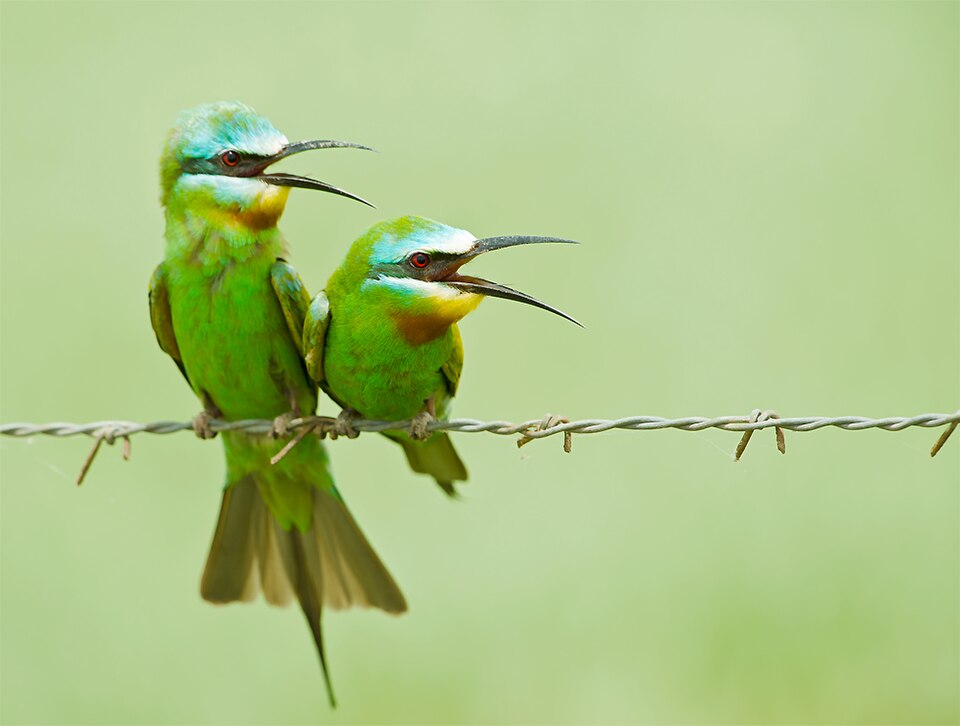
Blue-cheeked Bee-eater (Merops persicus) Blue-cheeked Bee-eater
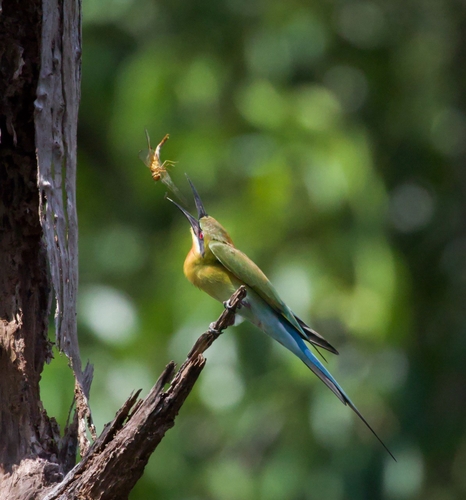
Blue-tailed Bee-eater (Merops philippinus) Blue-tailed Bee-eater

Media

Loading…

In short

The most reliable field mark for separating Blue-cheeked Bee-eater from Blue-tailed Bee-eater is the extent and color of the blue on the face and the color of the rump and undertail: Blue-cheeked has a broad blue cheek patch and green rump/undertail, while Blue-tailed shows only a narrow blue cheek patch but a bright blue rump and undertail. Both are slender, green bee-eaters with long central tail streamers, but Blue-cheeked is bulkier and longer overall. Juveniles of both species lack the tail streamers, making facial and rump color even more critical. Habitat can help: Blue-tailed is usually near water, Blue-cheeked in drier, more open country.

Identification tips

  1. Face pattern: Blue-cheeked Bee-eater has a broad blue patch on the sides of the face ('cheeks'), while Blue-tailed Bee-eater's blue is restricted to a narrow patch below the eye. This is the most consistent mark at all ages.
  2. Rump and undertail color: Blue-tailed Bee-eater shows a bright blue rump and blue undertail coverts, contrasting with the green back. Blue-cheeked has a green rump and undertail, blending with the rest of the body. This is especially obvious in flight or when the tail is fanned.
  3. Throat color and extent: Blue-tailed has a darker, more extensive chestnut throat and upper breast, especially in healthy males, while Blue-cheeked's throat is more yellow with a brownish wash and less chestnut overall.
  4. Tail streamers: Both species have elongated central tail feathers in adults, but Blue-cheeked's are often longer, especially in males. Females and juveniles have shorter or absent streamers, so do not rely on this alone.
  5. Juvenile plumage: Juveniles of both species lack tail streamers and are duller, but the face and rump/undertail color differences remain reliable. Look for the blue cheek patch (broad in Blue-cheeked, narrow in Blue-tailed) and the color of the rump.
  6. Size and structure: Blue-cheeked is heavier and longer overall, often appearing bulkier and longer-winged. Blue-tailed is more slender and slightly smaller. This is a supporting mark unless both are seen together.
  7. Habitat: Blue-tailed is almost always near water (rivers, lakes, estuaries), while Blue-cheeked prefers drier, open country with scattered trees. Use this only as a supporting clue, as both can occur in similar-looking open habitats.
  8. Perching behavior: Blue-cheeked often perches on exposed wires or trees in open country; Blue-tailed may perch near water, sometimes in groups.
  9. Flight jizz: Both are agile, but Blue-cheeked can appear more powerful and direct in flight, while Blue-tailed may seem lighter and more buoyant, especially when foraging over water.
  10. Vocalizations: Blue-tailed's call is a rolling, whistling 'teerp', often given in flight. Blue-cheeked's call is flatter and less musical. Use with caution unless familiar with both.
  11. Geographic context: In South and Southeast Asia, Blue-tailed is the default; in North Africa and the Middle East, Blue-cheeked is expected. Both can be migratory or vagrant, so check range but do not rely on it alone.
  12. Colony structure: Blue-tailed often nests in dense colonies with many closely spaced holes; Blue-cheeked may nest solitarily or in loose groups, sometimes with European Bee-eaters.
  13. Sex differences: Both sexes are similar, but males have longer tail streamers. In Blue-tailed, healthy males may show brighter green and darker chestnut, while females have brighter blue rumps and yellow chins (subtle in the field).
  14. Feeding behavior: Both sally for insects, but Blue-tailed is more likely to forage over water or even the sea, while Blue-cheeked prefers open country.
  15. Pitfalls: Immature birds without tail streamers are easily confused; always check the width of the blue cheek patch and the color of the rump and undertail for the safest separation.

Size

Blue-cheeked Bee-eater is distinctly heavier (49.4g [wikidata]) and longer (31cm plus up to 7cm tail streamers) than Blue-tailed Bee-eater, which is smaller (29–43g, 29cm plus 7cm streamers) [wikipedia, wikidata]. In the field, Blue-cheeked often appears bulkier and longer-winged, especially when perched. However, both species have similar slender, elongated jizz typical of bee-eaters, so size is only a supporting clue unless seen side-by-side.

Plumage

Juveniles of both species lack the long central tail streamers, so focus on face and rump color. Blue-cheeked Bee-eater (all ages) shows a broad blue patch on the sides of the face (the 'blue cheeks'), a green rump and undertail, and a yellow throat with some brown. Blue-tailed Bee-eater has only a narrow blue patch on the face, but a bright blue rump and blue undertail coverts, which contrast with the green back. The chestnut on the throat and upper breast is darker and more extensive in Blue-tailed, especially in healthy males, while Blue-cheeked's throat is more yellow with a brownish wash. Both have a black eye-stripe and black bill. In flight, the blue rump of Blue-tailed is often visible as a flash, while Blue-cheeked appears more uniformly green from above and below. Sexes are similar in both, though males have longer tail streamers. Juveniles are drabber in both, but the face and rump/undertail color differences remain the best clues.

Behaviour

Both species hunt insects by sallying from perches, often returning to the same spot. Blue-tailed Bee-eater is more likely to be seen feeding and roosting communally, sometimes with helpers at the nest, and often forages over water or even the sea. Blue-cheeked Bee-eater may nest solitarily or in small loose colonies, sometimes with European Bee-eaters, and prefers open perches like telephone wires. Both species nest in tunnels in sandy or loamy banks, but Blue-tailed often forms dense colonies.

Habitat

Blue-cheeked Bee-eater breeds in dry, open country with scattered trees (often acacia) in Northern Africa, the Middle East, and Central Asia, and winters in tropical Africa, sometimes being resident in the Sahel [wikipedia]. Blue-tailed Bee-eater is found in open habitats near water across South and Southeast Asia, breeding colonially in river valleys and loamy sand banks. If the bird is near water, especially in South/Southeast Asia, Blue-tailed is more likely; if in drier, more arid terrain, especially in North Africa or the Middle East, Blue-cheeked is favored.

Voice

Blue-cheeked Bee-eater's call is described as 'flatter' and less 'fluty' than European Bee-eater, but direct comparison with Blue-tailed is not detailed in the notes. Blue-tailed Bee-eater calls mainly in flight with a rolling, chirping, whistling 'teerp'. In practice, both have typical bee-eater calls, but Blue-tailed's may sound more musical or whistled, while Blue-cheeked's is less so. Voice is a supporting clue but not diagnostic on its own.

Submit a better description

Use the same sections as the comparison. Your text is published immediately.

The most reliable field mark for separating Blue-cheeked Bee-eater from Blue-tailed Bee-eater is the extent and color of the blue on the face and the color of the rump and undertail: Blue-cheeked has a broad blue cheek patch and green rump/undertail, while Blue-tailed shows only a narrow blue cheek patch but a bright blue rump and undertail. Both are slender, green bee-eaters with long central tail streamers, but Blue-cheeked is bulkier and longer overall. Juveniles of both species lack the tail streamers, making facial and rump color even more critical. Habitat can help: Blue-tailed is usually near water, Blue-cheeked in drier, more open country.

  1. Face pattern: Blue-cheeked Bee-eater has a broad blue patch on the sides of the face ('cheeks'), while Blue-tailed Bee-eater's blue is restricted to a narrow patch below the eye. This is the most consistent mark at all ages.
  2. Rump and undertail color: Blue-tailed Bee-eater shows a bright blue rump and blue undertail coverts, contrasting with the green back. Blue-cheeked has a green rump and undertail, blending with the rest of the body. This is especially obvious in flight or when the tail is fanned.
  3. Throat color and extent: Blue-tailed has a darker, more extensive chestnut throat and upper breast, especially in healthy males, while Blue-cheeked's throat is more yellow with a brownish wash and less chestnut overall.
  4. Tail streamers: Both species have elongated central tail feathers in adults, but Blue-cheeked's are often longer, especially in males. Females and juveniles have shorter or absent streamers, so do not rely on this alone.
  5. Juvenile plumage: Juveniles of both species lack tail streamers and are duller, but the face and rump/undertail color differences remain reliable. Look for the blue cheek patch (broad in Blue-cheeked, narrow in Blue-tailed) and the color of the rump.
  6. Size and structure: Blue-cheeked is heavier and longer overall, often appearing bulkier and longer-winged. Blue-tailed is more slender and slightly smaller. This is a supporting mark unless both are seen together.
  7. Habitat: Blue-tailed is almost always near water (rivers, lakes, estuaries), while Blue-cheeked prefers drier, open country with scattered trees. Use this only as a supporting clue, as both can occur in similar-looking open habitats.
  8. Perching behavior: Blue-cheeked often perches on exposed wires or trees in open country; Blue-tailed may perch near water, sometimes in groups.
  9. Flight jizz: Both are agile, but Blue-cheeked can appear more powerful and direct in flight, while Blue-tailed may seem lighter and more buoyant, especially when foraging over water.
  10. Vocalizations: Blue-tailed's call is a rolling, whistling 'teerp', often given in flight. Blue-cheeked's call is flatter and less musical. Use with caution unless familiar with both.
  11. Geographic context: In South and Southeast Asia, Blue-tailed is the default; in North Africa and the Middle East, Blue-cheeked is expected. Both can be migratory or vagrant, so check range but do not rely on it alone.
  12. Colony structure: Blue-tailed often nests in dense colonies with many closely spaced holes; Blue-cheeked may nest solitarily or in loose groups, sometimes with European Bee-eaters.
  13. Sex differences: Both sexes are similar, but males have longer tail streamers. In Blue-tailed, healthy males may show brighter green and darker chestnut, while females have brighter blue rumps and yellow chins (subtle in the field).
  14. Feeding behavior: Both sally for insects, but Blue-tailed is more likely to forage over water or even the sea, while Blue-cheeked prefers open country.
  15. Pitfalls: Immature birds without tail streamers are easily confused; always check the width of the blue cheek patch and the color of the rump and undertail for the safest separation.

Blue-cheeked Bee-eater is distinctly heavier (49.4g [wikidata]) and longer (31cm plus up to 7cm tail streamers) than Blue-tailed Bee-eater, which is smaller (29–43g, 29cm plus 7cm streamers) [wikipedia, wikidata]. In the field, Blue-cheeked often appears bulkier and longer-winged, especially when perched. However, both species have similar slender, elongated jizz typical of bee-eaters, so size is only a supporting clue unless seen side-by-side.

Juveniles of both species lack the long central tail streamers, so focus on face and rump color. Blue-cheeked Bee-eater (all ages) shows a broad blue patch on the sides of the face (the 'blue cheeks'), a green rump and undertail, and a yellow throat with some brown. Blue-tailed Bee-eater has only a narrow blue patch on the face, but a bright blue rump and blue undertail coverts, which contrast with the green back. The chestnut on the throat and upper breast is darker and more extensive in Blue-tailed, especially in healthy males, while Blue-cheeked's throat is more yellow with a brownish wash. Both have a black eye-stripe and black bill. In flight, the blue rump of Blue-tailed is often visible as a flash, while Blue-cheeked appears more uniformly green from above and below. Sexes are similar in both, though males have longer tail streamers. Juveniles are drabber in both, but the face and rump/undertail color differences remain the best clues.

Both species hunt insects by sallying from perches, often returning to the same spot. Blue-tailed Bee-eater is more likely to be seen feeding and roosting communally, sometimes with helpers at the nest, and often forages over water or even the sea. Blue-cheeked Bee-eater may nest solitarily or in small loose colonies, sometimes with European Bee-eaters, and prefers open perches like telephone wires. Both species nest in tunnels in sandy or loamy banks, but Blue-tailed often forms dense colonies.

Blue-cheeked Bee-eater breeds in dry, open country with scattered trees (often acacia) in Northern Africa, the Middle East, and Central Asia, and winters in tropical Africa, sometimes being resident in the Sahel [wikipedia]. Blue-tailed Bee-eater is found in open habitats near water across South and Southeast Asia, breeding colonially in river valleys and loamy sand banks. If the bird is near water, especially in South/Southeast Asia, Blue-tailed is more likely; if in drier, more arid terrain, especially in North Africa or the Middle East, Blue-cheeked is favored.

Blue-cheeked Bee-eater's call is described as 'flatter' and less 'fluty' than European Bee-eater, but direct comparison with Blue-tailed is not detailed in the notes. Blue-tailed Bee-eater calls mainly in flight with a rolling, chirping, whistling 'teerp'. In practice, both have typical bee-eater calls, but Blue-tailed's may sound more musical or whistled, while Blue-cheeked's is less so. Voice is a supporting clue but not diagnostic on its own.

Discard your changes?

You have unsaved edits. If you leave now, those changes will be lost.

Blue-cheeked Bee-eater · Blue-tailed Bee-eater · My Tricky Birds