

abelharuco-de-faces-azuis vs abelharuco-de-cauda-azul
Merops persicus versus Merops philippinus
Jogue um quiz com abelharuco-de-faces-azuis e abelharuco-de-cauda-azul
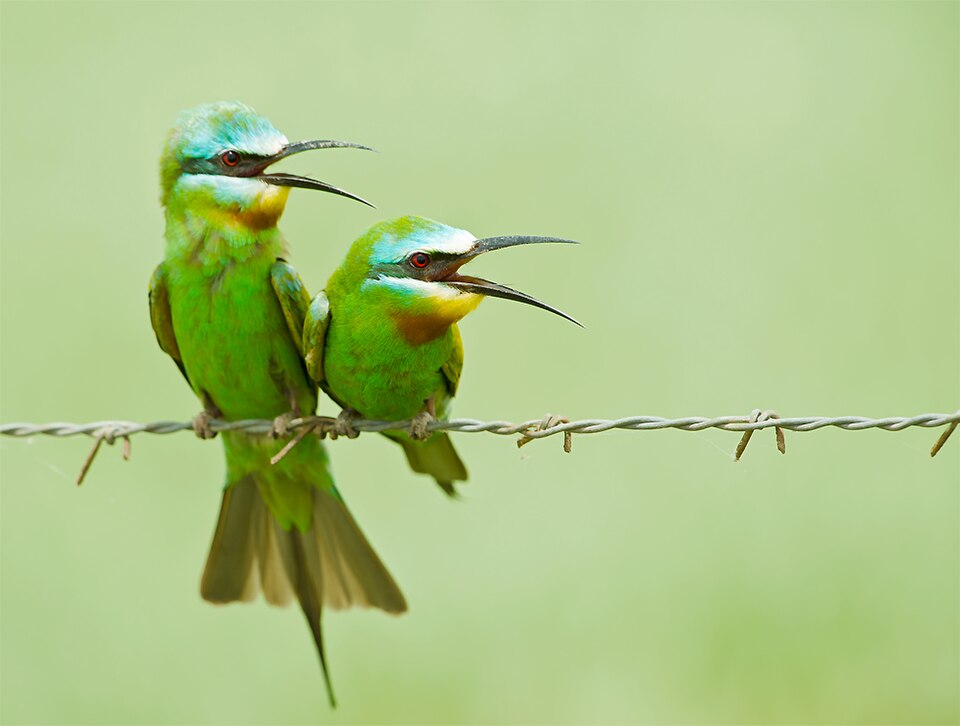 abelharuco-de-faces-azuis
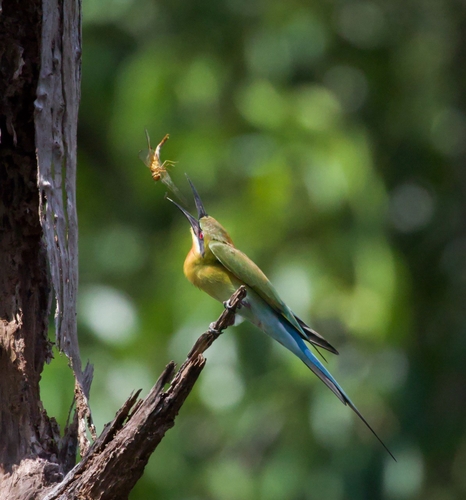 abelharuco-de-cauda-azul
Em resumo
A marca de campo mais confiável para separar o abelharuco-de-faces-azuis do abelharuco-de-cauda-azul é a extensão e a cor do azul no rosto e a cor da região do rabo e da parte inferior da cauda: o abelharuco-de-faces-azuis tem uma ampla mancha azul nas bochechas e uma região do rabo/parte inferior da cauda verde, enquanto o abelharuco-de-cauda-azul apresenta apenas uma estreita mancha azul nas bochechas, mas uma região do rabo e parte inferior da cauda azul brilhante. Ambos são abelharucos esguios e verdes com longas penas centrais da cauda, mas o abelharuco-de-faces-azuis é mais robusto e mais longo no geral. Os juvenis de ambas as espécies não têm as penas da cauda, tornando a cor do rosto e da região do rabo ainda mais crítica. O habitat pode ajudar: o abelharuco-de-cauda-azul é geralmente encontrado perto da água, enquanto o abelharuco-de-faces-azuis em áreas mais secas e abertas.
Dicas de identificação
- Padrão do rosto: O abelharuco-de-faces-azuis tem uma ampla mancha azul nas laterais do rosto ('bochechas'), enquanto o azul do abelharuco-de-cauda-azul é restrito a uma estreita mancha abaixo do olho. Esta é a marca mais consistente em todas as idades.
- Cor da região do rabo e parte inferior da cauda: O abelharuco-de-cauda-azul apresenta uma região do rabo azul brilhante e penas da parte inferior da cauda azuis, contrastando com as costas verdes. O abelharuco-de-faces-azuis tem uma região do rabo e parte inferior da cauda verdes, misturando-se com o restante do corpo. Isso é especialmente óbvio em voo ou quando a cauda está aberta.
- Cor e extensão da garganta: O abelharuco-de-cauda-azul tem uma garganta e parte superior do peito castanho mais escuros e mais extensos, especialmente em machos saudáveis, enquanto a garganta do abelharuco-de-faces-azuis é mais amarela com um tom acastanhado e menos castanho no geral.
- Penas da cauda: Ambas as espécies têm penas centrais da cauda alongadas em adultos, mas as do abelharuco-de-faces-azuis são frequentemente mais longas, especialmente em machos. Fêmeas e juvenis têm penas mais curtas ou ausentes, então não confie apenas nisso.
- Plumagem juvenil: Os juvenis de ambas as espécies não têm penas da cauda e são mais apagados, mas as diferenças de cor do rosto e da região do rabo/parte inferior da cauda permanecem confiáveis. Procure pela mancha azul nas bochechas (ampla no abelharuco-de-faces-azuis, estreita no abelharuco-de-cauda-azul) e a cor da região do rabo.
- Tamanho e estrutura: O abelharuco-de-faces-azuis é mais pesado e mais longo no geral, frequentemente parecendo mais robusto e com asas mais longas. O abelharuco-de-cauda-azul é mais esguio e ligeiramente menor. Esta é uma marca de apoio, a menos que ambos sejam vistos juntos.
- Habitat: O abelharuco-de-cauda-azul está quase sempre perto da água (rios, lagos, estuários), enquanto o abelharuco-de-faces-azuis prefere áreas secas e abertas com árvores dispersas. Use isso apenas como uma pista de apoio, pois ambos podem ocorrer em habitats abertos semelhantes.
- Comportamento de empoleiramento: O abelharuco-de-faces-azuis frequentemente se empoleira em fios expostos ou árvores em áreas abertas; o abelharuco-de-cauda-azul pode se empoleirar perto da água, às vezes em grupos.
- Comportamento de voo: Ambos são ágeis, mas o abelharuco-de-faces-azuis pode parecer mais poderoso e direto em voo, enquanto o abelharuco-de-cauda-azul pode parecer mais leve e mais flutuante, especialmente ao forragear sobre a água.
- Vocalizações: O chamado do abelharuco-de-cauda-azul é um 'teerp' rolante e assobiado, frequentemente emitido em voo. O chamado do abelharuco-de-faces-azuis é mais plano e menos musical. Use com cautela, a menos que esteja familiarizado com ambos.
- Contexto geográfico: No Sul e Sudeste da Ásia, o abelharuco-de-cauda-azul é o padrão; no Norte da África e no Oriente Médio, o abelharuco-de-faces-azuis é esperado. Ambos podem ser migratórios ou vagantes, então verifique a distribuição, mas não confie apenas nisso.
- Estrutura da colônia: O abelharuco-de-cauda-azul frequentemente faz ninhos em colônias densas com muitos buracos próximos; o abelharuco-de-faces-azuis pode nidificar solitariamente ou em grupos soltos, às vezes com abelharucos europeus.
- Diferenças sexuais: Ambos os sexos são semelhantes, mas os machos têm penas da cauda mais longas. No abelharuco-de-cauda-azul, machos saudáveis podem mostrar verde mais brilhante e castanho mais escuro, enquanto as fêmeas têm regiões do rabo azul mais brilhantes e queixos amarelos (sutil no campo).
- Comportamento alimentar: Ambos se lançam em busca de insetos, mas o abelharuco-de-cauda-azul é mais propenso a forragear sobre a água ou até mesmo o mar, enquanto o abelharuco-de-faces-azuis prefere áreas abertas.
- Armadilhas: Pássaros imaturos sem penas da cauda são facilmente confundidos; sempre verifique a largura da mancha azul nas bochechas e a cor da região do rabo e da parte inferior da cauda para a separação mais segura.
Tamanho
O abelharuco-de-faces-azuis é distintamente mais pesado (49,4g [wikidata]) e mais longo (31cm mais até 7cm de penas da cauda) do que o abelharuco-de-cauda-azul, que é menor (29–43g, 29cm mais 7cm de penas) [wikipedia, wikidata]. No campo, o abelharuco-de-faces-azuis frequentemente parece mais robusto e com asas mais longas, especialmente quando empoleirado. No entanto, ambas as espécies têm um jizz esguio e alongado semelhante, típico dos abelharucos, então o tamanho é apenas uma pista de apoio, a menos que sejam vistos lado a lado.
Plumagem
Os juvenis de ambas as espécies não têm as longas penas centrais da cauda, então concentre-se na cor do rosto e da região do rabo. O abelharuco-de-faces-azuis (todas as idades) mostra uma ampla mancha azul nas laterais do rosto (as 'bochechas azuis'), uma região do rabo e parte inferior da cauda verdes, e uma garganta amarela com um pouco de marrom. O abelharuco-de-cauda-azul tem apenas uma estreita mancha azul no rosto, mas uma região do rabo azul brilhante e penas da parte inferior da cauda azuis, que contrastam com as costas verdes. O castanho na garganta e parte superior do peito é mais escuro e mais extenso no abelharuco-de-cauda-azul, especialmente em machos saudáveis, enquanto a garganta do abelharuco-de-faces-azuis é mais amarela com um tom acastanhado. Ambos têm uma faixa ocular preta e bico preto. Em voo, a região do rabo azul do abelharuco-de-cauda-azul é frequentemente visível como um flash, enquanto o abelharuco-de-faces-azuis parece mais uniformemente verde de cima e de baixo. Os sexos são semelhantes em ambos, embora os machos tenham penas da cauda mais longas. Os juvenis são mais apagados em ambos, mas as diferenças de cor do rosto e da região do rabo/parte inferior da cauda permanecem as melhores pistas.
Comportamento
Ambas as espécies caçam insetos lançando-se de poleiros, frequentemente retornando ao mesmo local. O abelharuco-de-cauda-azul é mais propenso a ser visto se alimentando e repousando em grupo, às vezes com ajudantes no ninho, e frequentemente forrageia sobre a água ou até mesmo o mar. O abelharuco-de-faces-azuis pode nidificar solitariamente ou em pequenas colônias soltas, às vezes com abelharucos europeus, e prefere poleiros abertos como fios telefônicos. Ambas as espécies fazem ninhos em túneis em margens arenosas ou argilosas, mas o abelharuco-de-cauda-azul frequentemente forma colônias densas.
Habitat
O abelharuco-de-faces-azuis se reproduz em áreas secas e abertas com árvores dispersas (frequentemente acácia) no Norte da África, Oriente Médio e Ásia Central, e inverna na África tropical, às vezes sendo residente no Sahel [wikipedia]. O abelharuco-de-cauda-azul é encontrado em habitats abertos perto da água em toda a Ásia do Sul e Sudeste, reproduzindo-se colonialmente em vales de rios e margens de areia argilosa. Se o pássaro estiver perto da água, especialmente no Sul/Sudeste da Ásia, é mais provável que seja o abelharuco-de-cauda-azul; se em terreno mais seco e árido, especialmente no Norte da África ou Oriente Médio, o abelharuco-de-faces-azuis é favorecido.
Voz
O chamado do abelharuco-de-faces-azuis é descrito como 'mais plano' e menos 'musical' do que o abelharuco europeu, mas a comparação direta com o abelharuco-de-cauda-azul não é detalhada nas notas. O abelharuco-de-cauda-azul chama principalmente em voo com um 'teerp' rolante, assobiado e chilreante. Na prática, ambos têm chamados típicos de abelharucos, mas o do abelharuco-de-cauda-azul pode soar mais musical ou assobiado, enquanto o do abelharuco-de-faces-azuis é menos assim. A voz é uma pista de apoio, mas não é diagnóstica por si só.
abelharuco-de-faces-azuis · abelharuco-de-cauda-azul · Minhas aves difíceis