

Motmot

Black-winged Stilt vs Little Cormorant

Himantopus himantopus versus Microcarbo niger

Play a quiz with Black-winged Stilt and Little Cormorant
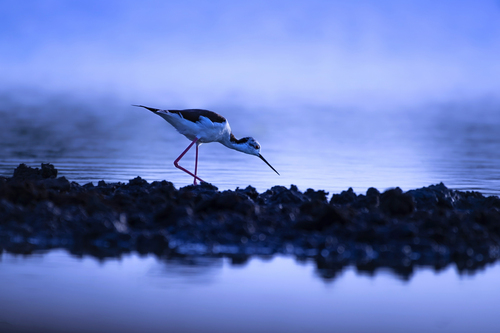
Black-winged Stilt (Himantopus himantopus) Black-winged Stilt
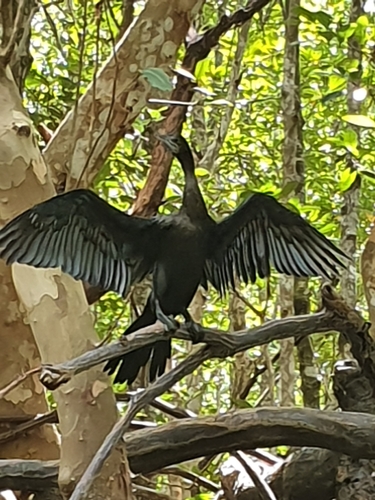
Little Cormorant (Microcarbo niger) Little Cormorant

Media

Loading…

In short

The most reliable field mark to separate Black-winged Stilt and Little Cormorant is overall structure and posture: the stilt is a slender, long-legged wader with a thin, straight bill, while the cormorant is a compact, short-legged, duck-like swimmer with a thicker, hooked bill. Juvenile Black-winged Stilts show a pale sandy upperwing with whitish fringes, especially visible in flight, while Little Cormorants (of any age) are uniformly dark above. In flight, stilts have trailing pink legs and a striking black-and-white pattern, whereas cormorants appear all dark with short tails and necks. Even at a distance, the stilt's extremely long pink legs and upright stance are diagnostic, while the cormorant is always seen swimming low in the water or perched with a hunched posture.

Identification tips

  1. Leg length and color: Black-winged Stilts have extremely long, bright pink legs visible even at a distance, both when standing and in flight. Little Cormorants have short, dark legs that are rarely seen except when perched.
  2. Bill shape: Stilts have a long, straight, thin black bill; cormorants have a shorter, stouter bill with a hooked tip, more suited for catching fish.
  3. Body posture: Stilts stand upright, often very erect, while cormorants are hunched when perched and swim low in the water.
  4. Flight silhouette: Stilts fly with neck and legs fully extended, showing a slim, stretched profile; cormorants fly with neck slightly kinked and legs not trailing far beyond the tail.
  5. Juvenile wing pattern: Juvenile stilts show pale sandy upperwings with whitish fringes forming a pale line in flight—never seen in cormorants.
  6. Adult plumage: Adult stilts are sharply black above and white below, with a white head and neck (variable black on head/neck by sex/season). Cormorants are all black or brownish-black, sometimes with a small white throat patch in non-breeding plumage.
  7. Underparts: Stilts always have clean white underparts; cormorants are dark below.
  8. Swimming behavior: Cormorants swim and dive for fish, often seen in the water; stilts rarely swim and are always seen wading or flying.
  9. Perched behavior: Cormorants often perch with wings spread to dry; stilts do not show this behavior.
  10. Tail: Cormorants have a short, rounded tail visible in flight and when perched; stilts have a proportionally longer, thinner tail.
  11. Head shape: Cormorants have a rounded head with a short crest in breeding plumage; stilts have a small, rounded head with a clean profile.
  12. Habitat: If seen in deep water or perched on branches over water, cormorant is likely; if wading in open shallow water, stilt is likely.
  13. Vocalization: If you hear low grunts or roaring at a colony, suspect cormorant; stilts are much quieter.
  14. Group behavior: Cormorants may be in tight colonies or loose foraging groups; stilts are more scattered, often in pairs or small groups in open wetlands.
  15. Seasonal variation: Amount of black on stilt's head/neck varies by sex and season, but never approaches the all-dark look of cormorant.

Size

Black-winged Stilt is lighter (body mass ~160g) and more delicate, with a long-legged, slender build. Little Cormorant is heavier and bulkier, appearing more robust and compact. The cormorant is about 50 cm long (longer than the stilt's 33–36 cm), but the stilt's long legs and neck can make it appear taller when standing. In flight, the stilt looks stretched and elegant, while the cormorant is stocky and short-tailed.

Plumage

Juvenile Black-winged Stilts have greyish upperparts with a sandy tone and pale feather fringes, producing a whitish line on the wing in flight—this is absent in Little Cormorant of any age. Adult Black-winged Stilts are sharply black above and white below, with a white head and neck (amount of black on head varies by sex and season). Little Cormorant adults in breeding plumage are all black with some white facial spots and a short crest; non-breeding and juveniles are brownish-black with a possible small white throat patch. The stilt's underparts are always clean white, while the cormorant is dark overall. In flight, stilts show a strong contrast between black wings and white body, with trailing pink legs; cormorants are uniformly dark with no contrasting panels or lines.

Behaviour

Black-winged Stilts are almost always seen wading in shallow water, walking with a deliberate, upright gait, or flying with legs and neck fully extended. They rarely swim. Little Cormorants are typically seen swimming low in the water, often diving for fish, or perched with wings outstretched to dry. Cormorants may also perch on branches or rocks, usually with a hunched posture. Stilts are gregarious but not colonial nesters, while cormorants often nest and roost in noisy colonies.

Habitat

Black-winged Stilts prefer shallow marshes, lakes, and ponds, always in open, muddy or grassy wetlands. Little Cormorants are found on lakes, rivers, ponds, and wetlands but are more often seen in deeper water and can be found in urban and rural settings. Cormorants are rarely seen wading; instead, they swim or perch near water. Overlap can occur in large wetland complexes, but their microhabitat use is different: stilts in the shallows, cormorants in open water or perched.

Voice

Little Cormorants are vocal at colonies and roosts, giving low roaring sounds, grunts, and 'kok-kok-kok' calls. Black-winged Stilts are generally quieter, with no distinctive calls noted in the provided sources.

Submit a better description

Use the same sections as the comparison. Your text is published immediately.

The most reliable field mark to separate Black-winged Stilt and Little Cormorant is overall structure and posture: the stilt is a slender, long-legged wader with a thin, straight bill, while the cormorant is a compact, short-legged, duck-like swimmer with a thicker, hooked bill. Juvenile Black-winged Stilts show a pale sandy upperwing with whitish fringes, especially visible in flight, while Little Cormorants (of any age) are uniformly dark above. In flight, stilts have trailing pink legs and a striking black-and-white pattern, whereas cormorants appear all dark with short tails and necks. Even at a distance, the stilt's extremely long pink legs and upright stance are diagnostic, while the cormorant is always seen swimming low in the water or perched with a hunched posture.

  1. Leg length and color: Black-winged Stilts have extremely long, bright pink legs visible even at a distance, both when standing and in flight. Little Cormorants have short, dark legs that are rarely seen except when perched.
  2. Bill shape: Stilts have a long, straight, thin black bill; cormorants have a shorter, stouter bill with a hooked tip, more suited for catching fish.
  3. Body posture: Stilts stand upright, often very erect, while cormorants are hunched when perched and swim low in the water.
  4. Flight silhouette: Stilts fly with neck and legs fully extended, showing a slim, stretched profile; cormorants fly with neck slightly kinked and legs not trailing far beyond the tail.
  5. Juvenile wing pattern: Juvenile stilts show pale sandy upperwings with whitish fringes forming a pale line in flight—never seen in cormorants.
  6. Adult plumage: Adult stilts are sharply black above and white below, with a white head and neck (variable black on head/neck by sex/season). Cormorants are all black or brownish-black, sometimes with a small white throat patch in non-breeding plumage.
  7. Underparts: Stilts always have clean white underparts; cormorants are dark below.
  8. Swimming behavior: Cormorants swim and dive for fish, often seen in the water; stilts rarely swim and are always seen wading or flying.
  9. Perched behavior: Cormorants often perch with wings spread to dry; stilts do not show this behavior.
  10. Tail: Cormorants have a short, rounded tail visible in flight and when perched; stilts have a proportionally longer, thinner tail.
  11. Head shape: Cormorants have a rounded head with a short crest in breeding plumage; stilts have a small, rounded head with a clean profile.
  12. Habitat: If seen in deep water or perched on branches over water, cormorant is likely; if wading in open shallow water, stilt is likely.
  13. Vocalization: If you hear low grunts or roaring at a colony, suspect cormorant; stilts are much quieter.
  14. Group behavior: Cormorants may be in tight colonies or loose foraging groups; stilts are more scattered, often in pairs or small groups in open wetlands.
  15. Seasonal variation: Amount of black on stilt's head/neck varies by sex and season, but never approaches the all-dark look of cormorant.

Black-winged Stilt is lighter (body mass ~160g) and more delicate, with a long-legged, slender build. Little Cormorant is heavier and bulkier, appearing more robust and compact. The cormorant is about 50 cm long (longer than the stilt's 33–36 cm), but the stilt's long legs and neck can make it appear taller when standing. In flight, the stilt looks stretched and elegant, while the cormorant is stocky and short-tailed.

Juvenile Black-winged Stilts have greyish upperparts with a sandy tone and pale feather fringes, producing a whitish line on the wing in flight—this is absent in Little Cormorant of any age. Adult Black-winged Stilts are sharply black above and white below, with a white head and neck (amount of black on head varies by sex and season). Little Cormorant adults in breeding plumage are all black with some white facial spots and a short crest; non-breeding and juveniles are brownish-black with a possible small white throat patch. The stilt's underparts are always clean white, while the cormorant is dark overall. In flight, stilts show a strong contrast between black wings and white body, with trailing pink legs; cormorants are uniformly dark with no contrasting panels or lines.

Black-winged Stilts are almost always seen wading in shallow water, walking with a deliberate, upright gait, or flying with legs and neck fully extended. They rarely swim. Little Cormorants are typically seen swimming low in the water, often diving for fish, or perched with wings outstretched to dry. Cormorants may also perch on branches or rocks, usually with a hunched posture. Stilts are gregarious but not colonial nesters, while cormorants often nest and roost in noisy colonies.

Black-winged Stilts prefer shallow marshes, lakes, and ponds, always in open, muddy or grassy wetlands. Little Cormorants are found on lakes, rivers, ponds, and wetlands but are more often seen in deeper water and can be found in urban and rural settings. Cormorants are rarely seen wading; instead, they swim or perch near water. Overlap can occur in large wetland complexes, but their microhabitat use is different: stilts in the shallows, cormorants in open water or perched.

Little Cormorants are vocal at colonies and roosts, giving low roaring sounds, grunts, and 'kok-kok-kok' calls. Black-winged Stilts are generally quieter, with no distinctive calls noted in the provided sources.

Discard your changes?

You have unsaved edits. If you leave now, those changes will be lost.

Black-winged Stilt · Little Cormorant · My Tricky Birds