

Motmot

Black-winged Stilt vs Black-necked Stilt

Himantopus himantopus versus Himantopus mexicanus

Play a quiz with Black-winged Stilt and Black-necked Stilt
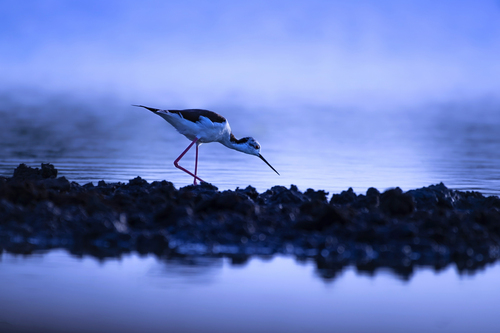
Black-winged Stilt (Himantopus himantopus) Black-winged Stilt
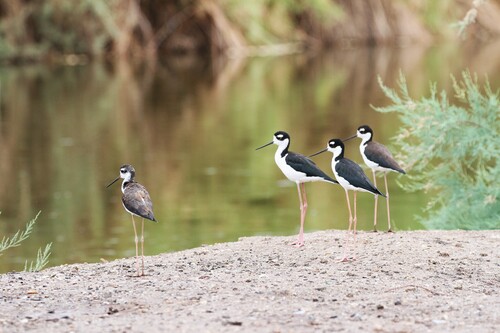
Black-necked Stilt (Himantopus mexicanus) Black-necked Stilt

Media

Loading…

In short

The most reliable field mark to separate Black-winged Stilt from Black-necked Stilt is the head and neck pattern in adults: Black-necked Stilt shows a continuous black line from the back up the hindneck, forming a full black cap that covers the head to just below the eye, with a distinct white spot above the eye. Black-winged Stilt adults are generally white-headed (especially in winter), with much less black on the head and neck, and never show a full black cap or the white eye-spot. Juvenile Black-winged Stilts have sandy-grey wings with pale fringes, while juvenile Black-necked Stilts are paler olive-brown above with rows of black speckles. Both species have very long pink legs and slender black bills, but subtle differences in back color and head pattern are key. In flight or at a distance, check for the extent and shape of black on the head and neck, and look for the white spot above the eye in Black-necked Stilt.

Identification tips

  1. Head and neck pattern (adult, all seasons): Black-necked Stilt shows a continuous black line from the back up the hindneck, forming a full black cap that covers the crown and extends below the eye, except for a white spot above the eye and white around the bill. Black-winged Stilt is mostly white-headed (especially in winter), with only variable black on the nape or hindneck, never forming a full cap.
  2. White spot above the eye (adult Black-necked): Look for a distinct white spot above the eye in Black-necked Stilt; Black-winged Stilt never shows this feature.
  3. Juvenile upperparts (flight or perched): Juvenile Black-winged Stilts are grey with a sandy hue and broad pale fringes on the wing coverts, forming a whitish line in flight. Juvenile Black-necked Stilts are light olive-brown above with rows of black speckles and some dark barring on the flanks.
  4. Back color (adult, breeding): Males of both species can show a greenish gloss on the back and wings, but in Black-winged Stilt the back is jet black (with greenish gloss in males, brownish in females), while in Black-necked Stilt the black is similar but the brown tinge in females is more pronounced.
  5. Tail pattern: Black-necked Stilt has a white tail with some grey banding; Black-winged Stilt's tail is less distinctly marked.
  6. Bill and leg color: Both species have long, thin black bills and long pink legs; these are not useful for separation.
  7. Sexual dimorphism: In both species, males are glossier black above, females browner; this is subtle and not reliable for separation.
  8. Flight views: In flight, focus on the head and neck pattern and any pale lines on the upperwing (juveniles). Both show black wings and white underparts.
  9. Downy young: Downy Black-necked Stilts are olive-brown above with black speckles; Black-winged Stilts are not described in detail but are generally greyer.
  10. Seasonal variation: Black-winged Stilt males may show more black on the head and neck in summer, but never a full cap; females and winter males are whiter-headed.
  11. Range and context: In the Americas, Black-necked Stilt is expected; in Europe, Asia, and Africa, Black-winged Stilt is the default. Vagrants are rare but possible.
  12. Pitfalls: Beware of variable black on the head and neck in Black-winged Stilt males in summer, which can approach but never matches the full cap of Black-necked. Intergrades in South America may show intermediate patterns.
  13. Habitat: Both species use similar wetland habitats; do not rely on habitat alone for identification.
  14. Behavior: Both species behave similarly and show the same foraging and flight style; behavior is not a separator.
  15. Vocalizations: No diagnostic differences are described in the sources.

Size

Both species are very similar in size and structure, with only minor differences: Black-winged Stilt averages 160 g and Black-necked Stilt 169 g in body mass, so size is not a reliable field mark. Length and wingspan overlap completely (Black-winged: 33–36 cm; Black-necked: 35–39 cm), and both have long, thin black bills and extremely long pink legs. In the field, structural differences are negligible and should not be relied upon for separation.

Plumage

Juvenile and immature birds show the clearest differences in wing and upperpart pattern: juvenile Black-winged Stilts are grey with a sandy hue and prominent pale feather fringes, which can appear as a whitish line in flight; this is absent in Black-necked Stilt. Juvenile Black-necked Stilts are light olive-brown above with rows of black speckles and some dark barring on the flanks. In adults, Black-necked Stilt always shows a continuous black line from the back up the hindneck, forming a full black cap on the head (except for a white spot above the eye and around the bill). Black-winged Stilt adults are mostly white-headed, especially in winter, with variable but always less extensive black on the head and neck. Males of both species may show a greenish gloss on the back and wings in breeding season, but females have a browner tinge. The tail of Black-necked Stilt is white with some grey banding, which is less prominent or absent in Black-winged Stilt.

Behaviour

Both species behave similarly, foraging in shallow water with a distinctive high-stepping gait and probing with their long bills. No behavioral differences are reliably diagnostic in the field. Both can be seen wading or flying in loose groups. Flight is direct and strong, with legs trailing well beyond the tail.

Habitat

Habitat is not a reliable separator outside of range: both species prefer shallow wetlands, marshes, and ponds. Black-winged Stilt is found in Europe, Asia, and Africa, while Black-necked Stilt is restricted to the Americas (including the US, Central and South America, and the Caribbean). In areas of potential vagrancy or overlap, habitat selection is similar, so context is only helpful if you know the local expected species.

Submit a better description

Use the same sections as the comparison. Your text is published immediately.

The most reliable field mark to separate Black-winged Stilt from Black-necked Stilt is the head and neck pattern in adults: Black-necked Stilt shows a continuous black line from the back up the hindneck, forming a full black cap that covers the head to just below the eye, with a distinct white spot above the eye. Black-winged Stilt adults are generally white-headed (especially in winter), with much less black on the head and neck, and never show a full black cap or the white eye-spot. Juvenile Black-winged Stilts have sandy-grey wings with pale fringes, while juvenile Black-necked Stilts are paler olive-brown above with rows of black speckles. Both species have very long pink legs and slender black bills, but subtle differences in back color and head pattern are key. In flight or at a distance, check for the extent and shape of black on the head and neck, and look for the white spot above the eye in Black-necked Stilt.

  1. Head and neck pattern (adult, all seasons): Black-necked Stilt shows a continuous black line from the back up the hindneck, forming a full black cap that covers the crown and extends below the eye, except for a white spot above the eye and white around the bill. Black-winged Stilt is mostly white-headed (especially in winter), with only variable black on the nape or hindneck, never forming a full cap.
  2. White spot above the eye (adult Black-necked): Look for a distinct white spot above the eye in Black-necked Stilt; Black-winged Stilt never shows this feature.
  3. Juvenile upperparts (flight or perched): Juvenile Black-winged Stilts are grey with a sandy hue and broad pale fringes on the wing coverts, forming a whitish line in flight. Juvenile Black-necked Stilts are light olive-brown above with rows of black speckles and some dark barring on the flanks.
  4. Back color (adult, breeding): Males of both species can show a greenish gloss on the back and wings, but in Black-winged Stilt the back is jet black (with greenish gloss in males, brownish in females), while in Black-necked Stilt the black is similar but the brown tinge in females is more pronounced.
  5. Tail pattern: Black-necked Stilt has a white tail with some grey banding; Black-winged Stilt's tail is less distinctly marked.
  6. Bill and leg color: Both species have long, thin black bills and long pink legs; these are not useful for separation.
  7. Sexual dimorphism: In both species, males are glossier black above, females browner; this is subtle and not reliable for separation.
  8. Flight views: In flight, focus on the head and neck pattern and any pale lines on the upperwing (juveniles). Both show black wings and white underparts.
  9. Downy young: Downy Black-necked Stilts are olive-brown above with black speckles; Black-winged Stilts are not described in detail but are generally greyer.
  10. Seasonal variation: Black-winged Stilt males may show more black on the head and neck in summer, but never a full cap; females and winter males are whiter-headed.
  11. Range and context: In the Americas, Black-necked Stilt is expected; in Europe, Asia, and Africa, Black-winged Stilt is the default. Vagrants are rare but possible.
  12. Pitfalls: Beware of variable black on the head and neck in Black-winged Stilt males in summer, which can approach but never matches the full cap of Black-necked. Intergrades in South America may show intermediate patterns.
  13. Habitat: Both species use similar wetland habitats; do not rely on habitat alone for identification.
  14. Behavior: Both species behave similarly and show the same foraging and flight style; behavior is not a separator.
  15. Vocalizations: No diagnostic differences are described in the sources.

Both species are very similar in size and structure, with only minor differences: Black-winged Stilt averages 160 g and Black-necked Stilt 169 g in body mass, so size is not a reliable field mark. Length and wingspan overlap completely (Black-winged: 33–36 cm; Black-necked: 35–39 cm), and both have long, thin black bills and extremely long pink legs. In the field, structural differences are negligible and should not be relied upon for separation.

Juvenile and immature birds show the clearest differences in wing and upperpart pattern: juvenile Black-winged Stilts are grey with a sandy hue and prominent pale feather fringes, which can appear as a whitish line in flight; this is absent in Black-necked Stilt. Juvenile Black-necked Stilts are light olive-brown above with rows of black speckles and some dark barring on the flanks. In adults, Black-necked Stilt always shows a continuous black line from the back up the hindneck, forming a full black cap on the head (except for a white spot above the eye and around the bill). Black-winged Stilt adults are mostly white-headed, especially in winter, with variable but always less extensive black on the head and neck. Males of both species may show a greenish gloss on the back and wings in breeding season, but females have a browner tinge. The tail of Black-necked Stilt is white with some grey banding, which is less prominent or absent in Black-winged Stilt.

Both species behave similarly, foraging in shallow water with a distinctive high-stepping gait and probing with their long bills. No behavioral differences are reliably diagnostic in the field. Both can be seen wading or flying in loose groups. Flight is direct and strong, with legs trailing well beyond the tail.

Habitat is not a reliable separator outside of range: both species prefer shallow wetlands, marshes, and ponds. Black-winged Stilt is found in Europe, Asia, and Africa, while Black-necked Stilt is restricted to the Americas (including the US, Central and South America, and the Caribbean). In areas of potential vagrancy or overlap, habitat selection is similar, so context is only helpful if you know the local expected species.

Discard your changes?

You have unsaved edits. If you leave now, those changes will be lost.

Black-winged Stilt · Black-necked Stilt · My Tricky Birds