

Motmot

Black-winged Monarch vs Australian Spectacled Monarch

Monarcha frater versus Symposiachrus trivirgatus

Play a quiz with Black-winged Monarch and Australian Spectacled Monarch
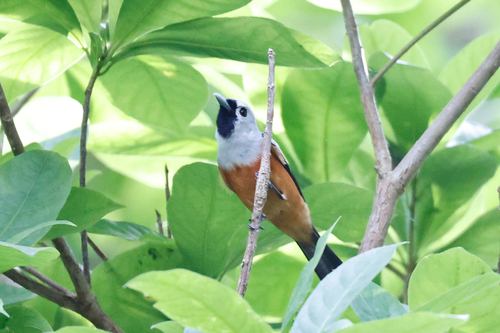
Black-winged Monarch (Monarcha frater) Black-winged Monarch
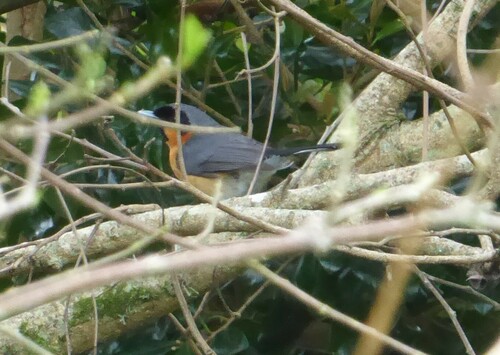
Australian Spectacled Monarch (Symposiachrus trivirgatus) Australian Spectacled Monarch

Media

Loading…

In short

The most reliable way to separate Black-winged Monarch from Australian Spectacled Monarch is by focusing on facial pattern and wing coloration in adults. Black-winged Monarch shows a much darker wing and lacks the bold pale spectacles of Spectacled Monarch, which is named for its prominent facial markings. Both species overlap in Australia and New Guinea, so range alone is not diagnostic. Immature and juvenile plumages are not described in detail in the sources, so field separation relies on adult features. Habitat preferences are broadly similar, but Spectacled Monarch is also found in mangroves.

Identification tips

  1. Facial pattern is key: Adult Australian Spectacled Monarch shows bold pale spectacles (eye-ring and lores), giving the face a striking, masked look. Black-winged Monarch lacks this feature and has a plainer face.
  2. Wing coloration: Black-winged Monarch has distinctly dark (blackish) wings in adults, which contrast with the rest of the plumage. Spectacled Monarch's wings are not as dark and do not stand out in the same way.
  3. Juvenile/immature separation: No detailed information is available on immature or juvenile wing patterns for either species, so caution is needed with young birds—rely on facial markings if visible.
  4. Bill and structure: Both species are structurally similar, with no reliable differences in bill shape or size described in the sources.
  5. Perched vs. in flight: Since no distinctive flight or upperwing pattern is described, focus on facial and wing coloration in all viewing conditions.
  6. Habitat context: If the bird is seen in mangrove forest, Australian Spectacled Monarch is more likely, but both species can occur in lowland and montane forests.
  7. Range is not diagnostic: Both species occur in Australia and New Guinea, so do not use location alone to separate them.
  8. Alternate names confusion: Be aware that "black-chinned monarch" can refer to different species; always check the scientific name.
  9. Voice: No vocal differences are described in the sources, so do not rely on calls or song for separation.
  10. Season and sex: No seasonal or sexual plumage differences are described, so adult field marks apply year-round.
  11. Superficial resemblance: Both species are monarch flycatchers and may be confused at a glance, but the facial pattern (spectacles) of Spectacled Monarch is the most consistent field mark.
  12. When in doubt: If facial markings are not visible, note the darkness of the wings and overall impression, but be cautious with immatures or poor views.
  13. Community tips: No additional field marks or pitfalls are noted in community sources.
  14. Plumage pitfalls: Avoid confusion with other 'black-chinned' or 'black-winged' monarchs—always confirm the region and facial pattern.
  15. Documentation: Photographing the face and wings is the best way to confirm identification when uncertain.

Size

Black-winged Monarch has a recorded adult body mass of 22.0 g [wikidata], but no direct measurement is available for Australian Spectacled Monarch. Both are medium-sized monarch flycatchers and are likely to overlap in size, so structure and mass are not reliable for separation in the field.

Plumage

No detailed age-specific (juvenile/immature) wing or upperwing pattern differences are described in the sources for either species. For adults, Black-winged Monarch is characterized by its dark wings and lack of strong facial markings. In contrast, Australian Spectacled Monarch is named for its bold pale spectacles (eye-ring and lores), which are prominent in adults and make the face appear strikingly marked. Both species are generally similar in overall coloration otherwise, but the facial pattern and wing darkness are the main contrasts.

Behaviour

Both species are typical monarch flycatchers, likely to be active and agile in the lower to mid-levels of forest, sallying for insects. No behavioral differences are described in the sources that would reliably separate them in the field.

Habitat

Both species inhabit subtropical or tropical moist lowland and montane forests in Australia and New Guinea [wikipedia]. However, Australian Spectacled Monarch is also found in mangrove forests, which may provide a slight habitat clue if observed there. Otherwise, habitat overlap is extensive and not a strong separator.

Submit a better description

Use the same sections as the comparison. Your text is published immediately.

The most reliable way to separate Black-winged Monarch from Australian Spectacled Monarch is by focusing on facial pattern and wing coloration in adults. Black-winged Monarch shows a much darker wing and lacks the bold pale spectacles of Spectacled Monarch, which is named for its prominent facial markings. Both species overlap in Australia and New Guinea, so range alone is not diagnostic. Immature and juvenile plumages are not described in detail in the sources, so field separation relies on adult features. Habitat preferences are broadly similar, but Spectacled Monarch is also found in mangroves.

  1. Facial pattern is key: Adult Australian Spectacled Monarch shows bold pale spectacles (eye-ring and lores), giving the face a striking, masked look. Black-winged Monarch lacks this feature and has a plainer face.
  2. Wing coloration: Black-winged Monarch has distinctly dark (blackish) wings in adults, which contrast with the rest of the plumage. Spectacled Monarch's wings are not as dark and do not stand out in the same way.
  3. Juvenile/immature separation: No detailed information is available on immature or juvenile wing patterns for either species, so caution is needed with young birds—rely on facial markings if visible.
  4. Bill and structure: Both species are structurally similar, with no reliable differences in bill shape or size described in the sources.
  5. Perched vs. in flight: Since no distinctive flight or upperwing pattern is described, focus on facial and wing coloration in all viewing conditions.
  6. Habitat context: If the bird is seen in mangrove forest, Australian Spectacled Monarch is more likely, but both species can occur in lowland and montane forests.
  7. Range is not diagnostic: Both species occur in Australia and New Guinea, so do not use location alone to separate them.
  8. Alternate names confusion: Be aware that "black-chinned monarch" can refer to different species; always check the scientific name.
  9. Voice: No vocal differences are described in the sources, so do not rely on calls or song for separation.
  10. Season and sex: No seasonal or sexual plumage differences are described, so adult field marks apply year-round.
  11. Superficial resemblance: Both species are monarch flycatchers and may be confused at a glance, but the facial pattern (spectacles) of Spectacled Monarch is the most consistent field mark.
  12. When in doubt: If facial markings are not visible, note the darkness of the wings and overall impression, but be cautious with immatures or poor views.
  13. Community tips: No additional field marks or pitfalls are noted in community sources.
  14. Plumage pitfalls: Avoid confusion with other 'black-chinned' or 'black-winged' monarchs—always confirm the region and facial pattern.
  15. Documentation: Photographing the face and wings is the best way to confirm identification when uncertain.

Black-winged Monarch has a recorded adult body mass of 22.0 g [wikidata], but no direct measurement is available for Australian Spectacled Monarch. Both are medium-sized monarch flycatchers and are likely to overlap in size, so structure and mass are not reliable for separation in the field.

No detailed age-specific (juvenile/immature) wing or upperwing pattern differences are described in the sources for either species. For adults, Black-winged Monarch is characterized by its dark wings and lack of strong facial markings. In contrast, Australian Spectacled Monarch is named for its bold pale spectacles (eye-ring and lores), which are prominent in adults and make the face appear strikingly marked. Both species are generally similar in overall coloration otherwise, but the facial pattern and wing darkness are the main contrasts.

Both species are typical monarch flycatchers, likely to be active and agile in the lower to mid-levels of forest, sallying for insects. No behavioral differences are described in the sources that would reliably separate them in the field.

Both species inhabit subtropical or tropical moist lowland and montane forests in Australia and New Guinea [wikipedia]. However, Australian Spectacled Monarch is also found in mangrove forests, which may provide a slight habitat clue if observed there. Otherwise, habitat overlap is extensive and not a strong separator.

Discard your changes?

You have unsaved edits. If you leave now, those changes will be lost.

Black-winged Monarch · Australian Spectacled Monarch · My Tricky Birds