

Motmot

Black-winged Kite vs European Honey-buzzard

Elanus caeruleus versus Pernis apivorus

Play a quiz with Black-winged Kite and European Honey-buzzard
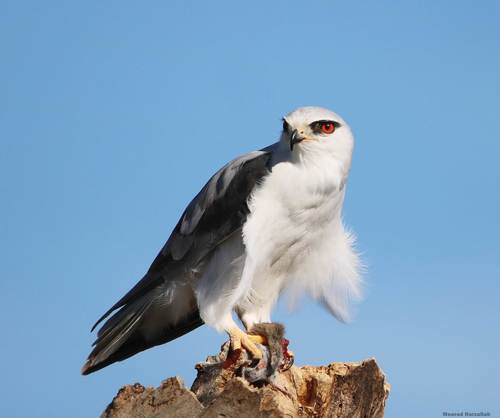
Black-winged Kite (Elanus caeruleus) Black-winged Kite
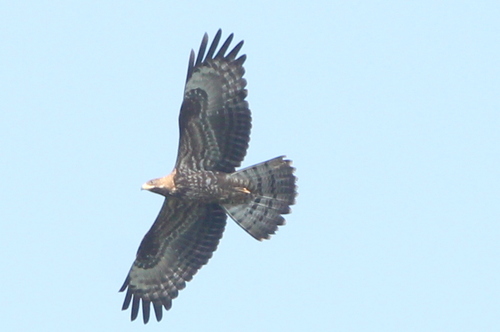
European Honey-buzzard (Pernis apivorus) European Honey-buzzard

Media

Loading…

In short

The most reliable field mark to separate Black-winged Kite from European Honey-buzzard is overall plumage and structure in flight: Black-winged Kite is compact, with striking white, grey, and black plumage and a short tail, while European Honey-buzzard is much larger, longer-winged, and long-tailed, with a more muted and variable brownish plumage. Juvenile Black-winged Kites show reddish-brown tones on upperparts and breast, unlike any honey-buzzard. In flight, the kite's wings are sharply pointed and the bird often hovers, while honey-buzzards soar on flat, broad wings with a long neck and small head. If you see a pale, owl-faced raptor with red eyes hovering over open land, it's a Black-winged Kite; a long-necked, broad-winged bird soaring over woodland is a European Honey-buzzard.

Identification tips

  1. Juvenile plumage: Juvenile Black-winged Kites have reddish-brown on the upperparts and breast, a unique feature not shown by any age of honey-buzzard. Use this mark if you see a rufous-tinged young raptor.
  2. Adult plumage: Black-winged Kite adults are sharply white below and pale grey above, with bold black patches on the shoulder and wingtips; honey-buzzards are brownish, variably barred, and never show this crisp contrast.
  3. Wing shape in flight: Black-winged Kite has long, pointed wings with black at the 'wrist' and outer primaries; European Honey-buzzard has broader, flat wings with no strong black contrast.
  4. Tail shape and pattern: Kite has a short, square tail, usually plain; honey-buzzard has a noticeably longer tail with two narrow dark bars and a broad subterminal bar.
  5. Head and face: Kite has an owl-like, rounded face with forward-facing red eyes; honey-buzzard has a small, pigeon-like head with a long neck, blue-grey (male) or brown (female) head, and no facial disk.
  6. Size and structure: Honey-buzzard is much larger, longer-winged, and longer-tailed; kite is small, compact, and short-tailed.
  7. Jizz in flight: Kite often hovers, kestrel-like, with wings held up in a shallow V; honey-buzzard soars on flat wings, sometimes with a slight downward kink at the wrist, and never hovers.
  8. Perched posture: Kite perches upright, often conspicuous on wires or posts in open country; honey-buzzard is secretive and usually perched in trees within woodland.
  9. Sex differences: Only honey-buzzard shows clear sexual dimorphism (blue-grey head in males, brown in females); kite sexes are similar.
  10. Habitat: Kites are seen in open, grassy areas; honey-buzzards are woodland birds.
  11. Behavior: Kite is often seen hunting by hovering; honey-buzzard is rarely seen except in soaring display or migration.
  12. Vocalization: Only honey-buzzard has a distinctive call ('peee-lu'); kite is generally silent.
  13. Iris color: Kite has striking red eyes; honey-buzzard's eyes are not red.
  14. Mimicry pitfalls: Juvenile honey-buzzards may mimic buzzards but never show the kite's black-and-white or reddish juvenile tones.
  15. Season/context: If seen in Europe in open country outside woodland, especially hovering, default to kite; if soaring over woodland, especially in late spring/summer, consider honey-buzzard.

Size

Black-winged Kite is a small raptor, much smaller and more compact than European Honey-buzzard. Honey-buzzard is 52–60 cm long with a wingspan of 130–150 cm and weighs 440–1050 g [wikipedia], making it noticeably larger and longer-winged than the kite. The kite is not as heavy-bodied, but its shorter tail and smaller frame are obvious when seen side by side or with other raptors for scale.

Plumage

Juvenile Black-winged Kites are distinctive with reddish-brown feathers on the upperparts and breast, a feature not found in any age of European Honey-buzzard. Adult Black-winged Kites are strikingly white below and pale grey above, with bold black patches on the shoulders and wingtips, and red irises. In contrast, European Honey-buzzard is variable brownish above and below, with barring on the tail (usually two narrow dark bars and a broad subterminal bar) and no strong contrast on the wing. Male honey-buzzards have a blue-grey head, females brown, but both lack the kite's black-and-white pattern. In flight, the kite's wings are long, pointed, and show black at the 'wrist' and primaries, while honey-buzzard's wings are broader, held flat, and lack strong black contrast. Juvenile honey-buzzards may mimic buzzards but never show the kite's crisp black-and-white or reddish tones.

Behaviour

Black-winged Kite is best known for its habit of hovering over open grasslands, kestrel-like, often remaining stationary in the air as it hunts. European Honey-buzzard does not hover; it soars on flat wings, often high above woodland, with a distinctive long-necked silhouette. The kite is more likely to be seen perched in the open or hovering, while the honey-buzzard is secretive except during migration or display flights. The kite's owl-like face and forward-facing eyes are unique among these two.

Habitat

Black-winged Kite prefers open grasslands, plains, and sometimes grassy slopes, rarely in dense woodland. European Honey-buzzard breeds in woodland and is rarely seen away from forested areas except on migration. If the bird is seen hovering over open country, it's almost certainly a kite; a soaring raptor over or near woodland is more likely a honey-buzzard.

Voice

European Honey-buzzard has a clear 'peee-lu' call, especially during display. Black-winged Kite is generally quiet, and its calls are not a useful field mark in most situations.

Submit a better description

Use the same sections as the comparison. Your text is published immediately.

The most reliable field mark to separate Black-winged Kite from European Honey-buzzard is overall plumage and structure in flight: Black-winged Kite is compact, with striking white, grey, and black plumage and a short tail, while European Honey-buzzard is much larger, longer-winged, and long-tailed, with a more muted and variable brownish plumage. Juvenile Black-winged Kites show reddish-brown tones on upperparts and breast, unlike any honey-buzzard. In flight, the kite's wings are sharply pointed and the bird often hovers, while honey-buzzards soar on flat, broad wings with a long neck and small head. If you see a pale, owl-faced raptor with red eyes hovering over open land, it's a Black-winged Kite; a long-necked, broad-winged bird soaring over woodland is a European Honey-buzzard.

  1. Juvenile plumage: Juvenile Black-winged Kites have reddish-brown on the upperparts and breast, a unique feature not shown by any age of honey-buzzard. Use this mark if you see a rufous-tinged young raptor.
  2. Adult plumage: Black-winged Kite adults are sharply white below and pale grey above, with bold black patches on the shoulder and wingtips; honey-buzzards are brownish, variably barred, and never show this crisp contrast.
  3. Wing shape in flight: Black-winged Kite has long, pointed wings with black at the 'wrist' and outer primaries; European Honey-buzzard has broader, flat wings with no strong black contrast.
  4. Tail shape and pattern: Kite has a short, square tail, usually plain; honey-buzzard has a noticeably longer tail with two narrow dark bars and a broad subterminal bar.
  5. Head and face: Kite has an owl-like, rounded face with forward-facing red eyes; honey-buzzard has a small, pigeon-like head with a long neck, blue-grey (male) or brown (female) head, and no facial disk.
  6. Size and structure: Honey-buzzard is much larger, longer-winged, and longer-tailed; kite is small, compact, and short-tailed.
  7. Jizz in flight: Kite often hovers, kestrel-like, with wings held up in a shallow V; honey-buzzard soars on flat wings, sometimes with a slight downward kink at the wrist, and never hovers.
  8. Perched posture: Kite perches upright, often conspicuous on wires or posts in open country; honey-buzzard is secretive and usually perched in trees within woodland.
  9. Sex differences: Only honey-buzzard shows clear sexual dimorphism (blue-grey head in males, brown in females); kite sexes are similar.
  10. Habitat: Kites are seen in open, grassy areas; honey-buzzards are woodland birds.
  11. Behavior: Kite is often seen hunting by hovering; honey-buzzard is rarely seen except in soaring display or migration.
  12. Vocalization: Only honey-buzzard has a distinctive call ('peee-lu'); kite is generally silent.
  13. Iris color: Kite has striking red eyes; honey-buzzard's eyes are not red.
  14. Mimicry pitfalls: Juvenile honey-buzzards may mimic buzzards but never show the kite's black-and-white or reddish juvenile tones.
  15. Season/context: If seen in Europe in open country outside woodland, especially hovering, default to kite; if soaring over woodland, especially in late spring/summer, consider honey-buzzard.

Black-winged Kite is a small raptor, much smaller and more compact than European Honey-buzzard. Honey-buzzard is 52–60 cm long with a wingspan of 130–150 cm and weighs 440–1050 g [wikipedia], making it noticeably larger and longer-winged than the kite. The kite is not as heavy-bodied, but its shorter tail and smaller frame are obvious when seen side by side or with other raptors for scale.

Juvenile Black-winged Kites are distinctive with reddish-brown feathers on the upperparts and breast, a feature not found in any age of European Honey-buzzard. Adult Black-winged Kites are strikingly white below and pale grey above, with bold black patches on the shoulders and wingtips, and red irises. In contrast, European Honey-buzzard is variable brownish above and below, with barring on the tail (usually two narrow dark bars and a broad subterminal bar) and no strong contrast on the wing. Male honey-buzzards have a blue-grey head, females brown, but both lack the kite's black-and-white pattern. In flight, the kite's wings are long, pointed, and show black at the 'wrist' and primaries, while honey-buzzard's wings are broader, held flat, and lack strong black contrast. Juvenile honey-buzzards may mimic buzzards but never show the kite's crisp black-and-white or reddish tones.

Black-winged Kite is best known for its habit of hovering over open grasslands, kestrel-like, often remaining stationary in the air as it hunts. European Honey-buzzard does not hover; it soars on flat wings, often high above woodland, with a distinctive long-necked silhouette. The kite is more likely to be seen perched in the open or hovering, while the honey-buzzard is secretive except during migration or display flights. The kite's owl-like face and forward-facing eyes are unique among these two.

Black-winged Kite prefers open grasslands, plains, and sometimes grassy slopes, rarely in dense woodland. European Honey-buzzard breeds in woodland and is rarely seen away from forested areas except on migration. If the bird is seen hovering over open country, it's almost certainly a kite; a soaring raptor over or near woodland is more likely a honey-buzzard.

European Honey-buzzard has a clear 'peee-lu' call, especially during display. Black-winged Kite is generally quiet, and its calls are not a useful field mark in most situations.

Discard your changes?

You have unsaved edits. If you leave now, those changes will be lost.

Black-winged Kite · European Honey-buzzard · My Tricky Birds