

Motmot

Black Redstart vs European Stonechat

Phoenicurus ochruros versus Saxicola rubicola

Play a quiz with Black Redstart and European Stonechat
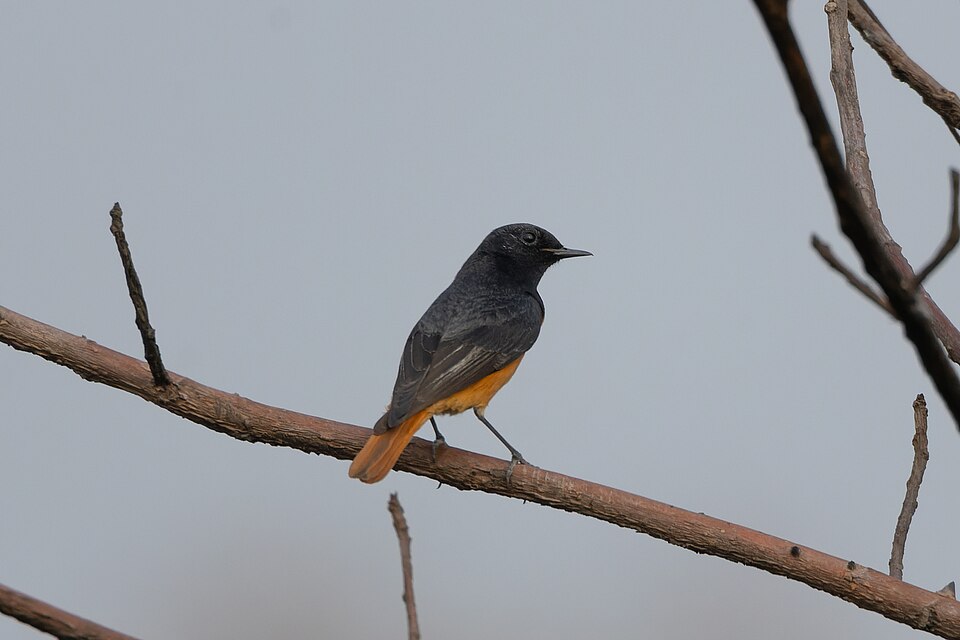
Black Redstart (Phoenicurus ochruros) Black Redstart
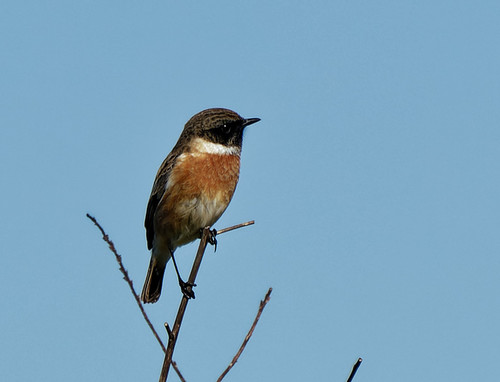
European Stonechat (Saxicola rubicola) European Stonechat

Media

Loading…

In short

The most reliable field mark between Black Redstart and European Stonechat is the tail and rump color: Black Redstart of all ages shows a striking orange-red tail with a dark central shaft, contrasting with a dark or grey rump, while European Stonechat has a dark tail and rump, lacking this contrast. Juvenile and female Black Redstarts are overall greyer or sandier with a pale buff eye-ring, while female and immature Stonechats are browner with a streaked appearance and no eye-ring. In flight, Black Redstart’s tail often flashes rufous, a key separation from the darker-tailed Stonechat. Both species are small, upright insectivores, but Black Redstart is more likely to be seen on rocks or urban structures, while Stonechat prefers shrubby grassland.

Identification tips

  1. Tail color is the single most reliable mark: Black Redstart of all ages shows a bright orange-red tail with a dark center, even in flight or poor light, while European Stonechat’s tail is dark brown to black and matches the rump.
  2. Rump color: Black Redstart’s rump is dark or grey, contrasting with the rufous tail; Stonechat’s rump is dark, blending with the tail (except in some pale southern subspecies, but never rufous).
  3. Eye-ring in females and juveniles: Female and juvenile Black Redstarts often show a distinct pale buff eye-ring, lacking in Stonechats of any age.
  4. Overall tone of plumage in immatures/females: Black Redstart is pale grey-brown or sandy, often with a uniform look; Stonechat is browner and more streaked, especially on the underparts.
  5. White in the wing: Adult male Stonechats have a small white scapular patch and, in some subspecies, a white half-collar on the neck; Black Redstart males may show a pale wing patch, but females and immatures do not.
  6. Head pattern in males: Adult male Stonechat has a striking black head with a white half-collar; Black Redstart males are dark grey to black, but lack the white neck patch.
  7. Underpart color in males: Black Redstart males (especially eastern subspecies) may have deep rufous underparts; Stonechat males have a bright orange throat and breast with a white belly.
  8. Perching behavior: Black Redstart often chooses rocks, walls, or rooftops, while Stonechat prefers low shrubs or tall weeds in open country.
  9. Tail movement: Black Redstart frequently shivers or flicks its tail, drawing attention to the rufous color; Stonechat may flick its tail, but the effect is less striking due to the dark color.
  10. Habitat context: In urban or rocky areas, expect Black Redstart; in shrubby grassland or heath, expect Stonechat.
  11. Flight view: In flight, look for the rufous tail of Black Redstart; Stonechat shows a uniform dark tail and rump.
  12. Sex and season: Female and juvenile Stonechats are especially prone to confusion with Black Redstart, but always check for the tail and eye-ring.
  13. Subspecific variation: Both species show some variation in color intensity, but the tail color and eye-ring remain reliable.
  14. Voice: Not covered in the notes, so do not rely on calls for separation here.
  15. Size and structure: Both are similar in size and upright in posture; do not use size alone for separation.

Size

Both species are very similar in size, with Black Redstart and European Stonechat both around 11.5–13 cm in length and weighing 13–17 g [wikipedia]. There is no significant difference in bulk or proportions that is reliably diagnostic in the field.

Plumage

Juvenile and female Black Redstarts are pale grey-brown or sandy overall, often with a distinct buff eye-ring and a uniform color to the head, nape, and back. Their tail is always orange-red, even in young birds, with a dark central shaft, and contrasts with the rump. In contrast, juvenile and female European Stonechats are browner, with streaked upperparts and underparts, lacking a clear eye-ring, and the only white is a small, often buffy-white scapular patch. The tail and rump are both dark, without any rufous flash. Adult male Black Redstarts (depending on subspecies) are dark grey to black with a rufous tail and may have a pale wing patch; adult male Stonechats have a black head, orange throat and breast, white neck-side patches, and a dark tail and rump. In flight, Black Redstart always shows a rufous tail, while Stonechat’s tail and rump remain dark. Subspecific variation in both species can cause confusion, but the tail color is consistent.

Behaviour

Black Redstart often perches on rocks, walls, or buildings, making short sallies for insects and frequently flicking or shivering its tail, which shows the rufous color. European Stonechat typically perches on low shrubs, brambles, or tall weeds in open grassland, also sallying for insects but less likely to use urban or rocky sites. Both species are upright and active, but Black Redstart is more likely to be seen in urban or rocky settings, while Stonechat is tied to shrubby, open country.

Habitat

Black Redstart favors rocky habitats, cliffs, and urban environments with stone or concrete structures, especially in breeding season, and is widespread in Eurasia and North Africa [wikipedia]. European Stonechat prefers open grassland, heathland, coastal dunes, and areas with scattered shrubs or bramble, rarely using built environments. If seen in a city or on a building, Black Redstart is far more likely; in shrubby fields or heath, Stonechat is expected.

Submit a better description

Use the same sections as the comparison. Your text is published immediately.

The most reliable field mark between Black Redstart and European Stonechat is the tail and rump color: Black Redstart of all ages shows a striking orange-red tail with a dark central shaft, contrasting with a dark or grey rump, while European Stonechat has a dark tail and rump, lacking this contrast. Juvenile and female Black Redstarts are overall greyer or sandier with a pale buff eye-ring, while female and immature Stonechats are browner with a streaked appearance and no eye-ring. In flight, Black Redstart’s tail often flashes rufous, a key separation from the darker-tailed Stonechat. Both species are small, upright insectivores, but Black Redstart is more likely to be seen on rocks or urban structures, while Stonechat prefers shrubby grassland.

  1. Tail color is the single most reliable mark: Black Redstart of all ages shows a bright orange-red tail with a dark center, even in flight or poor light, while European Stonechat’s tail is dark brown to black and matches the rump.
  2. Rump color: Black Redstart’s rump is dark or grey, contrasting with the rufous tail; Stonechat’s rump is dark, blending with the tail (except in some pale southern subspecies, but never rufous).
  3. Eye-ring in females and juveniles: Female and juvenile Black Redstarts often show a distinct pale buff eye-ring, lacking in Stonechats of any age.
  4. Overall tone of plumage in immatures/females: Black Redstart is pale grey-brown or sandy, often with a uniform look; Stonechat is browner and more streaked, especially on the underparts.
  5. White in the wing: Adult male Stonechats have a small white scapular patch and, in some subspecies, a white half-collar on the neck; Black Redstart males may show a pale wing patch, but females and immatures do not.
  6. Head pattern in males: Adult male Stonechat has a striking black head with a white half-collar; Black Redstart males are dark grey to black, but lack the white neck patch.
  7. Underpart color in males: Black Redstart males (especially eastern subspecies) may have deep rufous underparts; Stonechat males have a bright orange throat and breast with a white belly.
  8. Perching behavior: Black Redstart often chooses rocks, walls, or rooftops, while Stonechat prefers low shrubs or tall weeds in open country.
  9. Tail movement: Black Redstart frequently shivers or flicks its tail, drawing attention to the rufous color; Stonechat may flick its tail, but the effect is less striking due to the dark color.
  10. Habitat context: In urban or rocky areas, expect Black Redstart; in shrubby grassland or heath, expect Stonechat.
  11. Flight view: In flight, look for the rufous tail of Black Redstart; Stonechat shows a uniform dark tail and rump.
  12. Sex and season: Female and juvenile Stonechats are especially prone to confusion with Black Redstart, but always check for the tail and eye-ring.
  13. Subspecific variation: Both species show some variation in color intensity, but the tail color and eye-ring remain reliable.
  14. Voice: Not covered in the notes, so do not rely on calls for separation here.
  15. Size and structure: Both are similar in size and upright in posture; do not use size alone for separation.

Both species are very similar in size, with Black Redstart and European Stonechat both around 11.5–13 cm in length and weighing 13–17 g [wikipedia]. There is no significant difference in bulk or proportions that is reliably diagnostic in the field.

Juvenile and female Black Redstarts are pale grey-brown or sandy overall, often with a distinct buff eye-ring and a uniform color to the head, nape, and back. Their tail is always orange-red, even in young birds, with a dark central shaft, and contrasts with the rump. In contrast, juvenile and female European Stonechats are browner, with streaked upperparts and underparts, lacking a clear eye-ring, and the only white is a small, often buffy-white scapular patch. The tail and rump are both dark, without any rufous flash. Adult male Black Redstarts (depending on subspecies) are dark grey to black with a rufous tail and may have a pale wing patch; adult male Stonechats have a black head, orange throat and breast, white neck-side patches, and a dark tail and rump. In flight, Black Redstart always shows a rufous tail, while Stonechat’s tail and rump remain dark. Subspecific variation in both species can cause confusion, but the tail color is consistent.

Black Redstart often perches on rocks, walls, or buildings, making short sallies for insects and frequently flicking or shivering its tail, which shows the rufous color. European Stonechat typically perches on low shrubs, brambles, or tall weeds in open grassland, also sallying for insects but less likely to use urban or rocky sites. Both species are upright and active, but Black Redstart is more likely to be seen in urban or rocky settings, while Stonechat is tied to shrubby, open country.

Black Redstart favors rocky habitats, cliffs, and urban environments with stone or concrete structures, especially in breeding season, and is widespread in Eurasia and North Africa [wikipedia]. European Stonechat prefers open grassland, heathland, coastal dunes, and areas with scattered shrubs or bramble, rarely using built environments. If seen in a city or on a building, Black Redstart is far more likely; in shrubby fields or heath, Stonechat is expected.

Discard your changes?

You have unsaved edits. If you leave now, those changes will be lost.

Black Redstart · European Stonechat · My Tricky Birds