

Black-naped Oriole vs Slender-billed Oriole
Oriolus chinensis versus Oriolus tenuirostris
Play a quiz with Black-naped Oriole and Slender-billed Oriole
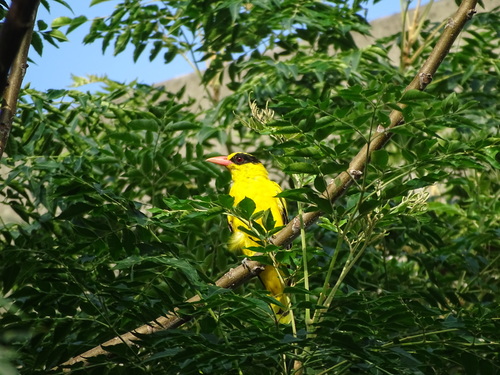 Black-naped Oriole
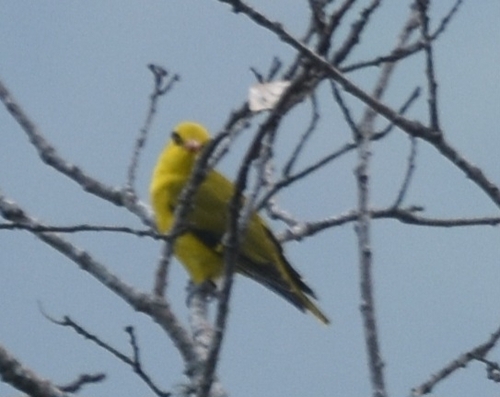 Slender-billed Oriole
In short
The most reliable field mark to separate Black-naped Oriole from Slender-billed Oriole is the broad black mask and nape: Black-naped Oriole shows a conspicuous black stripe that widens and joins at the back of the neck, forming a full 'nape' band, while Slender-billed Oriole lacks this feature. Both species are similar in size and overall golden-yellow coloration, but Black-naped Oriole is more likely to show a strong pinkish bill and, in females and juveniles, more greenish or olive tones on the mantle and tail. Juvenile Black-naped Orioles also show a streaked underside, which is not described for Slender-billed. Habitat overlap is possible, but Slender-billed Oriole is more restricted to forested hills and mountains, while Black-naped is often found in a wider range of wooded habitats, including gardens. Calls and songs may differ, but field separation is best based on plumage and structure.
Identification tips
- Broad black nape band (adult Black-naped): Look for a black stripe that widens and joins at the back of the neck, forming a full collar—this is diagnostic for Black-naped Oriole and absent in Slender-billed.
- Juvenile streaking (Black-naped): Juvenile Black-naped Orioles have a streaked underside and dull greenish upperparts with brown streaks; Slender-billed juveniles are not described as streaked, so any streaked young oriole is likely Black-naped.
- Bill color: Black-naped Oriole typically has a strong pinkish bill, which may be a useful mark in good light. Bill shape may differ, with Slender-billed possibly having a more slender bill, but this is not detailed in the sources.
- Female/immature mantle and tail: Female and some immature Black-naped Orioles show a greenish or olive mantle and tail, especially in southern populations. Slender-billed is not described as having this feature.
- Tail pattern (Black-naped): Central tail feathers tipped yellow, lateral ones more broadly yellow in Black-naped; tail pattern for Slender-billed is not described, so this may be a supporting mark.
- Wing pattern: In some Black-naped subspecies, wings are all black with a yellow primary covert patch; this is not mentioned for Slender-billed.
- Habitat context: Black-naped Oriole is common in gardens, urban parks, and a wide range of wooded habitats; Slender-billed is much more restricted to forested hills and mountains. If seen in a city or open woodland, Black-naped is far more likely.
- Flight style: Black-naped Oriole is noted for a dipping flight; this is not described for Slender-billed, but may be a subtle behavioral clue.
- Voice: Black-naped Oriole gives a nasal 'niee' or 'myaa' and a fluty song; Slender-billed's voice is not described, so only use this if you are already familiar with both.
- Geographic range: While ranges overlap in Southeast Asia, Black-naped is more widespread and adaptable, while Slender-billed is more localized to forested regions.
- Sexual dimorphism: Both species show some sexual variation, but only Black-naped females are described as more greenish or olive on the back and tail.
- Subspecies variation (Black-naped): Some Black-naped subspecies (e.g., Andaman, Nicobar) show all-black wings or a very broad nape band, which can be striking; no such variation is described for Slender-billed.
- Plumage brightness: Black-naped Oriole shows geographic variation in yellow brightness, with southern birds duller and more greenish; Slender-billed's plumage variation is not described.
- Pitfalls: Both species are similar in size and overall golden coloration; always check for the black nape band and juvenile streaking before relying on overall color or size.
- When in doubt: If the bird lacks a black nape band, is not streaked below, and is in deep forest, Slender-billed becomes more likely—but beware of range overlap and subtle individual variation.
Size
Both species are nearly identical in size, with an average body mass of 82 grams [wikidata]. There are no described differences in overall length, bulk, or proportions that would be reliable for field separation. Bill size may differ subtly, as the name 'Slender-billed' suggests, but this is not detailed in the available sources.
Plumage
Juvenile Black-naped Orioles are distinctive with a streaked underside and dull greenish upperparts with brown streaks, plus yellowish head and undertail coverts. This streaking is not described for Slender-billed Oriole juveniles, so a streaked, yellowish juvenile oriole is likely Black-naped. Adult male Black-naped Orioles show a broad black mask that widens and joins at the nape, forming a full collar, while Slender-billed lacks this feature. Female Black-naped Orioles are more greenish or olive on the mantle and tail, especially in southern populations, and may lack yellow spots on the wing secondaries, while no such variation is described for Slender-billed. The wings of Black-naped Oriole are all black with a yellow primary covert patch in some subspecies, but this is not detailed for Slender-billed. Tail pattern in Black-naped: central feathers tipped yellow, lateral ones more broadly yellow; no such detail is given for Slender-billed. In summary, the black nape band and any streaked juvenile are strong clues for Black-naped.
Behaviour
Both species are canopy-dwelling orioles, often seen moving through the upper levels of trees. Black-naped Oriole is noted for a dipping flight, which may help in separation if observed well, but this is not described for Slender-billed. Feeding behavior is similar, with both taking fruit and insects. Black-naped Oriole is more likely to be seen in gardens and open wooded areas, while Slender-billed is more strictly a forest species.
Habitat
Black-naped Oriole is found in a wide range of wooded habitats across Asia, including forests, gardens, and urban parks, and is often common even in city gardens in places like Singapore. Slender-billed Oriole is more restricted to subtropical or tropical moist lowland and montane forests, especially in the eastern Himalayas and Southeast Asia, and is less likely to be found in open or urban habitats. If seen in a city park or garden, Black-naped is much more likely.
Voice
The usual call of Black-naped Oriole is a nasal 'niee' or 'myaa', and the song is a fluty 'iwee wee wee-leeow'. Calls of some Black-naped subspecies are said to be quite different, with the Nicobar population having a more modulated note. No specific vocal description is available for Slender-billed Oriole in the sources, so voice is not a reliable separation unless the observer is familiar with both species' repertoires.
Black-naped Oriole · Slender-billed Oriole · My Tricky Birds