

Motmot

Black-headed Bunting vs Yellow-breasted Bunting

Emberiza melanocephala versus Emberiza aureola

Play a quiz with Black-headed Bunting and Yellow-breasted Bunting
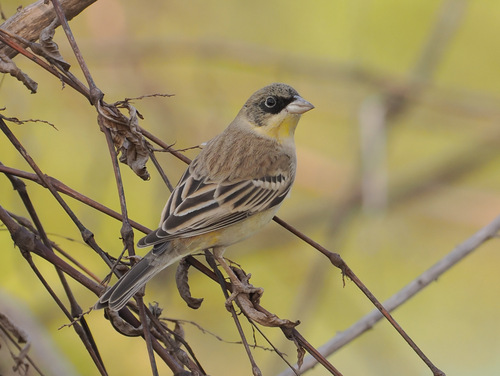
Black-headed Bunting (Emberiza melanocephala) Black-headed Bunting
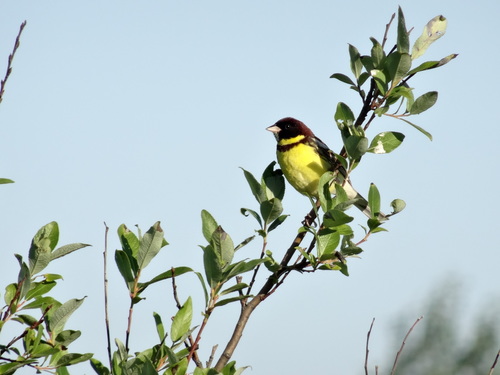
Yellow-breasted Bunting (Emberiza aureola) Yellow-breasted Bunting

Media

Loading…

In short

The most reliable separation between Black-headed Bunting and Yellow-breasted Bunting is in adult breeding males: Black-headed shows a striking black hood and bright yellow underparts with a chestnut back, while Yellow-breasted has a black face and throat bar, white underparts with black flank streaks, and a pink lower mandible. Females and immatures are much trickier, but Black-headed tends to have more yellow on the vent and less streaking below, while Yellow-breasted females and juveniles are more heavily streaked and have a buffier face. Both species can be similar in structure and size, but Black-headed averages slightly heavier and longer-tailed. Pay close attention to head pattern, underpart color, and streaking, especially in non-breeding or young birds.

Identification tips

  1. Adult breeding male Black-headed Bunting: Look for a full black hood, bright yellow underparts, and a chestnut back. This combination is unique among buntings in the region.
  2. Adult breeding male Yellow-breasted Bunting: Note the black face and throat bar (not a full hood), white underparts with bold black flank streaks, and a pink lower mandible. The back is brown, not chestnut.
  3. Female and immature Black-headed Bunting: Paler overall, with a greyish head, yellow vent, and less streaking below. First-year males may show a grey crown and mixed chestnut/grey back; first-year females have more streaking on the crown than the lower back.
  4. Female and immature Yellow-breasted Bunting: Heavily streaked on the back and underparts, with a whitish face marked by dark crown, eye, and cheek stripes. Juveniles are buffier overall and more streaked, especially on the face and underparts.
  5. Yellow vent (Black-headed Bunting): In all ages, a yellow vent is a useful mark for Black-headed Bunting, especially when compared to the buffier, more streaked underparts of Yellow-breasted.
  6. Head pattern: Black-headed Bunting females and immatures have a plainer, greyer head; Yellow-breasted Bunting females and immatures have a more contrasting, streaked face with dark stripes.
  7. Underpart streaking: Yellow-breasted Bunting (all ages except adult males) is more heavily streaked below, especially on the flanks and breast. Black-headed Bunting is less streaked, with cleaner yellow or pale underparts.
  8. Bill color: Adult male Yellow-breasted Bunting has a pink lower mandible, which can be a subtle but helpful mark at close range.
  9. Back color: Black-headed Bunting males have a rich chestnut back; Yellow-breasted Bunting has a brown back, never chestnut.
  10. Tail and structure: Black-headed Bunting is slightly bulkier and longer-tailed, but this is subtle and best used in direct comparison.
  11. Habitat and range: If in southeast Europe to Iran, especially in dry grasslands or farmland, Black-headed Bunting is more likely. In northern Eurasia, especially in wet meadows or reedbeds, Yellow-breasted Bunting is expected.
  12. Flock composition: Both species form flocks, but mixed flocks are rare outside migration or wintering areas where ranges overlap.
  13. Voice: Black-headed Bunting's song is loud and harsh with abrupt stops; Yellow-breasted Bunting's song is not described here, so do not rely on voice for separation unless known from other sources.
  14. Season and molt: Both species undergo two molts per year, but this is not helpful for field identification.
  15. Beware hybrids: In northern Iran, hybrids between Black-headed and Red-headed Bunting occur, but not with Yellow-breasted; confusion is most likely with dull females and juveniles, so focus on vent color and face pattern.

Size

Black-headed Bunting is slightly heavier (28 g) than Yellow-breasted Bunting (17–26 g), and is described as larger than a reed bunting with a long tail. Yellow-breasted Bunting is a large, stocky bunting for its genus, measuring 14–16 cm in length. In the field, both can appear similar in size, but Black-headed may look a bit bulkier and longer-tailed, especially when perched.

Plumage

For adult breeding males, Black-headed Bunting stands out with its full black hood, bright yellow underparts, and rich chestnut back. Yellow-breasted Bunting males have a black face and throat bar (not a full hood), white underparts with bold black flank streaks, and a pinkish lower mandible. Females and juveniles of both species are much less distinct: Black-headed Bunting females are paler, with a greyish head and yellow vent, while Yellow-breasted Bunting females are more heavily streaked on the back and underparts, with a whitish face marked by dark crown, eye, and cheek stripes. Juvenile Black-headed Buntings have a yellow vent and less streaking below, while juvenile Yellow-breasted Buntings are buffier overall and more streaked, especially on the underparts and face. First-year Black-headed Bunting males show a grey crown and a mix of chestnut and grey on the back, while first-year females have more crown streaking than lower back, with a yellow vent. No distinctive upperwing or flight pattern differences are described for these ages.

Behaviour

Both species are typical buntings, often seen foraging in flocks in open areas. Black-headed Bunting is noted for forming flocks in grasslands, especially outside the breeding season, and both species feed mostly on seeds, switching to insects when feeding young. No major behavioral differences are highlighted that are diagnostic in the field.

Habitat

Black-headed Bunting breeds in southeast Europe to Iran, favoring open grasslands and agricultural areas, and winters mainly in India and southeast Asia. Yellow-breasted Bunting is found across the Boreal and East Palearctic, breeding in northern Eurasia and wintering further south. While both can be found in open country, Black-headed is more associated with drier grasslands and farmland, while Yellow-breasted prefers wetter meadows, marsh edges, and reedbeds in its breeding range. Overlap is unlikely except on migration or in wintering grounds in South Asia.

Voice

Black-headed Bunting has a song of loud, harsh strophes with some clear, slurred notes, ending abruptly; its winter call is a single note tweet or soft 'zrit'. No specific vocal description is available for Yellow-breasted Bunting in these notes, so voice is not a reliable separator based on the provided information.

Submit a better description

Use the same sections as the comparison. Your text is published immediately.

The most reliable separation between Black-headed Bunting and Yellow-breasted Bunting is in adult breeding males: Black-headed shows a striking black hood and bright yellow underparts with a chestnut back, while Yellow-breasted has a black face and throat bar, white underparts with black flank streaks, and a pink lower mandible. Females and immatures are much trickier, but Black-headed tends to have more yellow on the vent and less streaking below, while Yellow-breasted females and juveniles are more heavily streaked and have a buffier face. Both species can be similar in structure and size, but Black-headed averages slightly heavier and longer-tailed. Pay close attention to head pattern, underpart color, and streaking, especially in non-breeding or young birds.

  1. Adult breeding male Black-headed Bunting: Look for a full black hood, bright yellow underparts, and a chestnut back. This combination is unique among buntings in the region.
  2. Adult breeding male Yellow-breasted Bunting: Note the black face and throat bar (not a full hood), white underparts with bold black flank streaks, and a pink lower mandible. The back is brown, not chestnut.
  3. Female and immature Black-headed Bunting: Paler overall, with a greyish head, yellow vent, and less streaking below. First-year males may show a grey crown and mixed chestnut/grey back; first-year females have more streaking on the crown than the lower back.
  4. Female and immature Yellow-breasted Bunting: Heavily streaked on the back and underparts, with a whitish face marked by dark crown, eye, and cheek stripes. Juveniles are buffier overall and more streaked, especially on the face and underparts.
  5. Yellow vent (Black-headed Bunting): In all ages, a yellow vent is a useful mark for Black-headed Bunting, especially when compared to the buffier, more streaked underparts of Yellow-breasted.
  6. Head pattern: Black-headed Bunting females and immatures have a plainer, greyer head; Yellow-breasted Bunting females and immatures have a more contrasting, streaked face with dark stripes.
  7. Underpart streaking: Yellow-breasted Bunting (all ages except adult males) is more heavily streaked below, especially on the flanks and breast. Black-headed Bunting is less streaked, with cleaner yellow or pale underparts.
  8. Bill color: Adult male Yellow-breasted Bunting has a pink lower mandible, which can be a subtle but helpful mark at close range.
  9. Back color: Black-headed Bunting males have a rich chestnut back; Yellow-breasted Bunting has a brown back, never chestnut.
  10. Tail and structure: Black-headed Bunting is slightly bulkier and longer-tailed, but this is subtle and best used in direct comparison.
  11. Habitat and range: If in southeast Europe to Iran, especially in dry grasslands or farmland, Black-headed Bunting is more likely. In northern Eurasia, especially in wet meadows or reedbeds, Yellow-breasted Bunting is expected.
  12. Flock composition: Both species form flocks, but mixed flocks are rare outside migration or wintering areas where ranges overlap.
  13. Voice: Black-headed Bunting's song is loud and harsh with abrupt stops; Yellow-breasted Bunting's song is not described here, so do not rely on voice for separation unless known from other sources.
  14. Season and molt: Both species undergo two molts per year, but this is not helpful for field identification.
  15. Beware hybrids: In northern Iran, hybrids between Black-headed and Red-headed Bunting occur, but not with Yellow-breasted; confusion is most likely with dull females and juveniles, so focus on vent color and face pattern.

Black-headed Bunting is slightly heavier (28 g) than Yellow-breasted Bunting (17–26 g), and is described as larger than a reed bunting with a long tail. Yellow-breasted Bunting is a large, stocky bunting for its genus, measuring 14–16 cm in length. In the field, both can appear similar in size, but Black-headed may look a bit bulkier and longer-tailed, especially when perched.

For adult breeding males, Black-headed Bunting stands out with its full black hood, bright yellow underparts, and rich chestnut back. Yellow-breasted Bunting males have a black face and throat bar (not a full hood), white underparts with bold black flank streaks, and a pinkish lower mandible. Females and juveniles of both species are much less distinct: Black-headed Bunting females are paler, with a greyish head and yellow vent, while Yellow-breasted Bunting females are more heavily streaked on the back and underparts, with a whitish face marked by dark crown, eye, and cheek stripes. Juvenile Black-headed Buntings have a yellow vent and less streaking below, while juvenile Yellow-breasted Buntings are buffier overall and more streaked, especially on the underparts and face. First-year Black-headed Bunting males show a grey crown and a mix of chestnut and grey on the back, while first-year females have more crown streaking than lower back, with a yellow vent. No distinctive upperwing or flight pattern differences are described for these ages.

Both species are typical buntings, often seen foraging in flocks in open areas. Black-headed Bunting is noted for forming flocks in grasslands, especially outside the breeding season, and both species feed mostly on seeds, switching to insects when feeding young. No major behavioral differences are highlighted that are diagnostic in the field.

Black-headed Bunting breeds in southeast Europe to Iran, favoring open grasslands and agricultural areas, and winters mainly in India and southeast Asia. Yellow-breasted Bunting is found across the Boreal and East Palearctic, breeding in northern Eurasia and wintering further south. While both can be found in open country, Black-headed is more associated with drier grasslands and farmland, while Yellow-breasted prefers wetter meadows, marsh edges, and reedbeds in its breeding range. Overlap is unlikely except on migration or in wintering grounds in South Asia.

Black-headed Bunting has a song of loud, harsh strophes with some clear, slurred notes, ending abruptly; its winter call is a single note tweet or soft 'zrit'. No specific vocal description is available for Yellow-breasted Bunting in these notes, so voice is not a reliable separator based on the provided information.

Discard your changes?

You have unsaved edits. If you leave now, those changes will be lost.

Black-headed Bunting · Yellow-breasted Bunting · My Tricky Birds