

Black Grouse vs Caucasian Grouse
Lyrurus tetrix versus Lyrurus mlokosiewiczi
Play a quiz with Black Grouse and Caucasian Grouse
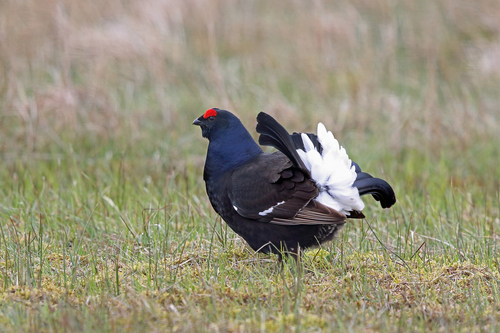 Black Grouse
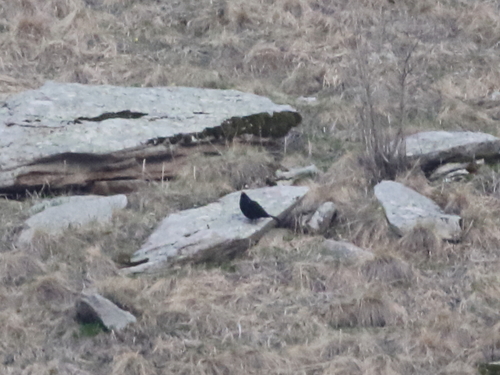 Caucasian Grouse
In short
The most reliable field mark between Black Grouse and Caucasian Grouse is the male's tail shape and contrasting white in the wings and undertail: Black Grouse males show a striking lyre-shaped tail with bold white wing bars and undertail coverts, while Caucasian Grouse males have a deeply forked tail and lack the strong white contrasts, showing only a brief flash of white underwing in display. Females of both are cryptic, but Black Grouse hens are larger and more rufous, while Caucasian Grouse hens are smaller and greyer with heavier barring. In flight, look for the Black Grouse's white wingline and broad white undertail, versus the subtler, momentary underwing flash of the Caucasian Grouse. Size and structure also help: Black Grouse are noticeably heavier and longer, especially in males.
Identification tips
- Tail shape in males: Black Grouse males have a lyre-shaped tail with outer feathers curving outward; Caucasian Grouse males have a deeply forked tail without the lyre shape. This is most obvious when displaying or perched.
- White contrasts in flight (all ages): Black Grouse show a bold white wing bar and broad white undertail coverts, visible both perched and in flight. Caucasian Grouse lack these, showing only a brief flash of white underwing during display flights.
- Plumage gloss (males): Black Grouse males have a deep blue gloss on neck and back, especially in good light; Caucasian Grouse males are more uniformly black without blue gloss.
- Female coloration: Black Grouse hens are larger, warmer rufous-brown, and less heavily barred. Caucasian Grouse hens are smaller, greyer, and more strongly barred, giving a colder, more patterned look.
- Size and bulk: Black Grouse are heavier and longer in both sexes. If you have a sense of scale, especially with other grouse or known objects, Black Grouse will look bulkier.
- Display behavior: Black Grouse males are noisy and conspicuous at leks, fanning tails and calling. Caucasian Grouse males are much quieter, with display consisting of fluttering leaps and wing whistles.
- Geographic context: Outside the Caucasus region, a black Lyrurus grouse is almost certainly Black Grouse. Caucasian Grouse are endemic to the Caucasus and adjacent areas.
- White undertail coverts: Only Black Grouse males show broad, bright white undertail coverts; Caucasian Grouse males do not.
- Wing bar: The white wing bar is strong and obvious in Black Grouse, absent in Caucasian Grouse except for a fleeting underwing flash during display.
- Lek size and noise: Black Grouse leks can be large and very noisy; Caucasian Grouse leks are smaller and quieter.
- Habitat: Black Grouse favor moorland and forest edge; Caucasian Grouse are more tied to subalpine and alpine zones of the Caucasus.
- Female structure: Black Grouse hens are larger and more robust; Caucasian Grouse hens are smaller and more delicate.
- Flight jizz: Black Grouse in flight show strong white contrasts and a heavier, more ponderous flight; Caucasian Grouse are more uniformly dark and less bulky in the air.
- Red eye combs: Both males have red eye combs, so this is not a useful separator.
- Hybridization: Black Grouse can hybridize with several other grouse and pheasants where ranges overlap, but this is not a common field concern for these two species.
Size
Black Grouse is the larger species, with males averaging around 1050 g (and sometimes much heavier), and females also larger than their Caucasian counterparts. Male Black Grouse reach about 60 cm in length, while Caucasian Grouse males are 50–55 cm. Females show a similar size gap: Black Grouse hens are about 45 cm, Caucasian Grouse hens 37–42 cm. In the field, Black Grouse appear bulkier and more robust, especially in direct comparison or with experience.
Plumage
- Males (adult breeding): Black Grouse males are glossy black with deep blue gloss on neck and back, a prominent white wing bar, and very conspicuous white undertail coverts. Their lyre-shaped tail is unique, with long, outwardly curving rectrices. Caucasian Grouse males are also all-black but lack the blue gloss and have a deeply forked tail rather than lyre-shaped. They do not show the broad white wing bar or undertail coverts; instead, the only white is a brief flash of underwing visible during display flights.
- Females: Black Grouse hens are larger, more rufous-brown, and less heavily barred. Caucasian Grouse hens are smaller, greyer, and more heavily barred, giving a colder, more patterned appearance. Both are cryptic, but the tone and barring differ.
- In flight (all ages): Black Grouse show a strong white wingline and broad white undertail, visible even in distant flight views. Caucasian Grouse lack these white contrasts except for a fleeting underwing flash during display; otherwise, their flight is more uniformly dark.
- Juvenile/immature: No specific juvenile upperwing pattern is described for either species, so rely on adult-like contrasts and general structure.
Behaviour
Both species perform group displays (leks) in spring, but the Black Grouse's display is more vocal and visually dramatic, with males fanning their lyre-shaped tails and showing off white undertail and wing bars. Caucasian Grouse males are quieter, with displays consisting mostly of fluttering, leaping, and a thin wing whistle, and only a flash of white underwing. Black Grouse are more likely to be seen in open moorland or at forest edges, while Caucasian Grouse are more tied to the Caucasus region and its specific habitats.
Habitat
Black Grouse breed across the Palearctic in moorland and steppe near woods, wintering in dense forests. Caucasian Grouse are restricted to the Caucasus region and adjacent areas, favoring subalpine and alpine habitats. If seen outside the Caucasus, a bird is almost certainly Black Grouse. Overlap is minimal, so geography is often a strong clue.
Voice
Black Grouse males are notably vocal during display, producing a long, bubbling coo or murmur. In contrast, Caucasian Grouse males are almost silent during display, with only a thin, whistling sound from their wings as they flutter. Females of both species are less vocal, but the Black Grouse's lek is generally much noisier.