

Black-chinned Hummingbird vs Anna's Hummingbird
Archilochus alexandri versus Calypte anna
Play a quiz with Black-chinned Hummingbird and Anna's Hummingbird
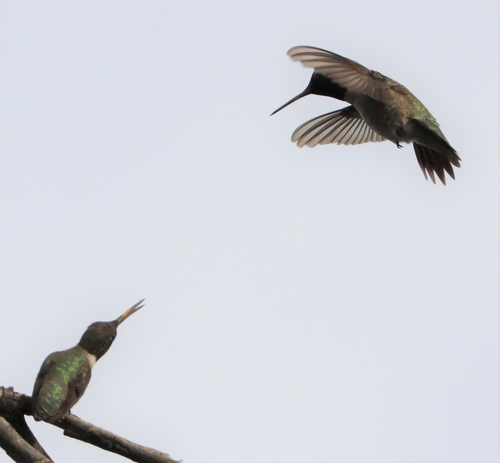 Black-chinned Hummingbird
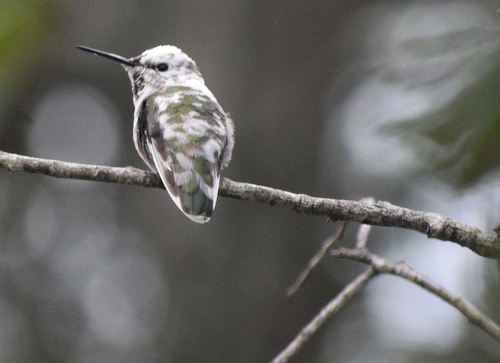 Anna's Hummingbird
In short
The most reliable field mark between Black-chinned and Anna's Hummingbird is the male's head and throat coloration: Black-chinned males show a black face and chin with a glossy purple gorget (only visible in good light), while Anna's males have a striking iridescent reddish-pink crown and gorget. Females and immatures are trickier, but Anna's can show some red on the throat and have a slightly larger, bulkier build. Tail shape and pattern, especially in juveniles and females, is also helpful: Black-chinned females and juveniles have a rounded tail with white tips, while Anna's have a dark, rounded tail with white tips on the outer feathers. In flight or perched, Anna's is generally larger and stockier. Both species have similar bills and green upperparts, so focus on head, throat, and tail details for separation.
Identification tips
- Male head and throat color (adults): Anna's males have a bright reddish-pink (magenta) crown and gorget, while Black-chinned males have a black face and chin with a purple gorget (only visible in good light). If you see red or pink on the crown, it's Anna's.
- Female and juvenile throat: Anna's females and juveniles may show a few red iridescent spots on the throat; Black-chinned females and juveniles lack any red or purple, though juvenile males may show a few purple feathers.
- Tail shape (adult males): Black-chinned males have a distinctly forked tail; Anna's males have a slightly forked or nearly square tail.
- Tail pattern (females and juveniles): Both species have white-tipped tail feathers, but Anna's shows white only on the outer feathers, while Black-chinned has more extensive white tips and a more rounded tail.
- Size and structure: Anna's is larger and bulkier, with a broader wingspan and heavier build than the more slender Black-chinned.
- Crown color (males): Only Anna's shows iridescent red or pink on the crown; Black-chinned always has a dark crown.
- Bill: Both have long, straight, slender bills; bill shape is not useful for separation.
- Back and flank color: Both are metallic green above and green on the flanks; not a reliable mark.
- Display behavior: Anna's males dive from much higher (up to 40 m) and sing; Black-chinned males display in lower, pendulum arcs and do not sing.
- Mechanical sounds: Anna's males make an 'explosive squeak' with tail feathers at the bottom of their dive; Black-chinned males produce a high-pitched trill with tail feathers during their display.
- Voice: Anna's males sing a thin, buzzy song; Black-chinned uses only high-pitched chirps, never a true song.
- Habitat context: Anna's is more likely in coastal gardens and urban areas on the Pacific coast; Black-chinned is more likely in interior arid or mountainous habitats.
- Juvenile dorsal feather edges: Black-chinned juveniles have buff margins on dorsal feathers; Anna's do not.
- White on tail (perched birds): Look for the extent and placement of white tips on the tail when the bird is perched and fanning its tail.
- When in doubt: If you see a hummingbird with a red or pink crown, it's Anna's. If the crown is dark and the gorget is only purple in certain light, it's Black-chinned.
Size
Anna's Hummingbird is noticeably larger and heavier than Black-chinned Hummingbird. Anna's measures about 9.9–10.9 cm (3.9–4.3 in) in length and weighs around 4.3 g, while Black-chinned is smaller at about 8.25 cm (3.25 in) (no mass given, but consistently lighter in direct comparison). Anna's also has a broader wingspan (12 cm) and a bulkier, more robust appearance, especially when perched. This size difference is subtle in the field but can be apparent when both species are seen side by side or at feeders.
Plumage
-
Juveniles and Females: Both species have metallic green upperparts and pale underparts, but Black-chinned juveniles have buff margins on dorsal feathers and lack any red or purple on the throat, while Anna's juveniles and females may show a few red iridescent spots on the throat. Tail shape is key: Black-chinned females and juveniles have a rounded tail with white tips, while Anna's have a dark, rounded tail with white tips only on the outer feathers.
-
Adult Males: Black-chinned males have a black face and chin with a glossy purple gorget (only visible at certain angles), and a dark forked tail. Anna's males are unique among North American hummers in having both a bright reddish-pink (magenta) crown and gorget, which can look dull unless well-lit, and a dark, slightly forked tail.
-
Tail: Black-chinned adult males have a distinctly forked tail, while Anna's tail is only slightly forked. Females and juveniles of both species have rounded tails, but the pattern of white tips differs as above.
-
Bill: Both species have long, straight, slender bills; not a reliable field mark.
Behaviour
Both species are highly active, often hovering and darting between flowers or feeders. Anna's Hummingbird males perform dramatic display dives from much higher (up to 40 m) than Black-chinned males (10–15 m), and Anna's males sing during courtship, which is unusual for North American hummers. Black-chinned males also display with dives and produce trilling sounds with their tail feathers, but their display is less vertical and more pendulum-like. Both can be territorial, but Black-chinned Hummingbirds are less aggressive when food sources are abundant.
Habitat
Black-chinned Hummingbird is more likely in a wide range of habitats, including deserts, mountain forests, and urban areas across the western US and northern Mexico. Anna's Hummingbird is most common along the Pacific coast, in open woodlands, shrubby areas, and gardens, but its range overlaps with Black-chinned in some western regions. If you are in coastal California or urban gardens in the Pacific Northwest, Anna's is more likely; in arid or interior mountain areas, Black-chinned is more expected.
Voice
Anna's Hummingbird males sing a thin, squeaky, buzzy song during courtship, lasting up to 10 seconds, and also give scratchy, metallic calls while perched. Black-chinned Hummingbirds do not sing but communicate with high-pitched chirps and produce trilling or whirring sonations with their tail and wing feathers during display dives. Both species produce mechanical sounds with their tail feathers during courtship dives, but Anna's 'explosive squeak' at the bottom of the dive is distinctive.
Black-chinned Hummingbird · Anna's Hummingbird · My Tricky Birds