

Motmot

Black-bellied Whistling-Duck vs White-tipped Dove

Dendrocygna autumnalis versus Leptotila verreauxi

Play a quiz with Black-bellied Whistling-Duck and White-tipped Dove
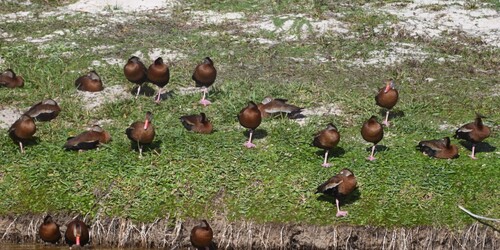
Black-bellied Whistling-Duck (Dendrocygna autumnalis) Black-bellied Whistling-Duck
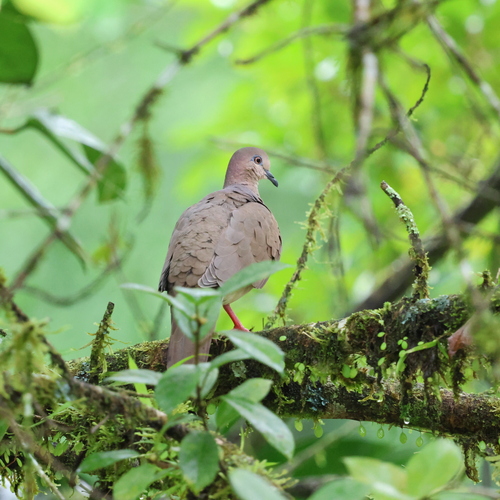
White-tipped Dove (Leptotila verreauxi) White-tipped Dove

Media

Loading…

In short

The most reliable field mark to separate Black-bellied Whistling-Duck from White-tipped Dove is the duck’s bold white wing patch (formed by the secondaries), which flashes in flight and is unique among whistling ducks, while the dove lacks any such wing marking. Structurally, the whistling-duck is much larger, with a long pink bill, long legs, and a distinctive upright stance, whereas the dove is compact, with a short black bill and red legs. On the ground, the duck’s black belly and tail contrast with its chestnut back and pale gray face, while the dove shows a plain gray-brown upperpart and a white-tipped tail. Juvenile whistling-ducks have a gray bill and less contrast below, but still show the white wing patch in flight. The two species differ strongly in behavior and context: whistling-ducks are often seen in flocks near water, while White-tipped Doves are solitary or in pairs, foraging quietly on the ground in woodland.

Identification tips

  1. White wing patch in flight (all ages, whistling-duck): Black-bellied Whistling-Duck shows a bold white patch on the upperwing, visible in flight and sometimes at rest; White-tipped Dove never shows any white in the wing. This is the single most reliable mark, especially for flying birds.
  2. Size and structure: The duck is much larger, with a long neck, long pink bill, and long legs, giving it a tall, upright stance. The dove is compact, with a short neck, short black bill, and red legs. Size difference is obvious even at a distance.
  3. Bill color and shape: Whistling-duck has a long, bright pink bill (gray in juveniles); dove has a short, dark bill. Bill color is a quick check at close range.
  4. Leg color and length: Duck’s legs are long and pink; dove’s are shorter and red. The duck often stands tall on its legs, unlike the dove.
  5. Belly and tail color: Whistling-duck has a black belly and tail, contrasting with chestnut back and pale gray face. Dove is whitish below, with a broad white tip to the tail (best seen from below or in flight), but never a black belly.
  6. Head pattern: Duck shows a pale gray face and upper neck with a thin white eye-ring; dove has a pale gray or whitish forehead, but the rest of the head is gray-brown, and the eye-ring is red or blue depending on region.
  7. Juvenile plumage: Juvenile whistling-ducks have a gray bill and less contrast on the belly but still show the white wing patch; juvenile doves are similar to adults but may be duller.
  8. Underwing color: Dove has rufous underwing coverts, but this is subtle and rarely visible; duck’s underwing is mostly white (secondaries) and black (primaries), obvious in flight.
  9. Vocalizations: Duck gives loud, high-pitched whistles, often in flocks; dove gives a deep, two-note hoot, usually from cover.
  10. Behavior: Whistling-ducks are gregarious, often in flocks near water, and may perch in trees or on buildings; doves are solitary or in pairs, foraging quietly on the ground in woodland.
  11. Habitat: Duck is found in open wetlands, ponds, and lakes; dove prefers woodland, forest edge, and dense thickets, rarely near open water.
  12. Flight style: Duck’s flight is slow and buoyant, often in flocks; dove’s flight is fast, direct, and accompanied by wing clattering, typical of pigeons.
  13. Context: If seen in a group, especially near water or perched high, suspect whistling-duck; if alone or in dense cover, likely the dove.
  14. Sexes: Both species are sexually monomorphic; males and females look alike, so sex is not a useful field mark.
  15. Pitfalls: At a distance, a perched whistling-duck may look plain and brownish, but the long legs, upright stance, and white wing patch (if visible) are giveaways. Doves never show these features.

Size

Black-bellied Whistling-Duck is much larger and heavier than White-tipped Dove. The duck measures 47–56 cm in length and averages 831 g in mass [wikidata], while the dove is about 28 cm long and weighs only 155 g [wikipedia]. The duck’s size, long neck, and legs are immediately apparent, especially in flight or when both are seen together. The dove is compact and pigeon-like, with a short neck and tail, and never approaches the bulk or height of the duck.

Plumage

For all ages, Black-bellied Whistling-Duck shows a bold white patch on the upperwing (formed by the secondaries), which is obvious in flight and sometimes visible at rest; this is never present in White-tipped Dove. Juvenile whistling-ducks have a gray bill and less contrast on the belly but still show the white wing patch. Adults of the duck have a black belly and tail, rich chestnut back and neck, pale gray face and upper neck, and a thin white eye-ring. The dove is much plainer: gray-brown above, whitish below with pinkish or buff on the chest, a pale gray or whitish forehead, and a broad white tip to the tail (best seen from below or in flight). The dove’s underwing coverts are rufous, but this is subtle and rarely diagnostic in the field. The duck’s long pink bill and legs are distinctive, while the dove has a short black bill and red legs. Both species have eye-rings, but the duck’s is thin and white, while the dove’s is red or blue depending on region.

Behaviour

Black-bellied Whistling-Ducks are often encountered in noisy, conspicuous flocks, sometimes perched in trees or on open ground near water, and are gregarious even outside the breeding season. Their upright stance and long legs are distinctive. In contrast, White-tipped Doves are solitary or in pairs, shy and wary, usually foraging quietly on the ground in woodland or forest edge, and rarely perch in the open. The dove’s flight is fast and direct with strong wingbeats and a clattering sound typical of pigeons, while the duck’s flight is slower and more buoyant.

Habitat

Black-bellied Whistling-Duck is found in open wetlands, ponds, lakes, and flooded fields, often near water and sometimes in urban parks with suitable habitat. They are cavity nesters and may be seen perched on trees or even buildings. White-tipped Dove prefers woodland, forest edge, and dense thickets, usually away from open water, and is rarely seen in open wetland habitats. The dove’s secretive habits and preference for cover contrast with the duck’s bold, open-country behavior.

Voice

Black-bellied Whistling-Duck is very vocal, often heard giving high-pitched whistling calls in flight or when alarmed. Their calls are loud and distinctive, often given in flocks. White-tipped Dove’s call is a deep, hollow 'ooo-wooooo', a two-note hoot with the second note longer and more audible; it is much lower-pitched and more mournful than the duck’s whistling. The dove’s call is usually heard from cover and is not associated with flocking behavior.

Submit a better description

Use the same sections as the comparison. Your text is published immediately.

The most reliable field mark to separate Black-bellied Whistling-Duck from White-tipped Dove is the duck’s bold white wing patch (formed by the secondaries), which flashes in flight and is unique among whistling ducks, while the dove lacks any such wing marking. Structurally, the whistling-duck is much larger, with a long pink bill, long legs, and a distinctive upright stance, whereas the dove is compact, with a short black bill and red legs. On the ground, the duck’s black belly and tail contrast with its chestnut back and pale gray face, while the dove shows a plain gray-brown upperpart and a white-tipped tail. Juvenile whistling-ducks have a gray bill and less contrast below, but still show the white wing patch in flight. The two species differ strongly in behavior and context: whistling-ducks are often seen in flocks near water, while White-tipped Doves are solitary or in pairs, foraging quietly on the ground in woodland.

  1. White wing patch in flight (all ages, whistling-duck): Black-bellied Whistling-Duck shows a bold white patch on the upperwing, visible in flight and sometimes at rest; White-tipped Dove never shows any white in the wing. This is the single most reliable mark, especially for flying birds.
  2. Size and structure: The duck is much larger, with a long neck, long pink bill, and long legs, giving it a tall, upright stance. The dove is compact, with a short neck, short black bill, and red legs. Size difference is obvious even at a distance.
  3. Bill color and shape: Whistling-duck has a long, bright pink bill (gray in juveniles); dove has a short, dark bill. Bill color is a quick check at close range.
  4. Leg color and length: Duck’s legs are long and pink; dove’s are shorter and red. The duck often stands tall on its legs, unlike the dove.
  5. Belly and tail color: Whistling-duck has a black belly and tail, contrasting with chestnut back and pale gray face. Dove is whitish below, with a broad white tip to the tail (best seen from below or in flight), but never a black belly.
  6. Head pattern: Duck shows a pale gray face and upper neck with a thin white eye-ring; dove has a pale gray or whitish forehead, but the rest of the head is gray-brown, and the eye-ring is red or blue depending on region.
  7. Juvenile plumage: Juvenile whistling-ducks have a gray bill and less contrast on the belly but still show the white wing patch; juvenile doves are similar to adults but may be duller.
  8. Underwing color: Dove has rufous underwing coverts, but this is subtle and rarely visible; duck’s underwing is mostly white (secondaries) and black (primaries), obvious in flight.
  9. Vocalizations: Duck gives loud, high-pitched whistles, often in flocks; dove gives a deep, two-note hoot, usually from cover.
  10. Behavior: Whistling-ducks are gregarious, often in flocks near water, and may perch in trees or on buildings; doves are solitary or in pairs, foraging quietly on the ground in woodland.
  11. Habitat: Duck is found in open wetlands, ponds, and lakes; dove prefers woodland, forest edge, and dense thickets, rarely near open water.
  12. Flight style: Duck’s flight is slow and buoyant, often in flocks; dove’s flight is fast, direct, and accompanied by wing clattering, typical of pigeons.
  13. Context: If seen in a group, especially near water or perched high, suspect whistling-duck; if alone or in dense cover, likely the dove.
  14. Sexes: Both species are sexually monomorphic; males and females look alike, so sex is not a useful field mark.
  15. Pitfalls: At a distance, a perched whistling-duck may look plain and brownish, but the long legs, upright stance, and white wing patch (if visible) are giveaways. Doves never show these features.

Black-bellied Whistling-Duck is much larger and heavier than White-tipped Dove. The duck measures 47–56 cm in length and averages 831 g in mass [wikidata], while the dove is about 28 cm long and weighs only 155 g [wikipedia]. The duck’s size, long neck, and legs are immediately apparent, especially in flight or when both are seen together. The dove is compact and pigeon-like, with a short neck and tail, and never approaches the bulk or height of the duck.

For all ages, Black-bellied Whistling-Duck shows a bold white patch on the upperwing (formed by the secondaries), which is obvious in flight and sometimes visible at rest; this is never present in White-tipped Dove. Juvenile whistling-ducks have a gray bill and less contrast on the belly but still show the white wing patch. Adults of the duck have a black belly and tail, rich chestnut back and neck, pale gray face and upper neck, and a thin white eye-ring. The dove is much plainer: gray-brown above, whitish below with pinkish or buff on the chest, a pale gray or whitish forehead, and a broad white tip to the tail (best seen from below or in flight). The dove’s underwing coverts are rufous, but this is subtle and rarely diagnostic in the field. The duck’s long pink bill and legs are distinctive, while the dove has a short black bill and red legs. Both species have eye-rings, but the duck’s is thin and white, while the dove’s is red or blue depending on region.

Black-bellied Whistling-Ducks are often encountered in noisy, conspicuous flocks, sometimes perched in trees or on open ground near water, and are gregarious even outside the breeding season. Their upright stance and long legs are distinctive. In contrast, White-tipped Doves are solitary or in pairs, shy and wary, usually foraging quietly on the ground in woodland or forest edge, and rarely perch in the open. The dove’s flight is fast and direct with strong wingbeats and a clattering sound typical of pigeons, while the duck’s flight is slower and more buoyant.

Black-bellied Whistling-Duck is found in open wetlands, ponds, lakes, and flooded fields, often near water and sometimes in urban parks with suitable habitat. They are cavity nesters and may be seen perched on trees or even buildings. White-tipped Dove prefers woodland, forest edge, and dense thickets, usually away from open water, and is rarely seen in open wetland habitats. The dove’s secretive habits and preference for cover contrast with the duck’s bold, open-country behavior.

Black-bellied Whistling-Duck is very vocal, often heard giving high-pitched whistling calls in flight or when alarmed. Their calls are loud and distinctive, often given in flocks. White-tipped Dove’s call is a deep, hollow 'ooo-wooooo', a two-note hoot with the second note longer and more audible; it is much lower-pitched and more mournful than the duck’s whistling. The dove’s call is usually heard from cover and is not associated with flocking behavior.

Discard your changes?

You have unsaved edits. If you leave now, those changes will be lost.

Black-bellied Whistling-Duck · White-tipped Dove · My Tricky Birds