

Motmot

Bioko Batis vs West African Batis

Batis poensis versus Batis occulta

Play a quiz with Bioko Batis and West African Batis
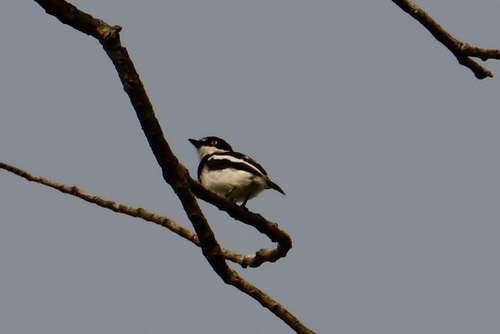
Bioko Batis (Batis poensis) Bioko Batis
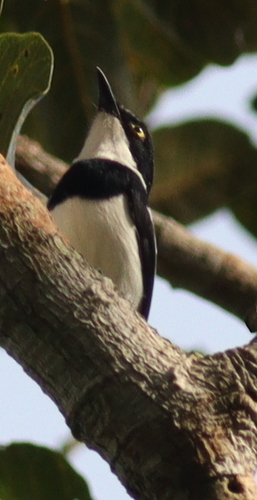
West African Batis (Batis occulta) West African Batis

Media

Loading…

In short

The most reliable way to separate Bioko Batis from West African Batis is by location: Bioko Batis is strictly endemic to Bioko Island, while West African Batis never occurs there and is widespread on the African mainland. In the hand or with close views, Bioko Batis males show a glossy blue-black head and mantle with a black breast band, while females have a chestnut breast band; West African Batis is very similar but subtle differences in plumage are not well documented. Juvenile and immature plumages are poorly described for both, so age-specific wing or upperpart patterns are not a safe field mark. Both species are small, active, black-and-white batises, and confusion is most likely in areas near Bioko or in collections. Focus on range and subtle plumage differences if seen well.

Identification tips

  1. Location is decisive: If you are on Bioko Island, you are looking at Bioko Batis. West African Batis does not occur there. On the mainland, especially in West and Central Africa, it is West African Batis.
  2. Male breast band color: Male Bioko Batis has a black breast band; female has a chestnut breast band. This is a key mark if you see the bird well from the front. West African Batis is similar, but the exact color and width of the breast band in females is not well documented, so use with caution.
  3. Glossy blue-black head and mantle (male Bioko Batis): Look for a glossy blue-black sheen on the head and mantle in males. West African Batis males may be less glossy, but this is subtle and not a primary field mark.
  4. White loral spot and supercilium: Bioko Batis sometimes shows a small white spot in front of the eye, occasionally extending back as a narrow supercilium. This feature may be present in West African Batis as well, so it is not diagnostic.
  5. Back and rump spotting: Bioko Batis has small white spots on the rump and lower back. This may be shared by West African Batis, but is not confirmed as a separator.
  6. Wing and tail pattern: Both species have black wings with a white stripe and a black tail with narrow white edges. No known differences in the pattern or extent of these markings.
  7. Juvenile and immature plumage: No distinctive age-specific wing or upperpart patterns are described for either species, so do not rely on immature plumage for separation.
  8. Size and structure: Both are tiny, compact batises; size and proportions are not useful for separation.
  9. Behavior: Both are active, arboreal, and join mixed-species flocks. Behavior is not a separator.
  10. Habitat context: If you are in tall, moist lowland forest on Bioko, it is Bioko Batis. On the mainland, in similar forest, it is West African Batis.
  11. Vocalizations: No comparative information is available; do not rely on voice.
  12. Season and breeding: Fledged juveniles of Bioko Batis have been seen in October, but breeding timing is not a separator.
  13. Pitfall: Do not rely on subtle differences in glossiness, rump spotting, or wing stripe width unless you have detailed, direct comparison and good light.
  14. Sex differences: Only female Bioko Batis is described as having a chestnut breast band; if you see this clearly, it supports Bioko Batis, but absence does not confirm West African Batis.
  15. Summary tip: In practice, range is the only safe separator in the field. Use plumage details only as supporting evidence if you have excellent views.

Size

Both species are very small batises, with Bioko Batis at about 10.5 cm in length and weighing 8.8–9.4 g [wikipedia]. No direct size data is available for West African Batis, but it is considered similarly small and compact. In the field, size is not a reliable separator between these two.

Plumage

Juvenile and immature plumages are not described in detail for either species, so there are no known age-specific wing or upperpart patterns to use for separation. For adults, male Bioko Batis has a glossy blue-black head and mantle, a small white loral spot (sometimes forming a short supercilium), blackish-grey back with small white rump spots, black wings with a white stripe, and a black tail with narrow white edges. The male's underparts are white with a black breast band. Female Bioko Batis is similar but duller above and has a chestnut (not black) breast band. Juveniles resemble females but are dingier. West African Batis is described as very similar in overall pattern, but specific differences in plumage details are not documented in the available sources. Thus, plumage alone is not a reliable separator unless the chestnut breast band of female Bioko Batis is seen well.

Behaviour

Bioko Batis is described as restless, shy, and highly arboreal, foraging mainly in the canopy by gleaning, flycatching, or hovering to pick insects. It often joins mixed-species flocks. There is no detailed behavioral description for West African Batis in the available sources, but as a batis, it is likely to show similar active, arboreal, insectivorous habits. Behavior is not a strong separator between these two species.

Habitat

Habitat is the most practical separator. Bioko Batis is strictly confined to the forests of Bioko Island, Equatorial Guinea, and does not occur on the mainland. West African Batis is found in lowland forests across a broad swath of West and Central Africa, including Cameroon, Gabon, Nigeria, and others, but not on Bioko. If you are on Bioko Island, you are seeing Bioko Batis; elsewhere in West Africa, it is West African Batis.

Submit a better description

Use the same sections as the comparison. Your text is published immediately.

The most reliable way to separate Bioko Batis from West African Batis is by location: Bioko Batis is strictly endemic to Bioko Island, while West African Batis never occurs there and is widespread on the African mainland. In the hand or with close views, Bioko Batis males show a glossy blue-black head and mantle with a black breast band, while females have a chestnut breast band; West African Batis is very similar but subtle differences in plumage are not well documented. Juvenile and immature plumages are poorly described for both, so age-specific wing or upperpart patterns are not a safe field mark. Both species are small, active, black-and-white batises, and confusion is most likely in areas near Bioko or in collections. Focus on range and subtle plumage differences if seen well.

  1. Location is decisive: If you are on Bioko Island, you are looking at Bioko Batis. West African Batis does not occur there. On the mainland, especially in West and Central Africa, it is West African Batis.
  2. Male breast band color: Male Bioko Batis has a black breast band; female has a chestnut breast band. This is a key mark if you see the bird well from the front. West African Batis is similar, but the exact color and width of the breast band in females is not well documented, so use with caution.
  3. Glossy blue-black head and mantle (male Bioko Batis): Look for a glossy blue-black sheen on the head and mantle in males. West African Batis males may be less glossy, but this is subtle and not a primary field mark.
  4. White loral spot and supercilium: Bioko Batis sometimes shows a small white spot in front of the eye, occasionally extending back as a narrow supercilium. This feature may be present in West African Batis as well, so it is not diagnostic.
  5. Back and rump spotting: Bioko Batis has small white spots on the rump and lower back. This may be shared by West African Batis, but is not confirmed as a separator.
  6. Wing and tail pattern: Both species have black wings with a white stripe and a black tail with narrow white edges. No known differences in the pattern or extent of these markings.
  7. Juvenile and immature plumage: No distinctive age-specific wing or upperpart patterns are described for either species, so do not rely on immature plumage for separation.
  8. Size and structure: Both are tiny, compact batises; size and proportions are not useful for separation.
  9. Behavior: Both are active, arboreal, and join mixed-species flocks. Behavior is not a separator.
  10. Habitat context: If you are in tall, moist lowland forest on Bioko, it is Bioko Batis. On the mainland, in similar forest, it is West African Batis.
  11. Vocalizations: No comparative information is available; do not rely on voice.
  12. Season and breeding: Fledged juveniles of Bioko Batis have been seen in October, but breeding timing is not a separator.
  13. Pitfall: Do not rely on subtle differences in glossiness, rump spotting, or wing stripe width unless you have detailed, direct comparison and good light.
  14. Sex differences: Only female Bioko Batis is described as having a chestnut breast band; if you see this clearly, it supports Bioko Batis, but absence does not confirm West African Batis.
  15. Summary tip: In practice, range is the only safe separator in the field. Use plumage details only as supporting evidence if you have excellent views.

Both species are very small batises, with Bioko Batis at about 10.5 cm in length and weighing 8.8–9.4 g [wikipedia]. No direct size data is available for West African Batis, but it is considered similarly small and compact. In the field, size is not a reliable separator between these two.

Juvenile and immature plumages are not described in detail for either species, so there are no known age-specific wing or upperpart patterns to use for separation. For adults, male Bioko Batis has a glossy blue-black head and mantle, a small white loral spot (sometimes forming a short supercilium), blackish-grey back with small white rump spots, black wings with a white stripe, and a black tail with narrow white edges. The male's underparts are white with a black breast band. Female Bioko Batis is similar but duller above and has a chestnut (not black) breast band. Juveniles resemble females but are dingier. West African Batis is described as very similar in overall pattern, but specific differences in plumage details are not documented in the available sources. Thus, plumage alone is not a reliable separator unless the chestnut breast band of female Bioko Batis is seen well.

Bioko Batis is described as restless, shy, and highly arboreal, foraging mainly in the canopy by gleaning, flycatching, or hovering to pick insects. It often joins mixed-species flocks. There is no detailed behavioral description for West African Batis in the available sources, but as a batis, it is likely to show similar active, arboreal, insectivorous habits. Behavior is not a strong separator between these two species.

Habitat is the most practical separator. Bioko Batis is strictly confined to the forests of Bioko Island, Equatorial Guinea, and does not occur on the mainland. West African Batis is found in lowland forests across a broad swath of West and Central Africa, including Cameroon, Gabon, Nigeria, and others, but not on Bioko. If you are on Bioko Island, you are seeing Bioko Batis; elsewhere in West Africa, it is West African Batis.

Discard your changes?

You have unsaved edits. If you leave now, those changes will be lost.

Bioko Batis · West African Batis · My Tricky Birds