

Motmot

フェルナンドポーセワタビタキ 対 ニシアフリカセワタビタキ

Batis poensis 対 Batis occulta

フェルナンドポーセワタビタキとニシアフリカセワタビタキのクイズ
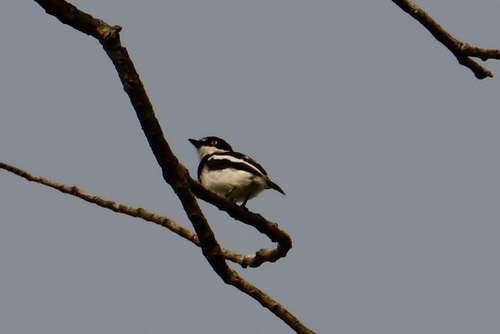
フェルナンドポーセワタビタキ (Batis poensis) フェルナンドポーセワタビタキ
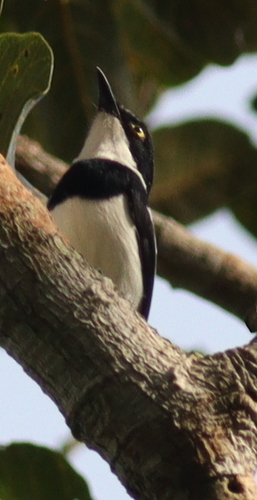
ニシアフリカセワタビタキ (Batis occulta) ニシアフリカセワタビタキ

メディア

読み込み中…

要点

フェルナンドポーセワタビタキとニシアフリカセワタビタキを区別する最も信頼できる方法は、場所によるものです:フェルナンドポーセワタビタキはBioko島に特有であり、ニシアフリカセワタビタキはそこには生息せず、アフリカ本土に広く分布しています。手に取ったり近くで見ると、フェルナンドポーセワタビタキのオスは光沢のある青黒い頭と背中、黒い胸帯を持ち、メスは栗色の胸帯を持っています;ニシアフリカセワタビタキは非常に似ていますが、羽毛の微妙な違いは十分に文書化されていません。両者の幼鳥や未成熟の羽毛は十分に記述されていないため、年齢特有の翼や上部の模様は安全なフィールドマークではありません。両種は小さく、活発で、白黒のセワタビタキであり、Bioko近くや標本コレクションでは混乱が最も起こりやすいです。良く見えた場合は、分布と微妙な羽毛の違いに焦点を当ててください。

識別のコツ

  1. 場所が決定的です: Bioko島にいる場合、あなたはフェルナンドポーセワタビタキを見ています。ニシアフリカセワタビタキはそこには生息しません。本土では、特に西アフリカと中央アフリカでは、ニシアフリカセワタビタキです。
  2. オスの胸帯の色: オスのフェルナンドポーセワタビタキは黒い胸帯を持ち、メスは栗色の胸帯を持っています。これは、鳥を正面からよく見ることができた場合の重要なマークです。ニシアフリカセワタビタキは似ていますが、メスの胸帯の正確な色と幅は十分に文書化されていないため、注意して使用してください。
  3. 光沢のある青黒い頭と背中(オスのフェルナンドポーセワタビタキ): オスの頭と背中に光沢のある青黒い光沢を探してください。ニシアフリカセワタビタキのオスは光沢が少ないかもしれませんが、これは微妙であり、主要なフィールドマークではありません。
  4. 白いロラルスポットと眉斑: フェルナンドポーセワタビタキは時々目の前に小さな白いスポットを示し、時折狭い眉斑として後ろに延びることがあります。この特徴はニシアフリカセワタビタキにも存在する可能性があるため、診断的ではありません。
  5. 背中と尾の斑点: フェルナンドポーセワタビタキは尾と下背に小さな白い斑点を持っています。これはニシアフリカセワタビタキにも共有される可能性がありますが、区別するための確認はされていません。
  6. 翼と尾の模様: 両種は白いストライプのある黒い翼と狭い白い縁のある黒い尾を持っています。これらのマーキングのパターンや範囲における違いは知られていません。
  7. 幼鳥と未成熟の羽毛: どちらの種についても、特有の年齢特有の翼や上部の模様は記述されていないため、未成熟の羽毛に頼らないでください。
  8. サイズと構造: 両者は小さく、コンパクトなセワタビタキであり、サイズや比率は区別に役立ちません。
  9. 行動: 両者は活発で樹上性であり、混成種の群れに参加します。行動は区別要因ではありません。
  10. 生息地の文脈: Biokoの高く湿った低地の森にいる場合、それはフェルナンドポーセワタビタキです。本土の同様の森では、ニシアフリカセワタビタキです。
  11. 鳴き声: 比較情報は利用できません;声に頼らないでください。
  12. 季節と繁殖: フェルナンドポーセワタビタキの巣立ちした幼鳥は10月に見られていますが、繁殖のタイミングは区別にはなりません。
  13. 落とし穴: 光沢、尾の斑点、または翼のストライプの幅の微妙な違いに頼らないでください。詳細な直接比較と良い光がない限り。
  14. 性差: フェルナンドポーセワタビタキのメスだけが栗色の胸帯を持つと記述されています;これを明確に見ることができれば、フェルナンドポーセワタビタキを支持しますが、これがないからといってニシアフリカセワタビタキを確認するわけではありません。
  15. 要約のヒント: 実際には、分布がフィールドでの唯一の安全な区別です。素晴らしい視界がある場合にのみ、羽毛の詳細を支持証拠として使用してください。

大きさ

両種は非常に小さなセワタビタキで、フェルナンドポーセワタビタキは約10.5 cmの長さで、体重は8.8–9.4 gです [wikipedia]。ニシアフリカセワタビタキの直接的なサイズデータは利用できませんが、同様に小さくコンパクトであると考えられています。フィールドでは、サイズはこれら2種を区別するための信頼できる指標ではありません。

羽色

幼鳥と未成熟の羽毛はどちらの種についても詳細に記述されていないため、区別に使用できる年齢特有の翼や上部の模様はありません。成鳥の場合、オスのフェルナンドポーセワタビタキは光沢のある青黒い頭と背中、小さな白いロラルスポット(時には短い眉斑を形成することもあります)、小さな白い尾の斑点を持つ黒灰色の背中、白いストライプのある黒い翼、狭い白い縁のある黒い尾を持っています。オスの腹部は白く、黒い胸帯があります。メスのフェルナンドポーセワタビタキは似ていますが、上部は鈍く、栗色(黒ではない)の胸帯を持っています。幼鳥はメスに似ていますが、より汚れた色合いです。ニシアフリカセワタビタキは全体的な模様が非常に似ていると記述されていますが、羽毛の詳細における特定の違いは利用可能な情報源には文書化されていません。したがって、羽毛だけでは、メスのフェルナンドポーセワタビタキの栗色の胸帯がよく見えない限り、信頼できる区別にはなりません。

行動

フェルナンドポーセワタビタキは落ち着きがなく、内気で、非常に樹上性であり、主にキャノピーで採餌し、虫を拾うためにグリーニング、フライキャッチング、またはホバリングを行います。混成種の群れに参加することがよくあります。利用可能な情報源にはニシアフリカセワタビタキの詳細な行動記述はありませんが、セワタビタキとして、同様の活発で樹上性の昆虫食性の習性を示す可能性があります。行動はこれらの2種を区別する強い要因ではありません。

生息環境

生息地は最も実用的な区別要因です。フェルナンドポーセワタビタキは厳密にBioko島、赤道ギニアの森に限定されており、本土には生息していません。ニシアフリカセワタビタキは、カメルーン、ガボン、ナイジェリアなどを含む西アフリカと中央アフリカの広範な低地の森に生息していますが、Biokoには生息していません。Bioko島にいる場合、あなたはフェルナンドポーセワタビタキを見ています;西アフリカの他の場所では、ニシアフリカセワタビタキです。

より良い説明を送る

比較と同じ項目を使ってください。文章はすぐに公開されます。

The most reliable way to separate Bioko Batis from West African Batis is by location: Bioko Batis is strictly endemic to Bioko Island, while West African Batis never occurs there and is widespread on the African mainland. In the hand or with close views, Bioko Batis males show a glossy blue-black head and mantle with a black breast band, while females have a chestnut breast band; West African Batis is very similar but subtle differences in plumage are not well documented. Juvenile and immature plumages are poorly described for both, so age-specific wing or upperpart patterns are not a safe field mark. Both species are small, active, black-and-white batises, and confusion is most likely in areas near Bioko or in collections. Focus on range and subtle plumage differences if seen well.

  1. Location is decisive: If you are on Bioko Island, you are looking at Bioko Batis. West African Batis does not occur there. On the mainland, especially in West and Central Africa, it is West African Batis.
  2. Male breast band color: Male Bioko Batis has a black breast band; female has a chestnut breast band. This is a key mark if you see the bird well from the front. West African Batis is similar, but the exact color and width of the breast band in females is not well documented, so use with caution.
  3. Glossy blue-black head and mantle (male Bioko Batis): Look for a glossy blue-black sheen on the head and mantle in males. West African Batis males may be less glossy, but this is subtle and not a primary field mark.
  4. White loral spot and supercilium: Bioko Batis sometimes shows a small white spot in front of the eye, occasionally extending back as a narrow supercilium. This feature may be present in West African Batis as well, so it is not diagnostic.
  5. Back and rump spotting: Bioko Batis has small white spots on the rump and lower back. This may be shared by West African Batis, but is not confirmed as a separator.
  6. Wing and tail pattern: Both species have black wings with a white stripe and a black tail with narrow white edges. No known differences in the pattern or extent of these markings.
  7. Juvenile and immature plumage: No distinctive age-specific wing or upperpart patterns are described for either species, so do not rely on immature plumage for separation.
  8. Size and structure: Both are tiny, compact batises; size and proportions are not useful for separation.
  9. Behavior: Both are active, arboreal, and join mixed-species flocks. Behavior is not a separator.
  10. Habitat context: If you are in tall, moist lowland forest on Bioko, it is Bioko Batis. On the mainland, in similar forest, it is West African Batis.
  11. Vocalizations: No comparative information is available; do not rely on voice.
  12. Season and breeding: Fledged juveniles of Bioko Batis have been seen in October, but breeding timing is not a separator.
  13. Pitfall: Do not rely on subtle differences in glossiness, rump spotting, or wing stripe width unless you have detailed, direct comparison and good light.
  14. Sex differences: Only female Bioko Batis is described as having a chestnut breast band; if you see this clearly, it supports Bioko Batis, but absence does not confirm West African Batis.
  15. Summary tip: In practice, range is the only safe separator in the field. Use plumage details only as supporting evidence if you have excellent views.

Both species are very small batises, with Bioko Batis at about 10.5 cm in length and weighing 8.8–9.4 g [wikipedia]. No direct size data is available for West African Batis, but it is considered similarly small and compact. In the field, size is not a reliable separator between these two.

Juvenile and immature plumages are not described in detail for either species, so there are no known age-specific wing or upperpart patterns to use for separation. For adults, male Bioko Batis has a glossy blue-black head and mantle, a small white loral spot (sometimes forming a short supercilium), blackish-grey back with small white rump spots, black wings with a white stripe, and a black tail with narrow white edges. The male's underparts are white with a black breast band. Female Bioko Batis is similar but duller above and has a chestnut (not black) breast band. Juveniles resemble females but are dingier. West African Batis is described as very similar in overall pattern, but specific differences in plumage details are not documented in the available sources. Thus, plumage alone is not a reliable separator unless the chestnut breast band of female Bioko Batis is seen well.

Bioko Batis is described as restless, shy, and highly arboreal, foraging mainly in the canopy by gleaning, flycatching, or hovering to pick insects. It often joins mixed-species flocks. There is no detailed behavioral description for West African Batis in the available sources, but as a batis, it is likely to show similar active, arboreal, insectivorous habits. Behavior is not a strong separator between these two species.

Habitat is the most practical separator. Bioko Batis is strictly confined to the forests of Bioko Island, Equatorial Guinea, and does not occur on the mainland. West African Batis is found in lowland forests across a broad swath of West and Central Africa, including Cameroon, Gabon, Nigeria, and others, but not on Bioko. If you are on Bioko Island, you are seeing Bioko Batis; elsewhere in West Africa, it is West African Batis.

変更を破棄しますか?

保存していない編集があります。今離れると失われます。

フェルナンドポーセワタビタキ · ニシアフリカセワタビタキ · 苦手な鳥