

Motmot

Bearded Vulture vs European Honey-buzzard

Gypaetus barbatus versus Pernis apivorus

Play a quiz with Bearded Vulture and European Honey-buzzard
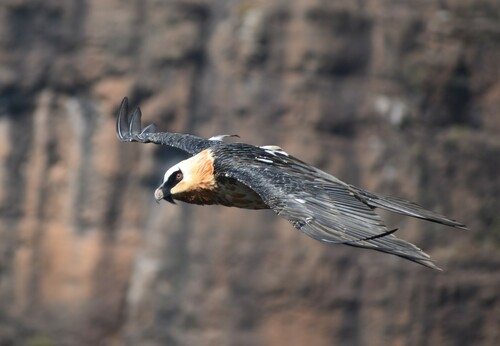
Bearded Vulture (Gypaetus barbatus) Bearded Vulture
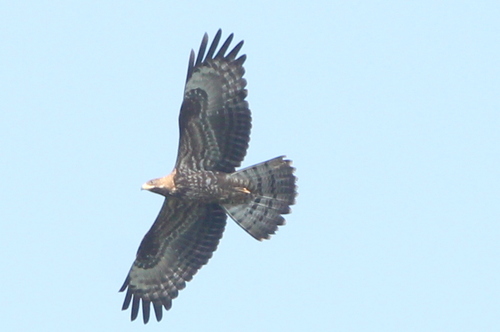
European Honey-buzzard (Pernis apivorus) European Honey-buzzard

Media

Loading…

In short

The most reliable field mark between Bearded Vulture and European Honey-buzzard is overall size and structure: Bearded Vulture is an enormous, long-winged, wedge-tailed raptor, utterly dwarfing the slim, medium-sized Honey-buzzard. In flight, Bearded Vulture shows long, narrow wings and a long, diamond-shaped tail, while Honey-buzzard has broad, flat wings and a long, but not wedge-shaped, tail with distinct barring. Juvenile Bearded Vultures are dark and massive, whereas juvenile Honey-buzzards can be confused with other buzzards but never approach the vulture’s bulk or proportions. Even at a distance, the vulture’s size, shape, and unique flight silhouette are diagnostic.

Identification tips

  1. Size is the first check: If the bird appears truly gigantic, with a wingspan over 2 meters and a long, wedge-shaped tail, it is Bearded Vulture. Honey-buzzard is never more than medium-large, with a wingspan up to 1.5 meters.
  2. Tail shape in flight: Bearded Vulture shows a long, diamond- or wedge-shaped tail, longer than the width of the wing. Honey-buzzard’s tail is long but straight-edged or slightly rounded, with clear dark barring (two narrow bars and a broad subterminal bar), never wedge-shaped.
  3. Wing shape and posture: Bearded Vulture has long, narrow wings, often slightly bowed, giving a falcon-like impression. Honey-buzzard soars on broad, flat wings, held straight or slightly downward at the tips, with a slight forward angle at the wrist and a projecting head/neck.
  4. Plumage in juveniles: Juvenile Bearded Vulture is uniform dark brown to blackish, with little contrast and no tail barring. Juvenile Honey-buzzard is brown with a barred tail and can mimic Common Buzzard, but never matches the vulture’s darkness or size.
  5. Adult facial pattern: Bearded Vulture adults have a pale, creamy forehead, black mask and beard, and often orange/rust-stained underparts. Honey-buzzard lacks any beard or mask; males have a blue-grey head, females brown, but both have plain faces.
  6. Flight jizz: Bearded Vulture appears elongated, almost stretched, with a long tail and narrow wings. Honey-buzzard looks long-necked, with a small head and broad wings, sometimes showing an angular chest in direct flight.
  7. Perched structure: On the ground, Bearded Vulture is massive, with a hunched back and powerful feet. Honey-buzzard is much slimmer, with long toes and claws adapted for digging, and never appears as bulky.
  8. Habitat context: Bearded Vulture is almost exclusively in high mountains and rocky areas; Honey-buzzard breeds in forests and is rarely seen in open alpine terrain.
  9. Behavior on the ground: Bearded Vulture may be seen walking or standing near carcasses or bones, sometimes carrying large bones in flight. Honey-buzzard is more likely to be seen digging for wasp nests in woodland clearings.
  10. Vocalization: If heard, Bearded Vulture gives shrill whistles or a 'cheek-acheek' call near the nest. Honey-buzzard’s display call is a clear 'peee-lu.'
  11. Sexual dimorphism: Only Honey-buzzard shows obvious sex differences in head color (male blue-grey, female brown); Bearded Vulture sexes are similar except for slight size difference.
  12. Plumage pitfalls: Honey-buzzard juveniles can mimic Common Buzzard but never show the vulture’s beard, mask, or overall darkness. Bearded Vulture’s orange/rust coloration is cosmetic and variable, but the black beard and mask are always present in adults.
  13. Tail barring: Honey-buzzard of all ages shows tail barring; Bearded Vulture never does.
  14. Feeding behavior: Bearded Vulture specializes in bones, often seen carrying or dropping them; Honey-buzzard specializes in wasp nests and is never seen with large bones.
  15. Geographic range: If in high mountains of southern Europe, Alps, or Himalayas, consider Bearded Vulture; if in lowland or upland forests across Europe, Honey-buzzard is more likely.

Size

Bearded Vulture is vastly larger: body mass averages 5544 g (range 4.5–7.8 kg), length 94–125 cm, and wingspan 2.31–2.83 m. European Honey-buzzard is much smaller, weighing 440–1050 g, length 52–60 cm, and wingspan 130–150 cm. In the field, the vulture’s wings and tail are longer than any buzzard or kite, and it appears almost eagle-like in scale, while Honey-buzzard is only slightly larger than a Common Buzzard and much lighter-bodied. The vulture’s tail is longer than its wing width, a unique proportion.

Plumage

Juvenile Bearded Vultures are dark black-brown overall with a grey-brown breast, lacking any pale panels or strong barring, and they remain dark for several years as they mature. Adults show a striking contrast between pale head/underparts (often stained orange or rust) and dark wings and tail, with a black mask and beard. In contrast, European Honey-buzzard juveniles are variable brown, sometimes mimicking Common Buzzard, but always with a barred tail (two narrow dark bars and a broad subterminal bar) and never with the vulture’s solid dark or striking facial pattern. Adult Honey-buzzards show sexual dimorphism: males have a blue-grey head, females brown, but both have a less contrasting, more muted plumage than Bearded Vulture. The vulture’s black facial beard and pale forehead are never matched by Honey-buzzard. In flight, the vulture’s wings are long and narrow, the tail wedge-shaped and longer than wing width; Honey-buzzard’s wings are broad, flat, and the tail is long but not wedge-shaped, with clear barring.

Behaviour

Bearded Vulture soars with long, shallow wingbeats and glides on long, narrow wings, often high above mountain slopes, sometimes carrying large bones. Its flight is more reminiscent of a giant falcon or kite, with a distinctive wedge tail. On the ground, it waddles and appears heavy. Honey-buzzard soars on flat, slightly forward-angled wings, often with a slight downward kink at the wrist, and the head projects forward with a long neck. It spends time on the forest floor digging for wasp nests and is much more secretive and inconspicuous when not displaying. The vulture is never seen digging or foraging on the ground for insects.

Habitat

Bearded Vulture is a mountain specialist, found in high-altitude rocky areas, cliffs, and alpine meadows, rarely descending to lowland forests. European Honey-buzzard breeds in woodlands and forests, often in lowlands or upland conifer plantations, and is rarely seen in open or rocky alpine terrain. If seen in a forest or lowland setting, Honey-buzzard is much more likely; a massive raptor soaring over high mountains is almost certainly Bearded Vulture.

Voice

Bearded Vulture is generally silent, except for shrill whistles in breeding display and a falcon-like 'cheek-acheek' call near the nest. European Honey-buzzard gives a clear 'peee-lu' call, especially during display flights. In most field situations, vocalizations are not likely to be helpful, as both are usually silent when soaring.

Submit a better description

Use the same sections as the comparison. Your text is published immediately.

The most reliable field mark between Bearded Vulture and European Honey-buzzard is overall size and structure: Bearded Vulture is an enormous, long-winged, wedge-tailed raptor, utterly dwarfing the slim, medium-sized Honey-buzzard. In flight, Bearded Vulture shows long, narrow wings and a long, diamond-shaped tail, while Honey-buzzard has broad, flat wings and a long, but not wedge-shaped, tail with distinct barring. Juvenile Bearded Vultures are dark and massive, whereas juvenile Honey-buzzards can be confused with other buzzards but never approach the vulture’s bulk or proportions. Even at a distance, the vulture’s size, shape, and unique flight silhouette are diagnostic.

  1. Size is the first check: If the bird appears truly gigantic, with a wingspan over 2 meters and a long, wedge-shaped tail, it is Bearded Vulture. Honey-buzzard is never more than medium-large, with a wingspan up to 1.5 meters.
  2. Tail shape in flight: Bearded Vulture shows a long, diamond- or wedge-shaped tail, longer than the width of the wing. Honey-buzzard’s tail is long but straight-edged or slightly rounded, with clear dark barring (two narrow bars and a broad subterminal bar), never wedge-shaped.
  3. Wing shape and posture: Bearded Vulture has long, narrow wings, often slightly bowed, giving a falcon-like impression. Honey-buzzard soars on broad, flat wings, held straight or slightly downward at the tips, with a slight forward angle at the wrist and a projecting head/neck.
  4. Plumage in juveniles: Juvenile Bearded Vulture is uniform dark brown to blackish, with little contrast and no tail barring. Juvenile Honey-buzzard is brown with a barred tail and can mimic Common Buzzard, but never matches the vulture’s darkness or size.
  5. Adult facial pattern: Bearded Vulture adults have a pale, creamy forehead, black mask and beard, and often orange/rust-stained underparts. Honey-buzzard lacks any beard or mask; males have a blue-grey head, females brown, but both have plain faces.
  6. Flight jizz: Bearded Vulture appears elongated, almost stretched, with a long tail and narrow wings. Honey-buzzard looks long-necked, with a small head and broad wings, sometimes showing an angular chest in direct flight.
  7. Perched structure: On the ground, Bearded Vulture is massive, with a hunched back and powerful feet. Honey-buzzard is much slimmer, with long toes and claws adapted for digging, and never appears as bulky.
  8. Habitat context: Bearded Vulture is almost exclusively in high mountains and rocky areas; Honey-buzzard breeds in forests and is rarely seen in open alpine terrain.
  9. Behavior on the ground: Bearded Vulture may be seen walking or standing near carcasses or bones, sometimes carrying large bones in flight. Honey-buzzard is more likely to be seen digging for wasp nests in woodland clearings.
  10. Vocalization: If heard, Bearded Vulture gives shrill whistles or a 'cheek-acheek' call near the nest. Honey-buzzard’s display call is a clear 'peee-lu.'
  11. Sexual dimorphism: Only Honey-buzzard shows obvious sex differences in head color (male blue-grey, female brown); Bearded Vulture sexes are similar except for slight size difference.
  12. Plumage pitfalls: Honey-buzzard juveniles can mimic Common Buzzard but never show the vulture’s beard, mask, or overall darkness. Bearded Vulture’s orange/rust coloration is cosmetic and variable, but the black beard and mask are always present in adults.
  13. Tail barring: Honey-buzzard of all ages shows tail barring; Bearded Vulture never does.
  14. Feeding behavior: Bearded Vulture specializes in bones, often seen carrying or dropping them; Honey-buzzard specializes in wasp nests and is never seen with large bones.
  15. Geographic range: If in high mountains of southern Europe, Alps, or Himalayas, consider Bearded Vulture; if in lowland or upland forests across Europe, Honey-buzzard is more likely.

Bearded Vulture is vastly larger: body mass averages 5544 g (range 4.5–7.8 kg), length 94–125 cm, and wingspan 2.31–2.83 m. European Honey-buzzard is much smaller, weighing 440–1050 g, length 52–60 cm, and wingspan 130–150 cm. In the field, the vulture’s wings and tail are longer than any buzzard or kite, and it appears almost eagle-like in scale, while Honey-buzzard is only slightly larger than a Common Buzzard and much lighter-bodied. The vulture’s tail is longer than its wing width, a unique proportion.

Juvenile Bearded Vultures are dark black-brown overall with a grey-brown breast, lacking any pale panels or strong barring, and they remain dark for several years as they mature. Adults show a striking contrast between pale head/underparts (often stained orange or rust) and dark wings and tail, with a black mask and beard. In contrast, European Honey-buzzard juveniles are variable brown, sometimes mimicking Common Buzzard, but always with a barred tail (two narrow dark bars and a broad subterminal bar) and never with the vulture’s solid dark or striking facial pattern. Adult Honey-buzzards show sexual dimorphism: males have a blue-grey head, females brown, but both have a less contrasting, more muted plumage than Bearded Vulture. The vulture’s black facial beard and pale forehead are never matched by Honey-buzzard. In flight, the vulture’s wings are long and narrow, the tail wedge-shaped and longer than wing width; Honey-buzzard’s wings are broad, flat, and the tail is long but not wedge-shaped, with clear barring.

Bearded Vulture soars with long, shallow wingbeats and glides on long, narrow wings, often high above mountain slopes, sometimes carrying large bones. Its flight is more reminiscent of a giant falcon or kite, with a distinctive wedge tail. On the ground, it waddles and appears heavy. Honey-buzzard soars on flat, slightly forward-angled wings, often with a slight downward kink at the wrist, and the head projects forward with a long neck. It spends time on the forest floor digging for wasp nests and is much more secretive and inconspicuous when not displaying. The vulture is never seen digging or foraging on the ground for insects.

Bearded Vulture is a mountain specialist, found in high-altitude rocky areas, cliffs, and alpine meadows, rarely descending to lowland forests. European Honey-buzzard breeds in woodlands and forests, often in lowlands or upland conifer plantations, and is rarely seen in open or rocky alpine terrain. If seen in a forest or lowland setting, Honey-buzzard is much more likely; a massive raptor soaring over high mountains is almost certainly Bearded Vulture.

Bearded Vulture is generally silent, except for shrill whistles in breeding display and a falcon-like 'cheek-acheek' call near the nest. European Honey-buzzard gives a clear 'peee-lu' call, especially during display flights. In most field situations, vocalizations are not likely to be helpful, as both are usually silent when soaring.

Discard your changes?

You have unsaved edits. If you leave now, those changes will be lost.

Bearded Vulture · European Honey-buzzard · My Tricky Birds