

Motmot

ヒゲワシ 対 ヨーロッパハチクマ

Gypaetus barbatus 対 Pernis apivorus

ヒゲワシとヨーロッパハチクマのクイズ
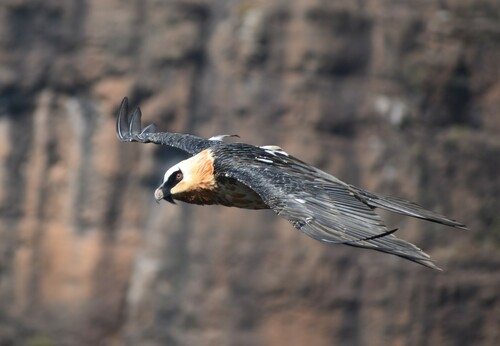
ヒゲワシ (Gypaetus barbatus) ヒゲワシ
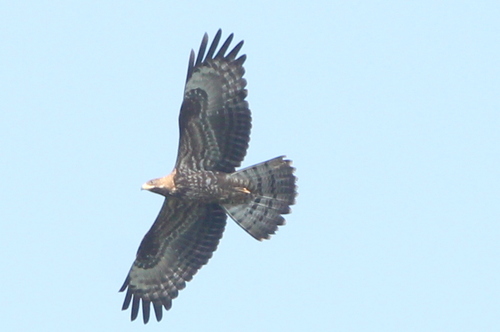
ヨーロッパハチクマ (Pernis apivorus) ヨーロッパハチクマ

メディア

読み込み中…

要点

ヒゲワシとヨーロッパハチクマの最も信頼できるフィールドマークは、全体のサイズと構造です:ヒゲワシは巨大で、長い翼とくさび形の尾を持つ猛禽類で、細身で中型のハチクマを完全に圧倒します。飛行中、ヒゲワシは長く狭い翼と長いダイヤモンド形の尾を示し、ハチクマは広く平らな翼と長いがくさび形ではない尾を持ち、明確な横縞があります。幼鳥のヒゲワシは暗くて大きいですが、幼鳥のハチクマは他のノスリと混同されることがありますが、決してワシの体格や比率には近づきません。遠くからでも、ワシのサイズ、形、独特の飛行シルエットは診断的です。

識別のコツ

  1. サイズが最初のチェック:もし鳥が本当に巨大に見え、翼幅が2メートルを超え、長いくさび形の尾を持っているなら、それはヒゲワシです。ハチクマは決して中型以上にはならず、翼幅は最大1.5メートルです。
  2. 飛行中の尾の形:ヒゲワシは長く、ダイヤモンド形またはくさび形の尾を示し、翼の幅よりも長いです。ハチクマの尾は長いですが、直線的またはわずかに丸みを帯びており、明確な暗い横縞(2本の狭いバーと1本の広い亜終端バー)を持ち、決してくさび形ではありません。
  3. 翼の形と姿勢:ヒゲワシは長く狭い翼を持ち、しばしばわずかに弓なりになり、ハヤブサのような印象を与えます。ハチクマは広く平らな翼で、先端がまっすぐまたはわずかに下向きに保たれ、手首にわずかな前方角度があり、頭/首が突き出ています。
  4. 幼鳥の羽毛:幼鳥のヒゲワシは均一な暗褐色から黒っぽく、コントラストが少なく、尾に横縞がありません。幼鳥のハチクマは褐色で横縞のある尾を持ち、ヨーロッパノスリを模倣することがありますが、決してワシの暗さやサイズには匹敵しません。
  5. 成鳥の顔の模様:ヒゲワシの成鳥は淡いクリーム色の額、黒いマスクとひげを持ち、しばしばオレンジまたは錆色の汚れた腹部があります。ハチクマにはひげやマスクがなく、オスは青灰色の頭、メスは褐色ですが、どちらも平坦な顔を持っています。
  6. 飛行の印象:ヒゲワシは細長く、ほぼ引き伸ばされたように見え、長い尾と狭い翼を持っています。ハチクマは長い首を持ち、小さな頭と広い翼を持ち、時には直接飛行中に角ばった胸を示します。
  7. 止まっている構造:地面では、ヒゲワシは巨大で、背中が丸まり、強力な足を持っています。ハチクマははるかに細く、掘るために適応した長い足指と爪を持ち、決して重厚には見えません。
  8. 生息地の文脈:ヒゲワシはほぼ高山と岩場に限定され、ハチクマは森林で繁殖し、開けた高山地帯ではめったに見られません。
  9. 地面での行動:ヒゲワシは死骸や骨の近くを歩いたり立ったりしているのが見られることがあり、時には大きな骨を飛ばして運ぶことがあります。ハチクマは森林の開けた場所でスズメバチの巣を掘っているのが見られる可能性が高いです。
  10. 鳴き声:もし聞こえたら、ヒゲワシは巣の近くで鋭い口笛や「チーク・ア・チーク」という呼び声を出します。ハチクマのディスプレイコールは明確な「ピー・ルー」です。
  11. 性差:ハチクマだけが頭の色に明らかな性差(オスは青灰色、メスは褐色)を示します。ヒゲワシの性はわずかなサイズの違いを除いて似ています。
  12. 羽毛の落とし穴:ハチクマの幼鳥はヨーロッパノスリを模倣することがありますが、決してワシのひげ、マスク、または全体の暗さを示しません。ヒゲワシのオレンジ/錆色の色合いは化粧的で変動的ですが、黒いひげとマスクは成鳥には常に存在します。
  13. 尾の横縞:すべての年齢のハチクマは尾に横縞を示しますが、ヒゲワシは決して示しません。
  14. 食事行動:ヒゲワシは骨を専門としており、しばしばそれを運んだり落としたりしているのが見られます。ハチクマはスズメバチの巣を専門としており、大きな骨を持っているのは決して見られません。
  15. 地理的範囲:もし南ヨーロッパ、アルプス、またはヒマラヤの高山にいるなら、ヒゲワシを考慮してください。もしヨーロッパの低地または高地の森林にいるなら、ハチクマの可能性が高いです。

大きさ

ヒゲワシは非常に大きく、体重は平均5544g(範囲4.5–7.8kg)、長さ94–125cm、翼幅は2.31–2.83mです。ヨーロッパハチクマははるかに小さく、体重は440–1050g、長さ52–60cm、翼幅は130–150cmです。フィールドでは、ワシの翼と尾はどのノスリやタカよりも長く、ほぼ鷲のようなスケールに見えますが、ハチクマはヨーロッパノスリよりもわずかに大きく、はるかに軽い体を持っています。ワシの尾は翼の幅よりも長く、独特の比率です。

羽色

幼鳥のヒゲワシは全体的に暗い黒褐色で、灰褐色の胸を持ち、淡いパネルや強い横縞がなく、成熟するまで数年間暗いままです。成鳥は淡い頭/腹部(しばしばオレンジまたは錆色に汚れている)と暗い翼と尾との間に際立ったコントラストを示し、黒いマスクとひげがあります。それに対して、ヨーロッパハチクマの幼鳥は変動する褐色で、時にはヨーロッパノスリを模倣しますが、常に横縞のある尾(2本の狭い暗いバーと1本の広い亜終端バー)を持ち、決してワシの固体の暗さや際立った顔の模様を持ちません。成鳥のハチクマは性差を示し、オスは青灰色の頭、メスは褐色ですが、どちらもヒゲワシよりもコントラストが少なく、より muted な羽毛を持っています。ワシの黒い顔のひげと淡い額は、ハチクマには決して匹敵しません。飛行中、ワシの翼は長く狭く、尾はくさび形で翼の幅よりも長いです;ハチクマの翼は広く平らで、尾は長いがくさび形ではなく、明確な横縞があります。

行動

ヒゲワシは長く浅い翼の打撃で滑空し、長く狭い翼で滑空し、しばしば山の斜面の高いところで、大きな骨を運ぶことがあります。その飛行は巨大なハヤブサやタカを思わせるもので、独特のくさび形の尾を持っています。地面では、ヒゲワシはよちよち歩き、重そうに見えます。ハチクマは平らでわずかに前方に傾いた翼で滑空し、しばしば手首にわずかな下向きの曲がりがあり、頭が長い首で前方に突き出ています。ハチクマは森林の床でスズメバチの巣を掘るのに時間を費やし、ディスプレイしていないときははるかに秘密主義で目立たないです。ワシは決して地面で昆虫を掘ったり採餌したりしているのは見られません。

生息環境

ヒゲワシは山の専門家で、高地の岩場、崖、アルプスの草原に生息し、低地の森林にはめったに降りません。ヨーロッパハチクマは森林や林に繁殖し、しばしば低地や高地の針葉樹の植林地に生息し、開けた岩場や高山地帯ではめったに見られません。森林や低地の環境で見られる場合、ハチクマの可能性がはるかに高く、高山を滑空する巨大な猛禽類はほぼ確実にヒゲワシです。

声

ヒゲワシは一般的に静かで、繁殖ディスプレイ中の鋭い口笛や巣の近くでのハヤブサのような「チーク・ア・チーク」という呼び声を除いては静かです。ヨーロッパハチクマは明確な「ピー・ルー」という呼び声を出し、特にディスプレイ飛行中に聞かれます。ほとんどのフィールド状況では、鳴き声は役に立たない可能性が高く、両者は通常、滑空中は静かです。

より良い説明を送る

比較と同じ項目を使ってください。文章はすぐに公開されます。

The most reliable field mark between Bearded Vulture and European Honey-buzzard is overall size and structure: Bearded Vulture is an enormous, long-winged, wedge-tailed raptor, utterly dwarfing the slim, medium-sized Honey-buzzard. In flight, Bearded Vulture shows long, narrow wings and a long, diamond-shaped tail, while Honey-buzzard has broad, flat wings and a long, but not wedge-shaped, tail with distinct barring. Juvenile Bearded Vultures are dark and massive, whereas juvenile Honey-buzzards can be confused with other buzzards but never approach the vulture’s bulk or proportions. Even at a distance, the vulture’s size, shape, and unique flight silhouette are diagnostic.

  1. Size is the first check: If the bird appears truly gigantic, with a wingspan over 2 meters and a long, wedge-shaped tail, it is Bearded Vulture. Honey-buzzard is never more than medium-large, with a wingspan up to 1.5 meters.
  2. Tail shape in flight: Bearded Vulture shows a long, diamond- or wedge-shaped tail, longer than the width of the wing. Honey-buzzard’s tail is long but straight-edged or slightly rounded, with clear dark barring (two narrow bars and a broad subterminal bar), never wedge-shaped.
  3. Wing shape and posture: Bearded Vulture has long, narrow wings, often slightly bowed, giving a falcon-like impression. Honey-buzzard soars on broad, flat wings, held straight or slightly downward at the tips, with a slight forward angle at the wrist and a projecting head/neck.
  4. Plumage in juveniles: Juvenile Bearded Vulture is uniform dark brown to blackish, with little contrast and no tail barring. Juvenile Honey-buzzard is brown with a barred tail and can mimic Common Buzzard, but never matches the vulture’s darkness or size.
  5. Adult facial pattern: Bearded Vulture adults have a pale, creamy forehead, black mask and beard, and often orange/rust-stained underparts. Honey-buzzard lacks any beard or mask; males have a blue-grey head, females brown, but both have plain faces.
  6. Flight jizz: Bearded Vulture appears elongated, almost stretched, with a long tail and narrow wings. Honey-buzzard looks long-necked, with a small head and broad wings, sometimes showing an angular chest in direct flight.
  7. Perched structure: On the ground, Bearded Vulture is massive, with a hunched back and powerful feet. Honey-buzzard is much slimmer, with long toes and claws adapted for digging, and never appears as bulky.
  8. Habitat context: Bearded Vulture is almost exclusively in high mountains and rocky areas; Honey-buzzard breeds in forests and is rarely seen in open alpine terrain.
  9. Behavior on the ground: Bearded Vulture may be seen walking or standing near carcasses or bones, sometimes carrying large bones in flight. Honey-buzzard is more likely to be seen digging for wasp nests in woodland clearings.
  10. Vocalization: If heard, Bearded Vulture gives shrill whistles or a 'cheek-acheek' call near the nest. Honey-buzzard’s display call is a clear 'peee-lu.'
  11. Sexual dimorphism: Only Honey-buzzard shows obvious sex differences in head color (male blue-grey, female brown); Bearded Vulture sexes are similar except for slight size difference.
  12. Plumage pitfalls: Honey-buzzard juveniles can mimic Common Buzzard but never show the vulture’s beard, mask, or overall darkness. Bearded Vulture’s orange/rust coloration is cosmetic and variable, but the black beard and mask are always present in adults.
  13. Tail barring: Honey-buzzard of all ages shows tail barring; Bearded Vulture never does.
  14. Feeding behavior: Bearded Vulture specializes in bones, often seen carrying or dropping them; Honey-buzzard specializes in wasp nests and is never seen with large bones.
  15. Geographic range: If in high mountains of southern Europe, Alps, or Himalayas, consider Bearded Vulture; if in lowland or upland forests across Europe, Honey-buzzard is more likely.

Bearded Vulture is vastly larger: body mass averages 5544 g (range 4.5–7.8 kg), length 94–125 cm, and wingspan 2.31–2.83 m. European Honey-buzzard is much smaller, weighing 440–1050 g, length 52–60 cm, and wingspan 130–150 cm. In the field, the vulture’s wings and tail are longer than any buzzard or kite, and it appears almost eagle-like in scale, while Honey-buzzard is only slightly larger than a Common Buzzard and much lighter-bodied. The vulture’s tail is longer than its wing width, a unique proportion.

Juvenile Bearded Vultures are dark black-brown overall with a grey-brown breast, lacking any pale panels or strong barring, and they remain dark for several years as they mature. Adults show a striking contrast between pale head/underparts (often stained orange or rust) and dark wings and tail, with a black mask and beard. In contrast, European Honey-buzzard juveniles are variable brown, sometimes mimicking Common Buzzard, but always with a barred tail (two narrow dark bars and a broad subterminal bar) and never with the vulture’s solid dark or striking facial pattern. Adult Honey-buzzards show sexual dimorphism: males have a blue-grey head, females brown, but both have a less contrasting, more muted plumage than Bearded Vulture. The vulture’s black facial beard and pale forehead are never matched by Honey-buzzard. In flight, the vulture’s wings are long and narrow, the tail wedge-shaped and longer than wing width; Honey-buzzard’s wings are broad, flat, and the tail is long but not wedge-shaped, with clear barring.

Bearded Vulture soars with long, shallow wingbeats and glides on long, narrow wings, often high above mountain slopes, sometimes carrying large bones. Its flight is more reminiscent of a giant falcon or kite, with a distinctive wedge tail. On the ground, it waddles and appears heavy. Honey-buzzard soars on flat, slightly forward-angled wings, often with a slight downward kink at the wrist, and the head projects forward with a long neck. It spends time on the forest floor digging for wasp nests and is much more secretive and inconspicuous when not displaying. The vulture is never seen digging or foraging on the ground for insects.

Bearded Vulture is a mountain specialist, found in high-altitude rocky areas, cliffs, and alpine meadows, rarely descending to lowland forests. European Honey-buzzard breeds in woodlands and forests, often in lowlands or upland conifer plantations, and is rarely seen in open or rocky alpine terrain. If seen in a forest or lowland setting, Honey-buzzard is much more likely; a massive raptor soaring over high mountains is almost certainly Bearded Vulture.

Bearded Vulture is generally silent, except for shrill whistles in breeding display and a falcon-like 'cheek-acheek' call near the nest. European Honey-buzzard gives a clear 'peee-lu' call, especially during display flights. In most field situations, vocalizations are not likely to be helpful, as both are usually silent when soaring.

変更を破棄しますか?

保存していない編集があります。今離れると失われます。

ヒゲワシ · ヨーロッパハチクマ · 苦手な鳥