

Motmot

Baird's Sandpiper vs Western Sandpiper

Calidris bairdii versus Calidris mauri

Play a quiz with Baird's Sandpiper and Western Sandpiper
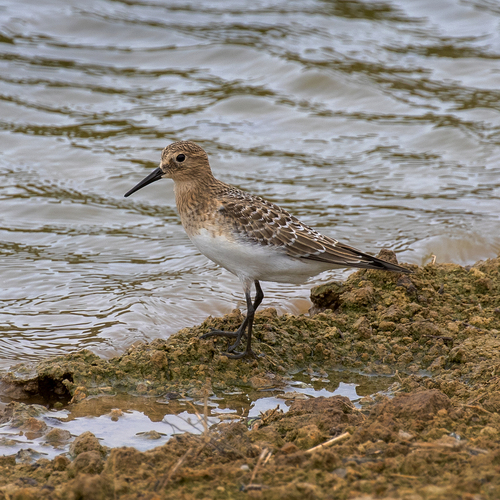
Baird's Sandpiper (Calidris bairdii) Baird's Sandpiper
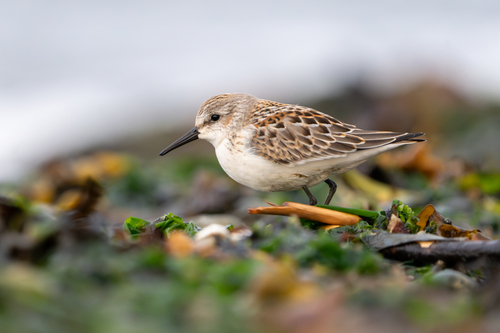
Western Sandpiper (Calidris mauri) Western Sandpiper

Media

Loading…

In short

The most reliable field mark between Baird's Sandpiper and Western Sandpiper is the wing length: Baird's Sandpiper shows noticeably long wings that project well beyond the tail when perched, a feature Western Sandpiper never shows. Both are small, dark-legged shorebirds with similar overall coloration, but subtle differences in structure and plumage can help. Western Sandpiper often shows a reddish crown in breeding plumage, while Baird's is more uniformly brown and streaked. Separation can be tricky, especially in non-breeding plumage, but careful attention to wing projection, bill shape, and seasonal color differences will help.

Identification tips

  1. Wing projection (all ages): Baird's Sandpiper has wings that extend well beyond the tail when perched, giving a long, attenuated rear end. Western Sandpiper's primaries do not project past the tail tip; its rear is shorter and squarer.
  2. Rump pattern (flight, all ages): Baird's shows a black rump patch in flight. Western Sandpiper lacks this feature; its rump is plain.
  3. Bill shape (adults, all seasons): Both have short, dark, thin bills, but Western Sandpiper's bill is thinner at the tip and can show a slight droop, especially in females. Baird's bill is straight and uniformly thin.
  4. Crown color (breeding adults): Western Sandpiper often shows a reddish-brown crown and sometimes rufous scapulars in breeding plumage. Baird's is more uniformly brown and streaked, with less contrast.
  5. Breast pattern (all ages): Baird's has a light brown breast with fine dark streaks extending onto the flanks. Western Sandpiper's breast is usually cleaner, with less extensive streaking.
  6. Upperpart tone (all ages): Baird's is generally darker brown above, especially in juveniles and fresh-plumaged birds. Western Sandpiper is paler and greyer above in winter.
  7. Leg color (all ages): Both have black legs; this is not a separator.
  8. Seasonal molt timing: Western Sandpiper acquires its plain grey winter plumage earlier in autumn than Baird's. Early autumn birds in drab plumage are more likely Western.
  9. Size and jizz: Western Sandpiper is slightly heavier and can appear a bit plumper, but this is subtle and unreliable without direct comparison.
  10. Tail projection: Baird's tail appears longer and more pointed due to the wing projection; Western's tail is shorter and more squared-off.
  11. Pitfalls with other species: Both can be confused with other 'peeps,' but the long-winged look is unique to Baird's among North American small sandpipers except White-rumped Sandpiper (which shows a white rump, not black).
  12. Context: Both species may be found together on migration. Do not rely on habitat or flock composition for separation.
  13. Voice: No diagnostic vocal differences are provided in the sources; do not use call for separation here.
  14. Age-specific confusion: Juvenile and first-winter birds are especially tricky; prioritize wing projection and overall shape over subtle color differences in these ages.
  15. In flight: Look for the black rump patch (Baird's) and long, pointed wings extending past the tail (Baird's) versus more compact, square-ended Western Sandpiper.

Size

Both species are small sandpipers, but Western Sandpiper is slightly heavier on average (body mass about 29.5 g [wikidata]). Length and wingspan overlap, with Western Sandpiper listed at 14–17 cm in length and 35–37 cm wingspan [wikipedia]. No direct mass data is given for Baird's, but size differences are subtle and not usually reliable in the field.

Plumage

For all ages, Baird's Sandpiper is best recognized by its long, pointed wings that extend well past the tail when perched—a feature not shared by Western Sandpiper. Juvenile and non-breeding birds of both species are generally brownish above and white below, but Baird's is darker above with a more streaked breast and a black rump patch. Western Sandpiper in breeding plumage shows a reddish-brown crown and sometimes rufous scapulars, while Baird's remains more uniformly brown and streaked. In winter, both species become plainer and greyer above, but Baird's still shows longer wings and a darker upper side. The black rump patch of Baird's is a useful mark in flight, but beware confusion with other 'peeps.'

Behaviour

Both species forage in similar ways, probing mudflats and shorelines for invertebrates. No strong behavioral differences are noted in the sources for field separation.

Habitat

Both species use similar habitats during migration—mudflats, lake edges, and coastal shorelines. Habitat is not a reliable separator between these two.

Submit a better description

Use the same sections as the comparison. Your text is published immediately.

The most reliable field mark between Baird's Sandpiper and Western Sandpiper is the wing length: Baird's Sandpiper shows noticeably long wings that project well beyond the tail when perched, a feature Western Sandpiper never shows. Both are small, dark-legged shorebirds with similar overall coloration, but subtle differences in structure and plumage can help. Western Sandpiper often shows a reddish crown in breeding plumage, while Baird's is more uniformly brown and streaked. Separation can be tricky, especially in non-breeding plumage, but careful attention to wing projection, bill shape, and seasonal color differences will help.

  1. Wing projection (all ages): Baird's Sandpiper has wings that extend well beyond the tail when perched, giving a long, attenuated rear end. Western Sandpiper's primaries do not project past the tail tip; its rear is shorter and squarer.
  2. Rump pattern (flight, all ages): Baird's shows a black rump patch in flight. Western Sandpiper lacks this feature; its rump is plain.
  3. Bill shape (adults, all seasons): Both have short, dark, thin bills, but Western Sandpiper's bill is thinner at the tip and can show a slight droop, especially in females. Baird's bill is straight and uniformly thin.
  4. Crown color (breeding adults): Western Sandpiper often shows a reddish-brown crown and sometimes rufous scapulars in breeding plumage. Baird's is more uniformly brown and streaked, with less contrast.
  5. Breast pattern (all ages): Baird's has a light brown breast with fine dark streaks extending onto the flanks. Western Sandpiper's breast is usually cleaner, with less extensive streaking.
  6. Upperpart tone (all ages): Baird's is generally darker brown above, especially in juveniles and fresh-plumaged birds. Western Sandpiper is paler and greyer above in winter.
  7. Leg color (all ages): Both have black legs; this is not a separator.
  8. Seasonal molt timing: Western Sandpiper acquires its plain grey winter plumage earlier in autumn than Baird's. Early autumn birds in drab plumage are more likely Western.
  9. Size and jizz: Western Sandpiper is slightly heavier and can appear a bit plumper, but this is subtle and unreliable without direct comparison.
  10. Tail projection: Baird's tail appears longer and more pointed due to the wing projection; Western's tail is shorter and more squared-off.
  11. Pitfalls with other species: Both can be confused with other 'peeps,' but the long-winged look is unique to Baird's among North American small sandpipers except White-rumped Sandpiper (which shows a white rump, not black).
  12. Context: Both species may be found together on migration. Do not rely on habitat or flock composition for separation.
  13. Voice: No diagnostic vocal differences are provided in the sources; do not use call for separation here.
  14. Age-specific confusion: Juvenile and first-winter birds are especially tricky; prioritize wing projection and overall shape over subtle color differences in these ages.
  15. In flight: Look for the black rump patch (Baird's) and long, pointed wings extending past the tail (Baird's) versus more compact, square-ended Western Sandpiper.

Both species are small sandpipers, but Western Sandpiper is slightly heavier on average (body mass about 29.5 g [wikidata]). Length and wingspan overlap, with Western Sandpiper listed at 14–17 cm in length and 35–37 cm wingspan [wikipedia]. No direct mass data is given for Baird's, but size differences are subtle and not usually reliable in the field.

For all ages, Baird's Sandpiper is best recognized by its long, pointed wings that extend well past the tail when perched—a feature not shared by Western Sandpiper. Juvenile and non-breeding birds of both species are generally brownish above and white below, but Baird's is darker above with a more streaked breast and a black rump patch. Western Sandpiper in breeding plumage shows a reddish-brown crown and sometimes rufous scapulars, while Baird's remains more uniformly brown and streaked. In winter, both species become plainer and greyer above, but Baird's still shows longer wings and a darker upper side. The black rump patch of Baird's is a useful mark in flight, but beware confusion with other 'peeps.'

Both species forage in similar ways, probing mudflats and shorelines for invertebrates. No strong behavioral differences are noted in the sources for field separation.

Both species use similar habitats during migration—mudflats, lake edges, and coastal shorelines. Habitat is not a reliable separator between these two.

Discard your changes?

You have unsaved edits. If you leave now, those changes will be lost.

Baird's Sandpiper · Western Sandpiper · My Tricky Birds