

Motmot

Asian Brown Flycatcher vs Spotted Flycatcher

Muscicapa dauurica versus Muscicapa striata

Play a quiz with Asian Brown Flycatcher and Spotted Flycatcher
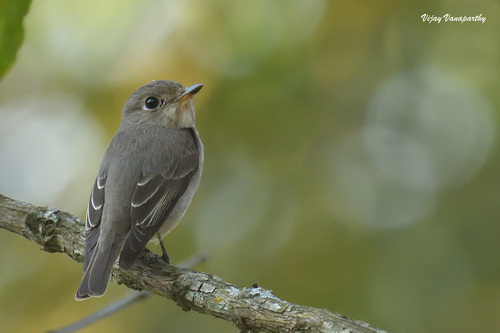
Asian Brown Flycatcher (Muscicapa dauurica) Asian Brown Flycatcher
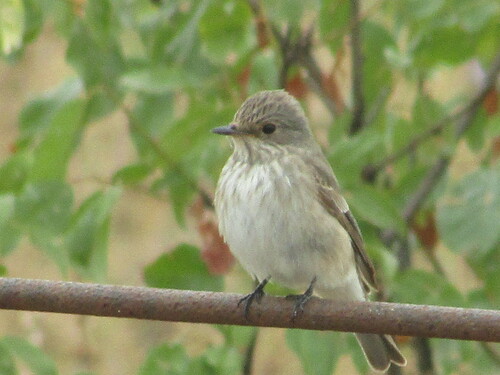
Spotted Flycatcher (Muscicapa striata) Spotted Flycatcher

Media

Loading…

In short

The most reliable field mark between Asian Brown Flycatcher and Spotted Flycatcher is the presence or absence of bold streaking on the crown and breast in adults: Spotted Flycatcher always shows clear brown streaks, while Asian Brown Flycatcher is plain-faced and unstreaked. Juveniles of both can appear scaly above, but Spotted Flycatcher juveniles have prominent ochre-buff spots above and below, whereas Asian Brown Flycatcher juveniles are scaly but lack strong spotting. Structurally, Asian Brown Flycatcher is slightly smaller, with a relatively longer tail and a proportionally larger, broader bill. Both species are drab, but careful attention to head pattern, breast markings, and bill structure will separate them in the field.

Identification tips

  1. Crown and Breast Streaking (Adults): Spotted Flycatcher always shows clear brown streaks on the crown, throat, and breast; Asian Brown Flycatcher is plain-faced and unstreaked. This is the single most reliable mark for adults.
  2. Juvenile Pattern: Juvenile Spotted Flycatcher has bold ochre-buff spots above and scaly brown spots below, making it look heavily marked; Asian Brown Flycatcher juvenile is scaly above and on the breast but lacks strong spots, appearing more subdued.
  3. Bill Structure: Asian Brown Flycatcher has a relatively large, broad-based, and dark bill (sometimes with a pale lower mandible in some populations); Spotted Flycatcher has a thinner, pointed bill, always black.
  4. Tail and Wing Proportions: Asian Brown Flycatcher is slightly smaller and relatively longer-tailed for its size, with a compact look; Spotted Flycatcher is longer overall, with long wings and tail, giving a more attenuated silhouette.
  5. Facial Pattern: Asian Brown Flycatcher may show a faint pale eyering ('spectacles'), but these are less contrasting than in some other Muscicapa; Spotted Flycatcher lacks a strong eyering, but its streaked crown and face give a subtly different impression.
  6. Upperparts Color: Both are grey-brown above, but Asian Brown Flycatcher can appear slightly greyer (especially as plumage ages), while Spotted Flycatcher is more uniformly dull grey-brown.
  7. Underparts: Asian Brown Flycatcher is whitish below with sometimes a brownish tinge to the flanks; Spotted Flycatcher is off-white below but always with streaks on the breast and throat.
  8. Wing and Tail Edging: Spotted Flycatcher adults have thin pale edges to wing and tail feathers, but this is subtle and rarely diagnostic at distance.
  9. Perched Posture: Spotted Flycatcher often appears very upright and may perch in the open for long periods; Asian Brown Flycatcher can be more restless and may flick its tail more frequently.
  10. Habitat Context: In Europe, Spotted Flycatcher is common in open woodland, parks, and gardens; Asian Brown Flycatcher is a rare vagrant, usually found in coastal migrant hotspots.
  11. Voice: If heard, Spotted Flycatcher's thin, descending call is distinctive; Asian Brown Flycatcher is usually silent or gives less distinctive calls (not described in the notes).
  12. Subspecific Variation: Minor differences in both species (e.g., paler or browner upperparts in some populations) are not usually diagnostic in the field.
  13. Confusion Risk: In dull light or at distance, both can appear drab and grey-brown; always look for streaking on the head and breast (present only in Spotted Flycatcher) as the clincher.
  14. Season: Juvenile and first-winter birds are most often confused; focus on the presence of bold spots (Spotted) versus scaly, spot-less pattern (Asian Brown).

Size

Spotted Flycatcher is slightly larger at about 14.5 cm in length, compared to Asian Brown Flycatcher's 13 cm. The difference is subtle in the field, but Spotted Flycatcher also tends to look longer-winged and longer-tailed overall. Both are slim, upright flycatchers, but Asian Brown Flycatcher may appear a bit more compact and shorter-billed in direct comparison. Weight is only given for Spotted Flycatcher (14–20 g), but both are lightweight, small passerines.

Plumage

Juvenile and first-winter birds are often confused: Spotted Flycatcher juveniles have distinctive ochre-buff spots on the upperparts and scaly brown spots below, making them look boldly patterned, while Asian Brown Flycatcher juveniles show a scaly effect above and on the breast but lack strong spots. Adult Spotted Flycatchers always show brown streaks on the crown, throat, and breast, which are diagnostic; Asian Brown Flycatcher adults are plain-faced, with grey-brown upperparts and whitish underparts, sometimes with a faint brownish wash to the flanks but never with bold streaks. The bill of Asian Brown Flycatcher is darker and broader-based, sometimes with a paler lower mandible in some subspecies. Spotted Flycatcher adults have thin pale edges to the wing and tail feathers, but this is subtle. Both species have grey-brown upperparts and whitish underparts, but only Spotted Flycatcher shows strong streaking. Subspecific variation in both is minor and not usually diagnostic in the field.

Behaviour

Both species hunt by sallying from perches to catch insects, often returning to the same spot. Spotted Flycatcher is noted for its upright posture and conspicuous perching behavior, often in open or semi-open habitats. Asian Brown Flycatcher behaves similarly but may appear more restless and is often seen flicking its longer tail. In flight, both are agile, but Spotted Flycatcher may look slightly longer-winged and more attenuated. Both can be confiding, but Spotted Flycatcher is more likely to perch in the open for extended periods.

Habitat

Spotted Flycatcher breeds across Europe and the Palearctic, favoring open woodlands, parks, gardens, and edges. Asian Brown Flycatcher breeds in eastern Asia and is a rare vagrant to Europe; it prefers forest edges, clearings, and wooded habitats. In western Europe, any Asian Brown Flycatcher is likely to be a rare migrant, often found in coastal migrant traps, while Spotted Flycatcher is a regular breeder and migrant in a wide range of open wooded habitats.

Voice

Spotted Flycatcher's call is a thin, drawn-out, high-pitched 'tssssseeeeeppppp,' slightly descending. No distinctive vocalization is described for Asian Brown Flycatcher in the provided notes, so voice is not a reliable separator here unless Spotted Flycatcher is heard giving its characteristic call.

Submit a better description

Use the same sections as the comparison. Your text is published immediately.

The most reliable field mark between Asian Brown Flycatcher and Spotted Flycatcher is the presence or absence of bold streaking on the crown and breast in adults: Spotted Flycatcher always shows clear brown streaks, while Asian Brown Flycatcher is plain-faced and unstreaked. Juveniles of both can appear scaly above, but Spotted Flycatcher juveniles have prominent ochre-buff spots above and below, whereas Asian Brown Flycatcher juveniles are scaly but lack strong spotting. Structurally, Asian Brown Flycatcher is slightly smaller, with a relatively longer tail and a proportionally larger, broader bill. Both species are drab, but careful attention to head pattern, breast markings, and bill structure will separate them in the field.

  1. Crown and Breast Streaking (Adults): Spotted Flycatcher always shows clear brown streaks on the crown, throat, and breast; Asian Brown Flycatcher is plain-faced and unstreaked. This is the single most reliable mark for adults.
  2. Juvenile Pattern: Juvenile Spotted Flycatcher has bold ochre-buff spots above and scaly brown spots below, making it look heavily marked; Asian Brown Flycatcher juvenile is scaly above and on the breast but lacks strong spots, appearing more subdued.
  3. Bill Structure: Asian Brown Flycatcher has a relatively large, broad-based, and dark bill (sometimes with a pale lower mandible in some populations); Spotted Flycatcher has a thinner, pointed bill, always black.
  4. Tail and Wing Proportions: Asian Brown Flycatcher is slightly smaller and relatively longer-tailed for its size, with a compact look; Spotted Flycatcher is longer overall, with long wings and tail, giving a more attenuated silhouette.
  5. Facial Pattern: Asian Brown Flycatcher may show a faint pale eyering ('spectacles'), but these are less contrasting than in some other Muscicapa; Spotted Flycatcher lacks a strong eyering, but its streaked crown and face give a subtly different impression.
  6. Upperparts Color: Both are grey-brown above, but Asian Brown Flycatcher can appear slightly greyer (especially as plumage ages), while Spotted Flycatcher is more uniformly dull grey-brown.
  7. Underparts: Asian Brown Flycatcher is whitish below with sometimes a brownish tinge to the flanks; Spotted Flycatcher is off-white below but always with streaks on the breast and throat.
  8. Wing and Tail Edging: Spotted Flycatcher adults have thin pale edges to wing and tail feathers, but this is subtle and rarely diagnostic at distance.
  9. Perched Posture: Spotted Flycatcher often appears very upright and may perch in the open for long periods; Asian Brown Flycatcher can be more restless and may flick its tail more frequently.
  10. Habitat Context: In Europe, Spotted Flycatcher is common in open woodland, parks, and gardens; Asian Brown Flycatcher is a rare vagrant, usually found in coastal migrant hotspots.
  11. Voice: If heard, Spotted Flycatcher's thin, descending call is distinctive; Asian Brown Flycatcher is usually silent or gives less distinctive calls (not described in the notes).
  12. Subspecific Variation: Minor differences in both species (e.g., paler or browner upperparts in some populations) are not usually diagnostic in the field.
  13. Confusion Risk: In dull light or at distance, both can appear drab and grey-brown; always look for streaking on the head and breast (present only in Spotted Flycatcher) as the clincher.
  14. Season: Juvenile and first-winter birds are most often confused; focus on the presence of bold spots (Spotted) versus scaly, spot-less pattern (Asian Brown).

Spotted Flycatcher is slightly larger at about 14.5 cm in length, compared to Asian Brown Flycatcher's 13 cm. The difference is subtle in the field, but Spotted Flycatcher also tends to look longer-winged and longer-tailed overall. Both are slim, upright flycatchers, but Asian Brown Flycatcher may appear a bit more compact and shorter-billed in direct comparison. Weight is only given for Spotted Flycatcher (14–20 g), but both are lightweight, small passerines.

Juvenile and first-winter birds are often confused: Spotted Flycatcher juveniles have distinctive ochre-buff spots on the upperparts and scaly brown spots below, making them look boldly patterned, while Asian Brown Flycatcher juveniles show a scaly effect above and on the breast but lack strong spots. Adult Spotted Flycatchers always show brown streaks on the crown, throat, and breast, which are diagnostic; Asian Brown Flycatcher adults are plain-faced, with grey-brown upperparts and whitish underparts, sometimes with a faint brownish wash to the flanks but never with bold streaks. The bill of Asian Brown Flycatcher is darker and broader-based, sometimes with a paler lower mandible in some subspecies. Spotted Flycatcher adults have thin pale edges to the wing and tail feathers, but this is subtle. Both species have grey-brown upperparts and whitish underparts, but only Spotted Flycatcher shows strong streaking. Subspecific variation in both is minor and not usually diagnostic in the field.

Both species hunt by sallying from perches to catch insects, often returning to the same spot. Spotted Flycatcher is noted for its upright posture and conspicuous perching behavior, often in open or semi-open habitats. Asian Brown Flycatcher behaves similarly but may appear more restless and is often seen flicking its longer tail. In flight, both are agile, but Spotted Flycatcher may look slightly longer-winged and more attenuated. Both can be confiding, but Spotted Flycatcher is more likely to perch in the open for extended periods.

Spotted Flycatcher breeds across Europe and the Palearctic, favoring open woodlands, parks, gardens, and edges. Asian Brown Flycatcher breeds in eastern Asia and is a rare vagrant to Europe; it prefers forest edges, clearings, and wooded habitats. In western Europe, any Asian Brown Flycatcher is likely to be a rare migrant, often found in coastal migrant traps, while Spotted Flycatcher is a regular breeder and migrant in a wide range of open wooded habitats.

Spotted Flycatcher's call is a thin, drawn-out, high-pitched 'tssssseeeeeppppp,' slightly descending. No distinctive vocalization is described for Asian Brown Flycatcher in the provided notes, so voice is not a reliable separator here unless Spotted Flycatcher is heard giving its characteristic call.

Discard your changes?

You have unsaved edits. If you leave now, those changes will be lost.

Asian Brown Flycatcher · Spotted Flycatcher · My Tricky Birds