

Ash-breasted Sierra Finch vs Uniform Finch
Geospizopsis plebejus versus Haplospiza unicolor
Play a quiz with Ash-breasted Sierra Finch and Uniform Finch
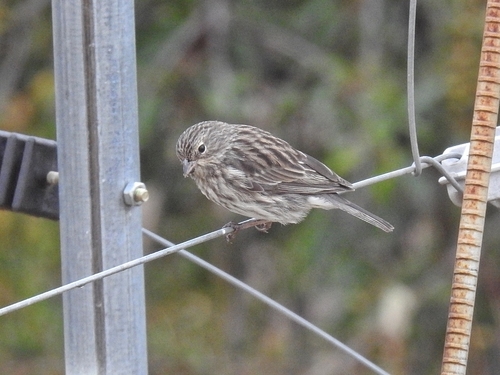 Ash-breasted Sierra Finch
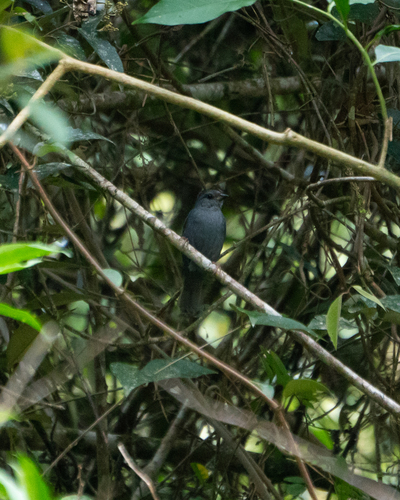 Uniform Finch
In short
The most reliable field mark between Ash-breasted Sierra Finch and Uniform Finch is their overall plumage tone and habitat: Ash-breasted Sierra Finch is distinctly grayish with variable flank and wing darkness depending on subspecies, and is found in high-altitude open habitats, while Uniform Finch is a more uniformly colored bird of lowland and montane humid forests. If you see a small, short-tailed finch in open, shrubby or grassy highlands, it's almost certainly Ash-breasted Sierra Finch; a similar-sized bird in dense, humid forest is likely Uniform Finch. Structural differences are subtle, but Ash-breasted Sierra Finch tends to look shorter-tailed and more compact. Immature/wing pattern details are not described for either species, so focus on overall color, habitat, and structure.
Identification tips
- Habitat is the first check: Ash-breasted Sierra Finch is found in open, high-altitude shrubland or grassland, while Uniform Finch is a bird of humid, often lowland or foothill forest. If you are in forest, lean strongly toward Uniform Finch.
- Overall color tone: Ash-breasted Sierra Finch is generally grayish, sometimes with darker flanks and blackish wings/tail (especially in some subspecies), while Uniform Finch is more uniform in color, lacking strong contrast between body and wings/tail.
- Tail and body structure: Ash-breasted Sierra Finch tends to look short-tailed and compact. Uniform Finch may appear more evenly proportioned, but this is subtle and not always reliable at distance.
- Subspecies variation in Ash-breasted Sierra Finch: Some populations (e.g., G. p. naroskyi) are smaller, more grayish, and have blackish wings and tail; others are less streaked or browner. Uniform Finch does not show this variation.
- No strong wing pattern: Neither species is described as having distinctive juvenile or immature wing markings, so do not rely on upperwing patterns in flight.
- Flank color: Darker flanks in some Ash-breasted Sierra Finch subspecies (e.g., G. p. naroskyi) can help separate from the more evenly colored Uniform Finch.
- Bill shape and color: Not described in detail for either species, so not a reliable separator here.
- Seasonal changes: No information on seasonal plumage changes for either species; assume adults and immatures are similar in their respective color patterns.
- Sex differences: Not described; treat both sexes as similar for field ID.
- Geographic range: Ash-breasted Sierra Finch is widespread in the Andes, while Uniform Finch is restricted to the Atlantic Forest region. Use range as a strong supporting clue.
- Foraging behavior: Expect Ash-breasted Sierra Finch to be more often on the ground or in low shrubs in open areas, while Uniform Finch will be in dense forest undergrowth.
- Confusion risk: If you see a small, grayish finch in open, high-altitude terrain, it is almost certainly Ash-breasted Sierra Finch. A similar bird in humid forest is likely Uniform Finch.
- No vocalization cues: No song or call details are provided, so do not rely on voice for separation in this pair.
- Juvenile/immature confusion: Since no distinctive immature marks are described, use the same field marks as for adults.
- When in doubt, prioritize habitat and overall color: These are the most consistent and reliable separators for this pair.
Size
Ash-breasted Sierra Finch is a small finch, measuring 11–11.5 cm in length and weighing 13–17.4 g [wikipedia]. No direct measurements are given for Uniform Finch, but both are considered small tanagers/finches. Expect them to be similar in size, but Ash-breasted Sierra Finch may appear slightly more compact and short-tailed in the field.
Plumage
No age-specific wing or flight pattern marks are described for either species. For adults, Ash-breasted Sierra Finch varies by subspecies: most are grayish overall, with some populations showing darker flanks, blackish wings and tail, and less brownish coloration. The Uniform Finch is described as 'uniform' in color, lacking strong contrast between body and wings/tail, and does not show the grayish or dark-flanked look of some Ash-breasted Sierra Finches. No information is provided for juvenile or immature plumages for either species, so assume adults and immatures are similar in their respective uniformity or grayness.
Behaviour
Behavior is not detailed for either species in the provided notes. However, Ash-breasted Sierra Finch is likely to be seen foraging on the ground or low shrubs in open habitats, while Uniform Finch would be found in the undergrowth or lower levels of dense humid forest. Flight style and foraging behavior may differ accordingly, but this is not explicitly described.
Habitat
Habitat is a strong separator: Ash-breasted Sierra Finch inhabits subtropical or tropical dry shrubland, high-altitude shrubland, and high-altitude grassland across the Andes of Argentina, Bolivia, Chile, Ecuador, and Peru [wikipedia]. In contrast, Uniform Finch is restricted to the southern Atlantic Forest of Brazil, Paraguay, and far northeastern Argentina, favoring subtropical or tropical moist lowland and montane forest [wikipedia]. If you are in open, dry, or high-altitude terrain, expect Ash-breasted Sierra Finch; in humid, forested lowlands or foothills, look for Uniform Finch.