
Motmot

Arctic Skua vs Pomarine Skua

Stercorarius parasiticus versus Stercorarius pomarinus

Play a quiz with Arctic Skua and Pomarine Skua
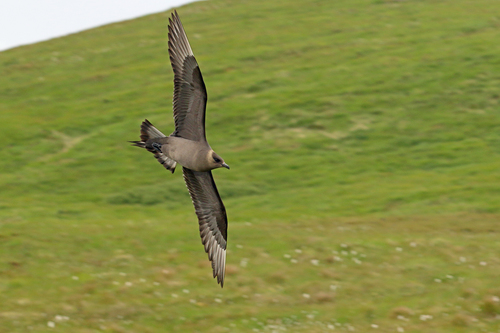
Arctic Skua (Stercorarius parasiticus) Arctic Skua
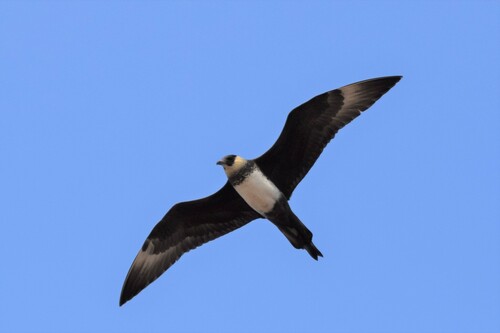
Pomarine Skua (Stercorarius pomarinus) Pomarine Skua

Media

Loading…

In short

The most reliable field mark between Arctic Skua (Parasitic Jaeger) and Pomarine Skua is overall structure and size: Pomarine is bulkier, broader-winged, and has a heavier, less falcon-like flight, while Arctic is slimmer and more agile. Adult breeding Pomarines have distinctive, long, spoon-shaped central tail feathers, longer than the pointed tail streamers of Arctic. Both species show similar plumage variation (light, dark, intermediate morphs) and a white wing flash, making separation of juveniles especially difficult. In flight, Pomarine’s double white flash on the underwing and heavier jizz are helpful, but many immature birds require careful structural comparison. Expect confusion especially with young birds or distant views.

Identification tips

  1. Size and bulk: Pomarine is noticeably larger and heavier than Arctic; use this when birds are together or with other seabirds for scale.
  2. Wing shape and flight: Pomarine has broader wings and a more measured, less falcon-like flight; Arctic is slimmer and more agile, especially in pursuit.
  3. Tail shape (breeding adults): Pomarine’s central tail feathers are long, spoon-shaped, and twisted; Arctic’s are pointed and shorter. This is a key mark for adults in breeding plumage.
  4. Underwing flash: Pomarine shows a double white flash on the underwing, while Arctic has a single white patch. This is most reliable on adults and older immatures in good light.
  5. Bill and head: Pomarine’s bill is stouter and the head appears more robust; Arctic’s bill is finer and the head sleeker, but this is subtle at distance.
  6. Plumage morphs: Both species have light, dark, and intermediate morphs; do not rely on overall color to separate them.
  7. Juvenile confusion: Juveniles of both are extremely similar; structure and flight style are more useful than plumage. At distance, separation may not be possible.
  8. Voice: Pomarine gives harsh chattering and 'which-yew' calls; Arctic gives nasal mewing and wailing notes. Useful only if heard well.
  9. Habitat context: Arctic is more likely near shore or over land during migration; Pomarine is more strictly pelagic outside breeding.
  10. Relative abundance: Arctic Skua is the most common jaeger seen from shore; Pomarine is less frequent except during migration events.
  11. Jizz: Pomarine looks heavier, less agile, and more gull-like; Arctic is more streamlined and falcon-like, especially in flight.
  12. Tail streamer length (non-breeding): Outside breeding, tail streamers are shorter or absent in both, making separation harder—fall back on structure and flight.
  13. Primary projection: Not specifically described in the notes, but Pomarine’s broader wings and heavier build are clues; Arctic’s wings are relatively longer and narrower.
  14. Behavior: Both species chase other birds for food, but Pomarine’s attacks are slower and more direct; Arctic is more agile and acrobatic.
  15. Pitfalls: Do not rely on color morph, single field marks, or brief views—use a combination of structure, flight, and context, especially for immatures.

Size

Pomarine Skua is consistently larger and heavier than Arctic Skua. Pomarine measures 46–67 cm in length (including up to 10 cm of tail streamer in breeding adults), with a wingspan of 110–138 cm and an average body mass around 694 g. Arctic Skua is smaller at 41–48 cm in length (tail streamer about 7 cm in breeding adults), wingspan 107–125 cm, and body mass 300–650 g. In the field, Pomarine appears noticeably bulkier and broader-winged, while Arctic is more slender and compact.

Plumage

Juvenile and immature plumage is notoriously difficult to separate. Both species show three color morphs (light, dark, intermediate) and a white wing flash. For adults in breeding plumage, Pomarine’s central tail feathers are much longer, spoon-shaped, and twisted, while Arctic’s are pointed and shorter. Light-morph adults of both have brown backs, mainly white underparts, yellowish-white necks with black caps, and dark primaries with a white flash. The Pomarine’s underwing flash appears as a diagnostic double flash, while Arctic’s is a single patch. Dark morphs are similar, but Pomarine is overall bulkier and the white flash is more pronounced. Juveniles of both are variable and can be almost impossible to separate by plumage alone at a distance.

Behaviour

In flight, Pomarine Skua is less falcon-like, with a heavier, more measured wingbeat and broader wings. Arctic Skua is more agile, with quicker, more acrobatic flight. Both are aggressive kleptoparasites, but Pomarine’s flight is less rapid and more direct. On the ground, Pomarine appears more robust and less streamlined than Arctic. Both species will defend nests aggressively, but this is rarely a field separation point.

Habitat

Both species are pelagic outside the breeding season, but Arctic Skua is more frequently seen from shore and breeds on tundra, high fells, and islands. Pomarine Skua winters farther offshore, typically at sea in tropical oceans, and is less often seen near land except during migration. During breeding, both occupy open, often remote habitats, but Pomarine is less likely to be encountered inland.

Voice

Arctic Skua is usually silent except for nasal mewing and wailing notes on the breeding grounds, with a shorter alarm call. Pomarine Skua has a variety of harsh chattering calls and a distinctive 'which-yew' sound. Vocalizations are rarely diagnostic at sea or on migration, but Pomarine’s calls are generally harsher and more varied.

Submit a better description

Use the same sections as the comparison. Your text is published immediately.

The most reliable field mark between Arctic Skua (Parasitic Jaeger) and Pomarine Skua is overall structure and size: Pomarine is bulkier, broader-winged, and has a heavier, less falcon-like flight, while Arctic is slimmer and more agile. Adult breeding Pomarines have distinctive, long, spoon-shaped central tail feathers, longer than the pointed tail streamers of Arctic. Both species show similar plumage variation (light, dark, intermediate morphs) and a white wing flash, making separation of juveniles especially difficult. In flight, Pomarine’s double white flash on the underwing and heavier jizz are helpful, but many immature birds require careful structural comparison. Expect confusion especially with young birds or distant views.

  1. Size and bulk: Pomarine is noticeably larger and heavier than Arctic; use this when birds are together or with other seabirds for scale.
  2. Wing shape and flight: Pomarine has broader wings and a more measured, less falcon-like flight; Arctic is slimmer and more agile, especially in pursuit.
  3. Tail shape (breeding adults): Pomarine’s central tail feathers are long, spoon-shaped, and twisted; Arctic’s are pointed and shorter. This is a key mark for adults in breeding plumage.
  4. Underwing flash: Pomarine shows a double white flash on the underwing, while Arctic has a single white patch. This is most reliable on adults and older immatures in good light.
  5. Bill and head: Pomarine’s bill is stouter and the head appears more robust; Arctic’s bill is finer and the head sleeker, but this is subtle at distance.
  6. Plumage morphs: Both species have light, dark, and intermediate morphs; do not rely on overall color to separate them.
  7. Juvenile confusion: Juveniles of both are extremely similar; structure and flight style are more useful than plumage. At distance, separation may not be possible.
  8. Voice: Pomarine gives harsh chattering and 'which-yew' calls; Arctic gives nasal mewing and wailing notes. Useful only if heard well.
  9. Habitat context: Arctic is more likely near shore or over land during migration; Pomarine is more strictly pelagic outside breeding.
  10. Relative abundance: Arctic Skua is the most common jaeger seen from shore; Pomarine is less frequent except during migration events.
  11. Jizz: Pomarine looks heavier, less agile, and more gull-like; Arctic is more streamlined and falcon-like, especially in flight.
  12. Tail streamer length (non-breeding): Outside breeding, tail streamers are shorter or absent in both, making separation harder—fall back on structure and flight.
  13. Primary projection: Not specifically described in the notes, but Pomarine’s broader wings and heavier build are clues; Arctic’s wings are relatively longer and narrower.
  14. Behavior: Both species chase other birds for food, but Pomarine’s attacks are slower and more direct; Arctic is more agile and acrobatic.
  15. Pitfalls: Do not rely on color morph, single field marks, or brief views—use a combination of structure, flight, and context, especially for immatures.

Pomarine Skua is consistently larger and heavier than Arctic Skua. Pomarine measures 46–67 cm in length (including up to 10 cm of tail streamer in breeding adults), with a wingspan of 110–138 cm and an average body mass around 694 g. Arctic Skua is smaller at 41–48 cm in length (tail streamer about 7 cm in breeding adults), wingspan 107–125 cm, and body mass 300–650 g. In the field, Pomarine appears noticeably bulkier and broader-winged, while Arctic is more slender and compact.

Juvenile and immature plumage is notoriously difficult to separate. Both species show three color morphs (light, dark, intermediate) and a white wing flash. For adults in breeding plumage, Pomarine’s central tail feathers are much longer, spoon-shaped, and twisted, while Arctic’s are pointed and shorter. Light-morph adults of both have brown backs, mainly white underparts, yellowish-white necks with black caps, and dark primaries with a white flash. The Pomarine’s underwing flash appears as a diagnostic double flash, while Arctic’s is a single patch. Dark morphs are similar, but Pomarine is overall bulkier and the white flash is more pronounced. Juveniles of both are variable and can be almost impossible to separate by plumage alone at a distance.

In flight, Pomarine Skua is less falcon-like, with a heavier, more measured wingbeat and broader wings. Arctic Skua is more agile, with quicker, more acrobatic flight. Both are aggressive kleptoparasites, but Pomarine’s flight is less rapid and more direct. On the ground, Pomarine appears more robust and less streamlined than Arctic. Both species will defend nests aggressively, but this is rarely a field separation point.

Both species are pelagic outside the breeding season, but Arctic Skua is more frequently seen from shore and breeds on tundra, high fells, and islands. Pomarine Skua winters farther offshore, typically at sea in tropical oceans, and is less often seen near land except during migration. During breeding, both occupy open, often remote habitats, but Pomarine is less likely to be encountered inland.

Arctic Skua is usually silent except for nasal mewing and wailing notes on the breeding grounds, with a shorter alarm call. Pomarine Skua has a variety of harsh chattering calls and a distinctive 'which-yew' sound. Vocalizations are rarely diagnostic at sea or on migration, but Pomarine’s calls are generally harsher and more varied.

Discard your changes?

You have unsaved edits. If you leave now, those changes will be lost.

Arctic Skua · Pomarine Skua · My Tricky Birds