

Motmot

Amur Paradise-Flycatcher vs Indian Paradise-Flycatcher

Terpsiphone incei versus Terpsiphone paradisi

Play a quiz with Amur Paradise-Flycatcher and Indian Paradise-Flycatcher
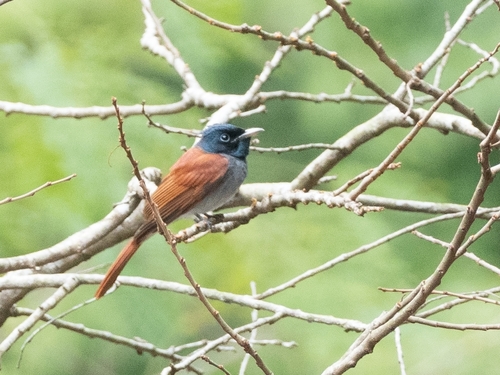
Amur Paradise-Flycatcher (Terpsiphone incei) Amur Paradise-Flycatcher
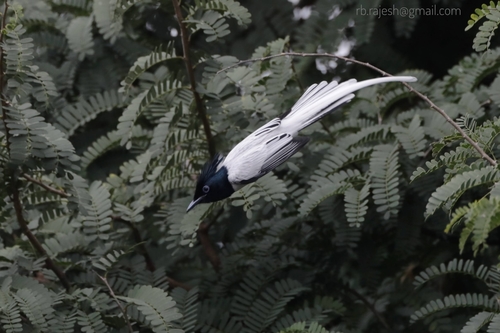
Indian Paradise-Flycatcher (Terpsiphone paradisi) Indian Paradise-Flycatcher

Media

Loading…

In short

The most reliable field mark between Amur Paradise-Flycatcher and Indian Paradise-Flycatcher is the combination of head and underpart coloration in adult males: Amur males have a black hood, white underparts, and blue eye-rings, while Indian males show more variation, with either rufous or white upperparts and less consistently white underparts. Both species can have long tail streamers in adult males, but the color forms and frequency of rufous versus white males differ geographically. Females and immatures are especially tricky, as both are rufous above with dark heads, but subtle differences in throat and underpart color, and the presence or absence of blue eye-rings, can help. Range is a strong clue: Amur breeds in northeast Asia and winters in Southeast Asia, while Indian is resident or migratory across the Indian subcontinent and parts of Central Asia.

Identification tips

  1. Adult male head and underparts: Amur males always show a black hood, white underparts, and blue eye-rings; Indian males have a glossy black head but can be rufous or white above, and underparts are not always white. Use this for perched or close views of adult males.
  2. Tail streamer color and length: Both species can have very long central tail feathers in adult males, but Amur's tail can be up to twice the body length, matching the longest Indian males. Tail length alone is not diagnostic.
  3. Upperpart color in males: Amur males come in two forms (rufous or white upperparts), but always have white underparts and black hoods. Indian males are more variable, with rufous, white, or intermediate upperparts, and the frequency of white morphs increases towards the southeast of their range.
  4. Shaft streaks on wings and tail: In Indian Paradise-Flycatcher, white morph males often show black shaft streaks and black edges on the wings and tail; rufous morphs lack these. This is less well described for Amur, but may help in white birds.
  5. Female and immature plumage: Both species' females are rufous above, but Indian females have a greyish throat and underparts, while Amur females may have whiter underparts. This is subtle and best used in combination with other marks.
  6. Eye-ring color: Blue eye-rings are prominent in adult male Amur and in young Indian males, but are not as obvious in Indian females. If seen well, a bright blue eye-ring supports Amur, but is not exclusive.
  7. Throat color in young males: Young Indian males have a black throat and blue eye-ring, while young Amur males' throat color is less well documented but may be less distinctly black.
  8. Geographic range: Amur breeds in northeast Asia and winters in Southeast Asia; Indian is resident or migratory across the Indian subcontinent and parts of Central Asia. Out of range records should be treated with caution.
  9. Habitat context: Amur prefers temperate forests in breeding season, Indian is more catholic in wooded habitats. In urban or dry woodland in India, Indian is vastly more likely.
  10. Behavior: Both sally for insects; Indian is noted for beating prey on rocks, but this is rarely observed and not diagnostic.
  11. Flight views: No distinctive upperwing pattern or flight mark is described for either species; separation in flight relies on tail length (in adult males) and overall coloration.
  12. Sex and age pitfalls: Females and immatures are the hardest to separate; focus on subtle throat and underpart color, eye-ring, and range.
  13. Plumage intermediates: Indian Paradise-Flycatcher shows more intermediates between rufous and white morphs, especially in India and China; Amur is more consistent in its forms.
  14. Seasonal timing: Amur is present in Southeast Asia only in winter; Indian is resident or a summer breeder. Timing of observation can be a clue.
  15. Voice: Not described in the available notes; do not rely on vocalizations for separation.

Size

Both species are similar in overall size, with Indian Paradise-Flycatcher adults measuring 19–22 cm in body length and having variable tail streamer length (up to 30 cm in males) [wikipedia]. Amur Paradise-Flycatcher males in breeding plumage can have tails twice the length of the body, which is comparable to the longest Indian males. Females of both species are short-tailed. There is no consistent size difference to separate them in the field.

Plumage

Juvenile and immature birds of both species are rufous above with dark heads, making them difficult to separate visually. For adults, Amur Paradise-Flycatcher males always have a black hood, white underparts, and blue eye-rings, regardless of whether their upperparts are rufous or white. Indian Paradise-Flycatcher adult males are more variable: some are bright rufous above, others are white, and many are intermediate, with the frequency of each morph depending on geography. Rufous Indian males lack black shaft streaks on the wing and tail, while white morphs may show black shaft streaks and black edges on these feathers. Females of both species are rufous above, but Indian females have a greyish throat and underparts, while Amur females are less well described but may have whiter underparts. Young Indian males resemble females but have a black throat and blue eye-rings, acquiring long tails in their second or third year. The blue eye-ring is a key feature for Amur, present in adult males and young males, but can also occur in Indian young males. In summary, adult male Amur is more consistently black-hooded and white-bellied, while Indian males are more variable and often rufous above.

Behaviour

Both species are active flycatchers, sallying from perches to catch insects in mid-air. Indian Paradise-Flycatcher is noted for sometimes killing prey by hitting it on a rock before eating, but this is not documented for Amur. Both species typically forage in the mid to upper canopy and can be seen flitting through foliage or making short flights after insects. Flight style and general behavior are very similar and not reliably diagnostic.

Habitat

Amur Paradise-Flycatcher breeds in temperate forests of northeast China and the Russian Far East, migrating to winter in Southeast Asia. Indian Paradise-Flycatcher is found in a wider range of wooded habitats across the Indian subcontinent, including forests, groves, and well-wooded gardens, and is resident or migratory depending on location. Overlap is possible in parts of China and Southeast Asia during migration or winter, but in most of their range, habitat and geography are strong clues to identity.

Submit a better description

Use the same sections as the comparison. Your text is published immediately.

The most reliable field mark between Amur Paradise-Flycatcher and Indian Paradise-Flycatcher is the combination of head and underpart coloration in adult males: Amur males have a black hood, white underparts, and blue eye-rings, while Indian males show more variation, with either rufous or white upperparts and less consistently white underparts. Both species can have long tail streamers in adult males, but the color forms and frequency of rufous versus white males differ geographically. Females and immatures are especially tricky, as both are rufous above with dark heads, but subtle differences in throat and underpart color, and the presence or absence of blue eye-rings, can help. Range is a strong clue: Amur breeds in northeast Asia and winters in Southeast Asia, while Indian is resident or migratory across the Indian subcontinent and parts of Central Asia.

  1. Adult male head and underparts: Amur males always show a black hood, white underparts, and blue eye-rings; Indian males have a glossy black head but can be rufous or white above, and underparts are not always white. Use this for perched or close views of adult males.
  2. Tail streamer color and length: Both species can have very long central tail feathers in adult males, but Amur's tail can be up to twice the body length, matching the longest Indian males. Tail length alone is not diagnostic.
  3. Upperpart color in males: Amur males come in two forms (rufous or white upperparts), but always have white underparts and black hoods. Indian males are more variable, with rufous, white, or intermediate upperparts, and the frequency of white morphs increases towards the southeast of their range.
  4. Shaft streaks on wings and tail: In Indian Paradise-Flycatcher, white morph males often show black shaft streaks and black edges on the wings and tail; rufous morphs lack these. This is less well described for Amur, but may help in white birds.
  5. Female and immature plumage: Both species' females are rufous above, but Indian females have a greyish throat and underparts, while Amur females may have whiter underparts. This is subtle and best used in combination with other marks.
  6. Eye-ring color: Blue eye-rings are prominent in adult male Amur and in young Indian males, but are not as obvious in Indian females. If seen well, a bright blue eye-ring supports Amur, but is not exclusive.
  7. Throat color in young males: Young Indian males have a black throat and blue eye-ring, while young Amur males' throat color is less well documented but may be less distinctly black.
  8. Geographic range: Amur breeds in northeast Asia and winters in Southeast Asia; Indian is resident or migratory across the Indian subcontinent and parts of Central Asia. Out of range records should be treated with caution.
  9. Habitat context: Amur prefers temperate forests in breeding season, Indian is more catholic in wooded habitats. In urban or dry woodland in India, Indian is vastly more likely.
  10. Behavior: Both sally for insects; Indian is noted for beating prey on rocks, but this is rarely observed and not diagnostic.
  11. Flight views: No distinctive upperwing pattern or flight mark is described for either species; separation in flight relies on tail length (in adult males) and overall coloration.
  12. Sex and age pitfalls: Females and immatures are the hardest to separate; focus on subtle throat and underpart color, eye-ring, and range.
  13. Plumage intermediates: Indian Paradise-Flycatcher shows more intermediates between rufous and white morphs, especially in India and China; Amur is more consistent in its forms.
  14. Seasonal timing: Amur is present in Southeast Asia only in winter; Indian is resident or a summer breeder. Timing of observation can be a clue.
  15. Voice: Not described in the available notes; do not rely on vocalizations for separation.

Both species are similar in overall size, with Indian Paradise-Flycatcher adults measuring 19–22 cm in body length and having variable tail streamer length (up to 30 cm in males) [wikipedia]. Amur Paradise-Flycatcher males in breeding plumage can have tails twice the length of the body, which is comparable to the longest Indian males. Females of both species are short-tailed. There is no consistent size difference to separate them in the field.

Juvenile and immature birds of both species are rufous above with dark heads, making them difficult to separate visually. For adults, Amur Paradise-Flycatcher males always have a black hood, white underparts, and blue eye-rings, regardless of whether their upperparts are rufous or white. Indian Paradise-Flycatcher adult males are more variable: some are bright rufous above, others are white, and many are intermediate, with the frequency of each morph depending on geography. Rufous Indian males lack black shaft streaks on the wing and tail, while white morphs may show black shaft streaks and black edges on these feathers. Females of both species are rufous above, but Indian females have a greyish throat and underparts, while Amur females are less well described but may have whiter underparts. Young Indian males resemble females but have a black throat and blue eye-rings, acquiring long tails in their second or third year. The blue eye-ring is a key feature for Amur, present in adult males and young males, but can also occur in Indian young males. In summary, adult male Amur is more consistently black-hooded and white-bellied, while Indian males are more variable and often rufous above.

Both species are active flycatchers, sallying from perches to catch insects in mid-air. Indian Paradise-Flycatcher is noted for sometimes killing prey by hitting it on a rock before eating, but this is not documented for Amur. Both species typically forage in the mid to upper canopy and can be seen flitting through foliage or making short flights after insects. Flight style and general behavior are very similar and not reliably diagnostic.

Amur Paradise-Flycatcher breeds in temperate forests of northeast China and the Russian Far East, migrating to winter in Southeast Asia. Indian Paradise-Flycatcher is found in a wider range of wooded habitats across the Indian subcontinent, including forests, groves, and well-wooded gardens, and is resident or migratory depending on location. Overlap is possible in parts of China and Southeast Asia during migration or winter, but in most of their range, habitat and geography are strong clues to identity.

Discard your changes?

You have unsaved edits. If you leave now, those changes will be lost.

Amur Paradise-Flycatcher · Indian Paradise-Flycatcher · My Tricky Birds