

Motmot

American Woodcock vs Grey Phalarope

Scolopax minor versus Phalaropus fulicarius

Play a quiz with American Woodcock and Grey Phalarope
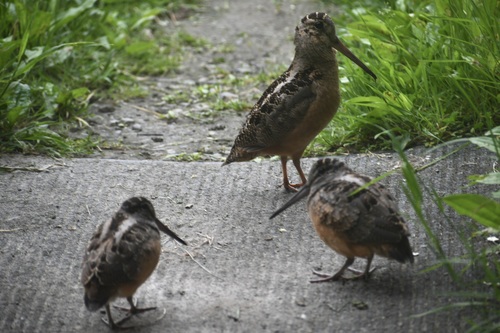
American Woodcock (Scolopax minor) American Woodcock
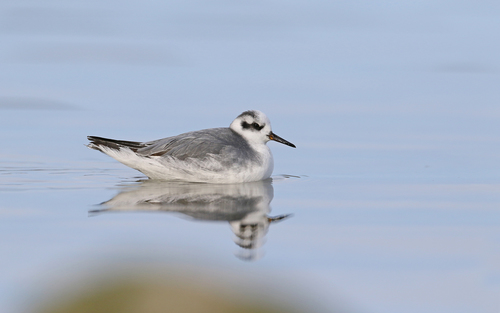
Grey Phalarope (Phalaropus fulicarius) Grey Phalarope

Media

Loading…

In short

The most reliable field mark to separate American Woodcock from Grey (Red) Phalarope is overall structure and bill shape: woodcock is a plump, round-bodied bird with a very long, thick, straight bill, while Grey Phalarope is slimmer, with a shorter, finer bill and often shows a contrasting dark eyepatch in non-breeding plumage. In flight, woodcock appears broad-winged and short-tailed, while phalarope is more compact and buoyant, often seen swimming. Juvenile and winter Grey Phalarope have a distinct dark eye-stripe or eyepatch, which American Woodcock never shows. Habitat is also a strong clue: woodcock is found on the ground in dense brush or young forest, while phalarope is almost always seen on open water or wet coastal areas.

Identification tips

  1. Bill shape and length: Woodcock has a very long, thick, straight bill (over 6 cm), while Grey Phalarope's bill is much shorter, finer, and in winter is all black. This is reliable at any age or season.
  2. Body structure: Woodcock is plump, round-bodied, with a large, rounded head and short neck; phalarope is slim, compact, and more delicate overall.
  3. Face pattern (juvenile/winter): Grey Phalarope (all non-breeding ages) shows a strong dark eyepatch or eye-stripe on a pale face; woodcock never shows a facial mask, instead has a plain, cryptic face with large eyes set high and back on the head.
  4. Plumage color: Woodcock is always earth-toned (brown, black, gray), heavily camouflaged, with no white or red; Grey Phalarope is white below and pale grey above in winter/juvenile, and breeding females are red below with white cheeks.
  5. Wing and tail in flight: Woodcock has broad, rounded wings and a short tail, giving a chunky, blunt appearance; phalarope has narrower wings and a more streamlined, compact look.
  6. Legs: Woodcock has short legs, usually hidden by body feathers; phalarope has longer, visible legs with lobed toes, especially when swimming.
  7. Habitat: Woodcock is found on the ground in dense brush or young forest, never on open water; phalarope is almost always seen swimming or on open water, rarely on land except at high Arctic breeding sites.
  8. Behavior: Woodcock walks slowly, often rocking back and forth; phalarope swims actively, often spinning in tight circles.
  9. Voice: Woodcock gives a buzzy 'peent' and a twittering flight display; phalarope gives a short 'beek' but is mostly silent.
  10. Sexual dimorphism: In breeding season, female Grey Phalarope is brighter (red below, white cheeks), but woodcock sexes are similar except for size.
  11. Size: Woodcock is larger and heavier than phalarope, but beware overlap with large female phalaropes and small male woodcocks.
  12. Context: If the bird is in a flock on open water, it is almost certainly a phalarope; if alone in brush or woodland, it is a woodcock.
  13. Head shape: Woodcock's head is large and rounded, with eyes set far back; phalarope's head is smaller and more proportional.
  14. Feeding style: Woodcock probes in soil for earthworms; phalarope picks at surface insects or spins to stir up prey in water.
  15. Flight style: Woodcock is heavy, zigzagging, and low; phalarope is buoyant, direct, and often in groups.

Size

American Woodcock is larger and heavier, measuring 25–30 cm in length with a wingspan of 42–48 cm and weighing 140–230 g [wikipedia]. Grey Phalarope is smaller at about 21 cm in length [wikipedia], with a more delicate build. Woodcock is noticeably bulkier and rounder, with a disproportionately large head and thick body, while phalarope is slim and compact. The woodcock's bill is much longer (6.4–7.1 cm) and stouter than the phalarope's shorter, finer bill.

Plumage

Juvenile and winter Grey Phalarope are pale grey above and white below, with a distinctive dark patch through the eye or a clear black eyepatch, and a black bill in winter [wikipedia]. Juvenile woodcock lacks any facial mask, instead showing cryptic brown, black, and gray camouflage with a large, rounded head and no strong face pattern. In all plumages, woodcock is earth-toned and heavily camouflaged, blending with leaf litter, while phalarope is always clean white below and, in winter, smooth pale grey above. In breeding season, female Grey Phalarope is strikingly red below with white cheeks and dark above, but American Woodcock never shows any red or white in its plumage. In flight, woodcock shows broad, rounded wings and a short tail, with no contrasting wing panels or trailing edges, while phalarope has narrower wings and a more compact outline. No age of woodcock ever shows a dark eye-stripe or eyepatch.

Behaviour

American Woodcock is almost always seen walking slowly on the ground, often rocking its body back and forth while foraging [wikipedia]. It is rarely seen in open water and is extremely well-camouflaged, relying on stillness to avoid detection. Grey Phalarope is typically found swimming on open water, often spinning rapidly in tight circles to stir up food, and is much more approachable and active. In flight, woodcock is heavy and zigzags low over the ground, while phalarope is buoyant and direct, often flying in flocks over water.

Habitat

Habitat is a strong separator: American Woodcock is found in brushy, young-forest habitats on the ground, often far from open water [wikipedia]. Grey Phalarope breeds in Arctic tundra but is most often seen in migration or winter on open water, including the ocean, lakes, and coastal wetlands. If the bird is seen swimming or on open water, it is almost certainly a phalarope; if deep in brush or woodland, it is a woodcock.

Voice

American Woodcock males give a short, buzzy 'peent' call from the ground and a liquid, chirping song during display flights, sometimes with a twittering sound from the wings [wikipedia]. Grey Phalarope has a short 'beek' call, but is generally quiet and not often heard unless at close range. Woodcock's display sounds are unique and not matched by phalarope.

Submit a better description

Use the same sections as the comparison. Your text is published immediately.

The most reliable field mark to separate American Woodcock from Grey (Red) Phalarope is overall structure and bill shape: woodcock is a plump, round-bodied bird with a very long, thick, straight bill, while Grey Phalarope is slimmer, with a shorter, finer bill and often shows a contrasting dark eyepatch in non-breeding plumage. In flight, woodcock appears broad-winged and short-tailed, while phalarope is more compact and buoyant, often seen swimming. Juvenile and winter Grey Phalarope have a distinct dark eye-stripe or eyepatch, which American Woodcock never shows. Habitat is also a strong clue: woodcock is found on the ground in dense brush or young forest, while phalarope is almost always seen on open water or wet coastal areas.

  1. Bill shape and length: Woodcock has a very long, thick, straight bill (over 6 cm), while Grey Phalarope's bill is much shorter, finer, and in winter is all black. This is reliable at any age or season.
  2. Body structure: Woodcock is plump, round-bodied, with a large, rounded head and short neck; phalarope is slim, compact, and more delicate overall.
  3. Face pattern (juvenile/winter): Grey Phalarope (all non-breeding ages) shows a strong dark eyepatch or eye-stripe on a pale face; woodcock never shows a facial mask, instead has a plain, cryptic face with large eyes set high and back on the head.
  4. Plumage color: Woodcock is always earth-toned (brown, black, gray), heavily camouflaged, with no white or red; Grey Phalarope is white below and pale grey above in winter/juvenile, and breeding females are red below with white cheeks.
  5. Wing and tail in flight: Woodcock has broad, rounded wings and a short tail, giving a chunky, blunt appearance; phalarope has narrower wings and a more streamlined, compact look.
  6. Legs: Woodcock has short legs, usually hidden by body feathers; phalarope has longer, visible legs with lobed toes, especially when swimming.
  7. Habitat: Woodcock is found on the ground in dense brush or young forest, never on open water; phalarope is almost always seen swimming or on open water, rarely on land except at high Arctic breeding sites.
  8. Behavior: Woodcock walks slowly, often rocking back and forth; phalarope swims actively, often spinning in tight circles.
  9. Voice: Woodcock gives a buzzy 'peent' and a twittering flight display; phalarope gives a short 'beek' but is mostly silent.
  10. Sexual dimorphism: In breeding season, female Grey Phalarope is brighter (red below, white cheeks), but woodcock sexes are similar except for size.
  11. Size: Woodcock is larger and heavier than phalarope, but beware overlap with large female phalaropes and small male woodcocks.
  12. Context: If the bird is in a flock on open water, it is almost certainly a phalarope; if alone in brush or woodland, it is a woodcock.
  13. Head shape: Woodcock's head is large and rounded, with eyes set far back; phalarope's head is smaller and more proportional.
  14. Feeding style: Woodcock probes in soil for earthworms; phalarope picks at surface insects or spins to stir up prey in water.
  15. Flight style: Woodcock is heavy, zigzagging, and low; phalarope is buoyant, direct, and often in groups.

American Woodcock is larger and heavier, measuring 25–30 cm in length with a wingspan of 42–48 cm and weighing 140–230 g [wikipedia]. Grey Phalarope is smaller at about 21 cm in length [wikipedia], with a more delicate build. Woodcock is noticeably bulkier and rounder, with a disproportionately large head and thick body, while phalarope is slim and compact. The woodcock's bill is much longer (6.4–7.1 cm) and stouter than the phalarope's shorter, finer bill.

Juvenile and winter Grey Phalarope are pale grey above and white below, with a distinctive dark patch through the eye or a clear black eyepatch, and a black bill in winter [wikipedia]. Juvenile woodcock lacks any facial mask, instead showing cryptic brown, black, and gray camouflage with a large, rounded head and no strong face pattern. In all plumages, woodcock is earth-toned and heavily camouflaged, blending with leaf litter, while phalarope is always clean white below and, in winter, smooth pale grey above. In breeding season, female Grey Phalarope is strikingly red below with white cheeks and dark above, but American Woodcock never shows any red or white in its plumage. In flight, woodcock shows broad, rounded wings and a short tail, with no contrasting wing panels or trailing edges, while phalarope has narrower wings and a more compact outline. No age of woodcock ever shows a dark eye-stripe or eyepatch.

American Woodcock is almost always seen walking slowly on the ground, often rocking its body back and forth while foraging [wikipedia]. It is rarely seen in open water and is extremely well-camouflaged, relying on stillness to avoid detection. Grey Phalarope is typically found swimming on open water, often spinning rapidly in tight circles to stir up food, and is much more approachable and active. In flight, woodcock is heavy and zigzags low over the ground, while phalarope is buoyant and direct, often flying in flocks over water.

Habitat is a strong separator: American Woodcock is found in brushy, young-forest habitats on the ground, often far from open water [wikipedia]. Grey Phalarope breeds in Arctic tundra but is most often seen in migration or winter on open water, including the ocean, lakes, and coastal wetlands. If the bird is seen swimming or on open water, it is almost certainly a phalarope; if deep in brush or woodland, it is a woodcock.

American Woodcock males give a short, buzzy 'peent' call from the ground and a liquid, chirping song during display flights, sometimes with a twittering sound from the wings [wikipedia]. Grey Phalarope has a short 'beek' call, but is generally quiet and not often heard unless at close range. Woodcock's display sounds are unique and not matched by phalarope.

Discard your changes?

You have unsaved edits. If you leave now, those changes will be lost.

American Woodcock · Grey Phalarope · My Tricky Birds