

Motmot

American Black Vulture vs Turkey Vulture

Coragyps atratus versus Cathartes aura

Play a quiz with American Black Vulture and Turkey Vulture
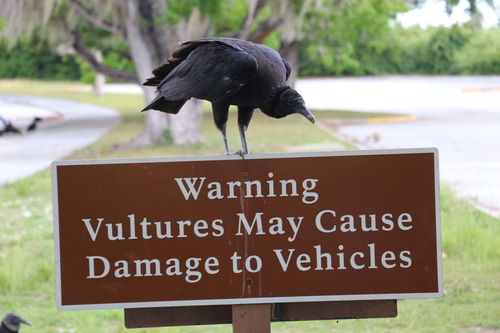
American Black Vulture (Coragyps atratus) American Black Vulture
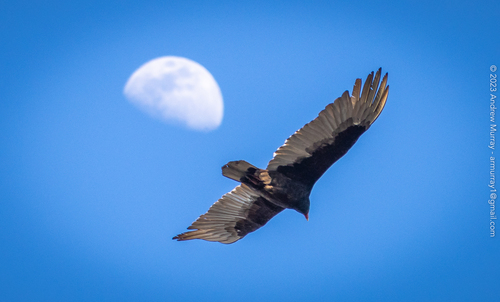
Turkey Vulture (Cathartes aura) Turkey Vulture

Media

Loading…

In short

The most reliable field mark between American Black Vulture and Turkey Vulture is the pattern on the underside of the wings in flight: Black Vultures show distinct white patches only at the wingtips, while Turkey Vultures display a broad silvery-gray area along the entire trailing edge of the underwing. Black Vultures have a short, square tail and flap more frequently with shallow, stiff wingbeats; Turkey Vultures have a longer, slimmer tail and soar with wings held in a shallow V, rarely flapping. Head color is also key: Black Vultures have dark gray featherless heads, while adult Turkey Vultures have red, unfeathered heads. These differences are visible year-round and in all age classes, though immature Turkey Vultures have grayish heads. Both species are large, dark scavengers, but careful attention to flight style and underwing pattern will separate them in almost any situation.

Identification tips

  1. Underwing pattern in flight (all ages): Black Vultures show sharp white patches only at the wingtips (base of primaries), while Turkey Vultures have a broad silvery-gray trailing edge along the entire underwing. This is the single most reliable field mark.
  2. Tail shape and length: Black Vulture’s tail is short and square, barely extending past the folded wings when perched. Turkey Vulture’s tail is long and slim, projecting well beyond the wing tips when perched or in flight.
  3. Flight style: Black Vultures flap frequently with shallow, stiff wingbeats and soar with wings held flat. Turkey Vultures rarely flap, soaring with wings in a shallow V and often rocking side to side.
  4. Head color (adults): Black Vultures have a dark gray, wrinkled, featherless head. Adult Turkey Vultures have a red, unfeathered head. Immature Turkey Vultures have a gray head, which can cause confusion, but the underwing pattern still separates them.
  5. Body color: Black Vultures are glossy black overall; Turkey Vultures are brownish-black, though this can be subtle in the field.
  6. Group behavior: Black Vultures are more likely to be seen in tight, aggressive groups, especially at carcasses. Turkey Vultures are usually solitary or in loose groups while foraging.
  7. Perched posture: Black Vultures appear more compact and hunched, with short tails and broad wings. Turkey Vultures look lankier, with longer tails and wings.
  8. Leg color: Both species can have white-streaked legs from urohidrosis; this is not a reliable separator.
  9. Bill color: Turkey Vultures have a short, hooked, ivory-colored beak; Black Vultures’ bill is less contrasting and less hooked, but this is rarely visible at a distance.
  10. Roosting: Both species may roost together on dead trees or man-made structures, so context alone is not diagnostic.
  11. Juvenile/immature confusion: Immature Turkey Vultures have a gray head and can be mistaken for Black Vultures, but the underwing pattern (broad silvery trailing edge vs. white wingtips) always separates them.
  12. Habitat: Both use a wide range of open and semi-open habitats; do not rely on habitat alone for separation.
  13. Vocalizations: Both are generally silent, uttering only hisses and grunts; not useful for identification.
  14. Season/sex: No seasonal or sexual differences in field marks; all tips above apply year-round and to both sexes.
  15. Leucistic birds: Rare white-plumaged individuals of either species occur but are exceptional; always check head color and underwing pattern for confirmation.

Size

Both species are large vultures, but Turkey Vulture is generally longer (62–81 cm vs. 56–74 cm) and has a broader wingspan (1.5–2 m vs. 1.33–1.67 m) [wikipedia]. Mass overlaps, but Black Vulture averages slightly heavier in some regions (Texas: 2.15 kg Black vs. 2 kg Turkey; Venezuela: 1.64 kg Black vs. 1.22–1.45 kg Turkey). In the field, Turkey Vultures appear lankier and longer-winged, while Black Vultures look more compact and broad-winged. Tail length is a strong differentiator: Turkey Vulture’s tail is long and slim, extending well past the wing tips when perched; Black Vulture’s tail is short and square, barely reaching past the folded wings.

Plumage

In all age classes, the most diagnostic plumage difference is the underwing pattern in flight. Black Vultures show white only at the base of the primaries (wingtip 'hands'), forming a sharp white patch at the outer edge of the underwing, while the rest of the wing is black. Turkey Vultures have a broad silvery-gray area along the entire trailing edge of the underwing, contrasting with the dark wing coverts and body. This difference is visible in both adults and immatures. Head color is also distinct: adult Black Vultures have a dark gray, wrinkled, featherless head; adult Turkey Vultures have a red, featherless head, while immatures have a gray head with a black beak tip. Both species are overall dark, but Turkey Vultures are more brownish-black, and Black Vultures are glossy black. Tail shape is also a key mark: Black Vulture’s tail is short and square, Turkey Vulture’s is long and slim. Both species can show white-streaked legs due to urohidrosis, so this is not a reliable separator.

Behaviour

Black Vultures flap more frequently and with shallower, stiffer wingbeats, alternating short bursts of flapping with brief glides. They soar with wings held flat (horizontal) and often fly in tight groups. Turkey Vultures rarely flap, instead soaring for long periods with wings held in a shallow dihedral (V-shape), rocking side to side. Turkey Vultures usually forage alone or in loose groups, while Black Vultures are more gregarious, often seen in large, tight flocks, especially at carcasses. Both species roost communally, sometimes together.

Habitat

Both species overlap widely in range and habitat, using open and semi-open areas, forests, shrublands, pastures, and even urban environments. Turkey Vulture has a broader range, extending farther north and south than Black Vulture. Black Vultures are more common in the southeastern US and throughout Central and South America, while Turkey Vultures are found from southern Canada to the southern tip of South America. Habitat is not a strong separator where both occur.

Voice

Neither species has a true voice; both lack a syrinx and can only hiss or grunt when agitated or feeding. Vocalizations are not useful for field separation.

Submit a better description

Use the same sections as the comparison. Your text is published immediately.

The most reliable field mark between American Black Vulture and Turkey Vulture is the pattern on the underside of the wings in flight: Black Vultures show distinct white patches only at the wingtips, while Turkey Vultures display a broad silvery-gray area along the entire trailing edge of the underwing. Black Vultures have a short, square tail and flap more frequently with shallow, stiff wingbeats; Turkey Vultures have a longer, slimmer tail and soar with wings held in a shallow V, rarely flapping. Head color is also key: Black Vultures have dark gray featherless heads, while adult Turkey Vultures have red, unfeathered heads. These differences are visible year-round and in all age classes, though immature Turkey Vultures have grayish heads. Both species are large, dark scavengers, but careful attention to flight style and underwing pattern will separate them in almost any situation.

  1. Underwing pattern in flight (all ages): Black Vultures show sharp white patches only at the wingtips (base of primaries), while Turkey Vultures have a broad silvery-gray trailing edge along the entire underwing. This is the single most reliable field mark.
  2. Tail shape and length: Black Vulture’s tail is short and square, barely extending past the folded wings when perched. Turkey Vulture’s tail is long and slim, projecting well beyond the wing tips when perched or in flight.
  3. Flight style: Black Vultures flap frequently with shallow, stiff wingbeats and soar with wings held flat. Turkey Vultures rarely flap, soaring with wings in a shallow V and often rocking side to side.
  4. Head color (adults): Black Vultures have a dark gray, wrinkled, featherless head. Adult Turkey Vultures have a red, unfeathered head. Immature Turkey Vultures have a gray head, which can cause confusion, but the underwing pattern still separates them.
  5. Body color: Black Vultures are glossy black overall; Turkey Vultures are brownish-black, though this can be subtle in the field.
  6. Group behavior: Black Vultures are more likely to be seen in tight, aggressive groups, especially at carcasses. Turkey Vultures are usually solitary or in loose groups while foraging.
  7. Perched posture: Black Vultures appear more compact and hunched, with short tails and broad wings. Turkey Vultures look lankier, with longer tails and wings.
  8. Leg color: Both species can have white-streaked legs from urohidrosis; this is not a reliable separator.
  9. Bill color: Turkey Vultures have a short, hooked, ivory-colored beak; Black Vultures’ bill is less contrasting and less hooked, but this is rarely visible at a distance.
  10. Roosting: Both species may roost together on dead trees or man-made structures, so context alone is not diagnostic.
  11. Juvenile/immature confusion: Immature Turkey Vultures have a gray head and can be mistaken for Black Vultures, but the underwing pattern (broad silvery trailing edge vs. white wingtips) always separates them.
  12. Habitat: Both use a wide range of open and semi-open habitats; do not rely on habitat alone for separation.
  13. Vocalizations: Both are generally silent, uttering only hisses and grunts; not useful for identification.
  14. Season/sex: No seasonal or sexual differences in field marks; all tips above apply year-round and to both sexes.
  15. Leucistic birds: Rare white-plumaged individuals of either species occur but are exceptional; always check head color and underwing pattern for confirmation.

Both species are large vultures, but Turkey Vulture is generally longer (62–81 cm vs. 56–74 cm) and has a broader wingspan (1.5–2 m vs. 1.33–1.67 m) [wikipedia]. Mass overlaps, but Black Vulture averages slightly heavier in some regions (Texas: 2.15 kg Black vs. 2 kg Turkey; Venezuela: 1.64 kg Black vs. 1.22–1.45 kg Turkey). In the field, Turkey Vultures appear lankier and longer-winged, while Black Vultures look more compact and broad-winged. Tail length is a strong differentiator: Turkey Vulture’s tail is long and slim, extending well past the wing tips when perched; Black Vulture’s tail is short and square, barely reaching past the folded wings.

In all age classes, the most diagnostic plumage difference is the underwing pattern in flight. Black Vultures show white only at the base of the primaries (wingtip 'hands'), forming a sharp white patch at the outer edge of the underwing, while the rest of the wing is black. Turkey Vultures have a broad silvery-gray area along the entire trailing edge of the underwing, contrasting with the dark wing coverts and body. This difference is visible in both adults and immatures. Head color is also distinct: adult Black Vultures have a dark gray, wrinkled, featherless head; adult Turkey Vultures have a red, featherless head, while immatures have a gray head with a black beak tip. Both species are overall dark, but Turkey Vultures are more brownish-black, and Black Vultures are glossy black. Tail shape is also a key mark: Black Vulture’s tail is short and square, Turkey Vulture’s is long and slim. Both species can show white-streaked legs due to urohidrosis, so this is not a reliable separator.

Black Vultures flap more frequently and with shallower, stiffer wingbeats, alternating short bursts of flapping with brief glides. They soar with wings held flat (horizontal) and often fly in tight groups. Turkey Vultures rarely flap, instead soaring for long periods with wings held in a shallow dihedral (V-shape), rocking side to side. Turkey Vultures usually forage alone or in loose groups, while Black Vultures are more gregarious, often seen in large, tight flocks, especially at carcasses. Both species roost communally, sometimes together.

Both species overlap widely in range and habitat, using open and semi-open areas, forests, shrublands, pastures, and even urban environments. Turkey Vulture has a broader range, extending farther north and south than Black Vulture. Black Vultures are more common in the southeastern US and throughout Central and South America, while Turkey Vultures are found from southern Canada to the southern tip of South America. Habitat is not a strong separator where both occur.

Neither species has a true voice; both lack a syrinx and can only hiss or grunt when agitated or feeding. Vocalizations are not useful for field separation.

Discard your changes?

You have unsaved edits. If you leave now, those changes will be lost.

American Black Vulture · Turkey Vulture · My Tricky Birds