

Motmot

American Black Vulture vs Roadside Hawk

Coragyps atratus versus Rupornis magnirostris

Play a quiz with American Black Vulture and Roadside Hawk
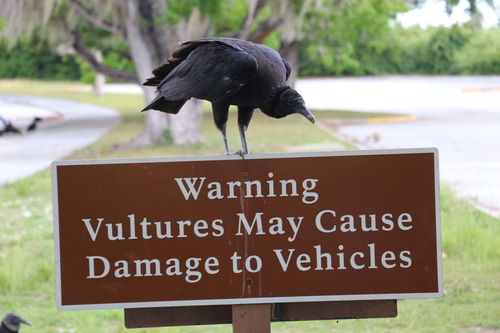
American Black Vulture (Coragyps atratus) American Black Vulture
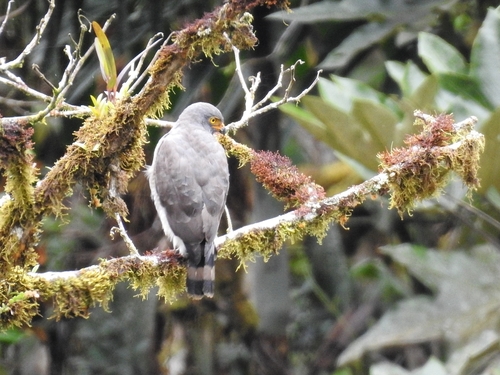
Roadside Hawk (Rupornis magnirostris) Roadside Hawk

Media

Loading…

In short

The most reliable field mark to separate American Black Vulture from Roadside Hawk is the black vulture’s striking white 'hand' patches on the underside of the primaries, visible in all ages during flight, contrasting with the roadside hawk’s barred brown-and-white underparts and tail, and lack of any white wing panels. Black vultures are much larger, bulkier, and soar with broad, squared-off wings and a short, square tail, while roadside hawks are compact, with proportionally long tails and short, rounded wings, and show rufous tones on the wings in flight. Perched, the vulture’s bare, wrinkled gray head and all-black plumage are unmistakable compared to the hawk’s feathered head, barred underparts, and brown or gray upperparts. In flight, black vultures flap in short bursts and glide, while roadside hawks have a more typical raptor flight with frequent flapping and less soaring. Confusion is most likely with distant, soaring birds, but careful attention to wing shape, underwing pattern, and size will resolve nearly all field encounters.

Identification tips

  1. White wing patches in flight (all ages): Black vulture shows bold white patches at the base of the primaries on the underside of the wing, forming a clear contrast with the rest of the black wing. Roadside hawk never shows this; its underwing is barred or plain, sometimes with rufous tones, but no white panel.
  2. Size and shape: Black vulture is much larger and bulkier, with a wingspan over 1.3 m, broad wings, and a short, square tail. Roadside hawk is small, with a long, banded tail and short, rounded wings. Even at a distance, the vulture’s size and proportions are distinctive.
  3. Head and bill: Black vulture has a bare, wrinkled gray head and neck, giving a vulture-like, almost reptilian appearance. Roadside hawk has a fully feathered head and a relatively large, hooked bill typical of hawks.
  4. Tail shape: Black vulture’s tail is very short and square, barely extending past the folded wings when perched. Roadside hawk’s tail is long and rounded, with clear gray barring.
  5. Plumage color: Black vulture is glossy black all over except for the white wing patches and gray legs. Roadside hawk is brown or gray above, barred brown-and-white below, and often shows rufous on the wings in flight.
  6. Perched posture: Black vulture perches hunched, often with wings spread to sun, and may be seen in groups. Roadside hawk perches upright, usually alone or in pairs, and does not sun itself in the same way.
  7. Flight style: Black vulture soars with wings held flat, flapping in short bursts and gliding. Roadside hawk flaps more frequently and does not soar as efficiently; it may be seen making shorter flights from a perch.
  8. Group behavior: Black vultures are often in large flocks, especially at roosts or carcasses. Roadside hawks are solitary or in pairs.
  9. Leg color and appearance: Black vulture’s legs are grayish-white, often streaked with white uric acid from urohidrosis. Roadside hawk’s legs are not described as distinctive.
  10. Vocalizations: Black vulture is silent except for grunts/hisses. Roadside hawk is very vocal, with a high-pitched squeaky call.
  11. Habitat context: Black vultures are common at landfills, roadsides, and open areas with carrion. Roadside hawks are common along roads and forest edges but do not scavenge.
  12. Iris color: Black vulture has brown eyes; roadside hawk has whitish or yellow eyes in adults.
  13. Feeding behavior: Black vultures feed on carrion, often in groups. Roadside hawks hunt small animals and insects, rarely at carcasses.
  14. Season and age: No significant age-related confusion; both species show their main field marks year-round and from juvenile through adult plumage.
  15. Common pitfalls: Distant, soaring roadside hawks may appear dark, but lack the vulture’s white wing patch and bulk. Juvenile vultures do not lose the white panel, so this mark is always reliable.

Size

Black vulture is dramatically larger: 56–74 cm (22–29 in) in length, with a 1.33–1.67 m (52–66 in) wingspan, and weighs 1.6–3 kg (3.5–6.6 lb) [wikipedia]. Roadside hawk is much smaller: 31–41 cm (12–16 in) long, weighing just 250–300 g (8.8–10.6 oz) [wikipedia]. The vulture’s wingspan is more than double that of the hawk, and it appears bulkier and heavier in all postures. Even at a distance, the size gap is usually obvious if both are seen together or near familiar objects.

Plumage

In all ages, the black vulture is glossy black overall with a featherless, wrinkled gray head and neck. The key flight mark is the white patch at the base of the primaries on the underwing, forming a sharp contrast with the rest of the wing and body, which remain black. The tail is short and square, barely extending past the folded wings. Juvenile and adult black vultures show this same pattern; there are no age-specific upperwing or underwing variations noted [wikipedia]. Roadside hawk, by contrast, is brown or gray above (varying by subspecies), with barred brown-and-white underparts and a tail marked by four or five gray bars. In flight, roadside hawks often show a touch of rufous on the wings, especially near the coverts, and the underwing lacks any white panel. The head is fully feathered, and the eyes are whitish or yellow in adults. There is significant plumage variation among roadside hawk subspecies, but none approach the vulture’s all-black look or bold white wing patch. Juvenile roadside hawks are not described as having distinctive upperwing panels or patterns that could be confused with the vulture.

Behaviour

Black vultures are highly gregarious, often seen soaring in large groups, roosting together on bare branches, and foraging communally at carcasses. They soar with wings held flat and make short, frequent flaps interspersed with glides. When perched, they may spread their wings to sun themselves. Roadside hawks are typically solitary or in pairs, often perched in open areas or soaring singly. Their flight is more active, with frequent flapping and less soaring than vultures. Roadside hawks do not gather in large flocks and are more likely to be seen hunting from a perch or making short flights after prey. The vulture’s tendency to regurgitate or defecate on its legs (urohidrosis) is unique and not seen in hawks.

Habitat

Both species can occur in open country, but context helps: black vultures are often found near human habitation, landfills, roadsides, and open fields, where they scavenge in groups. Roadside hawks are widespread and common in their range, often seen perched on wires, posts, or exposed branches along roads and forest edges, but are less likely to be seen at carcasses or in large groups. If the bird is with a flock at a carcass or soaring with other vultures, it is almost certainly a black vulture. A solitary raptor perched along a roadside or forest edge is more likely a roadside hawk.

Voice

Black vultures are generally silent, lacking a syrinx, and can only produce hisses or grunts when agitated or feeding [wikipedia]. Roadside hawks are notably vocal, with a high-pitched, piercing squeak that is often heard and can be a useful clue. If you hear a loud, squeaky call, it is the hawk; silence or only grunts/hisses points to the vulture.

Submit a better description

Use the same sections as the comparison. Your text is published immediately.

The most reliable field mark to separate American Black Vulture from Roadside Hawk is the black vulture’s striking white 'hand' patches on the underside of the primaries, visible in all ages during flight, contrasting with the roadside hawk’s barred brown-and-white underparts and tail, and lack of any white wing panels. Black vultures are much larger, bulkier, and soar with broad, squared-off wings and a short, square tail, while roadside hawks are compact, with proportionally long tails and short, rounded wings, and show rufous tones on the wings in flight. Perched, the vulture’s bare, wrinkled gray head and all-black plumage are unmistakable compared to the hawk’s feathered head, barred underparts, and brown or gray upperparts. In flight, black vultures flap in short bursts and glide, while roadside hawks have a more typical raptor flight with frequent flapping and less soaring. Confusion is most likely with distant, soaring birds, but careful attention to wing shape, underwing pattern, and size will resolve nearly all field encounters.

  1. White wing patches in flight (all ages): Black vulture shows bold white patches at the base of the primaries on the underside of the wing, forming a clear contrast with the rest of the black wing. Roadside hawk never shows this; its underwing is barred or plain, sometimes with rufous tones, but no white panel.
  2. Size and shape: Black vulture is much larger and bulkier, with a wingspan over 1.3 m, broad wings, and a short, square tail. Roadside hawk is small, with a long, banded tail and short, rounded wings. Even at a distance, the vulture’s size and proportions are distinctive.
  3. Head and bill: Black vulture has a bare, wrinkled gray head and neck, giving a vulture-like, almost reptilian appearance. Roadside hawk has a fully feathered head and a relatively large, hooked bill typical of hawks.
  4. Tail shape: Black vulture’s tail is very short and square, barely extending past the folded wings when perched. Roadside hawk’s tail is long and rounded, with clear gray barring.
  5. Plumage color: Black vulture is glossy black all over except for the white wing patches and gray legs. Roadside hawk is brown or gray above, barred brown-and-white below, and often shows rufous on the wings in flight.
  6. Perched posture: Black vulture perches hunched, often with wings spread to sun, and may be seen in groups. Roadside hawk perches upright, usually alone or in pairs, and does not sun itself in the same way.
  7. Flight style: Black vulture soars with wings held flat, flapping in short bursts and gliding. Roadside hawk flaps more frequently and does not soar as efficiently; it may be seen making shorter flights from a perch.
  8. Group behavior: Black vultures are often in large flocks, especially at roosts or carcasses. Roadside hawks are solitary or in pairs.
  9. Leg color and appearance: Black vulture’s legs are grayish-white, often streaked with white uric acid from urohidrosis. Roadside hawk’s legs are not described as distinctive.
  10. Vocalizations: Black vulture is silent except for grunts/hisses. Roadside hawk is very vocal, with a high-pitched squeaky call.
  11. Habitat context: Black vultures are common at landfills, roadsides, and open areas with carrion. Roadside hawks are common along roads and forest edges but do not scavenge.
  12. Iris color: Black vulture has brown eyes; roadside hawk has whitish or yellow eyes in adults.
  13. Feeding behavior: Black vultures feed on carrion, often in groups. Roadside hawks hunt small animals and insects, rarely at carcasses.
  14. Season and age: No significant age-related confusion; both species show their main field marks year-round and from juvenile through adult plumage.
  15. Common pitfalls: Distant, soaring roadside hawks may appear dark, but lack the vulture’s white wing patch and bulk. Juvenile vultures do not lose the white panel, so this mark is always reliable.

Black vulture is dramatically larger: 56–74 cm (22–29 in) in length, with a 1.33–1.67 m (52–66 in) wingspan, and weighs 1.6–3 kg (3.5–6.6 lb) [wikipedia]. Roadside hawk is much smaller: 31–41 cm (12–16 in) long, weighing just 250–300 g (8.8–10.6 oz) [wikipedia]. The vulture’s wingspan is more than double that of the hawk, and it appears bulkier and heavier in all postures. Even at a distance, the size gap is usually obvious if both are seen together or near familiar objects.

In all ages, the black vulture is glossy black overall with a featherless, wrinkled gray head and neck. The key flight mark is the white patch at the base of the primaries on the underwing, forming a sharp contrast with the rest of the wing and body, which remain black. The tail is short and square, barely extending past the folded wings. Juvenile and adult black vultures show this same pattern; there are no age-specific upperwing or underwing variations noted [wikipedia]. Roadside hawk, by contrast, is brown or gray above (varying by subspecies), with barred brown-and-white underparts and a tail marked by four or five gray bars. In flight, roadside hawks often show a touch of rufous on the wings, especially near the coverts, and the underwing lacks any white panel. The head is fully feathered, and the eyes are whitish or yellow in adults. There is significant plumage variation among roadside hawk subspecies, but none approach the vulture’s all-black look or bold white wing patch. Juvenile roadside hawks are not described as having distinctive upperwing panels or patterns that could be confused with the vulture.

Black vultures are highly gregarious, often seen soaring in large groups, roosting together on bare branches, and foraging communally at carcasses. They soar with wings held flat and make short, frequent flaps interspersed with glides. When perched, they may spread their wings to sun themselves. Roadside hawks are typically solitary or in pairs, often perched in open areas or soaring singly. Their flight is more active, with frequent flapping and less soaring than vultures. Roadside hawks do not gather in large flocks and are more likely to be seen hunting from a perch or making short flights after prey. The vulture’s tendency to regurgitate or defecate on its legs (urohidrosis) is unique and not seen in hawks.

Both species can occur in open country, but context helps: black vultures are often found near human habitation, landfills, roadsides, and open fields, where they scavenge in groups. Roadside hawks are widespread and common in their range, often seen perched on wires, posts, or exposed branches along roads and forest edges, but are less likely to be seen at carcasses or in large groups. If the bird is with a flock at a carcass or soaring with other vultures, it is almost certainly a black vulture. A solitary raptor perched along a roadside or forest edge is more likely a roadside hawk.

Black vultures are generally silent, lacking a syrinx, and can only produce hisses or grunts when agitated or feeding [wikipedia]. Roadside hawks are notably vocal, with a high-pitched, piercing squeak that is often heard and can be a useful clue. If you hear a loud, squeaky call, it is the hawk; silence or only grunts/hisses points to the vulture.

Discard your changes?

You have unsaved edits. If you leave now, those changes will be lost.

American Black Vulture · Roadside Hawk · My Tricky Birds