

American Bittern vs Yellow-crowned Night Heron
Botaurus lentiginosus versus Nyctanassa violacea
Play a quiz with American Bittern and Yellow-crowned Night Heron
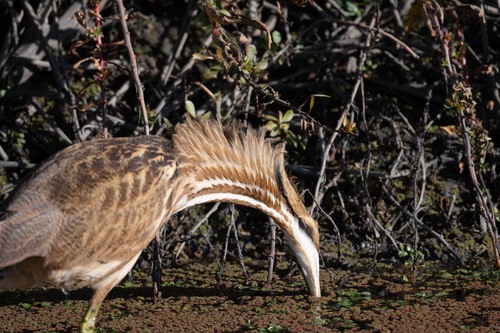 American Bittern
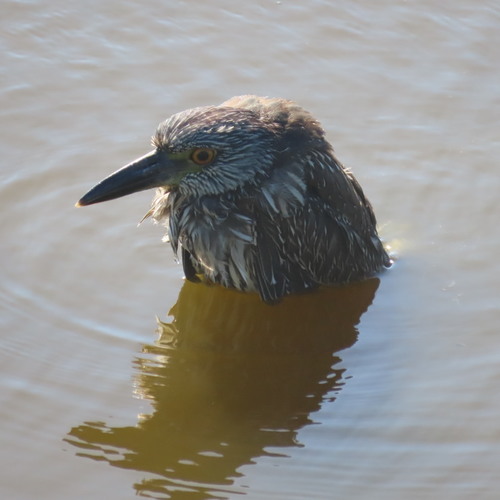 Yellow-crowned Night Heron
In short
The most reliable separation between American Bittern and Yellow-crowned Night Heron is in adult plumage: the bittern is a large, heavily streaked and speckled brown bird, while the night heron is smooth gray-blue with a striking black-and-white head pattern and yellow crown. Juveniles of both can be confusing, but bitterns always show a more cryptic, streaked look with a longer neck and heavier, dagger-like bill. In flight, American Bitterns appear broad-winged and chunky, with dark primaries and a streaked body, while Yellow-crowned Night Herons are more compact and show a scaled pattern on the upperwing. Structure, posture, and habitat also help: bitterns are solitary, secretive marsh birds that freeze with neck extended, while night herons are often seen perched upright or foraging openly near water, especially at dusk. If you see a bird with a bold yellow crown and white cheek stripes, it's a Yellow-crowned Night Heron; if it's all streaky brown and blends into reeds, it's an American Bittern.
Identification tips
- Juvenile confusion: Both species' juveniles are brown and streaked, but American Bittern juveniles are more heavily streaked and speckled, especially on the underparts and upperwing, while Yellow-crowned Night Heron juveniles have finer spots and a more scaled upperwing.
- Adult plumage: Adult American Bitterns are cryptic brown with bold streaks and speckles, blending perfectly into marsh vegetation. Adult Yellow-crowned Night Herons are smooth gray-blue with a black head, white cheeks, and a yellow crown stripe—very different from any bittern.
- Head pattern: Bitterns have a chestnut and black crown with a buff supercilium and mustachial stripe; night herons have a bold black-and-white face with a yellow crown stripe and white cheek patches.
- Bill shape and color: Bitterns have a long, robust, yellowish-green dagger-like bill (upper mandible darker); night herons have a thick, black bill set deeply under the eyes.
- Leg color: Bitterns have yellowish-green legs; night herons have bright yellow legs, which may turn coral or red in breeding adults.
- Neck length and posture: Bitterns have a long neck and often freeze with it extended vertically; night herons have a shorter neck and stand more upright, rarely adopting the 'bittern pose.'
- Body shape: Bitterns are chunky, long-bodied, and broad-winged; night herons are more compact and upright.
- Flight appearance: Bitterns in flight look heavy and broad-winged with dark primaries and a streaked body; night herons are more compact with a scaled upperwing and lack the bold streaking.
- Behavior: Bitterns are solitary, secretive, and rarely seen except when flushed; night herons are more social, often seen in pairs or small groups, and may perch openly.
- Habitat: Bitterns require dense, tall marsh vegetation; night herons are found in a wider range of wetland habitats, including mangroves and urban wetlands.
- Vocalization: The bittern's booming call is unique and diagnostic if heard; night herons are generally quieter or give less distinctive calls.
- Iris color: Bitterns have pale yellow irises; night herons have dark orange or red eyes in adults.
- Seasonal marks: Night herons grow long white plumes from the crown in breeding season; bitterns do not.
- Group context: If you see several similar birds together, especially in a colony, they're likely night herons; bitterns are almost always alone.
- When marks fail: In poor light or at great distance, rely on posture (bitterns freeze upright, night herons stand or walk more normally) and habitat (dense marsh vs. open wetland edge) as backup clues.
Size
American Bittern is the larger and heavier bird: 58–85 cm (23–33 in) long, with a 92–115 cm (36–45 in) wingspan and weighing 370–1,072 g. Yellow-crowned Night Heron is smaller and more compact, though exact size figures are not given here. In the field, bitterns look bulkier and longer-necked, while night herons are shorter-necked and more upright when perched. Both are substantial waders, but the bittern is noticeably more robust.
Plumage
Juvenile and immature birds are the main confusion point. Juvenile American Bitterns resemble adults, with brown, buff, and chestnut streaks and speckles all over, and a cryptic, camouflaged appearance. Their upperwings are dark chestnut-brown with blackish primaries and secondaries, tipped with buff or chestnut. Juvenile Yellow-crowned Night Herons are brownish overall with a grayish head, drab colors, and fine spots and streaks, but their wing pattern is not as boldly streaked or speckled as the bittern's; instead, they show a scaled pattern. Adult American Bitterns retain the streaked, mottled brown look, with a buffy, striped underpart and a chestnut-and-black crown. Adult Yellow-crowned Night Herons are smooth gray-blue with a black head, white cheeks, and a pale yellow crown stripe, plus long white plumes in breeding season. The night heron's bill is black and thick, while the bittern's is yellowish-green and dagger-like. Leg color is also useful: bitterns have yellowish-green legs, while night herons have yellow legs that can turn coral or red in breeding season.
Behaviour
American Bitterns are solitary, secretive, and extremely well-camouflaged, often freezing upright with their bill pointed skyward to blend into marsh vegetation. They hunt stealthily by walking or standing motionless among reeds, mostly at dusk or at night. Yellow-crowned Night Herons are also crepuscular and nocturnal but are more likely to be seen perched openly or foraging in the open, especially along the edges of water bodies. Night herons often stand upright and are less likely to freeze in the 'bittern pose.' Bitterns are rarely seen in flight except when flushed, while night herons may fly between perches or feeding areas at dusk.
Habitat
American Bitterns are marsh specialists, breeding and living in dense, reedy wetlands with tall vegetation like cattails and bulrushes, where they are difficult to spot. Yellow-crowned Night Herons are more flexible, found in a variety of wetland habitats, including mangroves, tidal creeks, and edges of lakes and rivers, often near crustacean-rich areas. Night herons are more likely to be seen in urban or suburban settings, while bitterns almost always require extensive marsh cover.
Voice
American Bittern is famous for its loud, booming call, described as 'oong, kach, oonk,' which is often heard at dusk or night and carries far across marshes. The Yellow-crowned Night Heron's vocalizations are not described here, but are generally less distinctive and less likely to be heard in the field compared to the bittern's unique call.
American Bittern · Yellow-crowned Night Heron · My Tricky Birds