

Motmot

African Pygmy-Goose vs Garganey

Nettapus auritus versus Spatula querquedula

Play a quiz with African Pygmy-Goose and Garganey
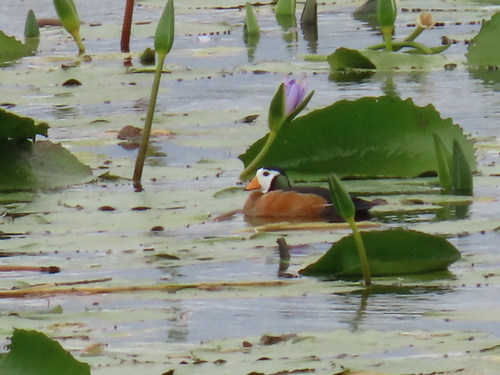
African Pygmy-Goose (Nettapus auritus) African Pygmy-Goose
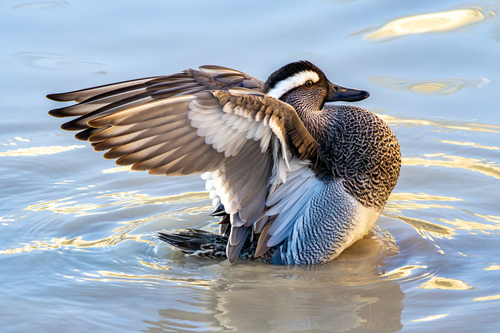
Garganey (Spatula querquedula) Garganey

Media

Loading…

In short

The most reliable field mark to separate African Pygmy-Goose from Garganey is size and structure: the pygmy-goose is much smaller, with a short, stubby bill and a compact, almost teal-like jizz, while Garganey is a typical small dabbling duck with a longer, sloped bill and more elongated body. In flight, adult male Garganey shows a pale blue speculum with a white border, while African Pygmy-Goose of all ages has a metallic green wing with a white bar on the secondaries. Adult males are easily told apart by head pattern: Garganey has a bold white eyebrow crescent, while male pygmy-goose has a white face with black and green patches. Females and immatures are trickier, but pygmy-goose is always much smaller and more compact, with a unique goose-like bill and different face pattern. Habitat can help: pygmy-goose is found on lily-covered still waters in sub-Saharan Africa, while Garganey is a Palearctic migrant, rarely seen in Africa outside the northern winter.

Identification tips

  1. Size and structure: African Pygmy-Goose is much smaller and more compact than Garganey; if you see both together, pygmy-goose looks almost teal-sized or smaller, with a short, stubby bill. Garganey is a typical dabbling duck in size and shape, with a longer, sloping bill.
  2. Bill shape and color: Pygmy-goose has a short, slightly upturned bill with yellow tones (especially lower mandible), while Garganey has a longer, grey, spatulate bill. This is visible even at a distance with good light.
  3. Wing pattern in flight (all ages): Garganey shows a pale blue speculum with a white border; pygmy-goose shows a metallic green wing with a white bar on the secondaries, but no blue. This is a key mark in flight or when preening.
  4. Adult male head pattern: Male pygmy-goose has a white face with black eye patches and powder green ear spots, black crown, and chestnut flanks; male Garganey has a brown head with a bold white supercilium (eyebrow) and grey body.
  5. Adult female/immature face: Female pygmy-goose has a gray face with brown smudges and a dark eye-stripe, but face is never as boldly marked as Garganey. Female Garganey has a pale eyebrow, dark eye-stripe, and pale lore spot bordered by a second dark line, giving a more streaked appearance.
  6. Juvenile plumage: Juvenile pygmy-goose has a white face with a dark V-shaped crown and black eye patch, rump and flanks white, back and tail black; juvenile Garganey is like a dull female, with less contrast but always brownish overall.
  7. Underparts: Pygmy-goose always has a white belly and underparts; Garganey underparts are more grey or brown, especially in females and immatures.
  8. Flank and back color: Male pygmy-goose flanks are intensely chestnut, back metallic green; female is darker brown. Garganey males have grey body, females are mottled brown.
  9. Leg and foot color: Pygmy-goose has dark gray to black feet; Garganey has grey legs and feet, but this is rarely visible in the field.
  10. Behavior: Pygmy-goose is often seen among water lilies, rarely in open water, and almost never on land. Garganey is more likely to dabble in the open, sometimes walks on mud or short grass.
  11. Habitat: Pygmy-goose is restricted to lily-covered still waters in sub-Saharan Africa and Madagascar; Garganey is a Palearctic migrant, present in Africa only in the northern winter and prefers open marshes and lakes.
  12. Seasonal occurrence: If seen in Africa outside the northern winter, Garganey is very unlikely; pygmy-goose is resident.
  13. Voice: Garganey male has a crackling call, but pygmy-goose is generally silent; not a primary field mark.
  14. Group size: Pygmy-goose usually in pairs or small groups; Garganey can form large flocks in migration/winter.
  15. Common pitfalls: Female and juvenile pygmy-goose can be confused with female Garganey, but always check size, bill shape, and wing pattern. Garganey never shows the compact, goose-like structure or the metallic green and white-barred wing of pygmy-goose.

Size

African Pygmy-Goose is dramatically smaller than Garganey. Adult pygmy-geese weigh about 260–285 g, with wings 142–165 mm long; they are one of the smallest waterfowl globally. Garganey is a small duck by dabbling duck standards, but still much larger than the pygmy-goose, with a noticeably longer body and bill. In the field, pygmy-goose appears almost teal-sized or smaller, while Garganey is closer to a Eurasian Teal or small Mallard. Bill shape is also diagnostic: pygmy-goose has a short, stubby, slightly upturned bill, while Garganey has a longer, sloping, spatulate bill typical of dabbling ducks.

Plumage

In flight, adult Garganey shows a pale blue speculum bordered with white, a key mark for all ages and sexes. African Pygmy-Goose has a metallic green wing with a white bar on the distal secondaries (both sexes, all ages), but no blue. Male pygmy-goose has a striking white face with black patches and powder green ear spots, a black crown, and rich chestnut flanks; female is duller, with a gray face and brown smudges, but still has a white bar on the wing. Garganey males have a bold white supercilium (eyebrow) over a brown head and breast, with grey body and loose scapulars; females are mottled brown with a pale eyebrow and dark eye-stripe, lacking the strong face contrast of pygmy-goose. Juvenile pygmy-goose resembles a duller female but with a white face and dark V-shaped crown, while juvenile Garganey is like adult female but with less contrast. Underparts are always white in pygmy-goose, while Garganey shows more grey and brown tones. Bill color is yellowish in pygmy-goose (especially lower mandible), always grey in Garganey.

Behaviour

African Pygmy-Goose is typically seen in pairs or small groups, often among water lilies, feeding mainly on seeds and rarely dabbling in the open. They are compact, buoyant, and rarely leave dense lily cover. Garganey is more likely to be seen dabbling in open water or marsh edges, sometimes in large flocks (especially in migration/winter), and often shows more active dabbling and head-shaking. Pygmy-goose is less likely to be seen walking on land or grazing, while Garganey may sometimes be seen on mud or short grass near water.

Habitat

African Pygmy-Goose is found year-round on still or slow-moving waters with abundant floating vegetation (especially water lilies) in sub-Saharan Africa and Madagascar. Garganey breeds in marshes and shallow wetlands across Europe and Asia, and winters in Africa, India, and Australasia, but is only present in Africa during the northern winter. Garganey prefers open marshes, lakes, and flooded fields, often without lily cover. If you see a small duck among lilies in Africa outside the northern winter, it is almost certainly a pygmy-goose.

Voice

Garganey males have a distinctive crackling mating call, while females are mostly silent or give weak quacks. African Pygmy-Goose is generally quiet, with no distinctive calls noted in the sources. Voice is not a reliable field mark for separating these two in most situations.

Submit a better description

Use the same sections as the comparison. Your text is published immediately.

The most reliable field mark to separate African Pygmy-Goose from Garganey is size and structure: the pygmy-goose is much smaller, with a short, stubby bill and a compact, almost teal-like jizz, while Garganey is a typical small dabbling duck with a longer, sloped bill and more elongated body. In flight, adult male Garganey shows a pale blue speculum with a white border, while African Pygmy-Goose of all ages has a metallic green wing with a white bar on the secondaries. Adult males are easily told apart by head pattern: Garganey has a bold white eyebrow crescent, while male pygmy-goose has a white face with black and green patches. Females and immatures are trickier, but pygmy-goose is always much smaller and more compact, with a unique goose-like bill and different face pattern. Habitat can help: pygmy-goose is found on lily-covered still waters in sub-Saharan Africa, while Garganey is a Palearctic migrant, rarely seen in Africa outside the northern winter.

  1. Size and structure: African Pygmy-Goose is much smaller and more compact than Garganey; if you see both together, pygmy-goose looks almost teal-sized or smaller, with a short, stubby bill. Garganey is a typical dabbling duck in size and shape, with a longer, sloping bill.
  2. Bill shape and color: Pygmy-goose has a short, slightly upturned bill with yellow tones (especially lower mandible), while Garganey has a longer, grey, spatulate bill. This is visible even at a distance with good light.
  3. Wing pattern in flight (all ages): Garganey shows a pale blue speculum with a white border; pygmy-goose shows a metallic green wing with a white bar on the secondaries, but no blue. This is a key mark in flight or when preening.
  4. Adult male head pattern: Male pygmy-goose has a white face with black eye patches and powder green ear spots, black crown, and chestnut flanks; male Garganey has a brown head with a bold white supercilium (eyebrow) and grey body.
  5. Adult female/immature face: Female pygmy-goose has a gray face with brown smudges and a dark eye-stripe, but face is never as boldly marked as Garganey. Female Garganey has a pale eyebrow, dark eye-stripe, and pale lore spot bordered by a second dark line, giving a more streaked appearance.
  6. Juvenile plumage: Juvenile pygmy-goose has a white face with a dark V-shaped crown and black eye patch, rump and flanks white, back and tail black; juvenile Garganey is like a dull female, with less contrast but always brownish overall.
  7. Underparts: Pygmy-goose always has a white belly and underparts; Garganey underparts are more grey or brown, especially in females and immatures.
  8. Flank and back color: Male pygmy-goose flanks are intensely chestnut, back metallic green; female is darker brown. Garganey males have grey body, females are mottled brown.
  9. Leg and foot color: Pygmy-goose has dark gray to black feet; Garganey has grey legs and feet, but this is rarely visible in the field.
  10. Behavior: Pygmy-goose is often seen among water lilies, rarely in open water, and almost never on land. Garganey is more likely to dabble in the open, sometimes walks on mud or short grass.
  11. Habitat: Pygmy-goose is restricted to lily-covered still waters in sub-Saharan Africa and Madagascar; Garganey is a Palearctic migrant, present in Africa only in the northern winter and prefers open marshes and lakes.
  12. Seasonal occurrence: If seen in Africa outside the northern winter, Garganey is very unlikely; pygmy-goose is resident.
  13. Voice: Garganey male has a crackling call, but pygmy-goose is generally silent; not a primary field mark.
  14. Group size: Pygmy-goose usually in pairs or small groups; Garganey can form large flocks in migration/winter.
  15. Common pitfalls: Female and juvenile pygmy-goose can be confused with female Garganey, but always check size, bill shape, and wing pattern. Garganey never shows the compact, goose-like structure or the metallic green and white-barred wing of pygmy-goose.

African Pygmy-Goose is dramatically smaller than Garganey. Adult pygmy-geese weigh about 260–285 g, with wings 142–165 mm long; they are one of the smallest waterfowl globally. Garganey is a small duck by dabbling duck standards, but still much larger than the pygmy-goose, with a noticeably longer body and bill. In the field, pygmy-goose appears almost teal-sized or smaller, while Garganey is closer to a Eurasian Teal or small Mallard. Bill shape is also diagnostic: pygmy-goose has a short, stubby, slightly upturned bill, while Garganey has a longer, sloping, spatulate bill typical of dabbling ducks.

In flight, adult Garganey shows a pale blue speculum bordered with white, a key mark for all ages and sexes. African Pygmy-Goose has a metallic green wing with a white bar on the distal secondaries (both sexes, all ages), but no blue. Male pygmy-goose has a striking white face with black patches and powder green ear spots, a black crown, and rich chestnut flanks; female is duller, with a gray face and brown smudges, but still has a white bar on the wing. Garganey males have a bold white supercilium (eyebrow) over a brown head and breast, with grey body and loose scapulars; females are mottled brown with a pale eyebrow and dark eye-stripe, lacking the strong face contrast of pygmy-goose. Juvenile pygmy-goose resembles a duller female but with a white face and dark V-shaped crown, while juvenile Garganey is like adult female but with less contrast. Underparts are always white in pygmy-goose, while Garganey shows more grey and brown tones. Bill color is yellowish in pygmy-goose (especially lower mandible), always grey in Garganey.

African Pygmy-Goose is typically seen in pairs or small groups, often among water lilies, feeding mainly on seeds and rarely dabbling in the open. They are compact, buoyant, and rarely leave dense lily cover. Garganey is more likely to be seen dabbling in open water or marsh edges, sometimes in large flocks (especially in migration/winter), and often shows more active dabbling and head-shaking. Pygmy-goose is less likely to be seen walking on land or grazing, while Garganey may sometimes be seen on mud or short grass near water.

African Pygmy-Goose is found year-round on still or slow-moving waters with abundant floating vegetation (especially water lilies) in sub-Saharan Africa and Madagascar. Garganey breeds in marshes and shallow wetlands across Europe and Asia, and winters in Africa, India, and Australasia, but is only present in Africa during the northern winter. Garganey prefers open marshes, lakes, and flooded fields, often without lily cover. If you see a small duck among lilies in Africa outside the northern winter, it is almost certainly a pygmy-goose.

Garganey males have a distinctive crackling mating call, while females are mostly silent or give weak quacks. African Pygmy-Goose is generally quiet, with no distinctive calls noted in the sources. Voice is not a reliable field mark for separating these two in most situations.

Discard your changes?

You have unsaved edits. If you leave now, those changes will be lost.

African Pygmy-Goose · Garganey · My Tricky Birds