

African Penduline Tit vs Short-clawed Lark
Anthoscopus caroli versus Certhilauda chuana
Play a quiz with African Penduline Tit and Short-clawed Lark
 African Penduline Tit
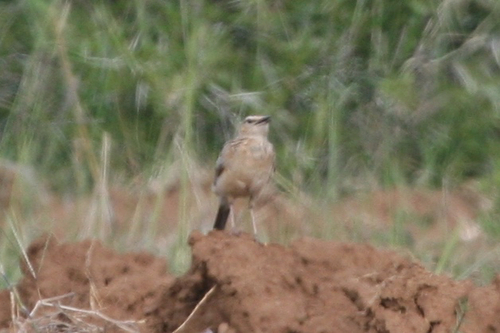 Short-clawed Lark
In short
The most reliable way to separate African Penduline Tit from Short-clawed Lark is by overall structure and bill shape: the tit is a tiny, compact bird with a very short, fine bill, while the lark is much larger and has a long, strong bill typical of larks. In flight or perched, the tit appears round and active, often in small flocks, whereas the lark is bulkier, with a longer tail and a more upright stance. Both can be found in dry savanna, but the lark is restricted to Botswana and South Africa, while the tit ranges much more widely. Juvenile or immature-specific wing patterns are not described for either species in the sources, so focus on size and structure for quick separation.
Identification tips
- Size is the fastest check: African Penduline Tit is tiny, much smaller than any lark, and can be mistaken for a warbler or small finch. If the bird looks sparrow-sized or larger, it's not a penduline tit.
- Bill shape is diagnostic: The tit has a very short, fine, pointed bill, while the lark has a long, strong, slightly decurved bill typical of ground-feeding larks. Bill length and thickness are visible even at moderate range.
- Tail length and shape: Penduline Tit has a short, neat tail, while Short-clawed Lark has a noticeably longer tail, often held level or slightly cocked when on the ground.
- Plumage texture and pattern: The tit is smooth and plain, with greyish upperparts and little to no streaking. The lark is sandy-brown with strong streaking on the back and crown, blending into grassy backgrounds.
- Facial markings: Short-clawed Lark may show a pale supercilium and more contrast on the face, while the tit's face is plain and lacks strong markings.
- Behavior: Penduline Tits are almost always in bushes or trees, rarely on the ground, and move quickly and acrobatically. Larks are ground-dwellers, walking or running in open areas, only flying when flushed.
- Posture: The tit is round-bodied and perky, often hanging or clinging to twigs. The lark is more upright and elongated, with a horizontal stance on the ground.
- Flight style: Penduline Tit has a weak, fluttery flight, often between bushes. Short-clawed Lark has a stronger, undulating flight, typical of larks, and may fly longer distances when disturbed.
- Social context: Tits are usually in small, noisy groups, while larks are more often solitary or in pairs.
- Habitat context: If in dense bush or at forest edge, it's likely a tit. If in open, grassy, treeless savanna, especially in Botswana or South Africa, consider lark.
- Geographic range: Outside Botswana and South Africa, Short-clawed Lark does not occur. In central, east, or west Africa, it's always a penduline tit.
- Plumage pitfalls: Immature or worn larks may look plainer, but still show streaking and larger size. Young penduline tits remain small and plain.
- Voice: Not described in the sources, so do not rely on vocalizations for separation in this context.
- Season/sex: No strong seasonal or sexual dimorphism is described for either species in the notes; these marks work year-round and for both sexes.
- When in doubt: Focus on size, bill, and behavior—these are reliable across all ages and seasons.
Size
African Penduline Tit is much smaller than Short-clawed Lark. The tit is among the tiniest African passerines, with a compact body and short tail, while the lark is a medium-sized, robust bird with a noticeably longer body and tail. Even at a distance, the size gap is obvious: the tit is finch-sized or smaller, while the lark is closer to a pipit or small thrush in bulk. If both species are seen together (rare, given range), the difference is striking.
Plumage
No distinctive juvenile or immature wing patterns are noted for either species in the available sources. Adult African Penduline Tit is generally greyish above with paler underparts, lacking strong streaking or contrast, and appears neat and soft-plumaged. The Short-clawed Lark, by contrast, is sandy to brownish above with streaked upperparts and paler underparts, blending well with dry grass. The lark's plumage is more cryptic and streaked, especially on the back and crown, while the tit is plainer and cleaner. In all ages and seasons, the tit lacks the strong facial markings or streaked back typical of the lark.
Behaviour
African Penduline Tit is highly active, often seen in small, restless groups flitting through bushes and trees, sometimes hanging upside down to feed. It is rarely seen on the ground. Short-clawed Lark is more terrestrial, walking or running on the ground in open savanna, often singly or in pairs, and is less likely to be seen in trees. The lark's movements are more deliberate, and it may flush with a strong, undulating flight when disturbed.
Habitat
Both species can be found in dry savanna, but their ranges only overlap in Botswana and South Africa. African Penduline Tit is much more widespread across sub-Saharan Africa and uses both dry and moist savanna as well as dry forest edges. Short-clawed Lark is restricted to Botswana and South Africa and prefers open, grassy savanna with sparse shrubs. If outside these two countries, the bird is almost certainly a penduline tit.