

african penduline-tit vs short-clawed lark
Anthoscopus caroli versus Certhilauda chuana
Jogue um quiz com african penduline-tit e short-clawed lark
 african penduline-tit
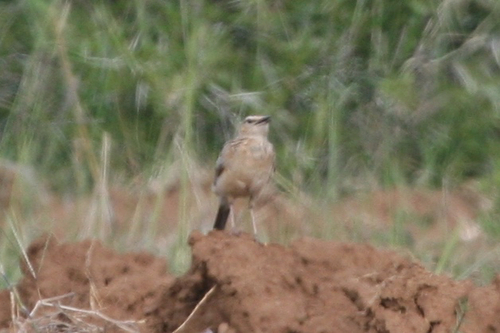 short-clawed lark
Em resumo
A maneira mais confiável de separar o african penduline-tit do short-clawed lark é pela estrutura geral e forma do bico: o tit é um pássaro minúsculo e compacto, com um bico muito curto e fino, enquanto o lark é muito maior e tem um bico longo e forte, típico dos larks. Em voo ou empoleirado, o tit parece redondo e ativo, frequentemente em pequenos bandos, enquanto o lark é mais robusto, com uma cauda mais longa e uma postura mais ereta. Ambos podem ser encontrados em savanas secas, mas o lark está restrito a Botswana e África do Sul, enquanto o tit tem uma distribuição muito mais ampla. Padrões de asas específicos de juvenis ou imaturos não são descritos para nenhuma das espécies nas fontes, então concentre-se no tamanho e na estrutura para uma separação rápida.
Dicas de identificação
- O tamanho é a verificação mais rápida: O african penduline-tit é minúsculo, muito menor do que qualquer lark, e pode ser confundido com um warbler ou um pequeno tentilhão. Se o pássaro parecer do tamanho de um pardal ou maior, não é um penduline tit.
- A forma do bico é diagnóstica: O tit tem um bico muito curto, fino e pontudo, enquanto o lark tem um bico longo, forte e levemente curvado, típico dos larks que se alimentam no solo. O comprimento e a espessura do bico são visíveis mesmo a uma distância moderada.
- Comprimento e forma da cauda: O penduline tit tem uma cauda curta e arrumada, enquanto o short-clawed lark tem uma cauda visivelmente mais longa, frequentemente mantida nivelada ou ligeiramente levantada quando no chão.
- Textura e padrão da plumagem: O tit é liso e simples, com partes superiores acinzentadas e pouco ou nenhum estriado. O lark é marrom-areia com estrias fortes nas costas e na coroa, misturando-se aos fundos gramados.
- Marcas faciais: O short-clawed lark pode mostrar um supercílios pálido e mais contraste no rosto, enquanto o tit's face é plain e carece de marcas fortes.
- Comportamento: Os penduline tits estão quase sempre em arbustos ou árvores, raramente no chão, e se movem rapidamente e acrobaticamente. Os larks são habitantes do solo, caminhando ou correndo em áreas abertas, voando apenas quando assustados.
- Postura: O tit é round-bodied e perky, frequentemente pendurado ou agarrado a galhos. O lark é mais ereto e alongado, com uma postura horizontal no chão.
- Estilo de voo: O penduline tit tem um voo fraco e tremulante, frequentemente entre arbustos. O short-clawed lark tem um voo mais forte e ondulante, típico dos larks, e pode voar distâncias maiores quando perturbado.
- Contexto social: Os tits estão geralmente em pequenos grupos barulhentos, enquanto os larks são mais frequentemente solitários ou em pares.
- Contexto de habitat: Se em arbustos densos ou na borda da floresta, é provável que seja um tit. Se em savana aberta, gramada e sem árvores, especialmente em Botswana ou África do Sul, considere o lark.
- Distribuição geográfica: Fora de Botswana e África do Sul, o short-clawed lark não ocorre. No centro, leste ou oeste da África, é sempre um penduline tit.
- Armadilhas de plumagem: Larks imaturos ou desgastados podem parecer mais simples, mas ainda mostram estrias e tamanho maior. Os jovens penduline tits permanecem pequenos e simples.
- Voz: Não descrita nas fontes, então não confie em vocalizações para separação neste contexto.
- Estação/sexo: Nenhum dimorfismo sexual ou sazonal forte é descrito para nenhuma das espécies nas notas; essas marcas funcionam durante todo o ano e para ambos os sexos.
- Quando em dúvida: Concentre-se no tamanho, bico e comportamento—esses são confiáveis em todas as idades e estações.
Tamanho
O african penduline-tit é muito menor que o short-clawed lark. O tit está entre os menores passeriformes africanos, com um corpo compacto e cauda curta, enquanto o lark é um pássaro de tamanho médio e robusto, com um corpo e cauda visivelmente mais longos. Mesmo à distância, a diferença de tamanho é óbvia: o tit é do tamanho de um tentilhão ou menor, enquanto o lark é mais próximo de um pipit ou um pequeno thrush em volume. Se ambas as espécies forem vistas juntas (raro, dada a distribuição), a diferença é marcante.
Plumagem
Nenhum padrão distintivo de asas juvenis ou imaturos é notado para nenhuma das espécies nas fontes disponíveis. O african penduline-tit adulto é geralmente acinzentado por cima com partes inferiores mais claras, sem estrias fortes ou contraste, e parece arrumado e com plumagem macia. O short-clawed lark, por outro lado, é de cor areia a marrom por cima, com partes superiores estriadas e partes inferiores mais claras, misturando-se bem com a grama seca. A plumagem do lark é mais críptica e estriada, especialmente nas costas e na coroa, enquanto o tit é mais simples e limpo. Em todas as idades e estações, o tit carece das marcas faciais fortes ou das costas estriadas típicas do lark.
Comportamento
O african penduline-tit é altamente ativo, frequentemente visto em pequenos grupos inquietos, voando entre arbustos e árvores, às vezes pendurado de cabeça para baixo para se alimentar. Raramente é visto no chão. O short-clawed lark é mais terrestre, caminhando ou correndo no chão em savanas abertas, frequentemente sozinho ou em pares, e é menos provável de ser visto em árvores. Os movimentos do lark são mais deliberados, e ele pode voar com um forte e ondulante voo quando perturbado.
Habitat
Ambas as espécies podem ser encontradas em savanas secas, mas suas distribuições só se sobrepõem em Botswana e África do Sul. O african penduline-tit é muito mais disseminado pela África subsaariana e utiliza tanto savanas secas quanto úmidas, bem como bordas de florestas secas. O short-clawed lark está restrito a Botswana e África do Sul e prefere savanas abertas e gramadas com arbustos esparsos. Se fora desses dois países, o pássaro é quase certamente um penduline tit.
african penduline-tit · short-clawed lark · Minhas aves difíceis