

Motmot

African Grey Woodpecker vs Olive Woodpecker

Dendropicos goertae versus Dendropicos griseocephalus

Play a quiz with African Grey Woodpecker and Olive Woodpecker
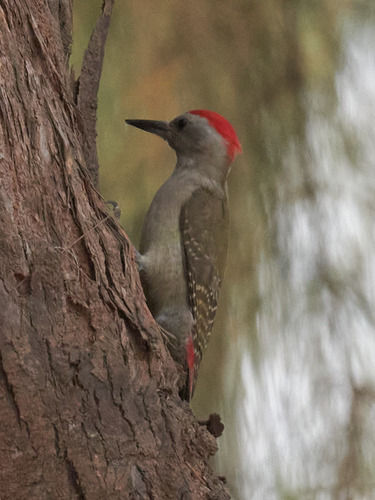
African Grey Woodpecker (Dendropicos goertae) African Grey Woodpecker
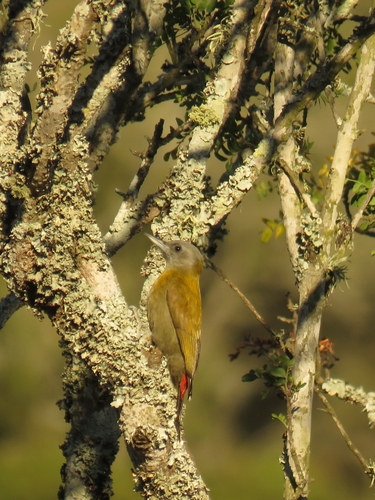
Olive Woodpecker (Dendropicos griseocephalus) Olive Woodpecker

Media

Loading…

In short

The most reliable way to separate African Grey Woodpecker from Olive Woodpecker is by head and underpart color: African Grey Woodpecker shows a distinctly pale grey head and underparts, while Olive Woodpecker has a darker grey head and a belly that is dark grey-olive with golden tones. Both species have red rumps and small red belly patches, but the overall tone of the upperparts is greener in African Grey and more olive-bronze in Olive Woodpecker. Males of both species have red on the head, but the pattern and shade differ. Juvenile birds of both species are duller, but African Grey juveniles are paler overall. Subtle differences in wing and tail pattern are present but less obvious in the field. Both are medium-sized woodpeckers with similar structure, so focus on plumage and head pattern for the best field separation.

Identification tips

  1. Head and Underpart Color: African Grey Woodpecker has a pale grey head and underparts, making it look much paler overall than Olive Woodpecker, which has a dark grey head and a belly that is dark grey-olive with golden tones. This is the most consistent field mark for all ages and sexes.
  2. Upperpart Color: African Grey Woodpecker shows unmarked green upperparts, while Olive Woodpecker's mantle is olive with golden or bronze tones. In good light, Olive Woodpecker may appear more bronzy or yellowish above, especially in the Ruwenzori subspecies.
  3. Rump and Belly Patch: Both species have a red rump and a small red or pink belly patch. In Olive Woodpecker, the rump is bright scarlet with possible grey bases and black subterminal bars, and the belly patch can be larger and pinker. In African Grey, the rump is a solid red and the belly patch is small.
  4. Sexual Dimorphism: Males of both species have red on the head. African Grey male has a red crown, while Olive Woodpecker male shows a prominent red nape and mid-crown. Females of both are plain grey-headed, but Olive Woodpecker females have a darker grey head and a shorter bill.
  5. Juvenile Plumage: Juvenile African Grey Woodpeckers are paler, with paler reds and possible flank barring. Juvenile Olive Woodpeckers are duller, greener above, and lack the yellow hues of adults, with little or no red on the belly and a paler red rump. Use these differences when observing family groups.
  6. Tail Pattern: Both have blackish tails, but Olive Woodpecker may show olive green edges on some tail feathers and lacks barring. African Grey's tail is simply blackish.
  7. Wing Pattern: Olive Woodpecker's wings are bronze or dark brown with subtle white spotting and barring on the flight feathers, and olive or reddish edges, but these are hard to see unless very close. African Grey's wings are not described as patterned.
  8. Bill Color: Olive Woodpecker has a grey upper mandible and bluish lower mandible, but this is subtle and rarely diagnostic in the field. African Grey's bill is not described as bicolored.
  9. Leg Color: Olive Woodpecker has greyish or olive legs, but this is not a reliable field mark at distance.
  10. Iris Color: Olive Woodpecker's irises are brown; iris color is not described for African Grey.
  11. Structure: Both species are similar in size and structure, with straight bills and stiff tails. Female Olive Woodpecker may have a slightly shorter bill, but this is not a strong field mark.
  12. Habitat: Both species occupy wooded habitats, but African Grey is more widespread and can be found in bush as well as forest. Olive Woodpecker is more restricted to southeast Africa and may prefer mature or montane forest. Use habitat only as a supporting clue.
  13. Behavior: Both species behave like typical woodpeckers, foraging on trunks and branches. Behavior is not a strong separator.
  14. Flight Views: In flight, look for the brighter scarlet rump of Olive Woodpecker, sometimes with grey bases and black bars, versus the solid red rump of African Grey. However, this is subtle and best used in combination with head and underpart color.
  15. Pitfalls: Both species can show some flank barring in juveniles, and both have red rumps and belly patches. Do not rely solely on these features; always check head and underpart color for confirmation.

Size

Both species are similar in size and structure, typical of small to medium Dendropicos woodpeckers. African Grey Woodpecker is about 20 cm in length (no mass data available), while Olive Woodpecker averages around 41 g in body mass. In the field, neither species appears noticeably larger or bulkier than the other, and both have a typical woodpecker shape with a straight bill and stiff tail. Bill length may be slightly shorter in female Olive Woodpecker, but this is subtle and not a primary field mark.

Plumage

Juveniles of both species are duller than adults, but African Grey Woodpecker juveniles are paler grey overall, with paler reds on rump and belly, and may show some flank barring. Juvenile Olive Woodpeckers are slightly greener above, have greyer, less yellow bellies, and their rump is a paler red than adults. In adults, African Grey Woodpecker has unmarked green upperparts, a pale grey head and underparts, a red rump, and a small red belly patch. Adult Olive Woodpecker has a darker grey head and neck, an olive to bronze mantle, dark grey-olive belly with golden tones, and a variable red or pink belly patch. Both species have blackish tails, but Olive Woodpecker's tail may show olive green edges and lacks barring, while African Grey's tail is simply blackish. In flight, the scarlet rump of Olive Woodpecker is often more prominent and can show grey bases and black subterminal bars, while African Grey's rump is a solid red. Wing coverts and flight feathers in Olive Woodpecker show subtle white spotting and barring, with olive or reddish edges, but these are not always easily seen in the field.

Behaviour

Both species behave like typical woodpeckers, foraging on trunks and branches, using their stiff tails for support. There is no strong behavioral difference noted in the sources that would help with field identification. Both species nest in tree holes and may be seen drumming or excavating nest sites.

Habitat

Both species are found in Sub-Saharan Africa and occupy similar wooded habitats. African Grey Woodpecker is widespread and common in forests and bush across much of Sub-Saharan and equatorial Africa. Olive Woodpecker is more localized to southeast Africa, with three subspecies in different regions. Both prefer forested areas, but Olive Woodpecker may be more associated with montane and mature forest, while African Grey can be found in a broader range of wooded habitats including bush and forest edge. Habitat alone is not a reliable separator where ranges overlap.

Submit a better description

Use the same sections as the comparison. Your text is published immediately.

The most reliable way to separate African Grey Woodpecker from Olive Woodpecker is by head and underpart color: African Grey Woodpecker shows a distinctly pale grey head and underparts, while Olive Woodpecker has a darker grey head and a belly that is dark grey-olive with golden tones. Both species have red rumps and small red belly patches, but the overall tone of the upperparts is greener in African Grey and more olive-bronze in Olive Woodpecker. Males of both species have red on the head, but the pattern and shade differ. Juvenile birds of both species are duller, but African Grey juveniles are paler overall. Subtle differences in wing and tail pattern are present but less obvious in the field. Both are medium-sized woodpeckers with similar structure, so focus on plumage and head pattern for the best field separation.

  1. Head and Underpart Color: African Grey Woodpecker has a pale grey head and underparts, making it look much paler overall than Olive Woodpecker, which has a dark grey head and a belly that is dark grey-olive with golden tones. This is the most consistent field mark for all ages and sexes.
  2. Upperpart Color: African Grey Woodpecker shows unmarked green upperparts, while Olive Woodpecker's mantle is olive with golden or bronze tones. In good light, Olive Woodpecker may appear more bronzy or yellowish above, especially in the Ruwenzori subspecies.
  3. Rump and Belly Patch: Both species have a red rump and a small red or pink belly patch. In Olive Woodpecker, the rump is bright scarlet with possible grey bases and black subterminal bars, and the belly patch can be larger and pinker. In African Grey, the rump is a solid red and the belly patch is small.
  4. Sexual Dimorphism: Males of both species have red on the head. African Grey male has a red crown, while Olive Woodpecker male shows a prominent red nape and mid-crown. Females of both are plain grey-headed, but Olive Woodpecker females have a darker grey head and a shorter bill.
  5. Juvenile Plumage: Juvenile African Grey Woodpeckers are paler, with paler reds and possible flank barring. Juvenile Olive Woodpeckers are duller, greener above, and lack the yellow hues of adults, with little or no red on the belly and a paler red rump. Use these differences when observing family groups.
  6. Tail Pattern: Both have blackish tails, but Olive Woodpecker may show olive green edges on some tail feathers and lacks barring. African Grey's tail is simply blackish.
  7. Wing Pattern: Olive Woodpecker's wings are bronze or dark brown with subtle white spotting and barring on the flight feathers, and olive or reddish edges, but these are hard to see unless very close. African Grey's wings are not described as patterned.
  8. Bill Color: Olive Woodpecker has a grey upper mandible and bluish lower mandible, but this is subtle and rarely diagnostic in the field. African Grey's bill is not described as bicolored.
  9. Leg Color: Olive Woodpecker has greyish or olive legs, but this is not a reliable field mark at distance.
  10. Iris Color: Olive Woodpecker's irises are brown; iris color is not described for African Grey.
  11. Structure: Both species are similar in size and structure, with straight bills and stiff tails. Female Olive Woodpecker may have a slightly shorter bill, but this is not a strong field mark.
  12. Habitat: Both species occupy wooded habitats, but African Grey is more widespread and can be found in bush as well as forest. Olive Woodpecker is more restricted to southeast Africa and may prefer mature or montane forest. Use habitat only as a supporting clue.
  13. Behavior: Both species behave like typical woodpeckers, foraging on trunks and branches. Behavior is not a strong separator.
  14. Flight Views: In flight, look for the brighter scarlet rump of Olive Woodpecker, sometimes with grey bases and black bars, versus the solid red rump of African Grey. However, this is subtle and best used in combination with head and underpart color.
  15. Pitfalls: Both species can show some flank barring in juveniles, and both have red rumps and belly patches. Do not rely solely on these features; always check head and underpart color for confirmation.

Both species are similar in size and structure, typical of small to medium Dendropicos woodpeckers. African Grey Woodpecker is about 20 cm in length (no mass data available), while Olive Woodpecker averages around 41 g in body mass. In the field, neither species appears noticeably larger or bulkier than the other, and both have a typical woodpecker shape with a straight bill and stiff tail. Bill length may be slightly shorter in female Olive Woodpecker, but this is subtle and not a primary field mark.

Juveniles of both species are duller than adults, but African Grey Woodpecker juveniles are paler grey overall, with paler reds on rump and belly, and may show some flank barring. Juvenile Olive Woodpeckers are slightly greener above, have greyer, less yellow bellies, and their rump is a paler red than adults. In adults, African Grey Woodpecker has unmarked green upperparts, a pale grey head and underparts, a red rump, and a small red belly patch. Adult Olive Woodpecker has a darker grey head and neck, an olive to bronze mantle, dark grey-olive belly with golden tones, and a variable red or pink belly patch. Both species have blackish tails, but Olive Woodpecker's tail may show olive green edges and lacks barring, while African Grey's tail is simply blackish. In flight, the scarlet rump of Olive Woodpecker is often more prominent and can show grey bases and black subterminal bars, while African Grey's rump is a solid red. Wing coverts and flight feathers in Olive Woodpecker show subtle white spotting and barring, with olive or reddish edges, but these are not always easily seen in the field.

Both species behave like typical woodpeckers, foraging on trunks and branches, using their stiff tails for support. There is no strong behavioral difference noted in the sources that would help with field identification. Both species nest in tree holes and may be seen drumming or excavating nest sites.

Both species are found in Sub-Saharan Africa and occupy similar wooded habitats. African Grey Woodpecker is widespread and common in forests and bush across much of Sub-Saharan and equatorial Africa. Olive Woodpecker is more localized to southeast Africa, with three subspecies in different regions. Both prefer forested areas, but Olive Woodpecker may be more associated with montane and mature forest, while African Grey can be found in a broader range of wooded habitats including bush and forest edge. Habitat alone is not a reliable separator where ranges overlap.

Discard your changes?

You have unsaved edits. If you leave now, those changes will be lost.

African Grey Woodpecker · Olive Woodpecker · My Tricky Birds