

African Goshawk vs Little Sparrowhawk
Aerospiza tachiro versus Tachyspiza minulla
Play a quiz with African Goshawk and Little Sparrowhawk
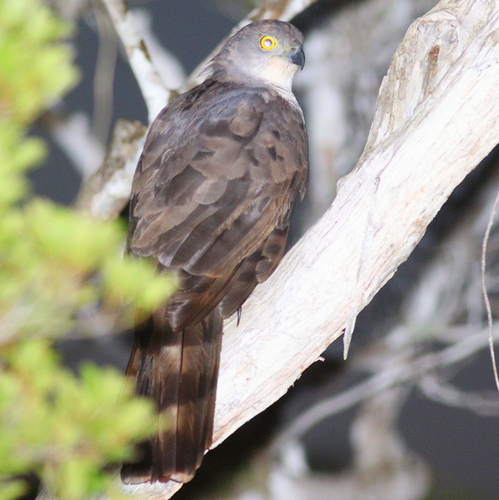 African Goshawk
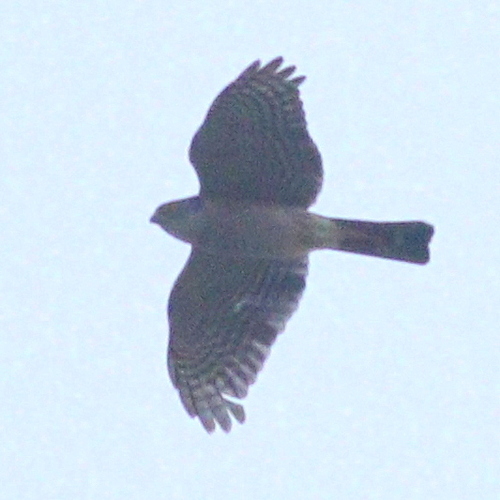 Little Sparrowhawk
In short
The most reliable field mark for separating African Goshawk from Little Sparrowhawk is size: African Goshawk is much larger and bulkier, while Little Sparrowhawk is tiny, even compared to other small raptors. In flight or perched, look for the Little Sparrowhawk’s distinctive two white spots under the central tail feathers and a narrow white lower rump patch, which are never shown by African Goshawk. Juvenile plumages differ: young African Goshawks are brown above with bold brown blotching below, while juvenile Little Sparrowhawks are browner with pale upperpart tips and spotting (not barring) below. Structure also helps: African Goshawk is broad-winged and long-tailed, but much more powerful and robust than the dainty, long-toed Little Sparrowhawk. Both can show grey upperparts and rufous-barred underparts in adults, so careful attention to size, tail pattern, and structure is key.
Identification tips
- Size is the first check: African Goshawk is much larger and bulkier than Little Sparrowhawk. If the bird looks small even for a sparrowhawk, it is almost certainly Little Sparrowhawk.
- White tail spots (adults): Only Little Sparrowhawk shows two white spots on the underside of the central tail feathers and a narrow white lower rump patch. These are visible in flight and when perched with the tail spread.
- Juvenile underparts: Juvenile African Goshawk has bold brown blotching on whitish underparts, while juvenile Little Sparrowhawk is spotted (not barred or blotched) below and browner overall.
- Adult underpart barring: African Goshawk adults have rufous barring on whitish underparts (more pronounced in males), while Little Sparrowhawk males show fine rufous barring and females have browner, less fine bars.
- Upperparts color: Adult African Goshawk is grey above (darker in males), while Little Sparrowhawk males are dark grey (almost black), and females are browner above.
- Throat and cheeks: Little Sparrowhawk males have a white throat sharply contrasting with dark cheeks; African Goshawk does not show this sharp contrast.
- Tail pattern in flight: African Goshawk’s tail is sooty brown to grey above with faint bars, white with grey bars below; Little Sparrowhawk’s tail is less distinctly barred but shows the diagnostic white spots underneath.
- Legs and toes: Both species have yellow legs, but Little Sparrowhawk’s are especially long and thin, often looking disproportionately long for its body.
- Cere color: African Goshawk has a greenish-grey cere; Little Sparrowhawk’s cere is yellow in adults and yellowish-green in juveniles.
- Eye color (juveniles): Juvenile Little Sparrowhawk has brown eyes, while adult eyes are deep yellow in both species.
- Structure: African Goshawk is broad-winged, long-tailed, and robust; Little Sparrowhawk is dainty, with a short body, long tail, and long toes.
- Behavior in flight: African Goshawk soars high with slow wingbeats and glides, often displaying; Little Sparrowhawk is more likely to be seen darting low through cover or perched quietly.
- Sexual dimorphism: Both species show some sex differences, but in African Goshawk, woodland females are less colorful and more camouflaged, while in Little Sparrowhawk, females are browner with less fine barring below.
- Habitat overlap: Both can occur in similar wooded habitats, so do not rely on location alone.
- Vocalization: If you hear a regular clicking call from a soaring bird, it is African Goshawk; Little Sparrowhawk’s voice is not described here.
Size
African Goshawk is a medium to large hawk, with males weighing 150–340 g and females 270–510 g, wingspan 44–70 cm. Little Sparrowhawk is much smaller: males 74–85 g, females 68–105 g, wingspan 39–50 cm. Even a female Little Sparrowhawk is smaller than the smallest male African Goshawk. In the field, African Goshawk appears robust and powerful, while Little Sparrowhawk is noticeably petite and delicate, with long legs and toes. Size alone will often separate them when seen well.
Plumage
- Juveniles: Juvenile African Goshawk is brown above with bold brown blotching on whitish underparts and flanks. Juvenile Little Sparrowhawk is browner overall, with pale tips to upperpart feathers and spotting (not barring) below; rump feathers have only the tips white, and the rump appears dark.
- Adults: Adult African Goshawk is grey above (darker in males), underparts whitish with rufous barring (more pronounced in males). Underwing is pale rufous to white, flight feathers and tail sooty brown to grey with faint bars above, white with grey bars below. Adult Little Sparrowhawk males are dark grey above (almost black), with white throat and fine rufous barring below; females are browner above, with browner and less fine underpart bars. Both sexes of Little Sparrowhawk have two white spots under the central tail feathers and a narrow white lower rump patch (diagnostic in adults).
- Soft parts: Both have black bills and yellow legs/feet, but cere color differs: African Goshawk cere is greenish-grey, Little Sparrowhawk cere is yellow (adults) or yellowish-green (juveniles). Eye color is yellow in both adults, but Little Sparrowhawk juveniles have brown eyes.
Behaviour
African Goshawk often soars above the canopy in slow, display flights with regular clicking calls, sometimes at great height. It is an ambush predator, typically hunting from a perch and occasionally seen hunting cooperatively at large prey gatherings. Little Sparrowhawk’s behavior is less described here, but as a tiny woodland raptor, it is more likely to be seen darting through cover or perched unobtrusively, rarely soaring high like the African Goshawk. The Little Sparrowhawk’s long legs and toes are often visible when perched.
Habitat
African Goshawk is found in a wide range of wooded habitats: dense forest, woodland, riverine and gallery forest, plantations, parks, and large gardens. It tolerates both moist and dry forests, even in isolated patches, and can occur in both lowland and montane areas. Little Sparrowhawk’s habitat is not detailed here, but it is also a woodland species, often in similar environments but is more likely to be overlooked due to its small size and secretive habits. Both can occur in overlapping areas, so habitat alone is not diagnostic.
Voice
African Goshawk gives a regular clicking call, especially during display flights high above the canopy. Little Sparrowhawk’s voice is not described in these notes, so vocalization is not a reliable separator unless you hear the African Goshawk’s distinctive display clicks.