

african goshawk vs little sparrowhawk
Aerospiza tachiro versus Tachyspiza minulla
Jogue um quiz com african goshawk e little sparrowhawk
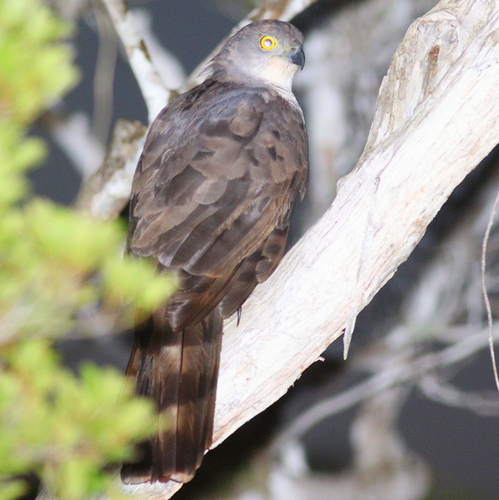 african goshawk
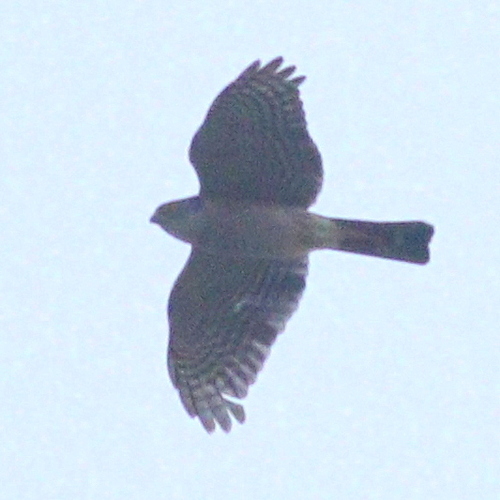 little sparrowhawk
Em resumo
A marca de campo mais confiável para separar african goshawk de little sparrowhawk é o tamanho: african goshawk é muito maior e mais robusto, enquanto little sparrowhawk é minúsculo, mesmo em comparação com outros pequenos raptores. Em voo ou empoleirado, procure pelos dois pontos brancos distintos sob as penas centrais da cauda do little sparrowhawk e uma mancha branca estreita na parte inferior da rabadilha, que nunca são mostrados pelo african goshawk. As plumagens juvenis diferem: os jovens african goshawks são marrons por cima com manchas marrons ousadas por baixo, enquanto os juvenis little sparrowhawks são mais marrons com pontas superiores pálidas e manchas (não listras) por baixo. A estrutura também ajuda: african goshawk tem asas largas e cauda longa, mas é muito mais poderoso e robusto do que o delicado little sparrowhawk. Ambos podem mostrar partes superiores cinzas e partes inferiores barradas de ruivo em adultos, então atenção cuidadosa ao tamanho, padrão da cauda e estrutura é fundamental.
Dicas de identificação
- O tamanho é a primeira verificação: african goshawk é muito maior e mais robusto do que little sparrowhawk. Se o pássaro parecer pequeno mesmo para um sparrowhawk, é quase certamente um little sparrowhawk.
- Pontos brancos na cauda (adultos): Apenas little sparrowhawk mostra dois pontos brancos na parte inferior das penas centrais da cauda e uma mancha branca estreita na parte inferior da rabadilha. Estes são visíveis em voo e quando empoleirados com a cauda aberta.
- Partes inferiores juvenis: O juvenil african goshawk tem manchas marrons ousadas nas partes inferiores esbranquiçadas, enquanto o juvenil little sparrowhawk é manchado (não listrado ou manchado) por baixo e mais marrom no geral.
- Listras nas partes inferiores dos adultos: Os adultos african goshawk têm listras ruivas nas partes inferiores esbranquiçadas (mais pronunciadas nos machos), enquanto os machos little sparrowhawk mostram listras ruivas finas e as fêmeas têm listras mais marrons e menos finas.
- Cor das partes superiores: O adulto african goshawk é cinza por cima (mais escuro nos machos), enquanto os machos little sparrowhawk são cinza escuro (quase preto), e as fêmeas são mais marrons por cima.
- Garganta e bochechas: Os machos little sparrowhawk têm uma garganta branca que contrasta nitidamente com as bochechas escuras; african goshawk não mostra esse contraste acentuado.
- Padrão da cauda em voo: A cauda do african goshawk é marrom sujo a cinza por cima com listras fracas, branca com listras cinzas por baixo; a cauda do little sparrowhawk é menos distintamente listrada, mas mostra os pontos brancos diagnósticos por baixo.
- Pernas e dedos: Ambas as espécies têm pernas amarelas, mas as do little sparrowhawk são especialmente longas e finas, muitas vezes parecendo desproporcionalmente longas para seu corpo.
- Cor do cera: O african goshawk tem uma cera cinza-esverdeada; a cera do little sparrowhawk é amarela em adultos e amarelo-esverdeada em juvenis.
- Cor dos olhos (juvenis): O juvenil little sparrowhawk tem olhos marrons, enquanto os olhos dos adultos são amarelos profundos em ambas as espécies.
- Estrutura: O african goshawk é de asas largas, cauda longa e robusto; o little sparrowhawk é delicado, com corpo curto, cauda longa e dedos longos.
- Comportamento em voo: O african goshawk voa alto com batidas lentas das asas e planagens, muitas vezes exibindo; o little sparrowhawk é mais provável a ser visto se movendo rapidamente por entre a vegetação ou empoleirado silenciosamente.
- Dimorfismo sexual: Ambas as espécies mostram algumas diferenças sexuais, mas no african goshawk, as fêmeas da floresta são menos coloridas e mais camufladas, enquanto no little sparrowhawk, as fêmeas são mais marrons com listras inferiores menos finas.
- Sobreposição de habitat: Ambas podem ocorrer em habitats florestais semelhantes, então não confie apenas na localização.
- Vocalização: Se você ouvir um chamado de clique regular de um pássaro em voo, é african goshawk; a voz do little sparrowhawk não é descrita aqui.
Tamanho
African goshawk é uma águia de tamanho médio a grande, com machos pesando 150–340 g e fêmeas 270–510 g, envergadura de 44–70 cm. Little sparrowhawk é muito menor: machos 74–85 g, fêmeas 68–105 g, envergadura 39–50 cm. Mesmo uma fêmea little sparrowhawk é menor do que o menor macho african goshawk. No campo, o african goshawk parece robusto e poderoso, enquanto o little sparrowhawk é notavelmente pequeno e delicado, com pernas e dedos longos. O tamanho sozinho muitas vezes os separará quando vistos bem.
Plumagem
- Juvenis: O juvenil african goshawk é marrom por cima com manchas marrons ousadas nas partes inferiores esbranquiçadas e flancos. O juvenil little sparrowhawk é mais marrom no geral, com pontas pálidas nas penas superiores e manchas (não listras) por baixo; as penas da rabadilha têm apenas as pontas brancas, e a rabadilha parece escura.
- Adultos: O adulto african goshawk é cinza por cima (mais escuro nos machos), partes inferiores esbranquiçadas com listras ruivas (mais pronunciadas nos machos). A parte inferior da asa é ruiva pálida a branca, penas de voo e cauda marrom sujo a cinza com listras fracas por cima, branca com listras cinzas por baixo. Os machos adultos little sparrowhawk são cinza escuro por cima (quase preto), com garganta branca e listras ruivas finas por baixo; as fêmeas são mais marrons por cima, com listras inferiores mais marrons e menos finas. Ambos os sexos de little sparrowhawk têm dois pontos brancos sob as penas centrais da cauda e uma mancha branca estreita na parte inferior da rabadilha (diagnóstico em adultos).
- Partes moles: Ambos têm bicos pretos e pernas/pés amarelos, mas a cor da cera difere: a cera do african goshawk é cinza-esverdeada, a cera do little sparrowhawk é amarela (adultos) ou amarelo-esverdeada (juvenis). A cor dos olhos é amarela em ambos os adultos, mas os juvenis little sparrowhawk têm olhos marrons.
Comportamento
African goshawk frequentemente voa acima da copa em voos lentos de exibição com chamados de clique regulares, às vezes a grandes alturas. É um predador de emboscada, tipicamente caçando de um poleiro e ocasionalmente visto caçando cooperativamente em grandes reuniões de presas. O comportamento do little sparrowhawk é menos descrito aqui, mas como um pequeno raptor florestal, é mais provável que seja visto se movendo rapidamente por entre a vegetação ou empoleirado discretamente, raramente voando alto como o african goshawk. As longas pernas e dedos do little sparrowhawk são frequentemente visíveis quando empoleirados.
Habitat
African goshawk é encontrado em uma ampla gama de habitats florestais: floresta densa, bosque, floresta ribeirinha e de galeria, plantações, parques e grandes jardins. Toleram florestas úmidas e secas, mesmo em manchas isoladas, e podem ocorrer em áreas de planície e montanha. O habitat do little sparrowhawk não é detalhado aqui, mas também é uma espécie florestal, frequentemente em ambientes semelhantes, mas é mais provável que passe despercebido devido ao seu pequeno tamanho e hábitos secretos. Ambos podem ocorrer em áreas sobrepostas, então o habitat sozinho não é diagnóstico.
Voz
African goshawk emite um chamado de clique regular, especialmente durante voos de exibição altos acima da copa. A voz do little sparrowhawk não é descrita nessas notas, então a vocalização não é um separador confiável, a menos que você ouça os cliques de exibição distintivos do african goshawk.