

Motmot

Adelie Penguin vs Gentoo Penguin

Pygoscelis adeliae versus Pygoscelis papua

Play a quiz with Adelie Penguin and Gentoo Penguin
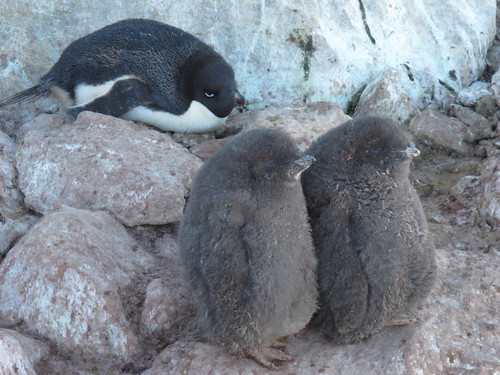
Adelie Penguin (Pygoscelis adeliae) Adelie Penguin
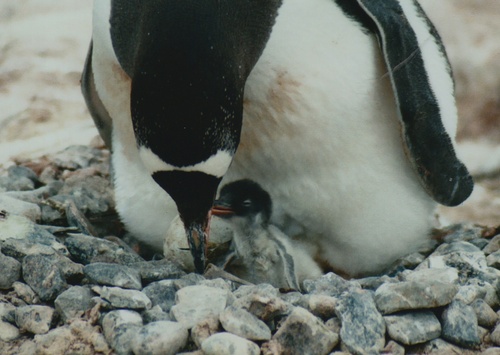
Gentoo Penguin (Pygoscelis papua) Gentoo Penguin

Media

Loading…

In short

The most reliable way to separate Adélie and Gentoo Penguins is by head pattern and bill color: adult Gentoos show a bold white band across the crown and a bright orange-red bill, while adult Adélies have a plain black head with a distinctive white eye ring and a mostly black bill. Juvenile Adélies can be confusing, especially before they develop the full eye ring and when their chin and throat are white, but they never show the Gentoo's white crown band or long, prominent tail. In flight or on land, Gentoos are also bulkier and have a noticeably longer tail that sweeps side to side as they walk. Always check the head pattern first, but use bill color and tail length as backup, especially for immatures.

Identification tips

  1. Head pattern is key: Adult Gentoo Penguins have a broad, white band across the crown from eye to eye, forming a 'bonnet'—never shown by Adélie of any age. Adélies have a plain black head with a white eye ring (adults) or plain face (immatures).
  2. Bill color: Gentoo bills are bright orange-red and unfeathered, obvious even at a distance. Adélie bills are mostly black and heavily feathered at the base, with only the tip exposed (sometimes with a faint reddish mark). This is visible in both adults and immatures.
  3. Eye ring: Adult Adélies have a conspicuous white eye ring; Gentoo Penguins do not. Immature Adélies lack the full eye ring, so use other marks for young birds.
  4. Tail length and carriage: Gentoo Penguins have the longest tail of any penguin, often seen sticking out and sweeping side to side as they walk. Adélie tails are much shorter and less noticeable.
  5. Chin and throat color (immatures): Immature Adélies have white chins and throats, which can cause confusion with other species, but they still lack the Gentoo's white crown band and orange bill.
  6. Upperparts hue (immatures): Young Adélies may show a bluer tinge to their upperparts, but this is subtle and not as useful as head and bill pattern.
  7. Wing pattern: Both species have black upperwings with white trailing edges and white underwings with a narrow black leading edge, so this is not a strong separator.
  8. Feet color: Gentoo feet are pale whitish-pink; Adélie feet are pinkish but usually less conspicuous due to shorter legs and less tail.
  9. Size and bulk: Gentoos are generally larger and bulkier, but size overlap means this is only a supporting mark.
  10. Colony location: Gentoos may nest inland or in grassy areas, Adélies stick to rocky, ice-free coastal ground. On the Antarctic Peninsula, both may occur together.
  11. Behavior: Watch for the Gentoo's tail sweeping as it walks; Adélies do not show this.
  12. Sex differences: Both species are sexually monomorphic in plumage, but Gentoo males may appear slightly larger.
  13. Flight vs perched: In flight, head and bill pattern are still visible at close range; at rest, head pattern and tail length are most obvious.
  14. Plumage pitfalls: Immature Adélies with white chins and throats can be mistaken for other species, but never show the Gentoo's white crown band or orange bill.
  15. When in doubt: Always prioritize head pattern (white crown band vs plain black with eye ring), then bill color, then tail length for the most reliable separation in all ages and seasons.

Size

Gentoo Penguins are generally larger and heavier than Adélie Penguins. Gentoos can reach 70–90 cm in length (with southern birds averaging 75–80 cm), while Adélies are 70–73 cm. Adult Gentoo males can weigh up to 8.5 kg before moulting, and females up to 8.2 kg, while Adélie adults average about 5 kg (5045 g). Gentoos also appear bulkier and longer-bodied, especially due to their prominent tail. However, size overlap is possible, so use structural and plumage features for positive ID.

Plumage

Juvenile and immature Adélie Penguins can be confused with other Pygoscelis penguins, but even at this age, they lack the Gentoo's broad white crown band and orange bill. Immature Adélies have a white chin and throat and a bluer tinge to their upperparts, but their head remains plain without any white band. Adult Adélies are black above and white below, with a conspicuous white eye ring and a mostly black bill (only the tip is exposed and may show faint reddish-brown). Gentoo adults are unmistakable with a wide white band running from eye to eye over the crown, a bright orange-red bill, and pale whitish-pink feet. Their tail is longer and more prominent than any other penguin, often visible as it sweeps behind them. In flight, both show black upperwings with white trailing edges, but the Gentoo's head and bill pattern remain visible at close range.

Behaviour

Gentoo Penguins are often seen with their long tails sticking out and sweeping side to side as they walk, a behavior not shown by Adélies. Both species nest in colonies and use stones for nests, but Gentoos are more likely to be seen inland or in grassy areas, sometimes up to 2 km from the coast, while Adélies stick to rocky, ice-free coastal sites. Both species are social and can be noisy at colonies, but there are no strong behavioral differences for field identification beyond tail carriage and walking style.

Habitat

Adélie Penguins are strictly Antarctic, breeding along the entire Antarctic coast and on nearby islands, always on ice-free rocky ground near the sea. Gentoo Penguins breed on subantarctic islands and the Antarctic Peninsula, favoring ice-free areas, often grassy or pebbly, and sometimes well inland. If you find penguins far inland in grassy terrain, Gentoo is more likely; on the Antarctic continent itself, Adélie is the default. However, both can overlap on the Antarctic Peninsula, so habitat alone is not diagnostic.

Submit a better description

Use the same sections as the comparison. Your text is published immediately.

The most reliable way to separate Adélie and Gentoo Penguins is by head pattern and bill color: adult Gentoos show a bold white band across the crown and a bright orange-red bill, while adult Adélies have a plain black head with a distinctive white eye ring and a mostly black bill. Juvenile Adélies can be confusing, especially before they develop the full eye ring and when their chin and throat are white, but they never show the Gentoo's white crown band or long, prominent tail. In flight or on land, Gentoos are also bulkier and have a noticeably longer tail that sweeps side to side as they walk. Always check the head pattern first, but use bill color and tail length as backup, especially for immatures.

  1. Head pattern is key: Adult Gentoo Penguins have a broad, white band across the crown from eye to eye, forming a 'bonnet'—never shown by Adélie of any age. Adélies have a plain black head with a white eye ring (adults) or plain face (immatures).
  2. Bill color: Gentoo bills are bright orange-red and unfeathered, obvious even at a distance. Adélie bills are mostly black and heavily feathered at the base, with only the tip exposed (sometimes with a faint reddish mark). This is visible in both adults and immatures.
  3. Eye ring: Adult Adélies have a conspicuous white eye ring; Gentoo Penguins do not. Immature Adélies lack the full eye ring, so use other marks for young birds.
  4. Tail length and carriage: Gentoo Penguins have the longest tail of any penguin, often seen sticking out and sweeping side to side as they walk. Adélie tails are much shorter and less noticeable.
  5. Chin and throat color (immatures): Immature Adélies have white chins and throats, which can cause confusion with other species, but they still lack the Gentoo's white crown band and orange bill.
  6. Upperparts hue (immatures): Young Adélies may show a bluer tinge to their upperparts, but this is subtle and not as useful as head and bill pattern.
  7. Wing pattern: Both species have black upperwings with white trailing edges and white underwings with a narrow black leading edge, so this is not a strong separator.
  8. Feet color: Gentoo feet are pale whitish-pink; Adélie feet are pinkish but usually less conspicuous due to shorter legs and less tail.
  9. Size and bulk: Gentoos are generally larger and bulkier, but size overlap means this is only a supporting mark.
  10. Colony location: Gentoos may nest inland or in grassy areas, Adélies stick to rocky, ice-free coastal ground. On the Antarctic Peninsula, both may occur together.
  11. Behavior: Watch for the Gentoo's tail sweeping as it walks; Adélies do not show this.
  12. Sex differences: Both species are sexually monomorphic in plumage, but Gentoo males may appear slightly larger.
  13. Flight vs perched: In flight, head and bill pattern are still visible at close range; at rest, head pattern and tail length are most obvious.
  14. Plumage pitfalls: Immature Adélies with white chins and throats can be mistaken for other species, but never show the Gentoo's white crown band or orange bill.
  15. When in doubt: Always prioritize head pattern (white crown band vs plain black with eye ring), then bill color, then tail length for the most reliable separation in all ages and seasons.

Gentoo Penguins are generally larger and heavier than Adélie Penguins. Gentoos can reach 70–90 cm in length (with southern birds averaging 75–80 cm), while Adélies are 70–73 cm. Adult Gentoo males can weigh up to 8.5 kg before moulting, and females up to 8.2 kg, while Adélie adults average about 5 kg (5045 g). Gentoos also appear bulkier and longer-bodied, especially due to their prominent tail. However, size overlap is possible, so use structural and plumage features for positive ID.

Juvenile and immature Adélie Penguins can be confused with other Pygoscelis penguins, but even at this age, they lack the Gentoo's broad white crown band and orange bill. Immature Adélies have a white chin and throat and a bluer tinge to their upperparts, but their head remains plain without any white band. Adult Adélies are black above and white below, with a conspicuous white eye ring and a mostly black bill (only the tip is exposed and may show faint reddish-brown). Gentoo adults are unmistakable with a wide white band running from eye to eye over the crown, a bright orange-red bill, and pale whitish-pink feet. Their tail is longer and more prominent than any other penguin, often visible as it sweeps behind them. In flight, both show black upperwings with white trailing edges, but the Gentoo's head and bill pattern remain visible at close range.

Gentoo Penguins are often seen with their long tails sticking out and sweeping side to side as they walk, a behavior not shown by Adélies. Both species nest in colonies and use stones for nests, but Gentoos are more likely to be seen inland or in grassy areas, sometimes up to 2 km from the coast, while Adélies stick to rocky, ice-free coastal sites. Both species are social and can be noisy at colonies, but there are no strong behavioral differences for field identification beyond tail carriage and walking style.

Adélie Penguins are strictly Antarctic, breeding along the entire Antarctic coast and on nearby islands, always on ice-free rocky ground near the sea. Gentoo Penguins breed on subantarctic islands and the Antarctic Peninsula, favoring ice-free areas, often grassy or pebbly, and sometimes well inland. If you find penguins far inland in grassy terrain, Gentoo is more likely; on the Antarctic continent itself, Adélie is the default. However, both can overlap on the Antarctic Peninsula, so habitat alone is not diagnostic.

Discard your changes?

You have unsaved edits. If you leave now, those changes will be lost.

Adelie Penguin · Gentoo Penguin · My Tricky Birds