

Motmot

Acadian Flycatcher vs Willow Flycatcher

Empidonax virescens versus Empidonax traillii

Play a quiz with Acadian Flycatcher and Willow Flycatcher
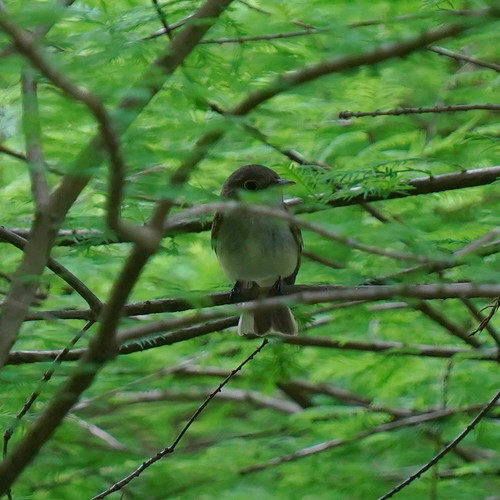
Acadian Flycatcher (Empidonax virescens) Acadian Flycatcher
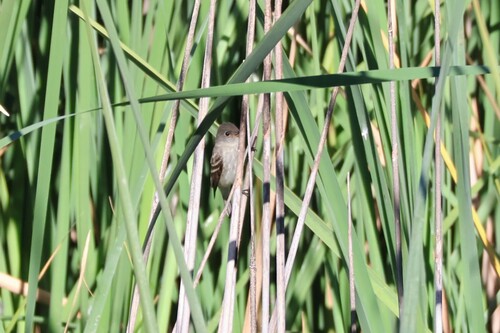
Willow Flycatcher (Empidonax traillii) Willow Flycatcher

Media

Loading…

In short

The most reliable field mark between Acadian and Willow Flycatchers is the eye ring: Acadian shows a distinct, crisp white eye ring, while Willow's is faint and often nearly absent. Bill shape and color also help—Acadian has a broader, flatter bill with a yellowish lower mandible, while Willow's bill is shorter, narrower, and more orangish below. Both are olive-backed Empidonax flycatchers with white wing bars, so careful attention to subtle facial and bill details is essential. Vocalizations are highly distinctive if heard, but in silent birds, structure and facial pattern are your best clues. Beware that both species are extremely similar in size and general jizz, making separation challenging without good views.

Identification tips

  1. Eye ring: Acadian Flycatcher has a bold, crisp, and complete white eye ring; Willow's is faint, indistinct, and often broken or nearly absent. This is the most reliable field mark in close views.
  2. Bill shape and color: Acadian's bill is broad and flat with a yellowish lower mandible; Willow's bill is smaller, narrower, and the lower mandible is orangish. Look for the broader, flatter bill on Acadian, especially from below or in profile.
  3. Facial expression: The strong eye ring on Acadian gives a more open-faced look, while Willow's fainter eye ring makes the face appear plainer and less contrasted.
  4. Breast wash: Acadian shows an olive wash on the breast; Willow's is more olive-gray. This is subtle and best used in good light.
  5. Upperparts color: Acadian is typically more olive above, Willow more brown-olive, but this difference is slight and unreliable in poor light.
  6. Wing bars: Both species have white wing bars; this is not a separator.
  7. Tail and wing structure: No clear differences are described in the sources, but Acadian may appear slightly longer-winged and broader-billed in direct comparison. Not reliable in isolation.
  8. Vocalizations: If you hear an explosive 'peet-sa' or 'ka-zeep', it's Acadian. Willow's song is different (not detailed here), so any vocalization should prompt a double-check.
  9. Behavior: Both sally for insects from perches and may glean insects; behavior is not useful for separation.
  10. Habitat: Not diagnostic based on current sources; both can overlap in migration.
  11. Size: Both are essentially the same size and mass; do not use size for separation.
  12. Juvenile/immature plumage: No unique age-specific wing or flight marks are described for either species, so rely on facial and bill details at all ages.
  13. Lighting and angle: Subtle facial and bill marks can be washed out in poor light or at a distance; always try for multiple views and angles.
  14. Empidonax pitfalls: Both species are part of a notoriously difficult genus; when in doubt, prioritize vocalizations and the eye ring/bill combination.
  15. Season and sex: No seasonal or sex-based plumage differences are described that aid separation.

Size

Both species are nearly identical in size and mass, with Willow Flycatcher averaging about 12.6 g in body mass. Length and wingspan overlap almost entirely (Acadian: 14–15 cm length, 22–23 cm wingspan), so size is not a reliable field mark. In hand or at very close range, Acadian may look slightly longer-winged and broader-billed, but this is subtle and not trustworthy in the field.

Plumage

Both adults have olive to brown-olive upperparts, whitish underparts, and white wing bars. The most consistent difference is the eye ring: Acadian's is bold, crisp, and complete, while Willow's is faint and often broken or nearly absent. The breast wash differs subtly: Acadian's is olive, Willow's is more olive-gray. Bill color is also useful—Acadian has a dark upper mandible and yellowish lower, while Willow's upper mandible is gray and the lower is orangish. No age-specific upperwing or flight pattern differences are described in the sources, so focus on facial and bill details in all plumages. Juvenile and immature plumages are not detailed in the sources, so assume these marks apply to all ages.

Behaviour

Both species are typical Empidonax flycatchers, sallying from perches to catch insects. Willow Flycatcher is described as a 'sit-and-wait' predator, often perching near the tops of shrubs and making short flights to capture prey, but this is not likely to differ much from Acadian's behavior in the field. Both may glean insects from foliage. Behavior is not a reliable separator.

Habitat

No habitat distinctions are provided in the sources for these two species. Both can be found in wooded or shrubby habitats during migration, and habitat alone is not diagnostic.

Voice

Vocalizations are highly distinctive if heard. Acadian Flycatcher gives an explosive, two-note 'peet-sa' or 'ka-zeep' song, with a soft 'peet' call and sometimes a flicker-like note. Willow Flycatcher's song is not described here, but it is known to differ significantly from Acadian's. If you hear the characteristic two-note song, it's Acadian; otherwise, rely on visual marks.

Submit a better description

Use the same sections as the comparison. Your text is published immediately.

The most reliable field mark between Acadian and Willow Flycatchers is the eye ring: Acadian shows a distinct, crisp white eye ring, while Willow's is faint and often nearly absent. Bill shape and color also help—Acadian has a broader, flatter bill with a yellowish lower mandible, while Willow's bill is shorter, narrower, and more orangish below. Both are olive-backed Empidonax flycatchers with white wing bars, so careful attention to subtle facial and bill details is essential. Vocalizations are highly distinctive if heard, but in silent birds, structure and facial pattern are your best clues. Beware that both species are extremely similar in size and general jizz, making separation challenging without good views.

  1. Eye ring: Acadian Flycatcher has a bold, crisp, and complete white eye ring; Willow's is faint, indistinct, and often broken or nearly absent. This is the most reliable field mark in close views.
  2. Bill shape and color: Acadian's bill is broad and flat with a yellowish lower mandible; Willow's bill is smaller, narrower, and the lower mandible is orangish. Look for the broader, flatter bill on Acadian, especially from below or in profile.
  3. Facial expression: The strong eye ring on Acadian gives a more open-faced look, while Willow's fainter eye ring makes the face appear plainer and less contrasted.
  4. Breast wash: Acadian shows an olive wash on the breast; Willow's is more olive-gray. This is subtle and best used in good light.
  5. Upperparts color: Acadian is typically more olive above, Willow more brown-olive, but this difference is slight and unreliable in poor light.
  6. Wing bars: Both species have white wing bars; this is not a separator.
  7. Tail and wing structure: No clear differences are described in the sources, but Acadian may appear slightly longer-winged and broader-billed in direct comparison. Not reliable in isolation.
  8. Vocalizations: If you hear an explosive 'peet-sa' or 'ka-zeep', it's Acadian. Willow's song is different (not detailed here), so any vocalization should prompt a double-check.
  9. Behavior: Both sally for insects from perches and may glean insects; behavior is not useful for separation.
  10. Habitat: Not diagnostic based on current sources; both can overlap in migration.
  11. Size: Both are essentially the same size and mass; do not use size for separation.
  12. Juvenile/immature plumage: No unique age-specific wing or flight marks are described for either species, so rely on facial and bill details at all ages.
  13. Lighting and angle: Subtle facial and bill marks can be washed out in poor light or at a distance; always try for multiple views and angles.
  14. Empidonax pitfalls: Both species are part of a notoriously difficult genus; when in doubt, prioritize vocalizations and the eye ring/bill combination.
  15. Season and sex: No seasonal or sex-based plumage differences are described that aid separation.

Both species are nearly identical in size and mass, with Willow Flycatcher averaging about 12.6 g in body mass. Length and wingspan overlap almost entirely (Acadian: 14–15 cm length, 22–23 cm wingspan), so size is not a reliable field mark. In hand or at very close range, Acadian may look slightly longer-winged and broader-billed, but this is subtle and not trustworthy in the field.

Both adults have olive to brown-olive upperparts, whitish underparts, and white wing bars. The most consistent difference is the eye ring: Acadian's is bold, crisp, and complete, while Willow's is faint and often broken or nearly absent. The breast wash differs subtly: Acadian's is olive, Willow's is more olive-gray. Bill color is also useful—Acadian has a dark upper mandible and yellowish lower, while Willow's upper mandible is gray and the lower is orangish. No age-specific upperwing or flight pattern differences are described in the sources, so focus on facial and bill details in all plumages. Juvenile and immature plumages are not detailed in the sources, so assume these marks apply to all ages.

Both species are typical Empidonax flycatchers, sallying from perches to catch insects. Willow Flycatcher is described as a 'sit-and-wait' predator, often perching near the tops of shrubs and making short flights to capture prey, but this is not likely to differ much from Acadian's behavior in the field. Both may glean insects from foliage. Behavior is not a reliable separator.

No habitat distinctions are provided in the sources for these two species. Both can be found in wooded or shrubby habitats during migration, and habitat alone is not diagnostic.

Vocalizations are highly distinctive if heard. Acadian Flycatcher gives an explosive, two-note 'peet-sa' or 'ka-zeep' song, with a soft 'peet' call and sometimes a flicker-like note. Willow Flycatcher's song is not described here, but it is known to differ significantly from Acadian's. If you hear the characteristic two-note song, it's Acadian; otherwise, rely on visual marks.

Discard your changes?

You have unsaved edits. If you leave now, those changes will be lost.

Acadian Flycatcher · Willow Flycatcher · My Tricky Birds