

Motmot

ミドリメジロハエトリ 対 メジロハエトリ

Empidonax virescens 対 Empidonax traillii

ミドリメジロハエトリとメジロハエトリのクイズ
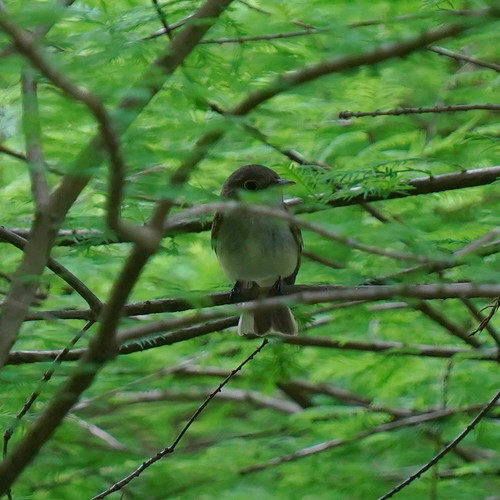
ミドリメジロハエトリ (Empidonax virescens) ミドリメジロハエトリ
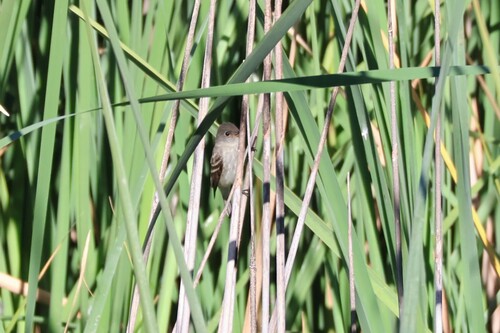
メジロハエトリ (Empidonax traillii) メジロハエトリ

メディア

読み込み中…

要点

アカディアンミドリメジロハエトリとメジロハエトリの最も信頼できるフィールドマークはアイリングです:アカディアンは明確でシャープな白いアイリングを示しますが、メジロのアイリングは薄く、しばしばほとんど存在しません。くちばしの形と色も役立ちます—アカディアンは下顎が黄色がかった広く平らなくちばしを持ち、メジロのくちばしは短く、狭く、下側がオレンジがかっています。両方ともオリーブ色の背中を持つEmpidonaxのハエトリで、白い翼帯がありますので、微妙な顔の特徴とくちばしの詳細に注意を払うことが重要です。鳴き声は聞こえれば非常に特徴的ですが、静かな鳥の場合、構造と顔のパターンが最良の手がかりです。両種はサイズと一般的な印象が非常に似ているため、良い視界がないと分けるのが難しいです。

識別のコツ

  1. アイリング: アカディアンミドリメジロハエトリは大胆でシャープ、完全な白いアイリングを持っています;メジロのアイリングは薄く、不明瞭で、しばしば壊れているかほとんど存在しません。これは近距離での最も信頼できるフィールドマークです。
  2. くちばしの形と色: アカディアンのくちばしは広く平らで、下顎が黄色がかっています;メジロのくちばしは小さく、狭く、下顎がオレンジがかっています。アカディアンの広く平らなくちばしを探してください、特に下からまたは横から見たときに。
  3. 顔の表情: アカディアンの強いアイリングはよりオープンな顔の印象を与え、メジロの薄いアイリングは顔をより平坦で対比が少ないように見せます。
  4. 胸の色合い: アカディアンは胸にオリーブ色の色合いを示します;メジロはよりオリーブグレーです。これは微妙で、良い光の下で使用するのが最適です。
  5. 上面の色: アカディアンは通常、上面がよりオリーブ色で、メジロはより茶色がかったオリーブですが、この違いはわずかで、悪い光の下では信頼できません。
  6. 翼帯: 両種とも白い翼帯を持っています;これは分ける要素ではありません。
  7. 尾と翼の構造: ソースには明確な違いは記載されていませんが、アカディアンは直接比較でわずかに長い翼と広いくちばしに見えるかもしれません。単独では信頼できません。
  8. 鳴き声: 爆発的な「ピートサ」または「カジープ」を聞いたら、それはアカディアンです。メジロの歌は異なります(ここでは詳細は記載されていません)、したがって、どんな鳴き声も二重確認を促すべきです。
  9. 行動: 両種は止まり木から昆虫を捕まえるために飛び出し、昆虫を摘むこともあります;行動は分けるためには役立ちません。
  10. 生息地: 現在のソースに基づいて診断的ではありません;両方とも移動中に重なることがあります。
  11. サイズ: 両方とも本質的に同じサイズと質量です;サイズを分けるために使用しないでください。
  12. 幼鳥/未成熟の羽毛: 両種に特有の年齢別の翼や飛行マークは記載されていないため、すべての年齢で顔とくちばしの詳細に依存してください。
  13. 光と角度: 微妙な顔とくちばしのマークは、悪い光や距離で消えてしまうことがあります;常に複数の視点と角度を試みてください。
  14. Empidonaxの落とし穴: 両種は悪名高い難しい属の一部です;疑わしい場合は、鳴き声とアイリング/くちばしの組み合わせを優先してください。
  15. 季節と性別: 分けるのに役立つ季節的または性別に基づく羽毛の違いは記載されていません。

大きさ

両種はサイズと質量がほぼ同一で、メジロハエトリは体重が約12.6gです。長さと翼幅はほぼ完全に重なります(アカディアン:長さ14〜15cm、翼幅22〜23cm)、したがってサイズは信頼できるフィールドマークではありません。手に持ったり非常に近い距離で見ると、アカディアンはわずかに長い翼と広いくちばしに見えるかもしれませんが、これは微妙で、フィールドでは信頼できません。

羽色

両方の成鳥はオリーブから茶色がかったオリーブの上面、白っぽい下面、白い翼帯を持っています。最も一貫した違いはアイリングです:アカディアンのアイリングは大胆でシャープ、完全ですが、メジロのアイリングは薄く、しばしば壊れているかほとんど存在しません。胸の色合いは微妙に異なります:アカディアンの色合いはオリーブで、メジロはよりオリーブグレーです。くちばしの色も役立ちます—アカディアンは暗い上顎と黄色がかった下顎を持ち、メジロの上顎は灰色で下顎はオレンジがかっています。ソースには年齢特有の上翼や飛行パターンの違いは記載されていないため、すべての羽毛で顔とくちばしの詳細に焦点を当ててください。幼鳥と未成熟の羽毛はソースに詳細が記載されていないため、これらのマークはすべての年齢に適用されると考えてください。

行動

両種は典型的なEmpidonaxのハエトリで、止まり木から昆虫を捕まえるために飛び出します。メジロハエトリは「座って待つ」捕食者として説明されており、しばしば低木の頂上近くに止まり、獲物を捕まえるために短い飛行を行いますが、これはアカディアンの行動とフィールドで大きく異なることはないでしょう。両方とも葉から昆虫を摘むことがあります。行動は信頼できる分ける要素ではありません。

生息環境

これらの二種に関しては、ソースに生息地の区別は提供されていません。両方とも移動中に森林や低木の生息地で見られることがあり、生息地だけでは診断的ではありません。

声

鳴き声は聞こえれば非常に特徴的です。アカディアンミドリメジロハエトリは爆発的な二音の「ピートサ」または「カジープ」の歌を発し、柔らかい「ピート」の呼び声と時々フリッカーのような音を持っています。メジロハエトリの歌はここでは記載されていませんが、アカディアンの歌とは大きく異なることが知られています。特徴的な二音の歌を聞いたら、それはアカディアンです;そうでなければ、視覚的なマークに依存してください。

より良い説明を送る

比較と同じ項目を使ってください。文章はすぐに公開されます。

The most reliable field mark between Acadian and Willow Flycatchers is the eye ring: Acadian shows a distinct, crisp white eye ring, while Willow's is faint and often nearly absent. Bill shape and color also help—Acadian has a broader, flatter bill with a yellowish lower mandible, while Willow's bill is shorter, narrower, and more orangish below. Both are olive-backed Empidonax flycatchers with white wing bars, so careful attention to subtle facial and bill details is essential. Vocalizations are highly distinctive if heard, but in silent birds, structure and facial pattern are your best clues. Beware that both species are extremely similar in size and general jizz, making separation challenging without good views.

  1. Eye ring: Acadian Flycatcher has a bold, crisp, and complete white eye ring; Willow's is faint, indistinct, and often broken or nearly absent. This is the most reliable field mark in close views.
  2. Bill shape and color: Acadian's bill is broad and flat with a yellowish lower mandible; Willow's bill is smaller, narrower, and the lower mandible is orangish. Look for the broader, flatter bill on Acadian, especially from below or in profile.
  3. Facial expression: The strong eye ring on Acadian gives a more open-faced look, while Willow's fainter eye ring makes the face appear plainer and less contrasted.
  4. Breast wash: Acadian shows an olive wash on the breast; Willow's is more olive-gray. This is subtle and best used in good light.
  5. Upperparts color: Acadian is typically more olive above, Willow more brown-olive, but this difference is slight and unreliable in poor light.
  6. Wing bars: Both species have white wing bars; this is not a separator.
  7. Tail and wing structure: No clear differences are described in the sources, but Acadian may appear slightly longer-winged and broader-billed in direct comparison. Not reliable in isolation.
  8. Vocalizations: If you hear an explosive 'peet-sa' or 'ka-zeep', it's Acadian. Willow's song is different (not detailed here), so any vocalization should prompt a double-check.
  9. Behavior: Both sally for insects from perches and may glean insects; behavior is not useful for separation.
  10. Habitat: Not diagnostic based on current sources; both can overlap in migration.
  11. Size: Both are essentially the same size and mass; do not use size for separation.
  12. Juvenile/immature plumage: No unique age-specific wing or flight marks are described for either species, so rely on facial and bill details at all ages.
  13. Lighting and angle: Subtle facial and bill marks can be washed out in poor light or at a distance; always try for multiple views and angles.
  14. Empidonax pitfalls: Both species are part of a notoriously difficult genus; when in doubt, prioritize vocalizations and the eye ring/bill combination.
  15. Season and sex: No seasonal or sex-based plumage differences are described that aid separation.

Both species are nearly identical in size and mass, with Willow Flycatcher averaging about 12.6 g in body mass. Length and wingspan overlap almost entirely (Acadian: 14–15 cm length, 22–23 cm wingspan), so size is not a reliable field mark. In hand or at very close range, Acadian may look slightly longer-winged and broader-billed, but this is subtle and not trustworthy in the field.

Both adults have olive to brown-olive upperparts, whitish underparts, and white wing bars. The most consistent difference is the eye ring: Acadian's is bold, crisp, and complete, while Willow's is faint and often broken or nearly absent. The breast wash differs subtly: Acadian's is olive, Willow's is more olive-gray. Bill color is also useful—Acadian has a dark upper mandible and yellowish lower, while Willow's upper mandible is gray and the lower is orangish. No age-specific upperwing or flight pattern differences are described in the sources, so focus on facial and bill details in all plumages. Juvenile and immature plumages are not detailed in the sources, so assume these marks apply to all ages.

Both species are typical Empidonax flycatchers, sallying from perches to catch insects. Willow Flycatcher is described as a 'sit-and-wait' predator, often perching near the tops of shrubs and making short flights to capture prey, but this is not likely to differ much from Acadian's behavior in the field. Both may glean insects from foliage. Behavior is not a reliable separator.

No habitat distinctions are provided in the sources for these two species. Both can be found in wooded or shrubby habitats during migration, and habitat alone is not diagnostic.

Vocalizations are highly distinctive if heard. Acadian Flycatcher gives an explosive, two-note 'peet-sa' or 'ka-zeep' song, with a soft 'peet' call and sometimes a flicker-like note. Willow Flycatcher's song is not described here, but it is known to differ significantly from Acadian's. If you hear the characteristic two-note song, it's Acadian; otherwise, rely on visual marks.

変更を破棄しますか?

保存していない編集があります。今離れると失われます。

ミドリメジロハエトリ · メジロハエトリ · 苦手な鳥