

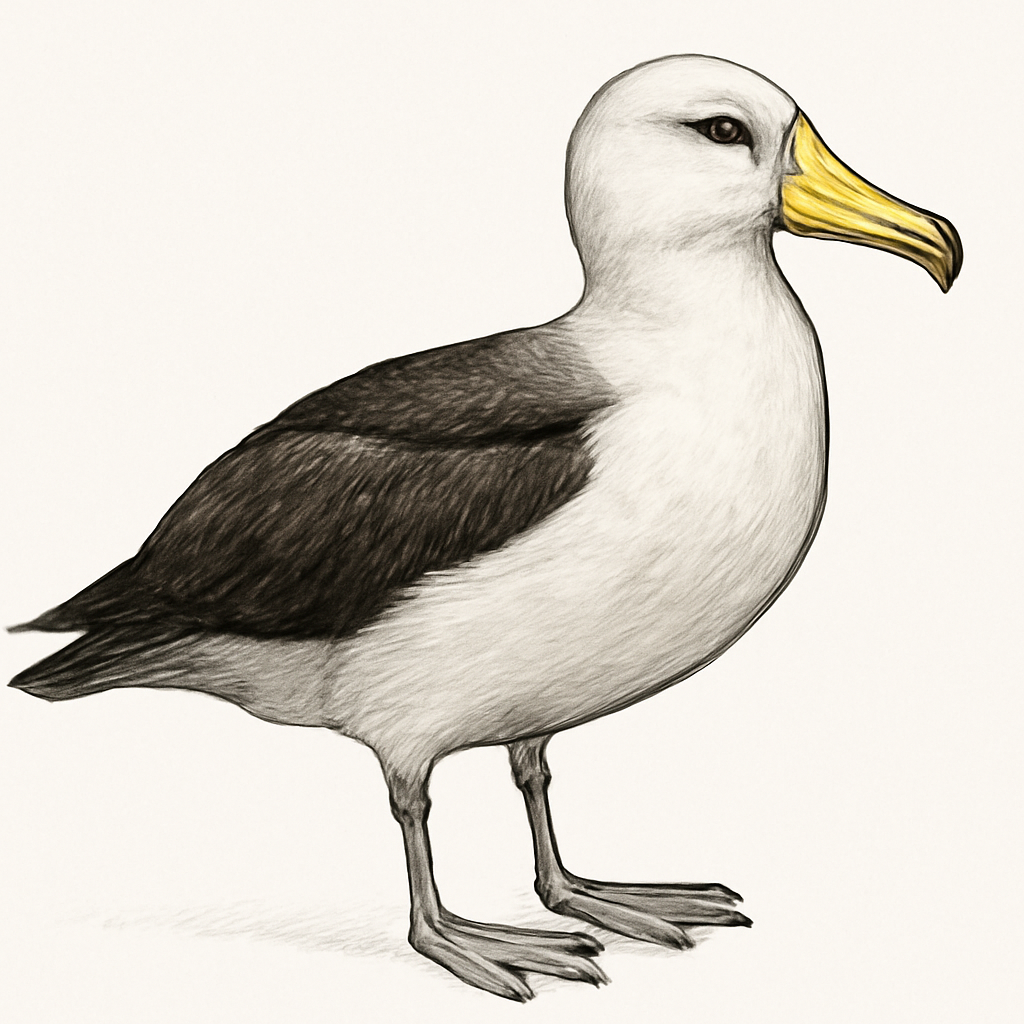
Atlantic Yellow-nosed Albatross
Thalassarche chlororhynchos
Albatrosses (Diomedeidae) · Procellariiformes · Albatrosses
Play a quiz with Atlantic Yellow-nosed Albatross and similar species
View all photos, video and sound
Review needed
Motmot is a community-driven project, and many photos still need a human check. If you know this bird, you can help by reviewing its images.

O-o, we ran out of AI credits. I develop Motmot in my spare time, and there is no funding behind it right now. If you would like to help it grow, write to me at info@motmot.club.
How to identify Atlantic Yellow-nosed Albatross
Writing identification notes…
This looks up identification notes in open sources, then asks the model to write them. It can take a minute.
Log in to generate identification notes for this bird.
Often mixed up with
In quizzes, players most often confuse Atlantic Yellow-nosed Albatross with these birds—either this species was picked by mistake, or the other way around.
| Species | Mix-ups |
|---|---|
| Black-browed Albatross Thalassarche melanophris | 23 |
| White-capped Albatross Thalassarche cauta | 6 |
| Buller's Albatross Thalassarche bulleri | 4 |
| Laysan Albatross Phoebastria immutabilis | 3 |
| Short-tailed Albatross Phoebastria albatrus | 3 |
Family
Albatrosses, of the biological family Diomedeidae, are large seabirds related to the procellariids, storm petrels, and diving petrels in the order Procellariiformes (the tubenoses). They range widely in the Southern Ocean and the North Pacific. They are absent from the North Atlantic, although fossil remains of short-tailed albatross show they lived there up to the Pleistocene, and occasional vagrants are found.
Order
Procellariiformes is an order of seabirds that comprises four families; the albatrosses, the petrels and shearwaters, and two families of storm petrels. Formerly called Tubinares and still called tubenoses in English, Procellariiformes are often referred to collectively as the petrels, a term that has been applied to all members of the order, or more commonly all the families except the albatrosses. They are almost exclusively pelagic (feeding in the open ocean), and have a cosmopolitan distribution across the world's oceans, …