Motmot

Bird course · Lesson 7 · 12 minutes

Geese in winter

Five geese you can see on British fields and estuaries

Winter is goose season. From October, hundreds of thousands of geese arrive from Iceland, Greenland, Svalbard and Siberia, and the fields and estuaries of Britain fill with the sound of them. If you hear a wild, honking chorus overhead, look up: geese fly in lines and V-shapes, called skeins.

Geese are easier than you think. Each of these five has one detail that gives it away: a black neck with a white chinstrap, a pink bill, a white face. We start with the one you have probably already seen on a park pond.

At the end there's a quiz of eight questions, with birds from the last two weeks mixed in.

Today: 5 birds

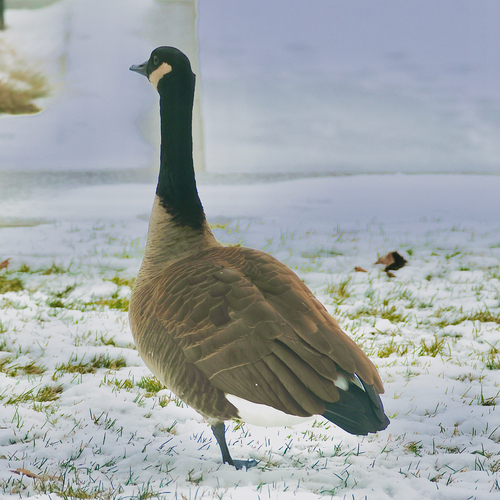
Canada Goose, adult adult
Photo: birdcite-ing · CC BY-NC

Bird 1 of 5

Canada Goose

Branta canadensis

How to recognise it

  • Big, with a long black neck
  • White chinstrap under the head
  • Brown body, pale breast
chinstrap A white band from cheek to cheek, under the chin.

Where and when

Park lakes, reservoirs and farmland all year, all over the country. Brought here from North America as an ornamental bird, in the 1600s.

Call A loud, nasal "ah-honk", and a lot of it. Recording: David Darrell-Lambert · xeno-canto

It is not a winter visitor but a resident, so you can practise on it any time of the year.

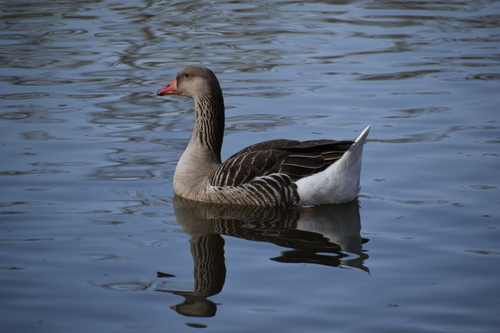
Greylag Goose, adult adult
Photo: Animal Wonders · CC BY-NC

Bird 2 of 5

Greylag Goose

Anser anser

How to recognise it

  • Big and grey-brown, with a thick neck
  • Heavy orange bill, pink legs
  • Pale grey forewing in flight
forewing The front part of the wing. Easy to see in flight.

Where and when

Lakes and fields, in flocks. Our only native goose that nests here, though many on park lakes are semi-tame. In winter, thousands more arrive from Iceland.

Call The farmyard goose of old: a loud, cackling "aang-ung-ung". Recording: Lars Edenius · xeno-canto

The farmyard goose is a descendant of the Greylag.

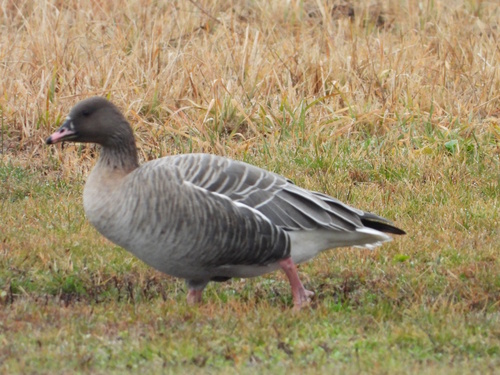
Pink-footed Goose, adult adult
Photo: Brian Vigorito · CC BY-NC

Bird 3 of 5

Pink-footed Goose

Anser brachyrhynchus

How to recognise it

  • Smaller and darker than a Greylag, with a dark brown head
  • Short bill, pink band in the middle
  • Pink legs

Where and when

Estuaries and stubble fields in eastern England, Lancashire and Scotland, from October to March. At dawn they leave the roost in huge skeins, with a babble of calls.

Call High, quick, nasal "wink-wink" calls, from a whole flock at once. Recording: Mark Pearson · xeno-canto

Most Pink-footed Geese in Britain breed in Iceland and Greenland, and come here for the winter.

Don’t confuse with: Greylag (just before): a bigger, paler goose with an orange bill.

Greylag or Pink-footed Goose?

Greylag GooseGreylag Goose
Pink-footed GoosePink-footed Goose

Look at the bill and the head. Greylag: big, heavy orange bill and a pale head. Pink-footed: smaller, with a dark head and a short bill with just a pink band. Both have pink legs.

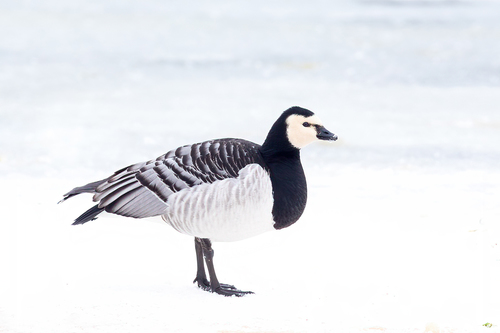
Barnacle Goose, adult adult
Photo: egorbirder · CC BY

Bird 4 of 5

Barnacle Goose

Branta leucopsis

How to recognise it

  • White face, black neck and breast
  • Grey back with black-and-white barring
  • Small, with a short black bill

Where and when

Grassy estuaries and islands, mostly on the Solway Firth and Islay in winter. Some feral birds now live on park lakes.

Call A yapping, dog-like "wuk-wuk-wuk", from a big flock. Recording: Peter Boesman · xeno-canto

In the Middle Ages people thought these geese grew out of barnacles on driftwood. That is how they got their name.

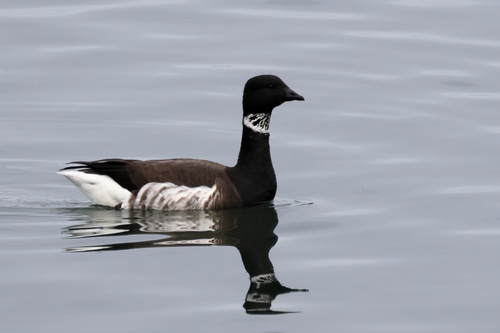
Brent Goose, adult, dark-bellied adult, dark-bellied
Photo: Mary Fenwick · CC BY-NC

Bird 5 of 5

Brent Goose

Branta bernicla

How to recognise it

  • Small, only a little bigger than a Mallard
  • Black head, neck and breast, with a small white neck patch
  • Dark body with a white rear end

Where and when

Muddy estuaries and saltmarshes on the south and east coast, from October to March. They graze on eelgrass and seaweed.

Call A low, rolling "rronk, rronk", from a flock out on the mud. Recording: David Darrell-Lambert · xeno-canto

The dark-bellied birds here come from Siberia. A paler, light-bellied form winters in Ireland and at Lindisfarne; we leave that one for later.

Quiz

8 questions, with a few birds from earlier lessons mixed in. Your answers stay in this browser.

Out and about this week

Go and look at the geese near you: a park lake, a reservoir or the estuary. Find the Canada Goose first. If you are near the coast, try to be there at dawn or dusk, when the skeins fly.