Motmot

Advanced birding · Lesson 32 · 22 minutes

Eastern vagrants

Siberian Accentor, Red-flanked Bluetail, two pipits, two buntings, Red-breasted Flycatcher and Brown Shrike

Easterly winds in October bring birds from Siberia to the coasts of north-west Europe. These birds were migrating south-east to the tropics of Asia, and some pointed the wrong way: 'reversed migration'. In the autumn of 2016 thousands of Siberian Accentors arrived in western Europe, and the event is still talked about.

The birds of today are the ones that you may well find: Richard's and Olive-backed Pipit, Little and Rustic Bunting, Red-breasted Flycatcher. The bluetail and the accentor are rare, and the Brown Shrike is a mega. On the day, when the wind has gone round to the east, check hedges and bushes on the east coast of the UK and the Dutch, German and Danish coasts, the Swedish islands and Norway.

Look for oddities: a bird that does not fit what you know. The first thing to do is to take a photograph, then look at the head, the tail and the call.

Today: 8 birds

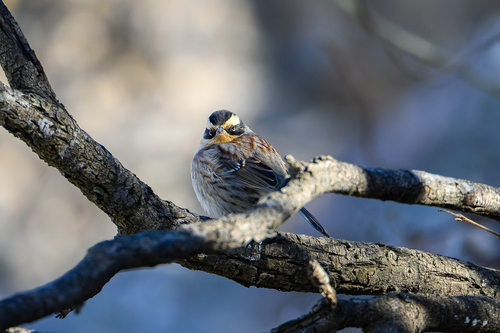
Siberian Accentor, adult adult
Photo: Yushi Wang · CC BY-NC

Bird 1 of 8

Siberian Accentor

Prunella montanella

How to recognise it

  • Warm buff-orange face and breast, with a dark crown and ear patch
  • A bold, buff-yellow eyebrow, a dark eye-stripe and a streaked back
  • Hops on the ground like a Dunnock, but looks richer and warmer

Where and when

UK, NL, DE, DK, SE, NO, FI: very rare, though there have been big arrivals (2016) in October. BE, FR, IE: almost never. A bird of the Siberian taiga that sometimes overwinters in Europe.

Call A high, soft, trilling “tirrirrirri”. Recording: Jarek Matusiak · xeno-canto

In 2016, hundreds appeared across north-west Europe. A bird that looks like a bright Dunnock in an October garden.

Don’t confuse with: Dunnock (beginners): greyer, with a plain face and a thin, dark bill.

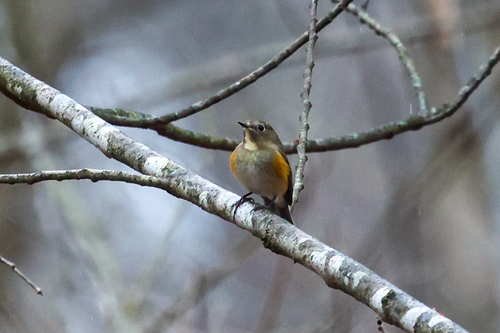
Red-flanked Bluetail, adult female adult female
Photo: tomfeild · CC BY

Bird 2 of 8

Red-flanked Bluetail
Tarsiger cyanurus

How to recognise it

  • A brown-grey bird with a bright blue tail, and orange flanks
  • A white throat and a pale eye ring, with a rather upright stance
  • Flicks and bobs its tail down, like a Robin

Where and when

UK, NL, DE, DK, SE, NO, FI: very rare, from late September to early November, with a few every year. FR, BE, IE: almost never. First-winters and females, brown with a blue tail, are the usual sight.

Call A soft, short “tic” and a low “whit”, and a descending song. Recording: Albert Lastukhin · xeno-canto

A bird that surprises: from a distance it is a dull brown bird, but when it flies, a flash of blue. An adult male is deep blue above.

Don’t confuse with: European Robin (beginners): a red-orange breast and no blue.

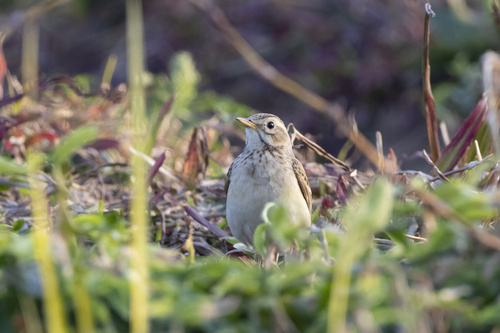
Richard's Pipit, adult adult
Photo: 大鹅Goose · CC BY-NC

Bird 3 of 8

Richard's Pipit

Anthus richardi

How to recognise it

  • Big, long-legged and upright, a pipit the size of a Skylark
  • A long hind claw, a long tail and a strong, thick bill
  • A loud, rasping call, quite different from a Meadow Pipit's

Where and when

UK, NL, DE, DK, FR, BE, SE, NO: rare but annual, in late September to October, on coastal fields and dunes. IE, FI: rare. A bird of Siberia that overshoots every autumn.

Call A loud, harsh, rasping “shreep” or “rrrp”, quite unlike any other pipit. Recording: Testaert Dominique · xeno-canto

Called a 'bruiser' of a pipit, it stands upright like a wagtail. It is a classic find on an autumn coast.

Don’t confuse with: Meadow Pipit (week 27): smaller, a thin call, shorter legs and short tail.

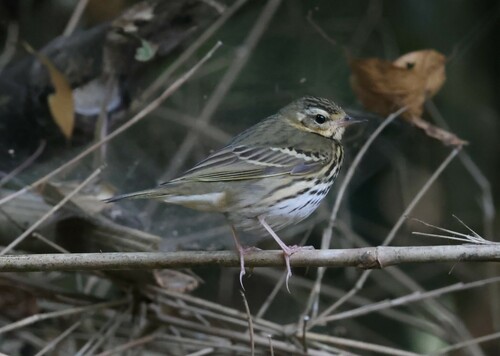
Olive-backed Pipit, adult adult
Photo: codyhylee · CC BY-NC

Bird 4 of 8

Olive-backed Pipit

Anthus hodgsoni

How to recognise it

  • An olive-green back with few streaks, and a buff-white eyebrow
  • White underparts with bold black streaks on the breast
  • A pale spot and a dark spot on the back of the ear coverts

Where and when

UK, NL, DE, DK, SE, NO, FI: rare but annual, in late September to October, in trees and bushes on the coast. FR, BE, IE: rare. A pipit that sits in trees.

Call A thin, sharp, buzzy “tseeep”, like a Tree Pipit but thinner. Recording: Julien Birard · xeno-canto

A pipit of the trees, sitting up in a sycamore. The plain olive back and the bold, black breast streaks stand out.

Don’t confuse with: Tree Pipit (week 27): browner, more streaked, buff, and with a buzzing call.

Richard's or Olive-backed Pipit?

Richard's PipitRichard's Pipit
Olive-backed PipitOlive-backed Pipit

Richard's is big, long-legged and upright, with a strong bill and a loud, rasping call. Olive-backed is the size of a Tree Pipit, with a plain olive back and bold black breast streaks and a pale-and-dark spot on the ear coverts. Olive-backed sits in trees, Richard's stays on the ground.

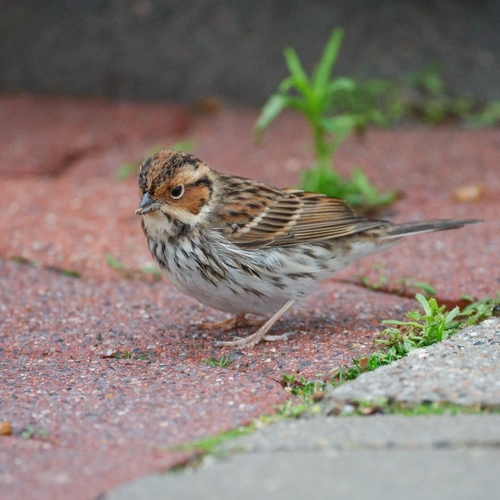
Little Bunting, adult adult
Photo: rafaelw · CC BY

Bird 5 of 8

Little Bunting

Schoeniclus pusillus

How to recognise it

  • A small bunting with a chestnut cheek patch framed by a dark border
  • A bold pale eye ring and a rufous crown with dark stripes
  • Thin, streaked flanks, and a small, sharp bill
eye ring A pale ring round the eye. Bold in Little Bunting.

Where and when

SE, FI, NO: breeds in the north, from June. UK, NL, DE, DK, FR, BE: rare but annual, from late September to November. IE: rare. A shy bird that skulks in vegetation and mixes with Reed Buntings.

Call A hard, short “tik” or “tsik”. Recording: Stanislas Wroza · xeno-canto

A small, tidy bunting. The rufous cheek with the dark edge is the mark, and the call is the first clue.

Don’t confuse with: Common Reed Bunting (week 28): a bigger bunting with a white collar and a brown cheek.

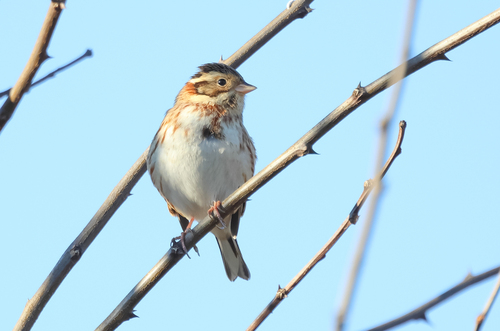
Rustic Bunting, adult adult
Photo: Fabio Moretto · CC BY-NC

Bird 6 of 8

Rustic Bunting

Schoeniclus rusticus

How to recognise it

  • White underparts, with a chestnut breast band and flank streaks
  • A white throat, a dark crown with a short crest, and a pale spot on the ear coverts
  • A bright, pink-based bill and a white eyebrow
breast band A band across the breast, as in the chestnut band of a Rustic Bunting.

Where and when

SE, FI, NO: uncommon breeders in the north, from June. UK, NL, DE, DK, FR, BE: rare, in spring and autumn. IE: almost never. A bunting of the Siberian forest, uncommon but regular.

Call A short, hard “tik” or “tsip”. Recording: Alan Dalton · xeno-canto

A smart bunting, which often turns up in a spring flock of Reed Buntings. The chestnut breast band is a good clue.

Don’t confuse with: Common Reed Bunting (week 28): a white collar and a streaked, not a white, breast.

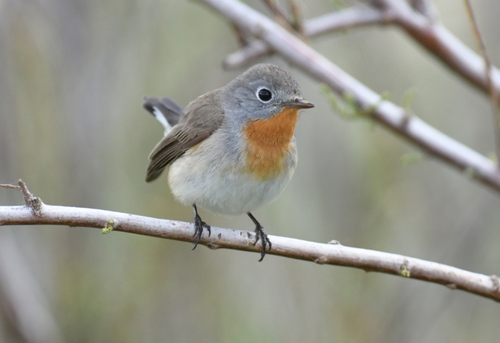
Red-breasted Flycatcher, adult adult
Photo: Анна Голубева · CC BY-NC-ND

Bird 7 of 8

Red-breasted Flycatcher

Ficedula parva

How to recognise it

  • A small, brown-grey flycatcher with a bright white base to the tail
  • A pale eye ring and a black tail with white outer sides, often cocked
  • A male in spring has an orange throat, but in autumn most birds have a buff throat

Where and when

SE, FI, NO, DE, DK: scarce breeders in the east, from May. UK, NL, BE, FR: rare in autumn on the coast, September to October. IE: rare. A bird that moves in the open, flicking its tail.

Call A dry, rattling “trrrt” and a clear, soft “tzik”. Recording: Stanislas Wroza · xeno-canto

The white tail base when it flits is the best sign. In autumn many are brown, with no red in them.

Don’t confuse with: Spotted Flycatcher (week 29): a streaked crown and breast, and no white tail base.

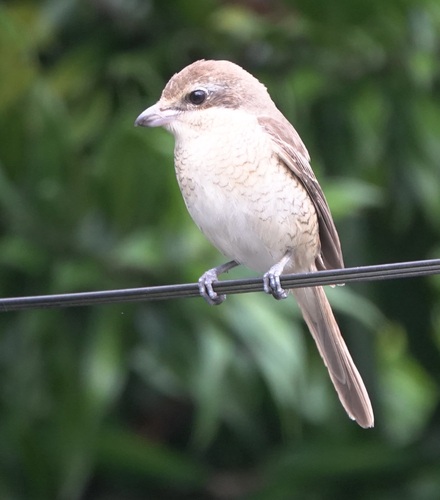
Brown Shrike, adult adult
Photo: kenny_well · CC BY-NC

Bird 8 of 8

Brown Shrike

Lanius cristatus

How to recognise it

  • A rufous-brown shrike with a strong black mask and white eyebrow
  • A long, rounded rufous tail and a pale underside
  • Sits upright on a bush top, scanning for prey
mask A dark patch through the eye, like a bandit's mask. Brown Shrikes have a strong one.

Where and when

UK, NL, DE, DK, SE, NO, FI, FR: very rare, in autumn, with a few records in Europe each year. BE, IE: almost never. A bird from East Asia that is among the rarest on the list.

Call A harsh “chek-chek”, a hard, dry rattle. Recording: Ujjal Kishor De · xeno-canto

A shrike that belongs to the Far East. A bird to check carefully against Red-backed Shrike: the tail and the mask.

Don’t confuse with: Red-backed Shrike (week 38): a grey head and a black tail with white sides.

Quiz

12 questions, with birds you have to repeat mixed in. Your answers decide when each bird comes back.

Out and about this week

When the wind goes round to the east in October, spend a morning on a coast with hedges and trees. Look for a bird that you do not recognise. Photograph it from every angle and look carefully at the head, tail and call.