Motmot

Advanced birding · Lesson 22 · 22 minutes

Female diving ducks

Tufted, Scaup, Pochard, Ferruginous, Red-crested Pochard, Ring-necked Duck and Goldeneye

The diving ducks are rounder, lower in the water and more compact than the dabbling ducks. The females are brown and grey, and the same rules apply: head shape, bill pattern and the pale marks on the face. The most useful clue for a diving duck is the shape of the head: peaked, rounded, or flat.

Lakes, reservoirs and gravel pits are the best habitats from October to March. In hard winters, Tufted Ducks, Pochards, Scaup and Goldeneyes arrive from the Baltic and from Russia, and pits on the coast fill with them. The rarer ones, like the Ring-necked Duck and Ferruginous Duck, hide in a flock of the common ones. The females are what you look at.

As in lesson 21, every photo here is a female, and the wrong answers in the quiz are other females.

Today: 7 birds

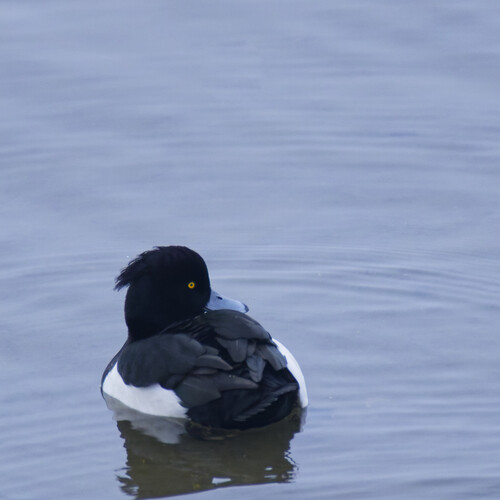
Tufted Duck, adult female adult female
Photo: Ардатов Иван · CC BY-NC

Bird 1 of 7

Tufted Duck

Aythya fuligula

How to recognise it

  • Dark brown overall, with a yellow eye and a small tuft on the nape
  • A blue-grey bill with a black nail, and sometimes a little white at the base
  • A rounded head, and a white wing bar in flight
nail The hard tip at the end of a duck's bill. Its size and colour differ: a Tufted Duck has a broad black nail.

Where and when

UK, IE, NL, BE, DE, FR, DK, SE, FI: common to abundant, on lakes and gravel pits, all year, with big numbers in winter. NO: fairly common. The commonest diving duck of the region.

Call A low, growling “kurr-kurr” from the female. Recording: Simon Elliott · xeno-canto

The standard female diving duck. Some have a bit of white at the bill base, which makes people think of Scaup.

Don’t confuse with: Greater Scaup (this week): bigger, with a wide, white face patch and a grey back.

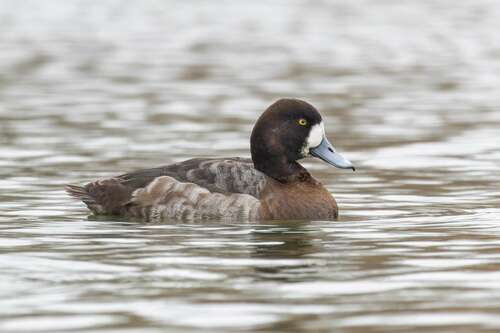
Greater Scaup, adult female adult female
Photo: alexislours · CC BY

Bird 2 of 7

Greater Scaup

Aythya marila

How to recognise it

  • A large, rounded head with a broad white face patch around the bill base
  • A grey back with fine barring, which shows in good light
  • A blue-grey bill with a small black nail, and a heavier look than a Tufted
nail The hard tip at the end of a duck's bill. Its size and colour differ: a Tufted Duck has a broad black nail.
face patch A pale patch on the face at the base of the bill. It is wide and white on a Scaup.

Where and when

UK, IE, NL, BE, DE, DK, FR: scarce to uncommon in winter, at the coast, with big flocks in the Wadden Sea and Baltic. NO, SE, FI: breeds in the north. A duck that likes the coast more than a Tufted Duck.

Call A low, soft, purring “arr-arr” from the female. Recording: Andrew Spencer · xeno-canto

Look at the width of the white patch: Scaup has a broad band round the bill, while a Tufted has a smudge. The rounder head and the grey back also help.

Don’t confuse with: Tufted Duck (this week): smaller, with a small tuft and a darker back.

Tufted Duck or Scaup, female?

Tufted DuckTufted Duck
Greater ScaupGreater Scaup

Size and head shape come first: a Scaup is bigger, with a rounder, tuftless head. The white at the bill base is the best clue: a Scaup has a broad white band all the way round the base of the bill, while a Tufted Duck has at most a small smudge. In good light a Scaup's back is finely barred grey.

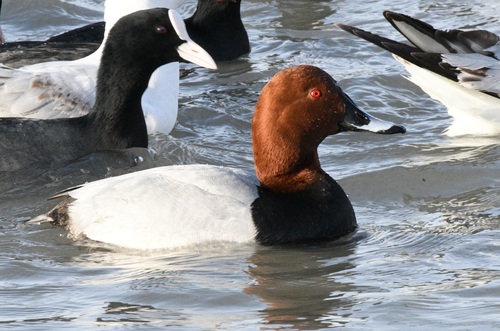
Common Pochard, adult female adult female
Photo: Мария Пахлеванова · CC BY-NC

Bird 3 of 7

Common Pochard

Aythya ferina

How to recognise it

  • Grey-brown, with a paler face and a pale eye ring and eyeline
  • A dark bill with a pale grey band across, and a sloping, peaked head
  • A greyish wing bar, with no white in the wing
eye ring A pale ring around the eye. It is bold on a female Ring-necked Duck.

Where and when

UK, IE, NL, BE, DE, FR, DK: fairly common in winter, with a smaller breeding population. NO, SE, FI: breeds in the south. Declining in many countries. A duck of reservoirs and open water.

Call A soft, rough “krr-krr” and a hoarse “karr”. Recording: Alain Malengreau · xeno-canto

A tubby, brownish-grey duck with a sloping head that rises to a peak. She is much plainer than the male.

Don’t confuse with: Ferruginous Duck (this week): darker, richer chestnut, with a white undertail. Tufted Duck: a black bill nail.

Ferruginous Duck, adult female adult female
Photo: Tisha Mukherjee · CC BY-SA

Bird 4 of 7

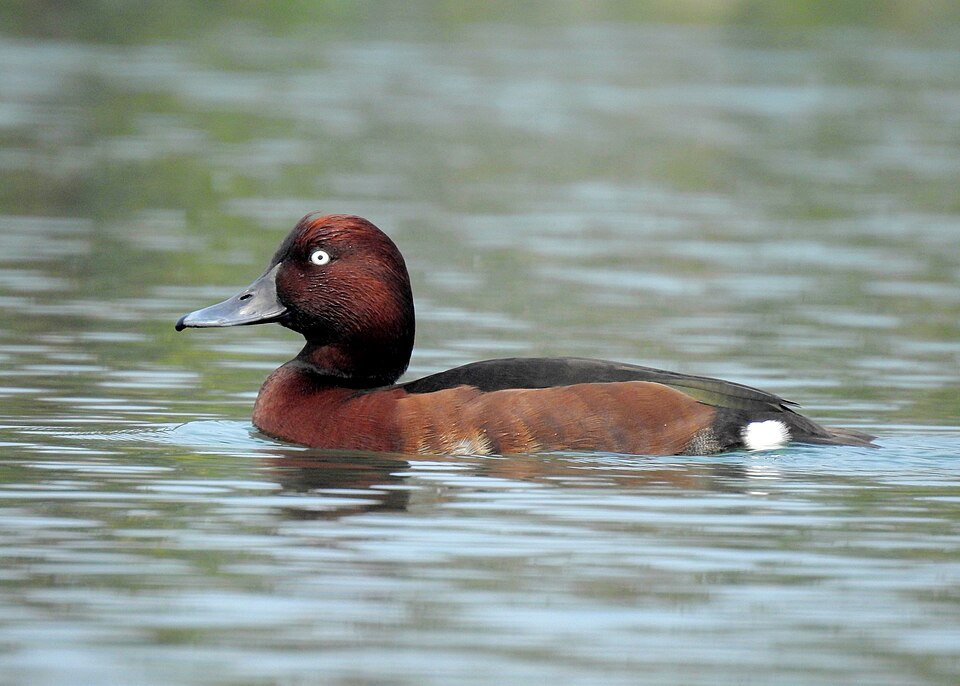
Ferruginous Duck

Aythya nyroca

How to recognise it

  • Dark chestnut-brown all over, with a peaked head and a steep forehead
  • A white undertail, and a small, dark nail on a grey bill
  • A clear white wing bar and a white belly
nail The hard tip at the end of a duck's bill. Its size and colour differ: a Tufted Duck has a broad black nail.

Where and when

DE, FR: rare, breeds in small numbers, with a few in winter. UK, IE, NL, BE, DK, SE: very rare, in autumn and winter. NO, FI: almost never. A rare bird, often among the Tufted Ducks.

Call A low, harsh “gaa-gaa” and a soft purr. Recording: Paweł Malczyk · xeno-canto

The rich brown is the best mark: if a diving duck looks chestnut and dark, check the white undertail.

Don’t confuse with: Common Pochard (this week): greyer, a pale ring on the bill. Tufted Duck: a tuft and a yellow eye.

Red-crested Pochard, adult female adult female
Photo: Анна Мостовая · CC BY-NC

Bird 5 of 7

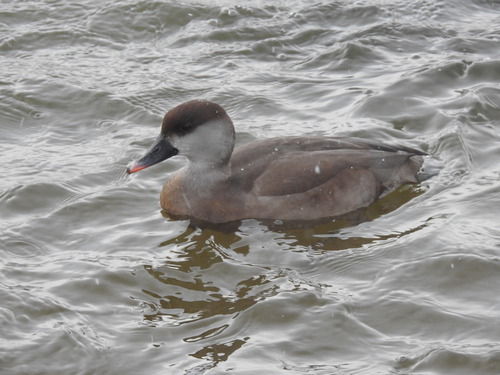
Red-crested Pochard

Netta rufina

How to recognise it

  • Pale brown, with a dark cap that runs down to the eye, contrasting with a pale cheek
  • A dark bill with a pinkish tip, and a plain pale face
  • A big, rounded head and a broad white wing bar

Where and when

FR, DE, NL, BE: uncommon, with growing numbers on gravel pits and lakes. UK: scarce, mostly escapes. DK, SE: rare. IE, NO, FI: very rare. A species that is mostly from the south of Europe and Asia.

Call A low, grating “krr-krr” and a rough, hoarse call. Recording: David Darrell-Lambert · xeno-canto

A pale-faced duck with a dark cap, like a dabbling duck that has gone diving. Many in the UK are escapes from collections.

Don’t confuse with: Common Pochard (this week): a darker, more uniform face. Mallard (week 21): a dabbling duck with an orange bill.

Ring-necked Duck, adult female adult female
Photo: jweaver22 · CC BY

Bird 6 of 7

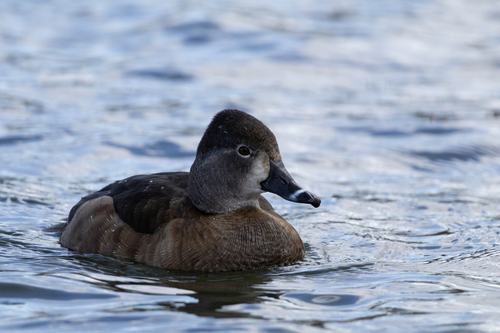
Ring-necked Duck

Aythya collaris

How to recognise it

  • A white eye ring that extends back as a thin line, and a pale ring round the bill
  • A peaked crown and a steep forehead, and a grey bill with a black tip
  • A grey wing bar, not a white one
peaked crown A head shape where the highest point is at the back of the crown, as in the Ring-necked Duck.
eye ring A pale ring around the eye. It is bold on a female Ring-necked Duck.

Where and when

UK, IE: rare but annual, from autumn to spring, among the Tufted Ducks. NL, BE, DE, FR, DK, SE, NO: very rare. FI: almost never. A North American duck, regular in the west.

Call Rarely heard; a low, soft purring “brrr”. Recording: Andrew Spencer · xeno-canto

A smart, quiet duck of the west, found by scanning flocks of Tufted and Pochard. The ring on the bill, not the neck, gives it its name.

Don’t confuse with: Tufted Duck (this week): a rounded head with a tuft, and a white wing bar. Common Pochard: a plainer face.

Common Goldeneye, adult female adult female
Photo: Michael and Antoni Hinczewski · CC BY

Bird 7 of 7

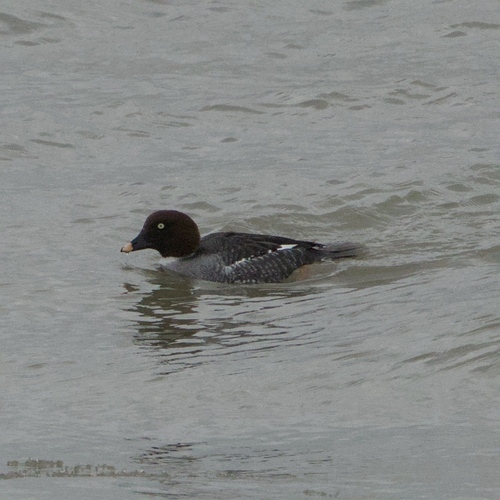
Common Goldeneye

Bucephala clangula

How to recognise it

  • A chocolate-brown head with a white collar-like ring around the neck
  • A dark grey body and a short, dark bill with a yellow tip
  • A big, domed head and a pale yellow eye

Where and when

UK, IE, NL, BE, DE, FR, DK: fairly common in winter, mostly from November to March. NO, SE, FI: breeds in forest lakes, nesting in boxes. A diver that bobs up and down.

Call Silent in winter; a short, harsh “gack” in flight. Recording: Lars Edenius · xeno-canto

The wings whistle in flight. Females have a brown head and a white collar, a clean-cut pattern.

Don’t confuse with: Smew female (week 23): small, chestnut cap, white cheek. Tufted Duck: a dark head and a tuft.

Quiz

12 questions, with birds you have to repeat mixed in. Your answers decide when each bird comes back.

Out and about this week

Choose a lake or reservoir with a mixed flock of diving ducks, between November and February. Count the females only and name them. Check the bill and the head shape of every one.