
gavião-urubu vs ferruginous hawk
Buteo albonotatus versus Buteo regalis
Jogue um quiz com gavião-urubu e ferruginous hawk
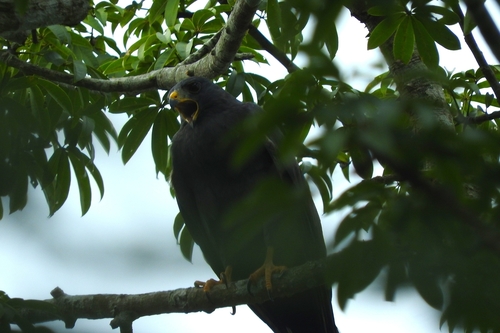 gavião-urubu
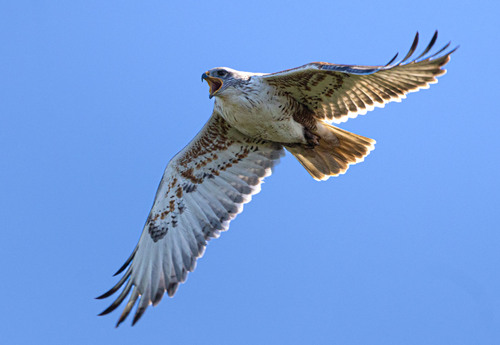 ferruginous hawk
Em resumo
A maneira mais confiável de separar o gavião-urubu do ferruginous hawk é pela tonalidade geral da plumagem e pelo padrão das asas em voo: o gavião-urubu é quase preto com penas de voo claras e barradas e uma cauda com faixas bem definidas, enquanto o ferruginous hawk é claro por baixo com partes superiores ruivas e brancas, e apresenta 'janelas' claras distintas nas asas e uma cauda ruiva. Os gaviões-urubu imaturos têm pequenas manchas brancas no peito e caudas mais finamente barradas, mas ainda parecem escuros no geral; os ferruginous hawks, independentemente da idade, mostram um corpo inferior branco e tons ruivos ou enferrujados proeminentes acima. Estruturalmente, o ferruginous hawk é muito mais robusto e com asas mais longas, com pernas emplumadas até os dedos, enquanto o gavião-urubu é mais esguio e semelhante a um urubu em voo. Ambas as espécies podem planar com um dihedral, mas sua coloração e forma são muito diferentes quando vistas de perto.
Dicas de identificação
- Cor geral em voo: O gavião-urubu é quase preto com primárias claras e barradas e uma cauda com faixas bem definidas; o ferruginous hawk é branco por baixo com partes superiores ruivas e brancas, e nunca parece totalmente escuro.
- Padrão da cauda: O gavião-urubu apresenta 3–4 faixas claras na cauda (a segunda a partir da ponta é a mais larga), visíveis de baixo e de cima; o ferruginous hawk tem uma cauda clara com um tom ruivo e não apresenta uma forte bandagem.
- Parte superior da asa em voo: O ferruginous hawk mostra duas 'janelas' claras na parte externa da asa superior e uma cauda ruiva—único entre os Buteos. O gavião-urubu não possui esses painéis claros e é uniformemente escuro acima, exceto pelas primárias barradas.
- Padrão da parte inferior da asa: O ferruginous hawk tem partes inferiores brancas com marcas patagiais ruivas e marcas escuras em forma de 'vírgula' no pulso; as partes inferiores do gavião-urubu são escuras com barrados claros nas penas de voo, sem qualquer base ruiva ou branca.
- Penas das pernas: O ferruginous hawk tem pernas emplumadas até os dedos (como uma águia-real); o gavião-urubu tem pernas amarelas nuas.
- Cabeça e marcas faciais: O ferruginous hawk tem uma cabeça branca com uma faixa escura ao redor do olho; o gavião-urubu tem cabeça escura com uma possível marca branca fraca no rosto e lores cinza claro.
- Peito e barriga: O ferruginous hawk tem barriga branca, mesmo nos imaturos; o gavião-urubu tem barriga escura, com imaturos mostrando apenas pequenas manchas brancas.
- Forma de voo: O ferruginous hawk é maciço, com asas longas e peito largo; o gavião-urubu é esguio, com cauda e asas longas, e uma silhueta semelhante a um urubu.
- Estilo de voo: Ambos podem planar com as asas em um dihedral, mas o gavião-urubu balança de lado a lado e frequentemente se junta a bandos de urubus, enquanto o ferruginous hawk é mais estável e poderoso.
- Postura empoleirada: O ferruginous hawk parece ereto, grande e pesado; o gavião-urubu é mais esguio e menos volumoso.
- Bico e pés: O ferruginous hawk tem um bico maior e os pés mais robustos entre os Buteos; o gavião-urubu tem um bico menor e pés menos massivos.
- Contexto de habitat: O ferruginous hawk é encontrado em planícies abertas e pradarias; o gavião-urubu prefere cânions, encostas áridas e florestas abertas.
- Confusão de imaturos: Os imaturos do gavião-urubu ainda são escuros no geral, com apenas pequenas manchas brancas no peito e uma cauda finamente barrada; os imaturos do ferruginous hawk são sempre claros por baixo e ruivos acima.
- Comprimento da cauda: O gavião-urubu tem uma cauda proporcionalmente mais longa, aumentando sua aparência semelhante a um urubu; a cauda do ferruginous hawk é larga e não tão longa em relação ao corpo.
- Diferenças sazonais/sexuais: Ambos os sexos são semelhantes em plumagem; as fêmeas do ferruginous hawk são maiores, mas isso não é uma marca de campo confiável. Não há forte variação sazonal em nenhuma das espécies.
Tamanho
O ferruginous hawk é significativamente maior e mais robusto do que o gavião-urubu. Enquanto o gavião-urubu pesa em média 762,5 g [wikidata], o ferruginous é o maior Buteo na América do Norte, com uma construção muito mais robusta, asas mais longas e um bico e pés maiores. O tarsus e a cauda do ferruginous hawk são ambos mais longos, e sua envergadura é maior. O gavião-urubu é um Buteo de tamanho médio e esguio, comparável em comprimento ao red-tailed hawk, mas mais leve e menos volumoso. No campo, o ferruginous hawk parecerá maciço, com um peito largo e cabeça grande, enquanto o gavião-urubu é esguio e quase semelhante a um urubu.
Plumagem
- Imaturos/Juvenis:
- Gavião-urubu: Os imaturos são escuros no geral, como os adultos, mas mostram pequenas manchas brancas no peito e uma cauda com faixas estreitas cinzas e pretas e uma ponta escura larga. As asas permanecem principalmente escuras com penas de voo barradas, dando uma aparência prateada à distância. Sem partes inferiores claras ou tons ruivos.
- Ferruginous Hawk: Tanto os adultos quanto os imaturos são claros por baixo, com um peito e barriga brancos, e uma cabeça branca com uma faixa escura ao redor do olho. As partes superiores são ruivas, especialmente nas costas e nas coberturas internas das asas, e as partes inferiores são brancas com marcas patagiais ruivas e marcas escuras em forma de 'vírgula' no pulso. Em voo, a asa superior mostra duas 'janelas' claras e uma cauda ruiva, que são únicas entre os Buteos.
- Adultos:
- Gavião-urubu: Uniformemente escuro com penas de voo cinzas barradas e uma cauda com 3–4 faixas claras (a segunda a partir da ponta é a mais larga e mais conspícua). O cera e as pernas são amarelos, os lores são cinza claro, e uma marca branca fraca pode ser vista no rosto. Sem plumagem corporal ruiva ou branca.
- Ferruginous Hawk: Partes inferiores brancas, partes superiores ruivas, e uma cabeça branca com uma faixa escura. As pernas são emplumadas até os dedos. A parte inferior da asa é branca com ruivo na base e vírgulas escuras no pulso. A cauda é clara com um tom ruivo e não apresenta uma forte bandagem.
Comportamento
Ambas as espécies planam com as asas em um leve dihedral, mas seus estilos de voo diferem sutilmente. O gavião-urubu frequentemente balança de lado a lado e imita o voo dos urubus-de-cabeça-preta, às vezes se juntando a bandos de urubus para se aproximar da presa. O ferruginous hawk também plana em um dihedral, mas parece mais poderoso e estável, com batidas de asa mais lentas e profundas. Empoleirado, o ferruginous hawk é ereto e maciço, enquanto o gavião-urubu parece mais esguio e ágil. O gavião-urubu é um predador ativo, enquanto o ferruginous hawk frequentemente caça de poleiros ou em voo baixo sobre campos abertos.
Habitat
O gavião-urubu prefere regiões quentes e secas, frequentemente perto de cânions, encostas áridas e florestas abertas, e é mais frequentemente visto no sudoeste dos EUA e na América Central/Sul. O ferruginous hawk prefere campos abertos, pradarias e planícies áridas, especialmente no oeste da América do Norte. Embora ambas possam ocorrer em campos abertos, o ferruginous hawk evita cânions arborizados e raramente é visto nos mesmos habitats que o gavião-urubu. O contexto pode ajudar: o gavião-urubu é mais provável de ser encontrado em terrenos rochosos e arbustivos; o ferruginous hawk em vastas extensões abertas e sem árvores.